
 Budi Mulyono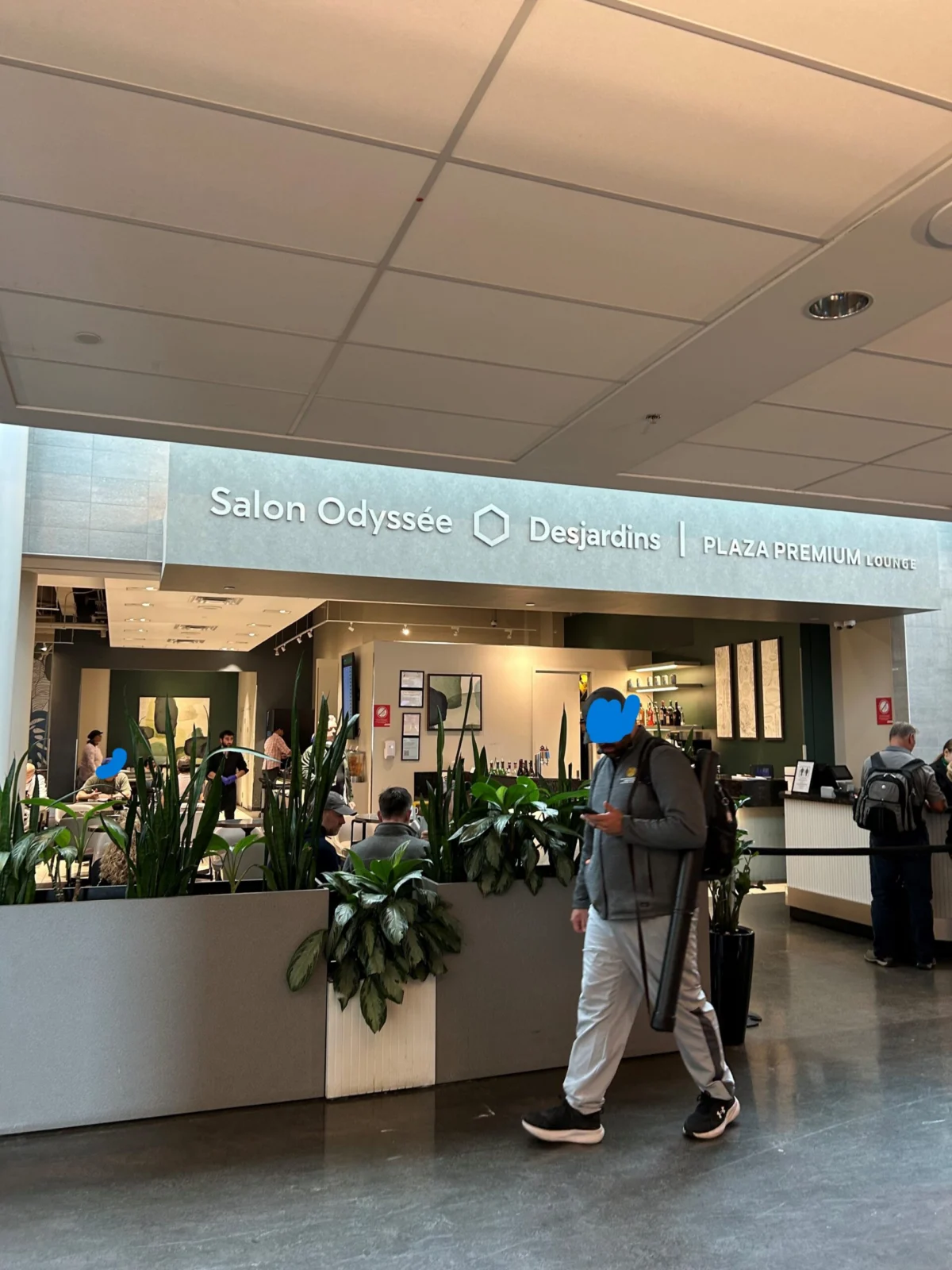
Montreal-Trudeau International Airport (YUL) continues to serve as a critical gateway for North American commerce and tourism, yet for travelers destined for the United States, the premium lounge landscape presents a starkly bifurcated experience. As of May 2026, the transborder concourse remains dominated by Air Canada’s extensive infrastructure, leaving a singular independent alternative for those not flying with the national carrier or within the Star Alliance network. Located strategically across from Gate 77, the Desjardins Odyssey Lounge—often referred to by frequent flyers as the only non-Air Canada sanctuary in the US-bound wing—persists as a unique, albeit idiosyncratic, fixture of the Montreal travel experience.
The transborder terminal, which necessitates that passengers clear US Customs and Border Protection (CBP) on Canadian soil, operates under strict space and security constraints. This environment has historically limited the expansion of third-party lounges. Recent assessments of the facility highlight a facility that challenges traditional definitions of airport luxury, functioning more as a segregated dining area than a secluded executive suite.
The Architectural Paradox: Design and Atmosphere
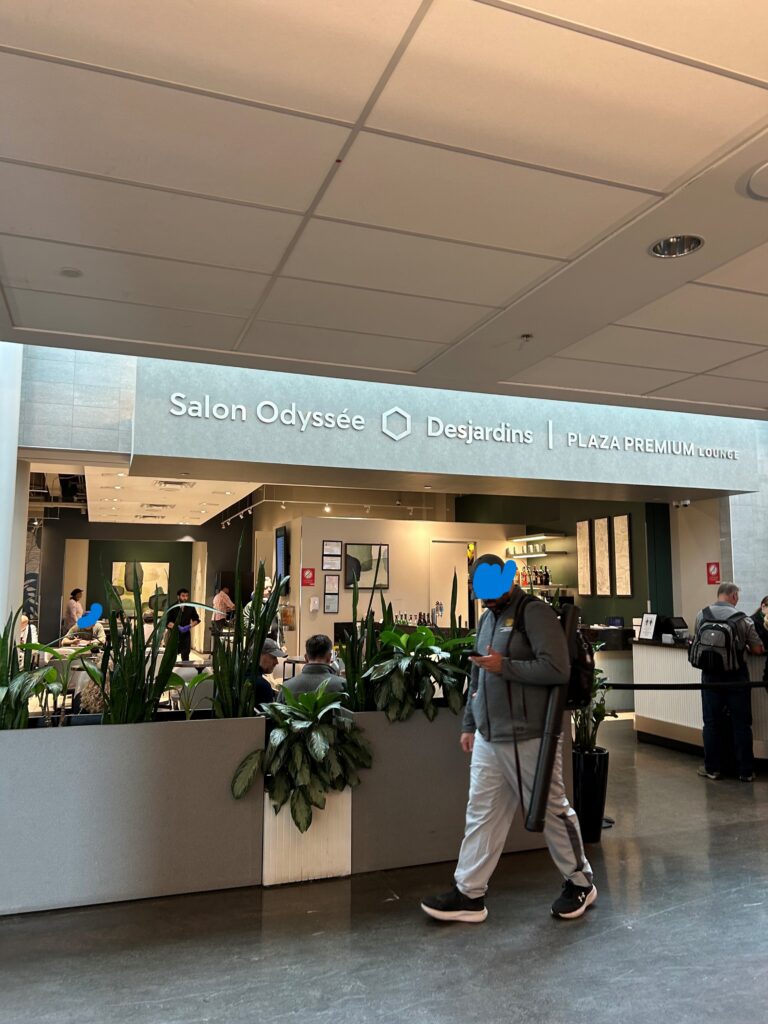
The Desjardins Odyssey Lounge is situated at the terminus of the duty-free shopping arcade, to the left of the primary US Customs exit. For many travelers, the first impression of the lounge is one of visual ambiguity. Unlike the frosted glass and heavy doors characteristic of the Air Canada Maple Leaf Lounge or the Centurion Lounges found in major US hubs, the Odyssey Lounge utilizes an open-concept design.
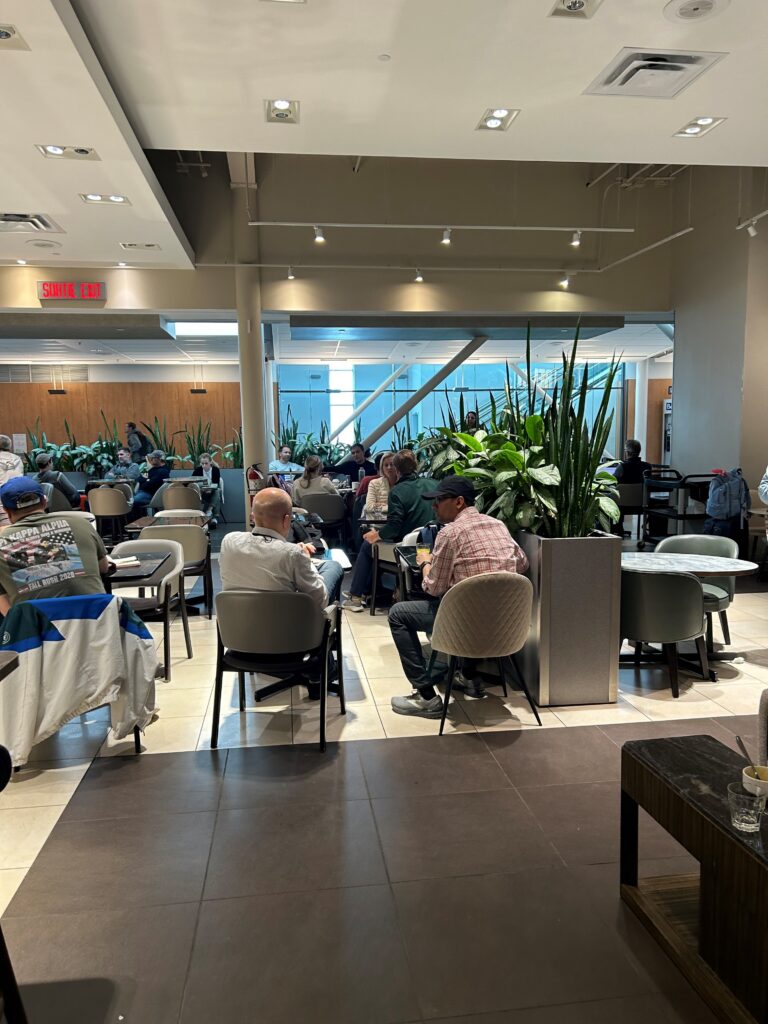
The space is partitioned from the general concourse only by low-lying planters and decorative dividers. This "open-air" approach means the lounge inherits the ambient noise, temperature fluctuations, and visual activity of the busy Gate 77 boarding area. While the entrance is clearly marked, the lack of a physical ceiling or soundproof barrier contributes to what many critics describe as an "odd" atmosphere for a premium space.
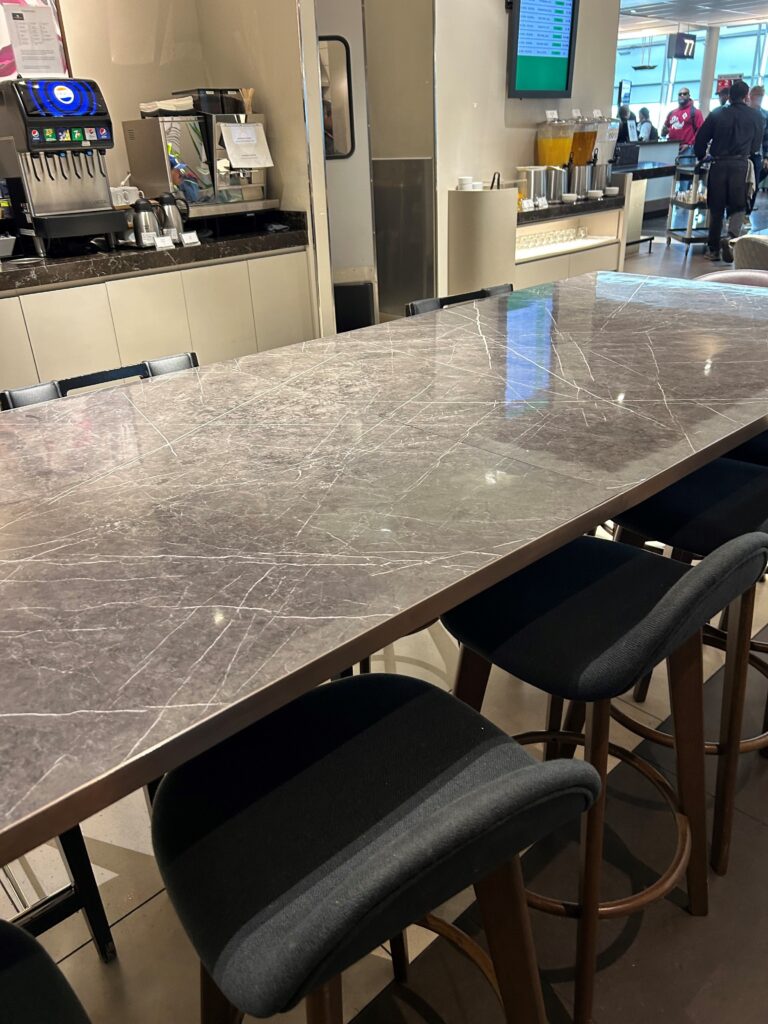
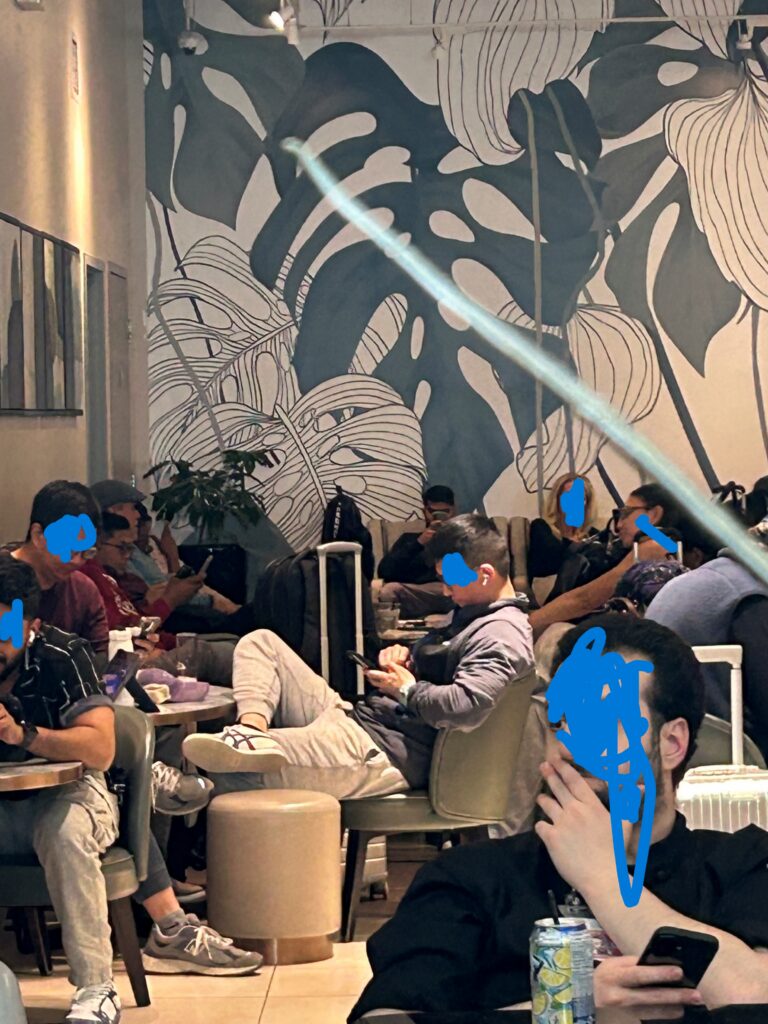
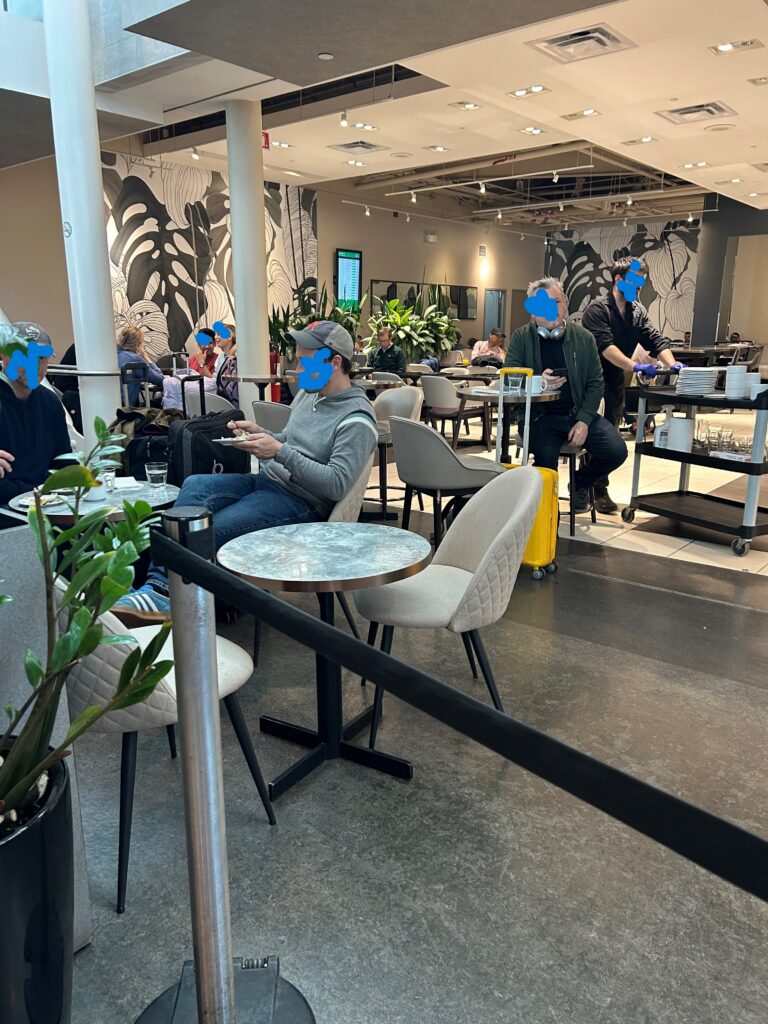
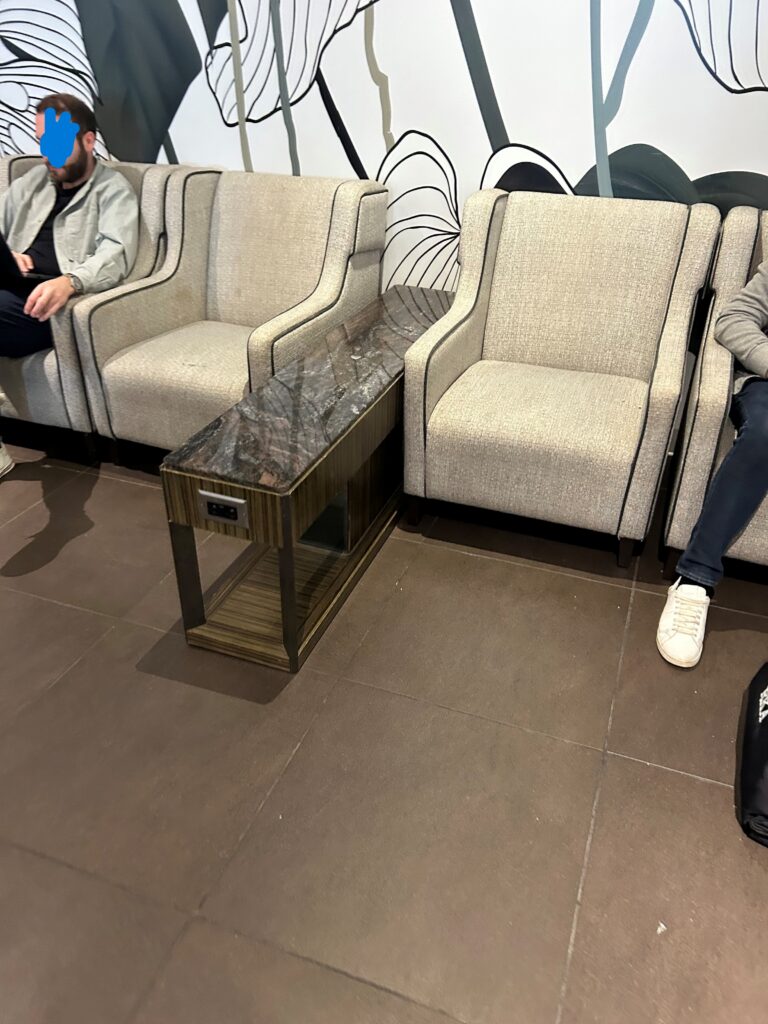
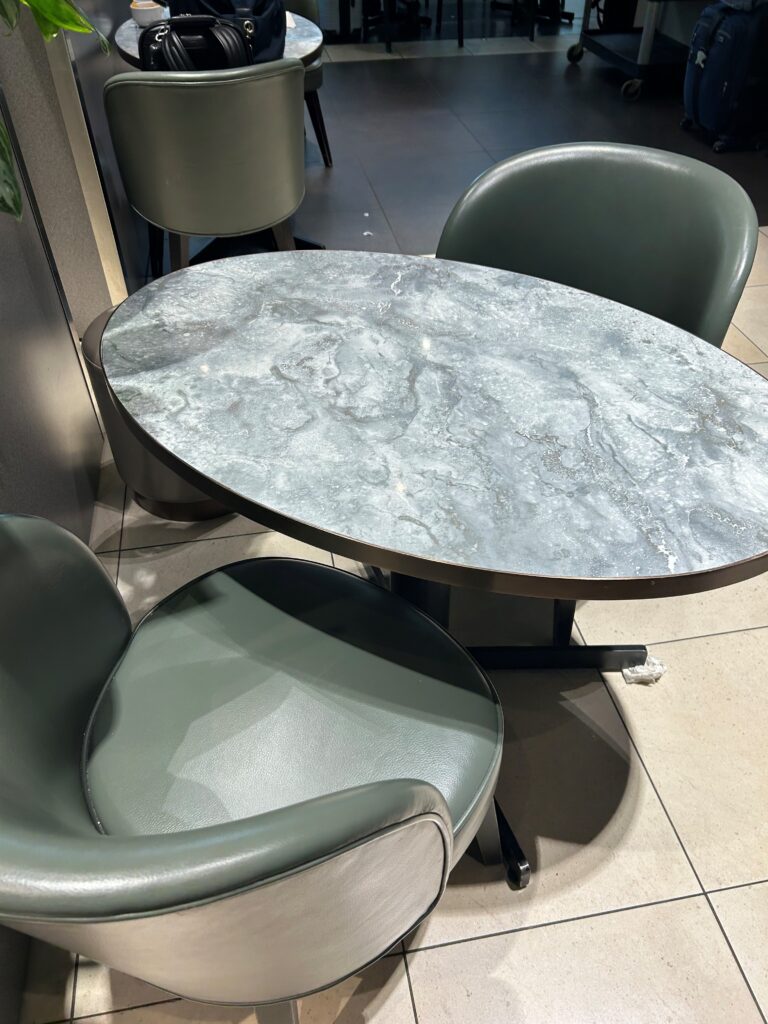
Internally, the lounge is compact, designed to accommodate a maximum of 80 guests. The floor plan is dominated by functional table seating, reminiscent of a standard airport bistro. A small section of comfortable, upholstered chairs lines the perimeter walls, providing the only concession to traditional lounge relaxation. The aesthetic is anchored by a large blue-green mural on the rear wall, intended to harmonize with the greenery of the concourse planters, though the effect is often overshadowed by the high density of passengers during peak departure windows.
Culinary Analysis: A Study in Contrast
Despite its physical limitations, the lounge’s catering operations provide a surprising level of quality in specific categories. The hot buffet, though small in footprint, offers a rotating selection of Mediterranean and international fare that often exceeds the standards of larger domestic lounges.
In May 2026, the featured menu included:
- Beef Souvlaki: Skewered seasoned beef, noted for its tenderness and authentic flavor profile.
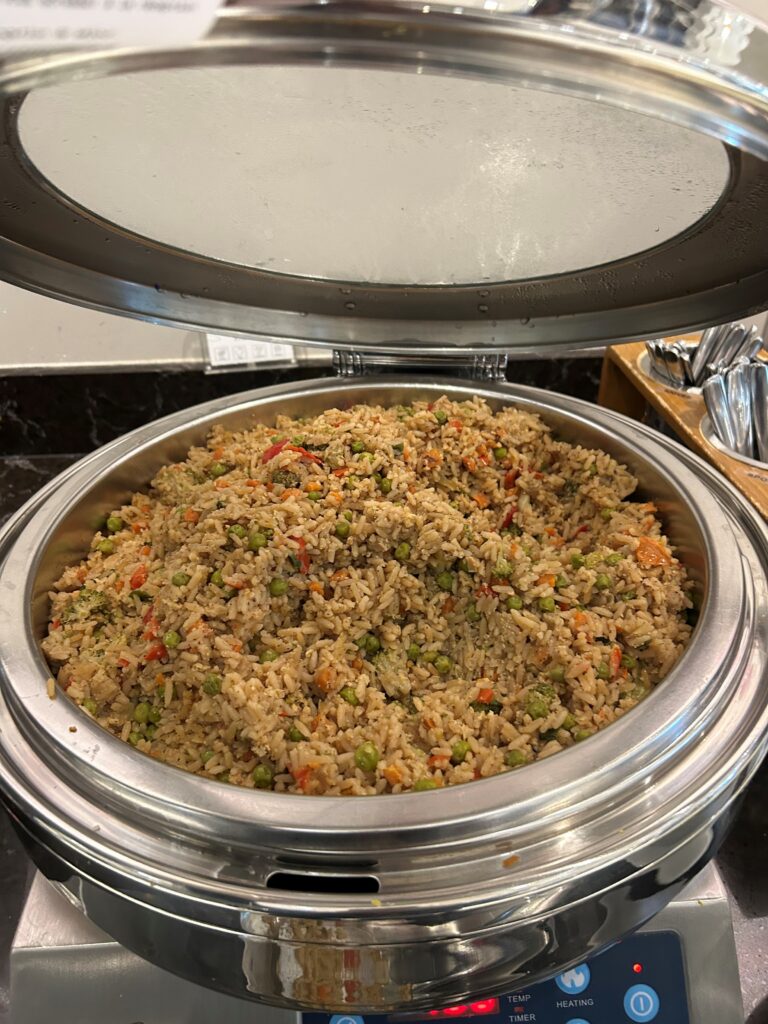
- Fried Rice: A well-prepared staple providing a reliable carbohydrate option for long-haul transcontinental flyers.
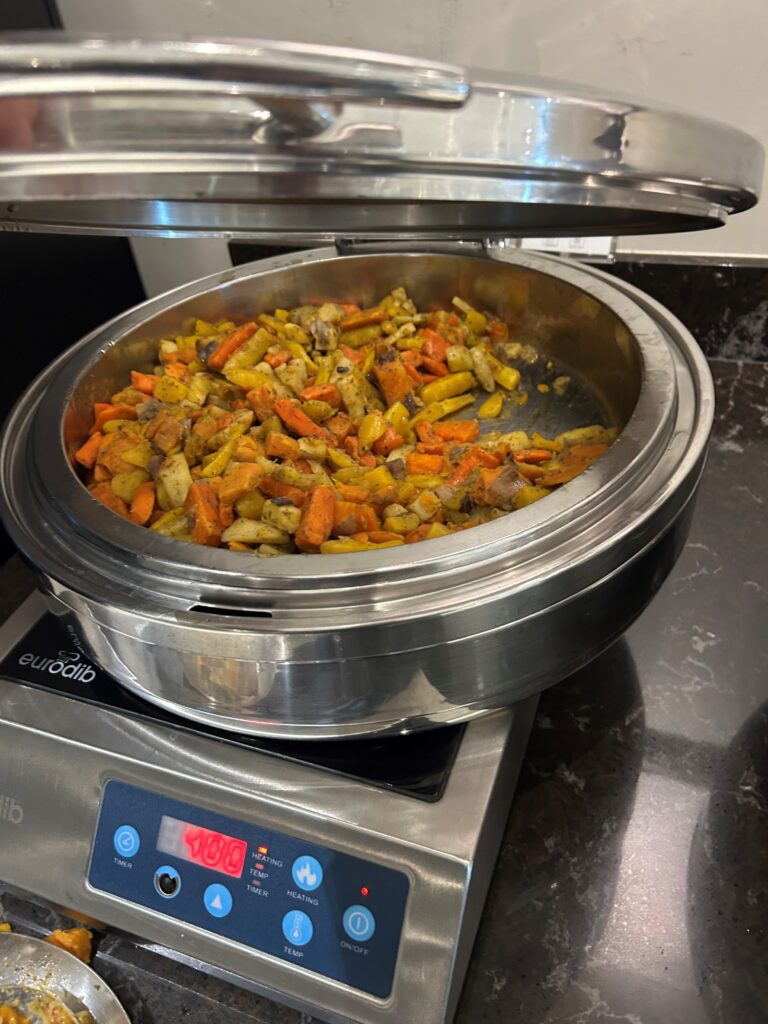
- Roasted Root Vegetables: A seasonal selection providing a healthy alternative to standard airport fare.
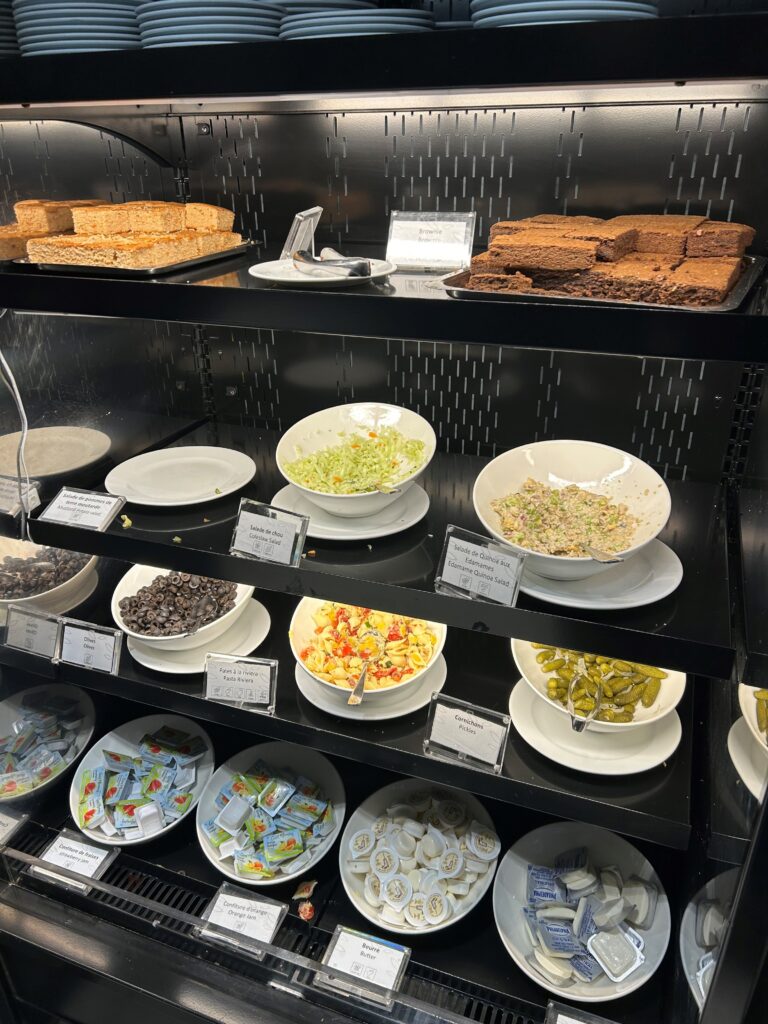
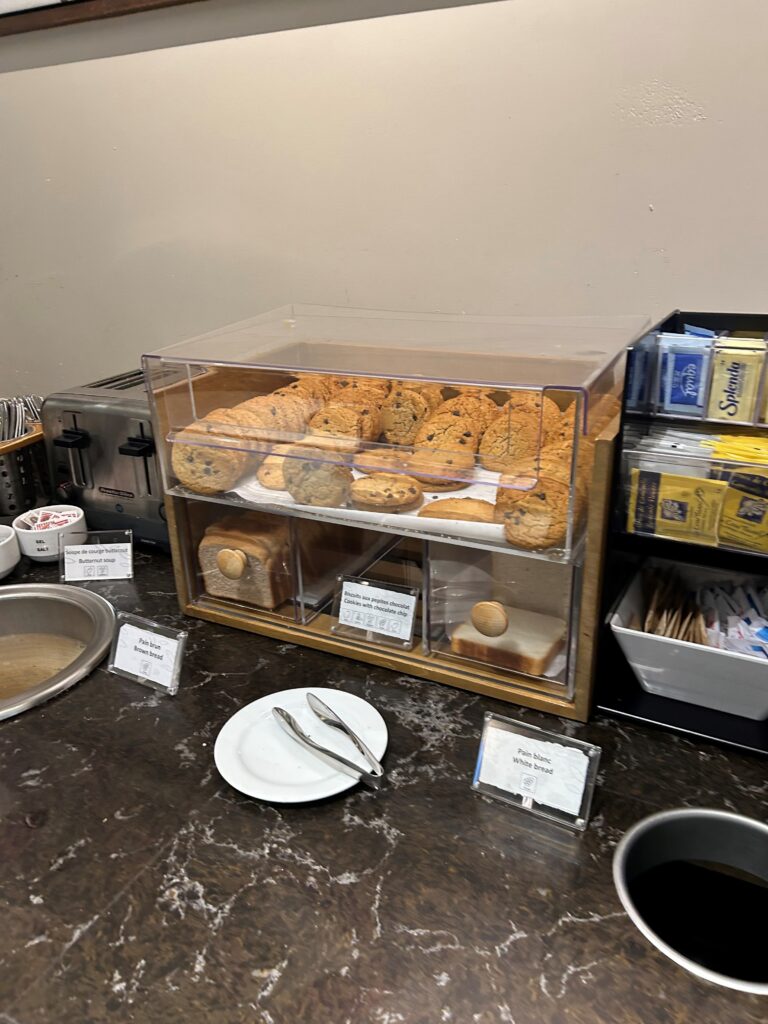
However, the culinary experience is inconsistent. The cold food section—traditionally a simpler logistical lift for lounge operators—is notably less substantial than the hot offerings. Guests frequently find a limited array of salad fixings and basic dessert items, such as cookies and small pastries.
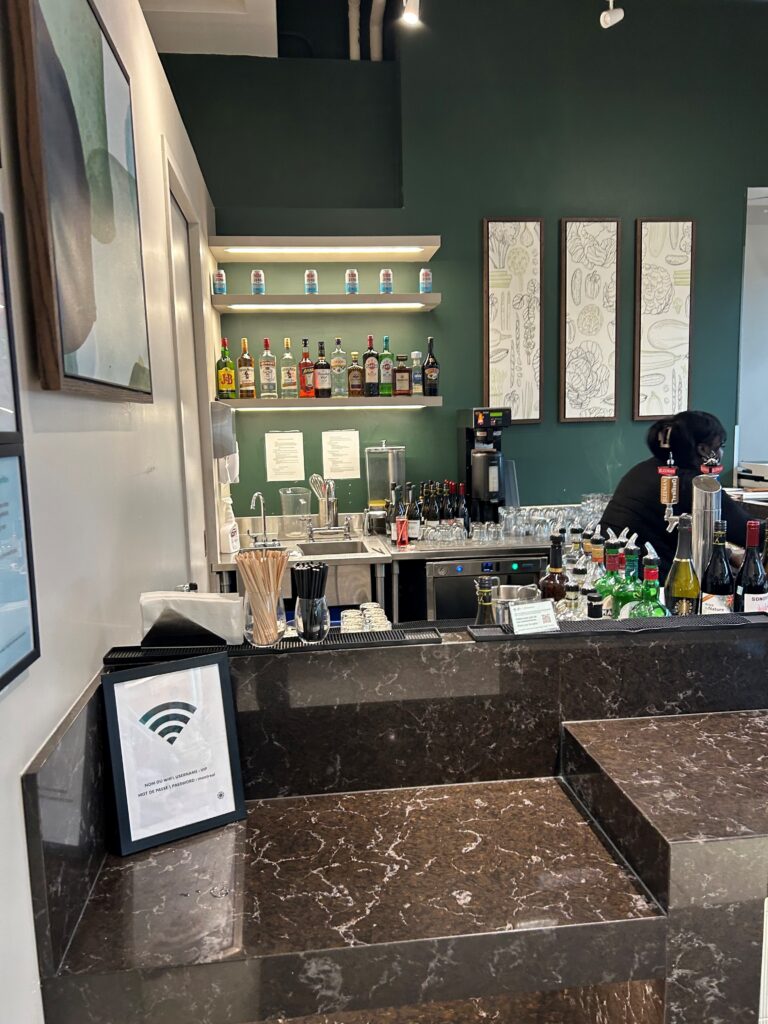
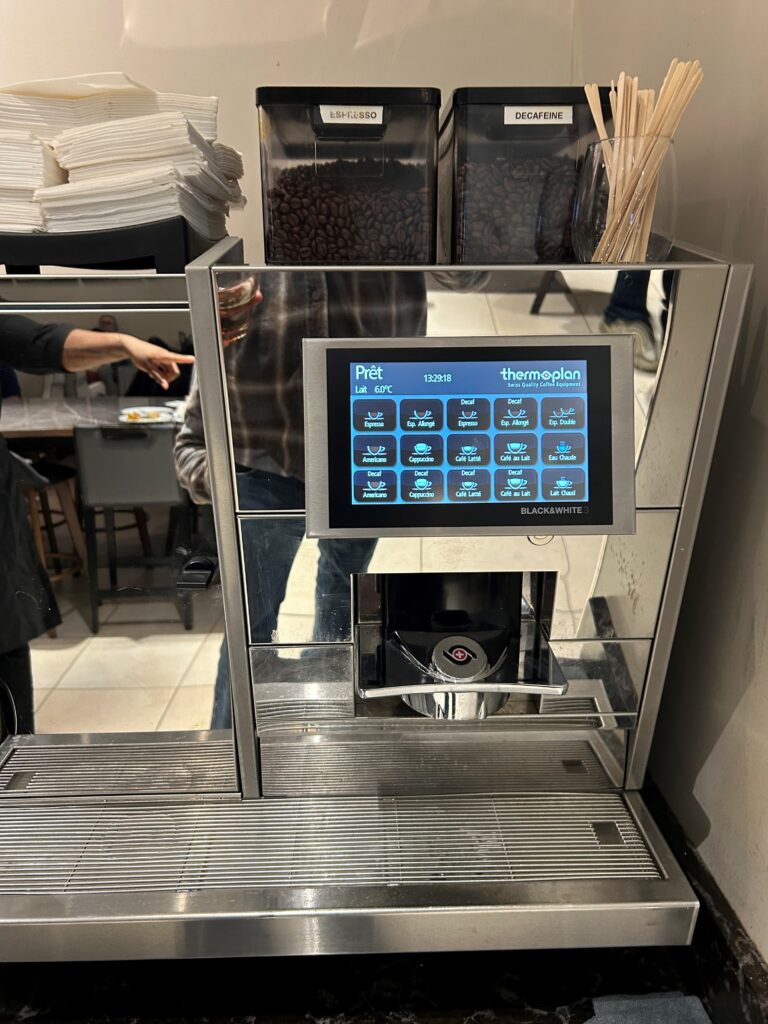
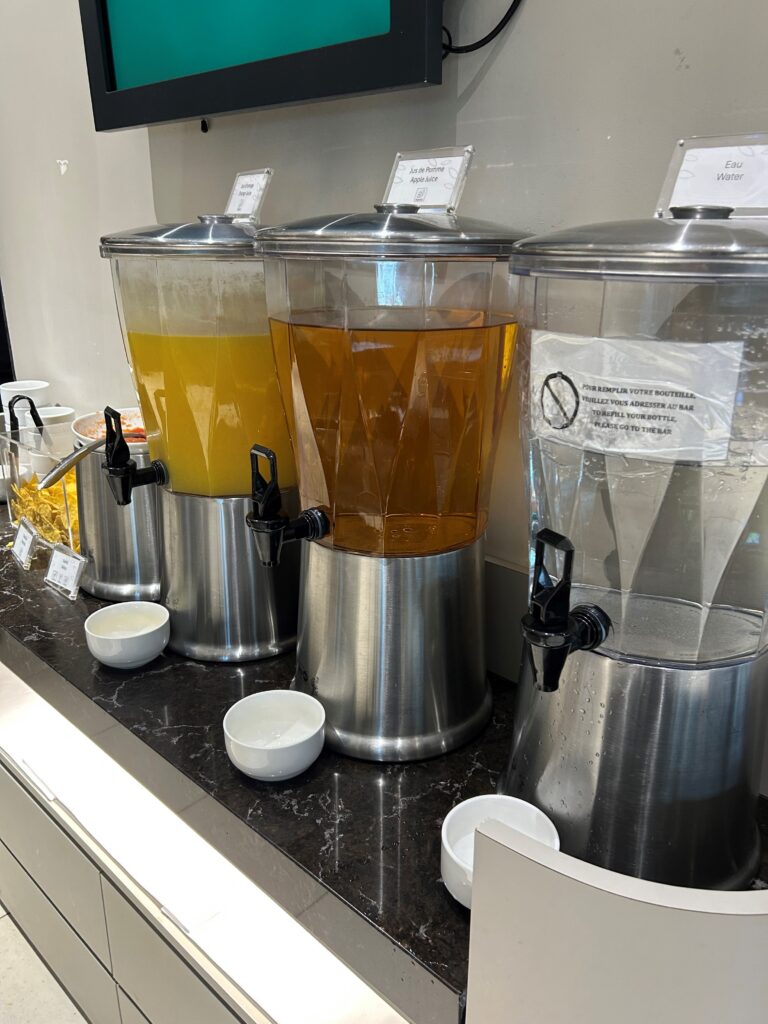
The beverage program is centered around a "tiny" but fully staffed bar. While the footprint is minimal, reports indicate that the staff maintains a high level of service, offering a standard selection of spirits, wines, and beers. Beyond the bar, a self-service area features a high-end espresso machine capable of producing various coffee-based beverages, alongside a standard selection of soft drinks and juices.
Infrastructure and Technical Limitations
The most significant criticisms of the Desjardins Odyssey Lounge involve its technical infrastructure and the absence of basic amenities. In an era where "power anxiety" is a primary driver for lounge attendance, the facility near Gate 77 remains underserved.
- Power Accessibility: Outlets are primarily located along the perimeter walls near the comfortable seating. Guests seated at the central tables—which comprise the majority of the lounge’s capacity—often find themselves without access to charging ports.
- Connectivity Issues: While the lounge advertises a password-protected Wi-Fi network, travelers have reported persistent difficulties in locating the SSID or maintaining a stable connection. Many guests ultimately revert to the general Montreal-Trudeau airport Wi-Fi, which, while functional, lacks the perceived security and speed of a dedicated lounge network.
- Sanitary Facilities: Perhaps the most unusual aspect of the lounge is the total absence of internal washrooms. Guests wishing to use the facilities must exit the lounge and utilize the public restrooms located in the general concourse. This requirement not only diminishes the "exclusive" feel of the space but also presents logistical challenges for solo travelers who must secure their luggage before leaving.
Access Protocols and Market Position
The access rules for the Odyssey Lounge are a frequent point of contention and confusion. Unlike airline-operated lounges that rely on ticket class or alliance status, the Odyssey Lounge is primarily accessible through specific financial partnerships and third-party programs.
As of 2026, the primary modes of entry include:
- Desjardins Cardholders: Specific tiers of Desjardins credit cards offer complimentary or discounted access.
- American Express Platinum: Cardholders often have access through the Global Lounge Collection, though specific terms vary by the country of issuance.
- Priority Pass and LoungeKey: These networks frequently include the Odyssey Lounge, but entry is often subject to "capacity controls," leading to many travelers being turned away at the door during the busy morning rush to US hubs like New York, Chicago, and Atlanta.
The frequent denial of entry has led to a reputation for "confusing access rules," necessitating that travelers consult the lounge’s official website or their banking app immediately prior to arrival.
Broader Context: The 2026 North American Travel Climate
The status of the Odyssey Lounge must be viewed through the lens of a volatile 2026 travel market. While Montreal-Trudeau has seen a resurgence in passenger numbers, the industry is grappling with operational inconsistencies. Major carriers like Delta Air Lines have recently faced scrutiny for "crew restrictions" and operational weaknesses that have led to hundreds of flight cancellations, even as rivals maintained schedules. Furthermore, the market has seen the "orderly wind-down" of Spirit Airlines, which has forced other carriers to scramble to fill the capacity void in the low-cost sector.
In this environment, airport lounges have transitioned from being "luxuries" to "essential recovery zones" for passengers facing delays or cancellations. The fact that the only independent option in YUL’s transborder wing is an "average" rated facility with limited amenities highlights a significant gap in the passenger experience infrastructure.

Analysis of Implications for YUL
The persistent limitations of the Odyssey Lounge reflect broader challenges at Montreal-Trudeau. As a hub, YUL is competing with Toronto Pearson (YYZ) and various US Northeastern airports for transit traffic. The quality of transborder facilities is a key metric for business travelers who frequently move between Quebec and the United States.

Industry analysts suggest that the "restaurant-style" design and lack of internal washrooms are likely the result of the lounge being a retrofitted space within an older section of the terminal. To remain competitive, especially as international carriers like Singapore Airlines begin offering high-speed Starlink Wi-Fi and premium ground experiences, third-party operators at YUL may need to consider significant renovations or expansion.

Conclusion: The "Average" Standard
The Desjardins Odyssey Lounge remains a study in functional compromise. It provides a vital service as the only alternative to the Air Canada monopoly, offering high-quality hot food and a professional staff that works diligently to maintain cleanliness in a high-traffic environment. However, its lack of integrated facilities and sparse power options prevent it from reaching the "premium" status expected of modern international lounges.

For the traveler departing Montreal for the United States, the lounge is a viable refuge for a quick meal and a drink, provided they have the correct credentials for entry. However, those seeking a quiet, tech-forward workspace with private amenities may find the experience lacking. As the aviation industry continues to evolve toward more seamless, tech-integrated experiences, the Odyssey Lounge stands as a reminder of the physical and logistical hurdles that still define many of North America’s busiest transborder terminals.



 Anjar Salim
 Chandra Hamzah
 Tatiana Tantri Indah Sari
 Lukman Taruna Persada Ramadan
