
 Budi Mulyono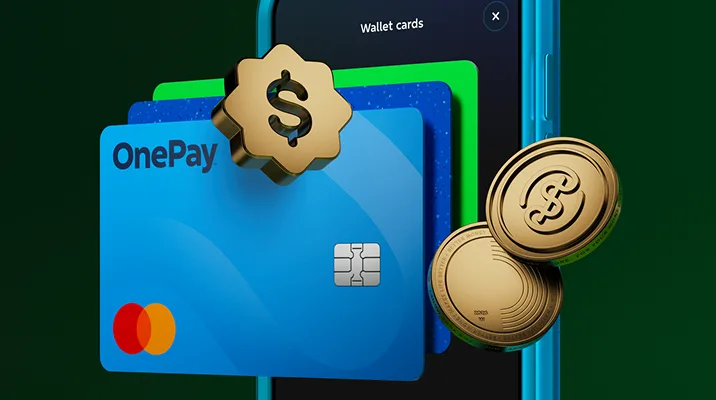
OnePay, a prominent player in the financial technology sector, has officially launched a high-value referral and signup promotion designed to accelerate user acquisition through mid-2026. This latest marketing initiative offers a tiered incentive structure where new customers can receive a $50 cash bonus, while existing users who facilitate these signups are eligible for a $200 referral reward. The program, which is scheduled to run through July 15, 2026, represents one of the most aggressive customer acquisition strategies currently active in the digital banking landscape, signaling a heightened level of competition among neobanks and fintech platforms.
Strategic Overview of the OnePay Incentive Program
The promotion is structured to leverage social proof and network effects, common tactics in the fintech industry used to lower Customer Acquisition Costs (CAC) compared to traditional advertising. By offering a $200 incentive to the referrer, OnePay is positioning its current user base as a decentralized sales force. For the new user, the $50 signup bonus serves as an entry-level incentive to transition their primary banking activities to the OnePay platform.
To qualify for these bonuses, the program dictates a specific set of criteria that must be met within a strict timeframe. New customers are required to open a OnePay deposit account using a unique referral link provided by an existing member. Following the account opening, the user must "unlock" the Banking+ tier of service within 45 days. This tier typically requires a qualifying direct deposit, often set at a minimum of $500, though the platform has historically been known to accept certain Automated Clearing House (ACH) transfers from other financial institutions as qualifying events.
Chronology and Important Deadlines
The timeline for this promotion is critical for participants seeking to maximize their financial returns. The current phase of the referral program is active effective immediately, with a hard deadline for new account openings set for July 15, 2026. This extended window suggests that OnePay is looking for sustained growth over several fiscal quarters rather than a short-term spike in user numbers.
The 45-day window for unlocking Banking+ status begins the moment the account is successfully opened. Failure to meet the deposit requirements within this period results in the forfeiture of both the $50 signup bonus for the new user and the $200 referral bonus for the existing customer. Financial analysts note that this "window of activity" is a standard industry practice designed to ensure that new accounts are not merely "ghost accounts" but are actively utilized for daily financial transactions.
Detailed Requirements for Banking+ Status
The "Banking+" designation is the cornerstone of OnePay’s premium digital experience. While the standard OnePay account offers basic spending and saving features, Banking+ provides enhanced benefits that often include higher Annual Percentage Yields (APY) on savings, early access to paychecks, and overdraft protection.
To achieve this status during the promotional period, the following steps are generally required:
- Account Initiation: Completion of the digital application process, including identity verification under "Know Your Customer" (KYC) regulations.
- Referral Validation: Ensuring the signup originates from a valid, active referral link found within the "Discover" tab of the OnePay mobile application.
- Funding the Account: Executing a qualifying direct deposit of at least $500. While payroll deposits from employers are the most reliable method, the fintech community often monitors "data points" to see which third-party transfers (such as those from brokerage accounts or other digital wallets) trigger the bonus.
- Verification Period: Once the deposit is received, OnePay typically undergoes a brief internal audit to confirm the validity of the transaction before distributing the cash rewards.
The Rise of "Multi-Player" Financial Strategies
The structure of the OnePay bonus has garnered significant attention from the "churning" and personal finance communities, who often utilize "two-player mode" strategies to maximize household earnings. In this scenario, one member of a household (Player 1) refers another member (Player 2).
Under the current OnePay terms, this strategy yields a cumulative return of $300 for the household: $200 for Player 1’s referral and $50 each for the initial signups or subsequent requirements met by Player 2. When compared to traditional high-yield savings accounts or standard checking account bonuses from "Big Four" banks, the return on investment for a $500 deposit is exceptionally high, often exceeding a 50% "return" on the required deposit amount in a matter of weeks.
Competitive Context in the Fintech Market
OnePay’s decision to offer a $200 referral bonus places it at the top of the market for fintech incentives. For comparison, many competitors in the space, such as Chime, SoFi, or Upgrade, typically offer referral bonuses ranging from $50 to $100. By doubling or quadrupling these standard rates, OnePay is making a clear bid for market share in an increasingly crowded field.
This aggressive positioning comes at a time when traditional banks are also increasing their signup incentives to combat the outflow of deposits to high-yield digital alternatives. The fintech sector has faced increased scrutiny over the last two years regarding profitability; however, programs like this suggest that well-funded platforms are still prioritizing user growth and deposit accumulation as primary metrics of success.
Security, Regulation, and Consumer Protections
As with all fintech platforms, OnePay operates through a partnership with a traditional banking institution to provide FDIC insurance. Deposits made into OnePay accounts are typically insured up to $250,000 through their partner bank, ensuring that the capital used to trigger these bonuses is protected under federal law.
From a regulatory standpoint, the $200 and $50 bonuses are generally considered miscellaneous income by the Internal Revenue Service (IRS). Participants in these programs should expect to receive a Form 1099-INT or 1099-MISC if their total earnings from the institution exceed $600 in a single tax year. Journalistic analysis of such programs often highlights that while the "free money" is attractive, users must remain diligent regarding the tax implications of aggressive referral activity.
Broader Implications for the Banking Industry
The OnePay promotion is symptomatic of a larger trend where banking is becoming increasingly "gamified." By integrating referral links into the "Discover" tab and using push notifications to remind users of the July 2026 deadline, OnePay is employing software-as-a-service (SaaS) growth tactics in the financial sector.
This shift has profound implications for consumer loyalty. While traditional banking relationships often lasted decades, the modern consumer is increasingly willing to move funds between platforms to capture promotional value. This "transient deposit" behavior forces banks to constantly innovate their product offerings beyond just the initial bonus to ensure long-term retention. For OnePay, the challenge will be retaining the users acquired during this $200 referral push once the initial incentive has been paid out.
Conclusion and Outlook
The New OnePay Referral & Signup Bonus is a significant development for consumers looking to optimize their liquid assets. With a generous $200 referral fee and a $50 signup incentive, the program sets a high bar for the industry. However, the requirement to unlock Banking+ via a $500 deposit serves as a filter to ensure that the platform attracts users with consistent cash flow.
As the July 15, 2026, deadline approaches, market observers will be watching to see if OnePay maintains these high incentive levels or if they will scale back as they reach their growth targets. For now, the promotion stands as a lucrative opportunity for those capable of meeting the straightforward direct deposit requirements and navigating the digital-first environment of modern fintech. For consumers, the message is clear: the competition for their deposits has never been more valuable, and the tools to capitalize on that competition are more accessible than ever through mobile-first banking solutions.




 Anjar Salim
 Chandra Hamzah
 Tatiana Tantri Indah Sari
 Lukman Taruna Persada Ramadan
