
 Chandra Hamzah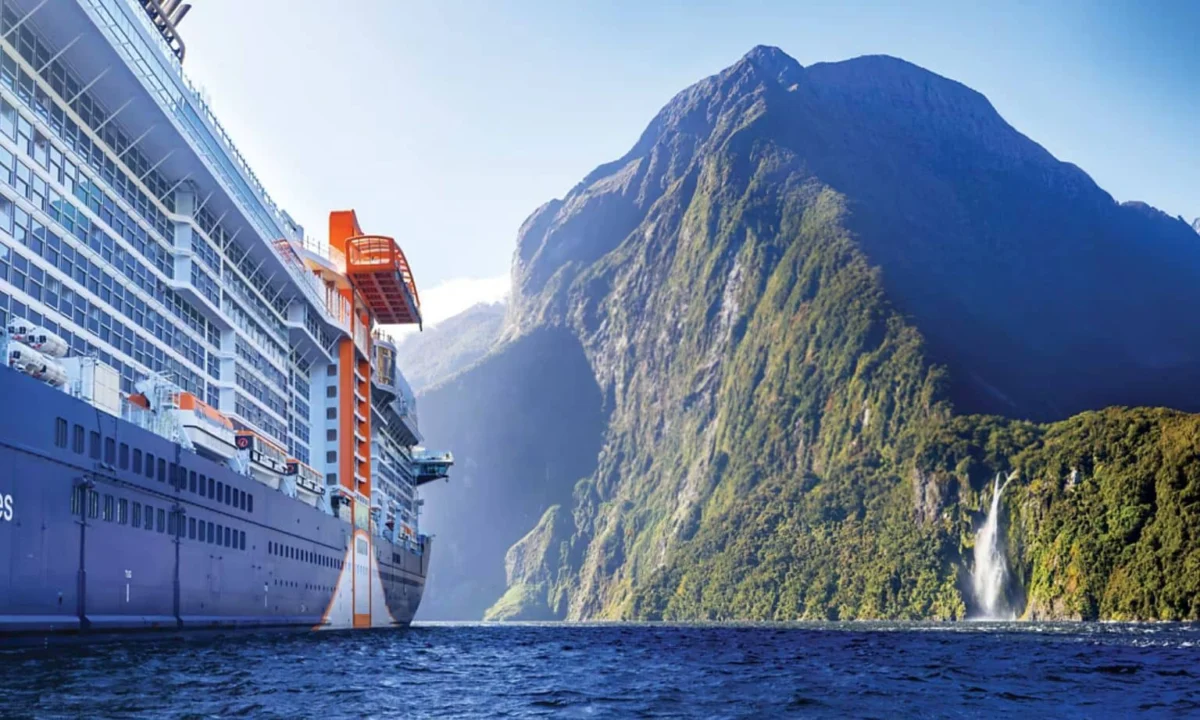
New Zealand is charting an ambitious and collaborative course for the future of its cruise tourism sector, underpinned by a robust strategy developed jointly by industry and government. Presented by the New Zealand Cruise Association (NZCA), this forward-looking plan, already demonstrating tangible successes since its inception last year, is now entering a new phase with specific goals set for 2040. The local industry is poised to achieve significant growth and solidify its standing as a premier cruise destination over the next 14 years.
The collaborative approach, meticulously crafted through the engagement of politicians and industry representatives, has already yielded a series of "quick wins" for New Zealand’s cruise landscape. Notably, a potential ban on cruising to the pristine Milford Sound was successfully averted, showcasing the efficacy of the unified strategy. Furthermore, Carnival Cruise Line has rerouted a series of sailings to be homeported out of Auckland, a significant commitment that boosts local economies and employment. Concurrently, substantial investments are being made in crucial infrastructure, including the development of a new cruise terminal in Auckland, designed to enhance passenger experience and operational efficiency. Auckland is also actively installing advanced hull cleaning facilities, a proactive measure to ensure visiting ships meet increasingly stringent environmental regulations. These developments underscore New Zealand’s dedication to both economic growth and environmental stewardship within the cruise sector.
Despite these positive developments, the NZCA acknowledges that cruise visitation to New Zealand has experienced a significant downturn, reportedly down by 40%. This stark figure highlights the critical need for continued effort to not only recover but also to surpass pre-pandemic visitation levels. Jacqui Lloyd, Chief Executive of the NZCA, emphasized the urgency of the situation, stating, "New Zealand cannot afford to assume cruise will simply return on its own. Cruise lines are making deployment decisions now in an incredibly competitive global market, and Horizon 2 is about ensuring New Zealand earns its place as a destination of choice again." Lloyd further expressed optimism about the progress made, noting, "We’ve made real progress over the past two years. Government engagement is better than it has ever been, relationships with cruise lines are positive, and the sector is now far more aligned nationally." This sentiment reflects a renewed sense of partnership and a shared vision for the industry’s resurgence.
Horizon 2: A Strategic Blueprint for 2040
The next iteration of New Zealand’s cruise strategy, aptly named Horizon 2, outlines a comprehensive roadmap designed to achieve ambitious targets by 2040. This detailed plan encompasses a multi-faceted approach, focusing on various elements of industry cooperation, including strategic networking events to foster stronger international partnerships, and advocating for essential bureaucratic reforms to streamline operations. A key component involves deeper engagement with political parties to ensure sustained support and policy alignment. Furthermore, the strategy addresses critical infrastructure gaps, recognizing that modern cruise facilities are paramount to attracting larger and more frequent sailings.
A significant focus of Horizon 2 is the effort to reduce regulatory costs and complexity for cruise ships operating within New Zealand waters. This initiative aims to create a more attractive and cost-effective operating environment, thereby encouraging cruise lines to prioritize New Zealand in their global deployment plans. By simplifying regulations and lowering operational burdens, the country seeks to enhance its competitive edge in a highly dynamic international market. This proactive stance is crucial for securing long-term cruise line commitment and maximizing the economic benefits derived from cruise tourism.
Australia at a Critical Juncture: A Tale of Divergent Fortunes
In stark contrast to New Zealand’s proactive and collaborative approach, the Australian cruise sector finds itself at a critical juncture, facing significant challenges due to a lack of coordinated industry-government strategy. Reports indicate little to no tangible progress has been made towards a unified, whole-of-government plan for cruising in Australia. This inaction has led to increasing vocalization from Australian cruise lines and institutions, expressing concern that the federal government is not fulfilling its role in supporting the industry’s recovery and growth.
The ramifications of this stagnation are substantial. The Australian cruise industry has reportedly experienced a revenue drop of approximately AUD $1 billion and a 35% decrease in cruise capacity. This decline has a ripple effect across various sectors of the Australian economy that rely on cruise tourism, including hospitality, transportation, and regional businesses.
A recent press release from Carnival Cruise Line, detailing the redeployment of the Carnival Adventure from Australia to the USA for six months of the year, explicitly cited regulatory difficulties as a contributing factor. This move underscores the increasing challenges faced by cruise operators in the Australian market. Joel Katz, Executive Director of CLIA Australasia, has been particularly outspoken, welcoming New Zealand’s initiative and drawing a sharp contrast with Australia’s situation.
Katz highlighted the significant economic contribution of cruise tourism to New Zealand, stating, "Cruise tourism is worth NZ$1.23 billion a year to the New Zealand economy and supports more than 8,000 Kiwi jobs, so it warrants decisive action to create an environment in which cruising can thrive." He added, "Destinations that take a strategic, long-term approach to fostering cruise tourism have the advantage when it comes to increasing their competitiveness and maximising the economic benefits that cruising brings to local communities."
In a LinkedIn post, Katz articulated the precarious position of Australia’s cruise industry: "Cruise tourism is at a crossroads in Australia. Not because Australians have lost interest in cruising. Far from it. Demand is strong, guest numbers are at record levels, and globally the cruise sector continues to grow. The issue is not demand… the issue is whether Australia is doing enough to remain competitive for the ships that can deliver that demand here."
Katz further elaborated on the mobility of cruise ships as assets, explaining that deployment decisions are made years in advance and are influenced by a multitude of factors. "Cruise ships are mobile assets," he stated. "They can be deployed almost anywhere in the world, and the decisions about where they go are made years in advance. Those decisions are influenced by destination appeal, guest demand, infrastructure, operating costs, regulation, policy certainty and the ease of doing business."
He posited that Australia, with its "spectacular ports, extraordinary regional experiences, strong consumer demand and a tourism industry that benefits enormously when ships come here," should be well-positioned. However, he pointed directly to the cumulative cost of operating in Australia as a significant impediment to competitiveness. "The cumulative cost of operating in Australia is becoming a real competitiveness issue. Port charges, government fees, regulatory compliance, fuel, logistics, provisioning, marine services, ground handling and turnaround costs all add up. Any one of these costs might be manageable in isolation. The problem is the combined effect."
Katz underscored the far-reaching economic impact of cruise tourism, emphasizing that it supports thousands of Australian jobs across a wide spectrum of industries. "Cruise tourism supports thousands of Australian jobs across ports, transport, hospitality, agriculture, tourism, technical services, security, travel agencies and regional businesses. When ships are lost, the impact does not stop at the gangway. It flows through the entire visitor economy." This comprehensive analysis highlights the urgent need for Australia to re-evaluate its approach to cruise tourism and implement strategies that foster a more welcoming and competitive environment for the global cruise fleet. The divergent paths of New Zealand and Australia serve as a compelling case study in the impact of strategic foresight and collaborative action in the vital sector of cruise tourism.




 Tatiana Tantri Indah Sari
 Budi Mulyono
 Anjar Salim
