
 Budi Mulyono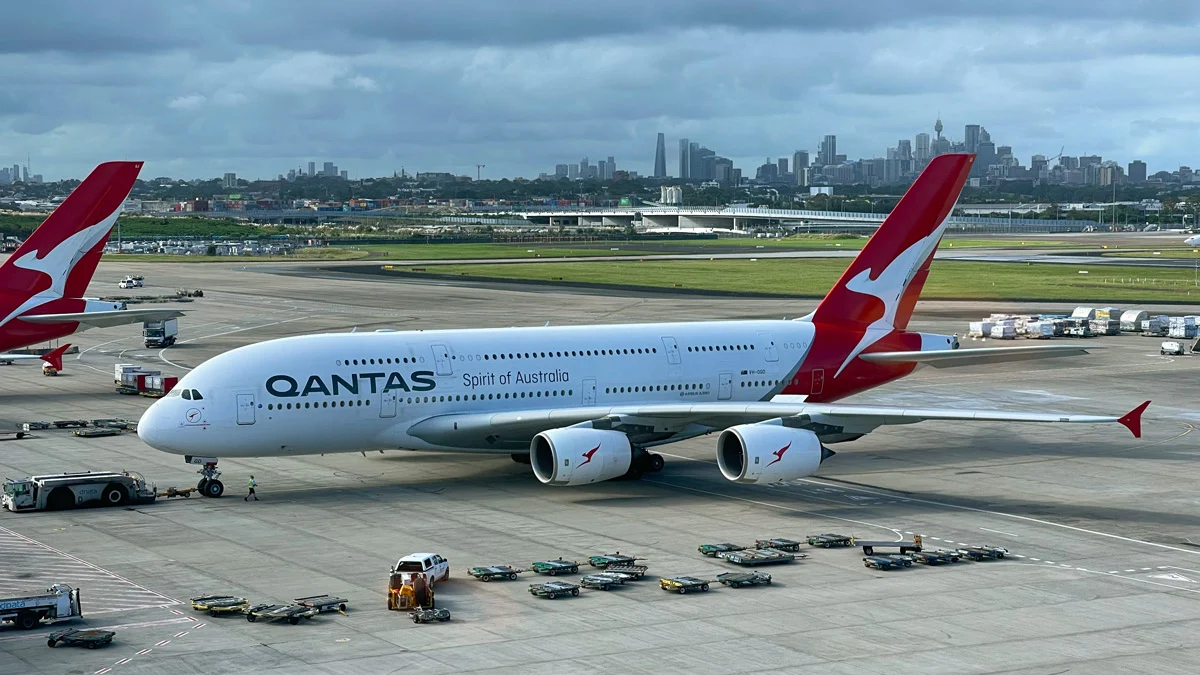
Qantas Airways has officially revised the timeline for its international Wi-Fi installation program, confirming that passengers aboard its flagship Airbus A380 fleet will have to wait until early 2027 for full connectivity. While the airline has successfully integrated high-speed internet across its Boeing 787 Dreamliner fleet and a significant portion of its Airbus A330 aircraft, the ten remaining A380 superjumbos—the crown jewels of the Qantas long-haul network—remain the final hurdle in the carrier’s multi-year connectivity strategy. According to statements from Qantas International Chief Executive Cam Wallace, the carrier now anticipates that the entire international fleet will be Wi-Fi-enabled within a nine-month window that concludes around April 2027. This update represents a significant departure from previous internal targets, which had aimed for a completed rollout by the end of 2025.
The delay highlights the logistical and technical complexities inherent in retrofitting the world’s largest passenger aircraft. Unlike newer generations of aircraft like the Boeing 787, which were designed with modern digital infrastructure in mind, the Airbus A380 requires extensive physical modifications to support high-speed satellite communication. The installation process involves the mounting of a large external antenna and a protective aerodynamic radome—often referred to as the "Wi-Fi hump"—atop the fuselage. This hardware must then be integrated with miles of internal cabling and a suite of servers and routers distributed throughout the double-decker cabin to ensure consistent signal strength for up to 485 passengers.
A History of Delays and Shifting Maintenance Schedules
The journey toward providing seamless gate-to-gate internet on Qantas international flights has been fraught with scheduling shifts. Originally, the airline intended to synchronize the Wi-Fi hardware installation with scheduled heavy maintenance checks for the A380 fleet, which typically take place at specialized facilities in the Middle East. However, shifting operational priorities and global supply chain constraints forced a decoupling of these events. By moving the Wi-Fi installation further down the priority list, Qantas opted to keep its superjumbos in the air to meet the surging demand for post-pandemic international travel, albeit at the cost of modern connectivity.
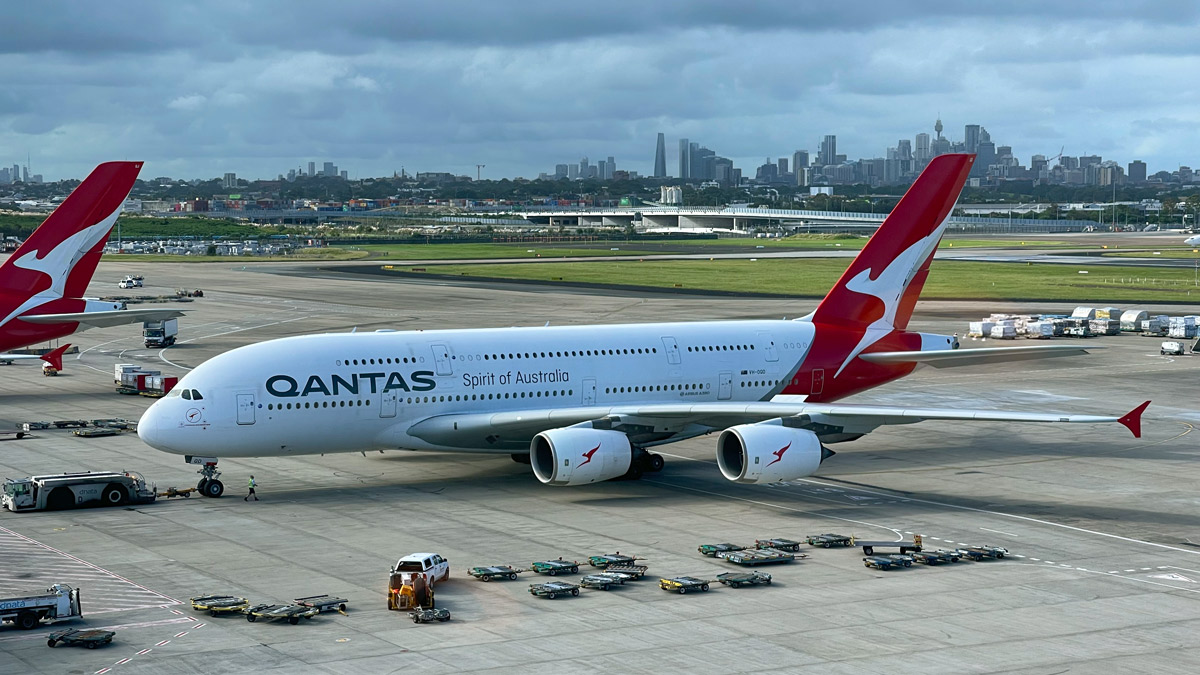
This nearly two-year delay from the original 2025 completion date means that for the next 24 to 30 months, passengers on some of the world’s longest routes will continue to experience a "digital disconnect." The A380s currently serve high-capacity, prestigious routes including Sydney to London (via Singapore), Melbourne to Los Angeles, and Sydney to Johannesburg. On the 22-hour journey from Australia to the United Kingdom, the absence of Wi-Fi remains a notable omission compared to competitors who have prioritized fleet-wide connectivity.
Technical Specifications: Viasat vs. Starlink
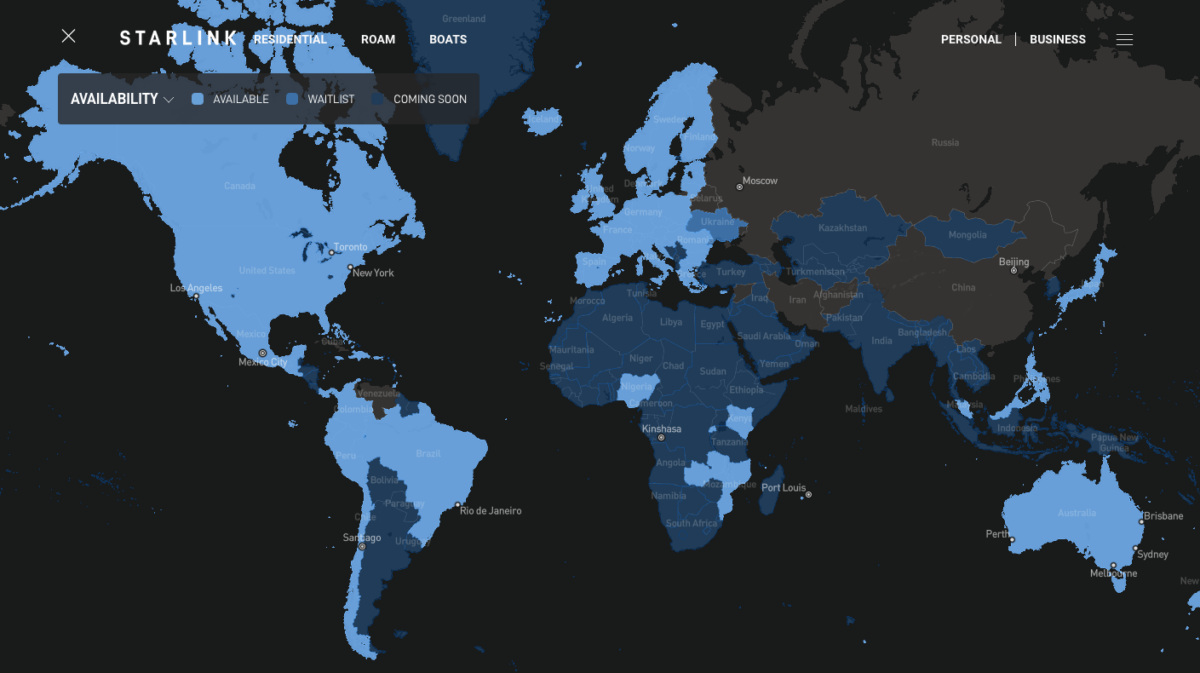
A central point of discussion among aviation analysts and frequent flyers is Qantas’ decision to stick with Viasat’s satellite technology rather than pivoting to the emerging Starlink service provided by SpaceX. While Starlink utilizes a Low Earth Orbit (LEO) satellite constellation to provide low-latency, high-speed internet that mimics ground-based fiber optics, Qantas has committed to Viasat’s Geostationary (GEO) satellite network.
Viasat’s technology, while reliable and capable of broad coverage, typically suffers from higher latency due to the distance signals must travel to satellites positioned 35,000 kilometers above the Earth. However, Qantas argues that the upcoming ViaSat-3 satellite constellation will bridge the performance gap. The third satellite in this series, launched in April 2026, is designed specifically to cover the Asia-Pacific region. Once it passes its rigorous orbital testing phase and enters service in late 2026, it is expected to provide an additional terabit per second of capacity. This influx of bandwidth is critical for the A380 fleet, where hundreds of passengers may simultaneously attempt to stream high-definition video or participate in video conferences.
Current performance metrics from Qantas’ Wi-Fi-enabled Boeing 787s show download speeds ranging from 10 Mbps to 50 Mbps. These speeds fluctuate based on the aircraft’s position relative to the satellite beam and the total number of active users. Connectivity is generally reported to be superior on North American routes, where Viasat has a more mature satellite infrastructure, whereas routes over the Indian Ocean or remote parts of Asia currently face more frequent "dead zones."
The Competitive Landscape of In-Flight Connectivity
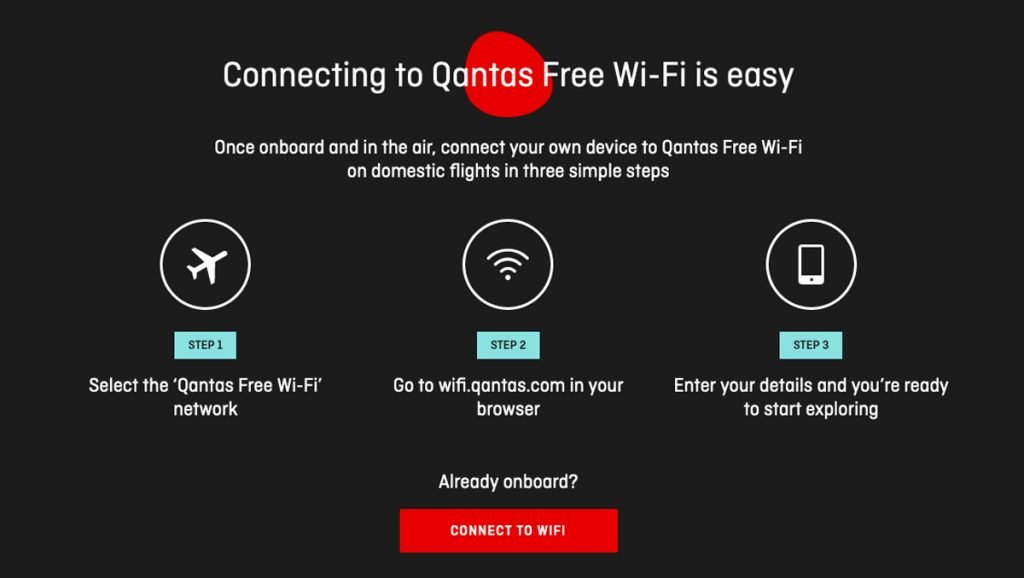
The decision to offer the service free of charge across all cabin classes—from First and Business to Premium Economy and Economy—is a strategic move to maintain passenger loyalty in an increasingly competitive market. Qantas’ domestic Wi-Fi has been free for years, setting a high expectation among Australian travelers. By extending this "fast and free" model to international routes, Qantas distinguishes itself from carriers like Emirates or Singapore Airlines, which have historically tiered their Wi-Fi access based on cabin class or frequent flyer status (though both have recently moved toward more generous free offerings for loyalty members).
However, the "free" aspect may be overshadowed by the superior technology being adopted by regional rivals. Air New Zealand and Qatar Airways have both signed landmark deals with Starlink, promising "plug-and-play" internet speeds that significantly outperform current GEO satellite offerings. For Qantas, the challenge will be ensuring that the Viasat-powered service on the A380 remains competitive through 2027 and beyond, especially as data-heavy applications like 4K streaming and cloud gaming become standard passenger requirements.
Logistical Impact on the A380 Fleet
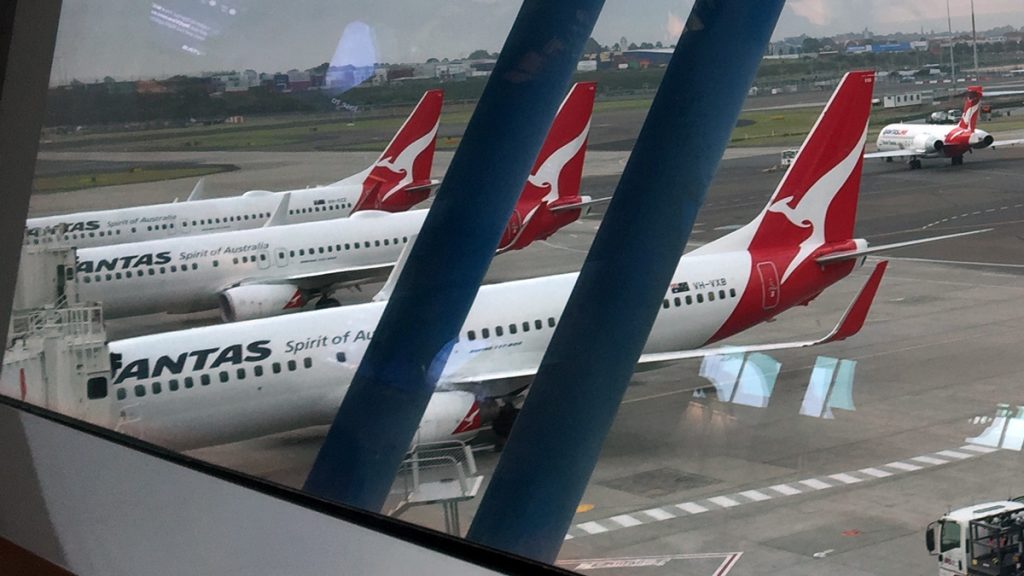
The A380 fleet’s role within Qantas is currently in a state of transition. While the airline has begun taking delivery of new Airbus A220s and is awaiting the A321XLR for domestic and short-haul international routes, the A380 remains essential for "Project Sunrise"—the airline’s ambitious plan for non-stop flights from Sydney and Melbourne to London and New York. While Project Sunrise will eventually utilize specially modified Airbus A350-1000s, the A380s will continue to provide the necessary capacity on high-demand routes for the remainder of the decade.
The installation of Wi-Fi is part of a broader "refresh" for the A380s, which includes the decommissioning of older Skybed seats in favor of the newer Business Suites and a redesigned upper-deck lounge. By the time the Wi-Fi rollout is complete in April 2027, the A380 interior will be more cohesive with the rest of the long-haul fleet, offering a unified digital and physical experience.
Strategic Implications and Passenger Expectations
Industry analysts suggest that the delay in Wi-Fi rollout reflects a broader conservative approach to capital expenditure under the airline’s current leadership. While the "Spirit of Australia" has faced criticism for aging cabin products and service inconsistencies, the commitment to free international Wi-Fi is a significant financial undertaking. The airline must pay for the bandwidth used by every passenger, a cost that adds up quickly on a 14-hour trans-Pacific flight.
For the corporate traveler, the April 2027 deadline is a long-dated promise. The ability to remain productive over the ocean is no longer a luxury but a baseline requirement for many Business Class passengers. Until the A380 fleet is fully equipped, Qantas risks losing high-yield corporate contracts to competitors who can offer guaranteed connectivity today.
Furthermore, the reliance on the ViaSat-3 satellite adds a layer of external risk. Satellite launches and deployments are notoriously complex; any technical failure in the ViaSat-3 constellation could further hamper Qantas’ ability to deliver on its speed promises. Nevertheless, the airline remains optimistic that the combination of new satellite capacity and free access will eventually set a new standard for Australian international travel.
Summary of the Qantas International Wi-Fi Roadmap
As it stands, the timeline for Qantas’ international connectivity is as follows:
- Boeing 787-9 Dreamliner: Installation complete; service active on most routes.
- Airbus A330-200/300: Installation largely complete; remaining aircraft to be finished by early 2025.
- Airbus A380: Installation begins in earnest in 2025/2026, with fleet-wide completion by April 2027.
- Airbus A350-1000 (Project Sunrise): Expected to be delivered with high-speed Wi-Fi pre-installed starting in late 2026.
The road to a fully connected fleet is longer than many passengers had hoped. For the next two years, the "A380 experience" will remain a traditional one—focused on IFE screens and sleep rather than emails and social media. While the promise of free, high-speed internet is a bright spot on the horizon, the delay serves as a reminder of the immense technical and logistical hurdles involved in modernizing the world’s most complex aircraft. For Qantas, the pressure is now on to ensure that once the switch is finally flipped in April 2027, the service is worth the wait.




 Anjar Salim
 Chandra Hamzah
 Tatiana Tantri Indah Sari
 Lukman Taruna Persada Ramadan
