
 Anjar Salim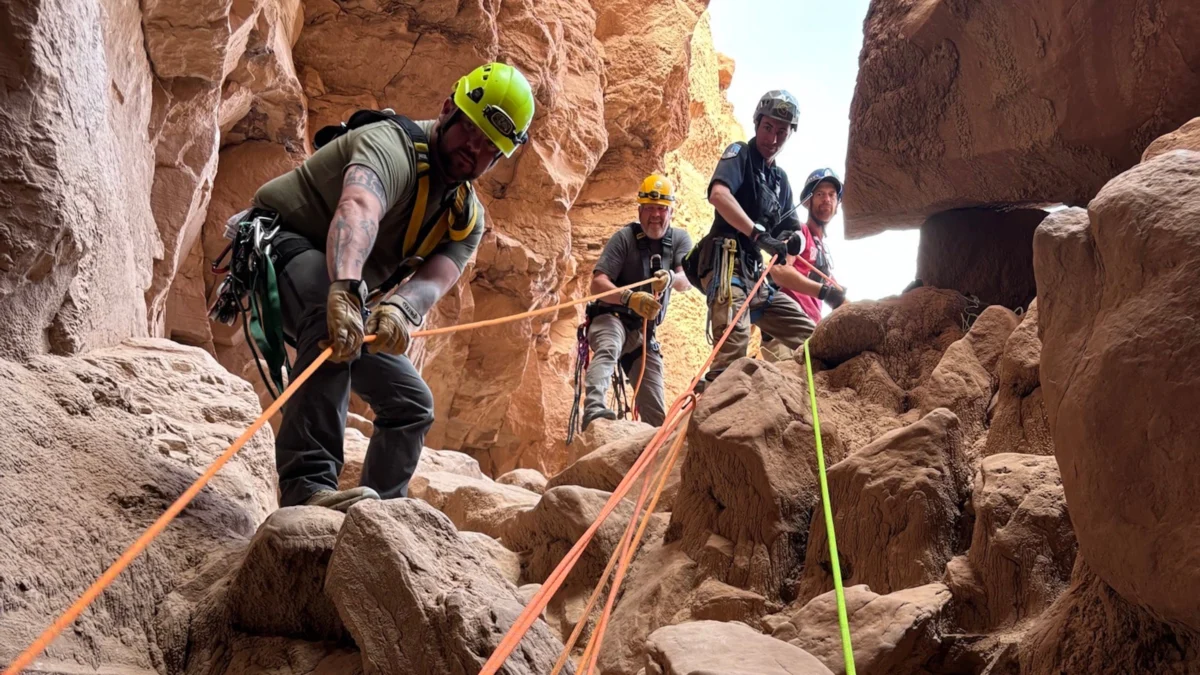
First responders in southeastern Utah are sounding an alarm following a series of high-stakes rescues in and around Goblin Valley State Park, highlighting a dangerous trend of visitor unpreparedness in the state’s rugged backcountry. During the first two weeks of April 2026, emergency personnel were called to the area almost daily, as hikers struggled with the deceptive terrain of the San Rafael Swell. Officials from the Utah Division of State Parks and the Emery County Sheriff’s Office report that these incidents are primarily driven by two recurring mistakes: a failure to monitor regional weather patterns and a significant underestimation of the remote, maze-like nature of slot canyons.
The spike in emergency calls has placed a heavy burden on local search and rescue (SAR) teams. Between April 5 and April 11, park rangers and county deputies responded to distress calls at a rate rarely seen outside of the peak summer season. The incidents ranged from navigational errors leading to multi-hour searches to technical extractions involving rope systems and aerial reconnaissance. While all individuals involved in the recent cluster of emergencies were successfully recovered, officials warn that the margin for error in the desert is razor-thin.
A Chronology of April Emergencies
The recent surge in activity reached a crescendo during the second week of April, though the groundwork for these warnings began in late March. According to Emery County Sheriff Tyson Huntington, a family of three—a husband, wife, and their daughter—became trapped in one of the park’s narrow corridors during a sudden flash flood. Despite the absence of rain in their immediate vicinity, a storm miles away sent a wall of water through the canyon system. The family managed to scramble to a high ledge, where they remained stranded for several hours as torrential rain continued. By the time rescuers reached them, the family was suffering from the early stages of hypothermia, with ambient temperatures dropping into the low 40s Fahrenheit.
On April 8, the focus shifted to Little Wild Horse Canyon, a popular slot canyon located on public lands managed by the Bureau of Land Management (BLM), just west of the state park boundary. A man in his seventies became disoriented after failing to make a critical navigational turn. The Little Wild Horse-Bell Canyon loop requires hikers to transition into Bell Canyon to return to the trailhead; the hiker missed this junction and continued deeper into the wilderness. Fortunately, the individual retained cellular service and sent a text to 911 as soon as he realized he was lost.
The rescue operation for the septuagenarian was a coordinated effort involving specialized equipment. A member of the SAR team utilized a private aircraft to conduct an aerial sweep of the canyon system, eventually spotting the hiker from the air. Ground teams then deployed off-road motorcycles and four-wheelers to navigate the sandy washes and reach the man’s location. Sheriff Huntington noted that while the hiker’s navigational error was the root cause of the emergency, his decision to stop and call for help immediately likely saved his life.
The following day, April 9, emergency teams were called to "The Goblin’s Lair," a cavernous rock formation within the state park. A young female hiker fell inside the cave, sustaining a broken ankle. Because of the technical nature of the terrain, rescuers had to rig a complex rope system to rappel into the lair. The victim was secured in a rescue basket and hoisted to safety. This incident highlighted the physical risks of the park’s "hoodoo" formations and cave-like structures, which can be slippery and unstable.
The Geography of Deception: Why Goblin Valley is Dangerous
Goblin Valley State Park is world-renowned for its "hoodoos"—mushroom-shaped sandstone pillars formed by the uneven erosion of the Entrada Sandstone. While the landscape appears whimsical, it is geologically complex. The "Valley of Goblins" is a vast, open area where the lack of established trails often leads hikers to wander aimlessly. Beyond the main valley lie the slot canyons, which are narrow, deep channels carved by water.
The primary danger in these canyons is the flash flood. Southeastern Utah is characterized by "slickrock" and clay-rich soils that do not absorb water efficiently. When rain falls on the high plateaus of the San Rafael Swell, the runoff collects and accelerates through the narrow slot canyons. Officials emphasize that a storm 15 to 20 miles away can trigger a life-threatening flood in a canyon where the sky is perfectly clear.
"The rain doesn’t have to be where you are," Sheriff Huntington explained. "The water just ends up where you are because of the drainage system. People look at the sky, see no clouds, and think they are safe. That is the most deadly misconception in canyon country."
Furthermore, the popularity of the area on social media and hiking apps has created a false sense of security. Little Wild Horse Canyon is frequently labeled as "family-friendly" or "beginner" on digital platforms. While the canyon is not technically difficult in terms of climbing, it remains a remote wilderness environment subject to extreme weather and navigational challenges. Park Manager Drew Sprafke noted that these labels often lead visitors to enter the canyons without adequate water, maps, or an understanding of the risks.
Analysis of Search and Rescue Logistics
The logistical strain of these rescues is significant. Emery County, like many rural Western counties, relies on a mix of professional deputies and volunteer SAR members. Each mission involves a high cost in terms of fuel, equipment maintenance, and personnel hours. The use of aircraft, as seen in the April 8 rescue, is an expensive but often necessary tool in the vast desert landscape where line-of-sight is blocked by towering canyon walls.
One of the greatest challenges for rescuers is the timing of the distress calls. Sheriff Huntington pointed out that many hikers wait until sunset to admit they are lost or injured. "We don’t get a distress call until 10:00 or 11:00 P.M. sometimes," he said. "The lack of daylight drastically hampers our efforts and increases the risk to our rescue teams."
The April 9 rescue in the Goblin’s Lair was successful in part because the hiker called for help in the mid-afternoon. This allowed the rope team to set up their equipment and complete the extraction before the temperature plummeted and visibility vanished.
Broader Implications for Utah Tourism and Public Safety
The surge in SAR incidents at Goblin Valley reflects a broader trend across Utah’s "Mighty 5" national parks and various state parks. As outdoor recreation continues to grow in popularity, the gap between visitor experience and terrain difficulty is widening. This has led to discussions among land managers regarding more aggressive education campaigns and potential permit systems for high-risk areas.
The economic impact of these rescues is also a point of concern. While Utah does not typically charge hikers for the cost of their rescue—fearing that the threat of a bill might cause people to delay calling for help—the funding for these operations comes from a combination of state grants and local taxes. Continuous spikes in activity can drain these resources quickly.
To mitigate future risks, Park Manager Sprafke and his team have implemented daily safety protocols. Every morning, the visitor center posts the "Flash Flood Potential" rating and detailed weather forecasts on its doors. Rangers are also increasing their presence at trailheads to speak directly with hikers about their gear and route plans.
Safety Guidelines and the Ten Essentials
In response to the April emergencies, the park issued a formal plea via social media, urging visitors to adhere to the "Ten Essentials" of backcountry travel. These include:
- Navigation: A physical map and compass (GPS can fail in deep canyons).
- Sun Protection: Sunscreen, hats, and protective clothing.
- Insulation: Extra layers, as desert temperatures can drop 40 degrees in an hour.
- Illumination: Headlamps or flashlights with extra batteries.
- First Aid Supplies: Including treatments for blisters and minor trauma.
- Fire: Matches or a lighter in a waterproof container.
- Repair Kit and Tools: Including a multi-tool or knife.
- Nutrition: Extra food for at least one additional day.
- Hydration: At least one gallon of water per person, per day.
- Emergency Shelter: A lightweight space blanket or bivy sack.
Officials conclude that while Goblin Valley offers some of the most unique geological sights in the world, it is not a controlled environment. The responsibility for safety rests primarily with the visitor. "Please help us get a break and follow some simple safety guidelines," the park’s official statement read. "If there is even a hint of rain in the regional forecast, the only safe choice is to stay out of the canyons."
As the spring hiking season continues, the Emery County Sheriff’s Office and Utah State Parks will remain on high alert. The lessons from the first two weeks of April serve as a stark reminder that in the high desert, preparation is the only thing standing between a memorable vacation and a life-threatening emergency.




 Chandra Hamzah
 Tatiana Tantri Indah Sari
 Budi Mulyono
 Lukman Taruna Persada Ramadan