
 Tatiana Tantri Indah Sari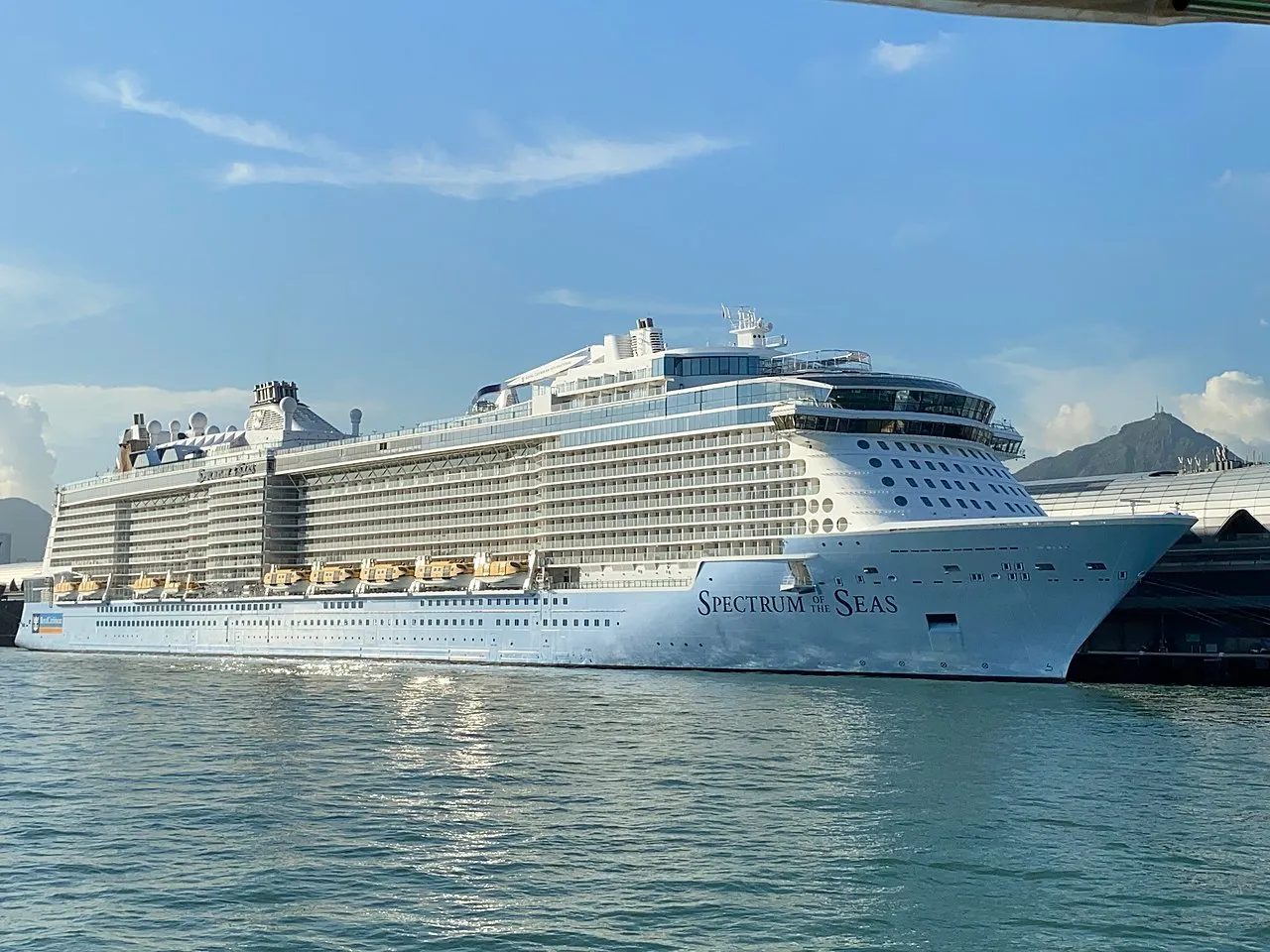
Royal Caribbean Group (RCL) has delivered a robust first-quarter performance, significantly outperforming analyst estimates, buoyed by sustained strong consumer demand for cruise vacations. Despite this impressive operational strength, the company acknowledged that escalating geopolitical tensions in the Middle East, broadly referred to in market discourse as the "Iran war" or regional instability, are quietly but substantially reshaping its profit projections through increased fuel expenses. The cruise giant reported an 11% surge in revenue, reaching $4.5 billion for the quarter, alongside a formidable 29% increase in net income, which climbed to $941 million. However, this success is tempered by a revised full-year outlook anticipating fuel expenses to hit approximately $1.3 billion, an upward adjustment of $0.62 per share from previous guidance, directly attributing the hike to the volatile global energy markets influenced by the Middle East’s geopolitical landscape.
Strong Operational Performance Fuels Q1 Success Amidst Post-Pandemic Boom
The impressive financial results for Royal Caribbean Group in the first quarter of 2024 underscore the continued vigor of the cruise industry’s recovery and the enduring appeal of its offerings. Consumer demand, often a bellwether for discretionary spending, has remained exceptionally strong across all key markets and brands within the Royal Caribbean portfolio, which includes Royal Caribbean International, Celebrity Cruises, and Silversea. The company reported healthy booking trends, not just for immediate departures but also extending into 2025, indicating sustained confidence in cruise travel. Pricing power has also been a significant factor, with yields—a key metric reflecting revenue per passenger day—showing considerable growth, driven by higher ticket prices and increased onboard spending.
This resurgence is partly attributed to the broader "revenge travel" phenomenon that has characterized the post-pandemic era, where consumers, having been restricted from international travel for extended periods, are prioritizing experiential vacations. Royal Caribbean has capitalized on this by strategically deploying its modern fleet, including new, highly anticipated ships like the Icon of the Seas, which debuted earlier this year to significant fanfare and record bookings. These new vessels, equipped with innovative features and enhanced guest experiences, command premium pricing and attract a diverse demographic, further solidifying the company’s market position. Load factors, representing the percentage of available berths occupied, have also returned to or exceeded historical highs, contributing directly to the elevated revenue and profitability seen in the first quarter. The company’s diverse itinerary offerings, from Caribbean escapes to European adventures and Alaskan wilderness tours, have also played a crucial role in capturing a broad segment of the leisure travel market.
The Geopolitical Undercurrent: Rising Fuel Costs and Red Sea Disruptions
While Royal Caribbean’s operational engines are firing on all cylinders, an external force is injecting significant uncertainty into its financial outlook: the escalating geopolitical tensions in the Middle East. The term "Iran war" used in market commentary refers to the broader regional instability, including the ongoing conflict in Gaza and its spillover effects, most notably the Houthi attacks on commercial shipping in the Red Sea. These attacks, which began in late 2023 and intensified into early 2024, have profoundly impacted global maritime trade routes.
The Red Sea, a vital conduit connecting the Mediterranean Sea via the Suez Canal to the Indian Ocean and beyond, is one of the world’s busiest shipping lanes. It provides the shortest sea route between Asia and Europe. However, with the Houthi rebels in Yemen targeting vessels in the Bab el-Mandeb Strait, a narrow chokepoint at the southern end of the Red Sea, many shipping companies, including some cruise lines, have been forced to reroute their vessels. Instead of transiting the Suez Canal, ships are now undertaking the significantly longer journey around the Cape of Good Hope at the southern tip of Africa. This extended route adds thousands of nautical miles and weeks to transit times, directly translating into substantially higher fuel consumption and increased operational costs.
For a global operator like Royal Caribbean, which frequently repositions ships between seasonal markets (e.g., from the Caribbean to Europe for the summer season), these rerouting decisions have immediate and costly implications. Bunker fuel, the heavy oil used by ships, is a major operating expense for cruise lines, typically accounting for a significant percentage of their total costs. The rerouting around Africa not only increases the sheer volume of fuel consumed but also contributes to upward pressure on global oil prices, exacerbated by the general uncertainty and supply chain concerns stemming from the Middle East. The volatility in crude oil markets, influenced by the geopolitical flashpoints, directly translates into higher prices for Very Low Sulphur Fuel Oil (VLSFO) and Marine Gas Oil (MGO)—the primary fuels used by modern cruise ships.
Revised Financial Outlook: Navigating the Cost Challenge
The $0.62 per share increase in expected full-year fuel expenses, pushing the total projection to $1.3 billion, represents a material impact on Royal Caribbean’s bottom line. To put this in perspective, for a company that typically aims for consistent earnings growth, such an increase can absorb a significant portion of the operational gains achieved through strong demand and efficient management. While cruise lines routinely employ fuel hedging strategies—using financial instruments to lock in future fuel prices—these strategies only mitigate a portion of the risk and typically cover a predetermined percentage of anticipated consumption. Unexpected and sharp spikes, or sustained high prices, beyond the hedged volume or duration can still exert considerable pressure.
The immediate implication for Royal Caribbean is a potential tempering of its full-year earnings per share (EPS) guidance. Despite the robust Q1 performance, the increased fuel costs will necessitate careful cost management and potentially strategic adjustments to maintain profitability targets. This could involve exploring further operational efficiencies, such as optimizing cruising speeds (known as "slow steaming") to conserve fuel, or even more localized itinerary adjustments to minimize transit distances. The company’s financial planning will undoubtedly factor in the ongoing volatility of crude oil markets and the unpredictability of geopolitical developments. Analysts will be closely watching how the company balances its pricing strategy—leveraging strong demand to potentially pass on some costs to consumers—with maintaining competitive pricing to sustain booking momentum.
Management’s Perspective and Strategic Responses
While specific granular commentary on the "Iran war" itself is typically avoided in earnings calls to focus on operational impacts, Royal Caribbean Group’s leadership, under CEO Jason Liberty, has consistently emphasized the company’s resilience and adaptability in navigating external challenges. Inferred statements from management would likely highlight the company’s strong operational performance as a testament to its robust business model and the enduring appeal of its brands. They would likely acknowledge the macroeconomic headwinds, including geopolitical instability, as external factors requiring prudent financial management and strategic flexibility.
The CFO, for instance, would likely elaborate on the company’s multi-pronged approach to cost mitigation. This includes continuous efforts to enhance fleet efficiency through technological upgrades, optimized route planning, and ongoing reviews of supply chain logistics. Fuel hedging programs, while not providing complete immunity, remain a critical tool in managing price volatility, offering a degree of predictability in an otherwise unpredictable market. Furthermore, Royal Caribbean, like other major cruise lines, has already made adjustments to certain itineraries that would have typically traversed the Red Sea and Suez Canal. For example, some long repositioning cruises or world cruises have been rerouted around Africa, incurring additional time and fuel costs, but prioritizing guest safety and operational certainty. These decisions, while impacting profitability, are crucial for maintaining brand reputation and guest confidence. The company’s robust balance sheet and access to capital markets also provide a buffer against unexpected cost surges, allowing it to absorb temporary shocks more effectively than smaller operators.
Broader Industry Implications and Investor Sentiment
The challenges faced by Royal Caribbean due to rising fuel costs are not isolated; they represent an industry-wide concern. Competitors such as Carnival Corporation (CCL) and Norwegian Cruise Line Holdings (NCLH) are similarly exposed to the vagaries of global oil prices and the disruptions to shipping lanes. All major cruise lines factor fuel costs prominently into their operational budgets and strategic planning. Therefore, Royal Caribbean’s revised guidance serves as a bellwether for the broader cruise sector, indicating that while demand remains strong, external geopolitical factors can significantly impact profitability across the board.
Investor sentiment typically reflects a balance between operational strength and external risks. While Royal Caribbean’s strong Q1 earnings beat would initially be met with positive market reaction, the warning about increased fuel costs introduces a note of caution. Investors will be scrutinizing future guidance, looking for reassurances on how the company plans to absorb these costs without significantly eroding profit margins. The stock market’s reaction will likely hinge on whether analysts perceive the company’s ability to maintain its pricing power and operational efficiencies as sufficient to offset the geopolitical headwinds. Long-term investors in the cruise sector are increasingly factoring in geopolitical risk as a persistent variable, alongside economic cycles and consumer trends. The industry’s ability to innovate in terms of fuel efficiency and explore alternative energy sources will become even more critical in mitigating future dependencies on volatile fossil fuel markets.
Future Outlook and Market Dynamics
Looking ahead, Royal Caribbean Group faces a dual narrative: continued robust consumer enthusiasm for cruising on one hand, and the unpredictable, costly impact of geopolitical instability on the other. The company’s ability to sustain its strong booking trends and pricing power will be crucial in offsetting the higher operational costs. The demand-supply dynamics appear favorable, with new ships entering service meeting a hungry market, potentially allowing for some cost pass-through to consumers without significantly dampening demand.
However, the trajectory of Middle East tensions and global oil prices remains highly uncertain. A de-escalation of the Red Sea crisis and a return to normal shipping routes would provide significant relief to fuel costs. Conversely, any further escalation could exacerbate the situation. Royal Caribbean, with its strong brand equity, diversified global itineraries, and a management team accustomed to navigating complex operational environments, is arguably well-positioned to weather these challenges. The company’s strategic focus on delivering premium experiences and its continuous investment in fleet modernization will be key to maintaining its competitive edge and long-term profitability amidst an increasingly complex global operating landscape. The cruise industry, as a microcosm of global trade and leisure, will continue to reflect the delicate balance between robust consumer desire and the often-unpredictable forces of geopolitics and economics.


 Chandra Hamzah
 Budi Mulyono
 Anjar Salim
