
 Budi Mulyono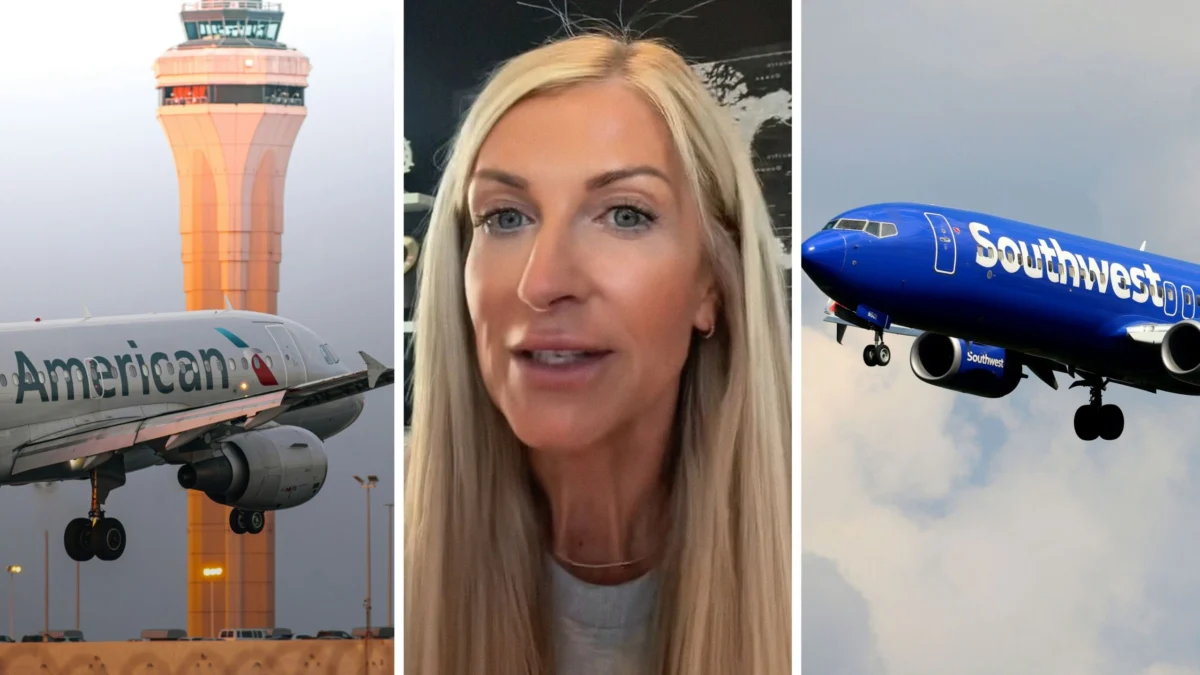
The landscape of American low-cost aviation is undergoing a period of profound transformation, as evidenced by a recent pricing anomaly that has sparked widespread debate among travel industry experts and consumers alike. The controversy began when Heather, a travel professional specializing in senior class adventures and known digitally as @seniortripplanner, documented a significant fare discrepancy for a flight from Indianapolis (IND) to Cancun (CUN). The search revealed a Southwest Airlines ticket priced at $2,042.45 per person for a nonstop flight. Simultaneously, a search for the same date and destination on American Airlines yielded a Business Class seat for $1,876—approximately $160 less than Southwest’s standard offering. This incident has become a focal point for broader discussions regarding Southwest’s evolving business model, the influence of activist investors, and the shifting economics of the airline industry.

The Indianapolis to Cancun Fare Discrepancy
The specific flight in question—a direct route from the American Midwest to a premier Mexican vacation destination—highlights a growing tension between consumer expectations and algorithmic pricing. For decades, Southwest Airlines positioned itself as the "everyman’s" carrier, characterized by transparent pricing, no hidden fees, and a lack of traditional cabin classes. However, the discovery of a $2,000-plus economy fare on a route where a legacy carrier offered a premium business product for less has led many to question the current state of Southwest’s yield management.

Yield management, the process of frequently adjusting prices based on demand, competition, and seat availability, appears to be operating aggressively on Southwest’s international routes. In communication with industry observers, Heather noted that she was researching fares for both her family and multiple clients, suggesting that the high price was not a singular glitch but a reflection of the airline’s current inventory strategy for peak travel periods. The realization that a passenger could receive a wider seat, priority boarding, and enhanced meal service on a legacy competitor for a lower price point challenges the fundamental value proposition that Southwest has maintained since its inception in 1971.

Market Dynamics and Operational Justifications
Industry analysts and corporate travel buyers have offered several explanations for these pricing spikes. One primary factor is the nature of the Indianapolis to Cancun route itself. While Southwest operates this as a nonstop service, it is not a high-frequency corridor for the airline compared to its domestic strongholds. According to a corporate travel buyer familiar with the route’s economics, Southwest may not be seeing the necessary volume to maintain lower price floors on direct international flights from secondary markets.
"Southwest doesn’t make a lot of money on this specific nonstop route," the buyer explained. "The plane will likely not be full, and international operations carry higher overhead. If they are not trying to compete aggressively in this specific market region, they will charge a premium for the convenience of the nonstop flight."

Furthermore, legacy carriers like American Airlines often use a "hub-and-spoke" model that allows them to subsidize certain fares or offer competitive pricing on routes where they are trying to gain market share from low-cost rivals. In this instance, American Airlines’ ability to offer a Business Class seat at a lower price point than Southwest’s economy seat suggests a strategic effort to capture high-value travelers in the Indianapolis market. Additionally, rising fuel costs and inflationary pressures on labor have forced all carriers to reconsider their pricing floors, but Southwest’s lack of a traditional premium cabin means it has fewer levers to pull when attempting to balance its revenue per available seat mile (RASM).

The Influence of Elliott Investment Management
The shift in Southwest’s pricing and policy environment cannot be analyzed without considering the recent intervention of activist shareholders. In 2024, Elliott Investment Management, an activist hedge fund, acquired a $1.9 billion stake in Southwest Airlines. The firm immediately launched a campaign to overhaul the airline’s leadership, specifically targeting CEO Robert Jordan.

Elliott’s critique was centered on what it termed "poor execution and leadership’s stubborn unwillingness to evolve the company’s strategy." The hedge fund argued that Southwest had become stagnant, failing to modernize its technology and operations following a catastrophic system-wide outage in December 2022 that left thousands of passengers stranded and cost the airline over $1 billion in lost revenue and compensation.

Under pressure from Elliott, Southwest began a series of radical departures from its historical "LUV" brand identity. These changes included:

- The abandonment of open seating in favor of assigned seats.
- The introduction of "premium" seating options with extra legroom.
- Increased scrutiny of baggage policies.
- Adjustments to the Rapid Rewards program that some users find less transparent than previous iterations.
By December 2025, Elliott Investment Management began reducing its stake, selling off 4 million shares and bringing its ownership down from 16% to approximately 9%. The firm described these transactions as "portfolio management," but for many long-term Southwest loyalists, the damage to the brand’s unique identity was already perceived as permanent.

A Chronology of Change at Southwest Airlines
To understand the current frustration among travelers, it is necessary to look at the timeline of Southwest’s transition from a disruptor to a carrier struggling to define its place in a consolidated market.

- December 2022: A massive winter storm exposes the fragility of Southwest’s point-to-point scheduling software. The resulting operational collapse leads to federal investigations and a mandate for technological modernization.
- June 2024: Elliott Investment Management goes public with its stake, demanding a change in the Board of Directors and the executive suite.
- Late 2024 – Early 2025: Southwest announces the most significant policy shifts in its history, including the end of the 50-year tradition of open seating.
- March 2025: Travel experts and influencers begin documenting "legacy-level" pricing on Southwest routes, often exceeding the cost of first-class or business-class tickets on competing airlines.
- December 2025: Elliott reduces its ownership stake, signaling a potential shift in the activist campaign but leaving the new corporate strategy in place.
Broader Implications for the Aviation Industry
The case of the $2,000 Indianapolis-Cancun flight is emblematic of a broader trend in the aviation industry: the "premiumization" of air travel. As airlines face higher operating costs, they are increasingly focusing on high-margin customers who are willing to pay for extra comfort and convenience. Southwest’s move toward assigned seating and premium cabins is a direct attempt to compete for these lucrative travelers.

However, this transition is fraught with risk. Southwest’s primary competitive advantage for decades was its simplicity and its "Bags Fly Free" promise. By adopting the complexities of legacy carriers—such as multiple fare classes and fees—Southwest risks alienating its core customer base of budget-conscious families and domestic business travelers.

The pricing discrepancy highlighted by Heather also points to the limitations of automated pricing algorithms. When an algorithm sees high demand for a specific direct flight, it will continue to raise the price regardless of what competitors are charging for a superior product in a different cabin. This "algorithmic blindness" can lead to significant brand erosion when customers realize they are being charged more for a lesser experience.

Financial Outlook and Future Projections
As the first quarter of the fiscal year concludes, investors and industry analysts are closely watching Southwest’s upcoming earnings calls. The central question is whether the "New Southwest" strategy—characterized by higher fares and assigned seating—will result in the revenue growth demanded by activist investors.

If the earnings reports show a decline in load factors (the percentage of seats filled) due to high pricing, the airline may be forced to roll back some of its more aggressive fare increases. Conversely, if the revenue per passenger continues to rise despite the public outcry, the industry may see a permanent shift where "low-cost carrier" becomes a misnomer, and Southwest operates essentially as a legacy airline without the international hub infrastructure of its rivals.

Conclusion
The evolution of Southwest Airlines serves as a case study in the pressures of modern corporate governance and the volatility of the travel market. For the traveler in Indianapolis looking to escape the winter for Cancun, the choice is no longer between a "cheap" Southwest flight and an "expensive" legacy flight. Instead, the market has become a complex web of algorithmic pricing where brand loyalty is increasingly tested by the raw numbers on the screen.
As Southwest continues to navigate its identity crisis, the broader industry will be watching to see if a low-cost pioneer can successfully transform into a premium-service competitor, or if the departure from its founding principles will leave it stranded in a middle ground where it is neither the cheapest nor the most comfortable option in the sky. For now, travelers like Heather remain skeptical, urging the airline to "make it make sense" as they look toward competitors for better value in the high-stakes world of international air travel.




 Anjar Salim
 Chandra Hamzah
 Tatiana Tantri Indah Sari
 Lukman Taruna Persada Ramadan