
 Tatiana Tantri Indah Sari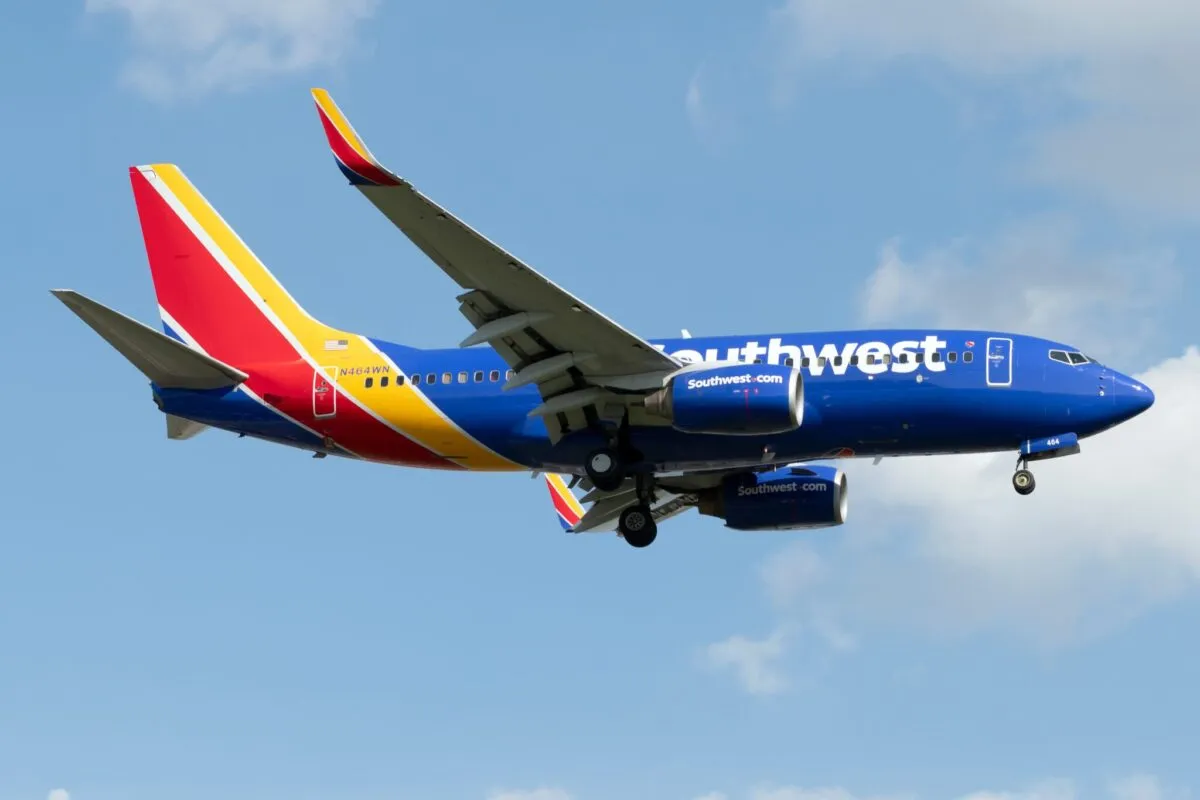
At the Semafor World Economy summit in Washington, D.C. on Monday, Southwest Airlines CEO Bob Jordan articulated a robust defense of his company’s long-standing business model, asserting that its inherent efficiencies continue to keep its operating costs significantly below those of its major competitors, even in the face of escalating global jet fuel prices. Jordan’s remarks underscored a critical differentiator for Southwest in an industry grappling with inflationary pressures and volatile energy markets, highlighting the airline’s persistent ability to offer low fares to consumers. His statement, "At Southwest, we’re the most efficient. We have the lowest cost of the large carriers. Our costs are about 20% less than American, Delta, and United," provided a clear quantitative measure of this strategic advantage.
The Economic Headwinds and the Semafor Summit Backdrop
Jordan’s statements were delivered against a backdrop of complex global economic dynamics. The Semafor World Economy summit convenes influential leaders, policymakers, and business executives to discuss pressing global financial and geopolitical issues. In this forum, discussions often revolve around inflation, supply chain resilience, energy security, and the post-pandemic recovery trajectory. For the airline industry, these themes are particularly acute. Following the unprecedented disruption of the COVID-19 pandemic, carriers have experienced a dramatic rebound in passenger demand, often outstripping capacity and straining operational resources. However, this recovery has been shadowed by a sharp rise in operational costs, most notably jet fuel, which often constitutes 25-30% of an airline’s total expenses. Geopolitical events, such as the conflict in Ukraine, coupled with OPEC+ production decisions and strong global demand, have pushed crude oil prices—and consequently jet fuel—to multi-year highs, posing a significant challenge to airlines worldwide. Jordan’s appearance at such a summit provided an opportunity to convey Southwest’s strategic positioning amidst these turbulent economic currents, emphasizing a unique resilience built into its operational DNA.
Southwest’s Enduring Cost Advantage: A Deep Dive into the Model
Central to Jordan’s assertion is Southwest’s meticulously crafted and steadfastly maintained operational model. This 20% differential represents a substantial competitive moat, allowing Southwest to absorb cost increases more effectively or pass on savings to consumers through lower fares, thereby stimulating demand.
The foundation of this cost efficiency traces back to the airline’s inception in 1971 under the visionary leadership of Herb Kelleher and Rollin King. Their initial strategy was revolutionary for its time, eschewing the traditional hub-and-spoke model favored by legacy carriers. Instead, Southwest pioneered a point-to-point network, connecting cities directly rather than routing all traffic through large, often congested, central hubs. This approach minimizes connection times, reduces the complexity of managing passenger transfers, and allows for quicker aircraft turnarounds—a crucial factor in maximizing asset utilization. Typical turnaround times for Southwest aircraft can be as short as 25-35 minutes, significantly less than the industry average for many complex hub operations. This efficiency translates directly into higher aircraft utilization, meaning planes spend more time in the air generating revenue and less time on the ground.
Another cornerstone of Southwest’s efficiency is its unwavering commitment to operating a single aircraft type: the Boeing 737. From its earliest days, Southwest standardized its fleet, a decision that has profound implications across its entire operation. A single fleet type simplifies maintenance procedures, requiring fewer spare parts inventories and specialized tools. Pilot and cabin crew training is streamlined, reducing costs and accelerating the time it takes for new hires to become operational. Furthermore, scheduling and operational flexibility are enhanced, as any 737 in the fleet can be substituted for another without logistical complications, a significant advantage during irregular operations or maintenance events. While the airline has evolved to incorporate different variants of the 737 (e.g., -700s, -800s, and the newer MAX series), the fundamental commonality remains, preserving the core benefits of fleet standardization. This contrasts sharply with legacy carriers that operate diverse fleets including regional jets, narrow-body, and wide-body aircraft from multiple manufacturers, each requiring distinct maintenance programs, pilot certifications, and spare parts inventories.
Adapting to Modern Market Dynamics (While Preserving Core Principles)
While Jordan’s comments emphasized the enduring nature of Southwest’s core cost advantages, it is important to acknowledge that the airline has not remained entirely static. Over its five-decade history, Southwest has made strategic adjustments to remain competitive and relevant. For instance, the airline, once famously absent from Global Distribution Systems (GDS) and online travel agencies (OTAs), has selectively expanded its presence on platforms like Expedia. This move allows it to reach a broader customer base, particularly corporate travelers and those who prefer to compare multiple airline options simultaneously. However, it has largely resisted implementing industry-wide practices such as assigned seating and charging fees for the first two checked bags, features that remain popular with its loyal customer base and differentiate it from most other carriers. These strategic adaptations demonstrate a pragmatic approach to market evolution while fiercely guarding the fundamental elements that underpin its cost structure and brand identity. The absence of assigned seating (open seating policy) and the allowance of two free checked bags are unique selling propositions that resonate strongly with its target demographic, contributing to brand loyalty despite increased competition from ultra-low-cost carriers.
The Fuel Cost Conundrum: A Closer Look at Industry Impact
The issue of fuel costs has become particularly acute for the aviation sector in recent years. After a period of relatively stable and even declining oil prices in the mid-2010s, the market has witnessed significant volatility. For example, according to data from the U.S. Energy Information Administration (EIA) and the International Air Transport Association (IATA), global jet fuel prices experienced surges of over 50% year-over-year in parts of 2022 and 2023. At peak, the price of jet fuel in some regions exceeded $4.00 per gallon, a stark increase from pre-pandemic levels often below $2.00 per gallon. This rapid escalation directly impacts airline profitability, as fuel is typically the single largest variable operating expense. For a major airline, a sustained dollar increase per barrel of oil can translate into hundreds of millions of dollars in additional annual expenses.
Airlines employ various strategies to mitigate fuel price risk, primarily through fuel hedging. This involves entering into financial contracts to lock in future fuel prices, thereby providing a degree of predictability. Southwest Airlines has historically been lauded for its astute fuel hedging strategies, which have often provided a significant competitive advantage during periods of rising prices. In the early 2000s, for instance, Southwest’s aggressive hedging program shielded it from the worst impacts of soaring oil prices, allowing it to maintain profitability when many rivals struggled, some even facing bankruptcy. While the specifics of current hedging portfolios vary and are dynamic, a well-managed hedging program can buffer an airline from the immediate shocks of market volatility, though it does not eliminate the underlying cost. Jordan’s remarks implicitly acknowledge that even with robust hedging, the baseline cost of fuel has risen, making inherent operational efficiency even more critical for maintaining a competitive edge.
Quantifying the "20% Advantage": Unit Costs and Operational Metrics
To understand the "20% less" cost claim, industry analysts often look at "Cost Per Available Seat Mile (CASM)," particularly "CASM ex-fuel" (excluding fuel costs to provide a clearer operational comparison). This metric measures how much it costs an airline to fly one seat one mile, stripped of the volatile fuel component. Southwest consistently reports one of the lowest CASM ex-fuel figures among major U.S. carriers. While specific numbers fluctuate by quarter and airline, Southwest’s CASM ex-fuel often hovers in the 8-10 cent range for its domestic operations. In contrast, legacy carriers like American, Delta, and United, with their more complex hub-and-spoke networks, diverse fleets (including wide-body aircraft for international routes), premium cabins, and extensive global operations, typically report higher CASM ex-fuel, sometimes in the 10-14 cent range or even higher when accounting for their full operational breadth across their global networks. This difference directly supports Jordan’s assertion of a significant cost gap.
Beyond CASM, other operational metrics reinforce Southwest’s efficiency:
- Aircraft Utilization: As mentioned, Southwest’s point-to-point network and quick turnarounds enable it to achieve higher daily aircraft utilization rates. This means its planes spend more time in the air generating revenue and less time on the ground, maximizing the return on a significant capital asset.
- Labor Productivity: Historically, Southwest has maintained strong labor relations and a highly productive workforce, contributing to lower labor costs per available seat mile compared to some competitors. Its single fleet type also means pilots and mechanics are cross-qualified on fewer aircraft types, simplifying operations and reducing training overhead. This operational simplicity fosters a more efficient work environment.
- Airport Costs: By operating primarily from secondary airports or less congested gates at major airports (where available), Southwest can sometimes negotiate lower landing fees and gate rental costs compared to airlines requiring prime hub infrastructure and premium slots at highly congested international gateways.
Implications for Consumers, Competition, and the Broader Market
The sustained cost advantage that CEO Bob Jordan highlighted has profound implications across the aviation ecosystem. For consumers, it translates directly into competitive fares. Southwest’s consistent ability to offer lower base prices places downward pressure on the entire domestic market, forcing competitors to either match prices on certain routes or differentiate through premium services, loyalty programs, or unique network offerings. This dynamic benefits travelers by providing more affordable air travel options and stimulating overall demand for air services, making air travel accessible to a broader demographic.
For competitors, particularly the legacy carriers, Southwest’s efficiency acts as a constant competitive benchmark. American, Delta, and United have responded over the years by launching their own "basic economy" fares, streamlining some domestic operations, and focusing on their distinct advantages, such as extensive international networks, premium cabins, and robust loyalty programs. However, fundamentally altering their complex hub-and-spoke models and diverse fleets to match Southwest’s cost structure is largely impractical. This means they must continue to find ways to add value that justifies their higher cost base, often by emphasizing connectivity, global reach, and a differentiated passenger experience. The emergence of ultra-low-cost carriers (ULCCs) like Spirit and Frontier also complicates the competitive landscape, pushing even Southwest to maintain its cost discipline while upholding its distinct brand of customer service.
From an investor perspective, an airline’s ability to control costs in a high-inflation environment is a key indicator of financial health and resilience. Jordan’s statements likely aim to reassure investors that Southwest’s foundational strengths will continue to drive profitability and sustained market presence despite external economic headwinds. This long-term stability and predictability in cost management can be a significant draw for shareholders seeking consistent performance in the cyclical airline industry.
Analyst Perspectives and Future Outlook
Industry analysts largely concur with Jordan’s assessment of Southwest’s inherent cost advantages. Firms tracking the airline sector frequently highlight Southwest’s disciplined approach to operations and its distinct model as key factors in its historical profitability and market leadership in the domestic U.S. leisure travel segment. While acknowledging challenges such as fleet modernization (e.g., integrating the 737 MAX, which faced its own issues in prior years) and occasional operational disruptions (such as the widespread meltdown during the 2022 holiday season due to a combination of severe weather and internal scheduling system failures), the consensus often points to the enduring strength of its core business principles. The 2022 holiday operational failure, for instance, cost the airline over $1 billion and severely tested its operational resilience, prompting significant investment in technology and operational safeguards. Despite such setbacks, the underlying cost structure remains a core strength.
Looking ahead, Southwest faces both opportunities and challenges. Continued fleet modernization with more fuel-efficient 737 MAX aircraft will be crucial for managing future fuel costs and reducing its carbon footprint, aligning with growing industry sustainability goals. Strategic network expansion, particularly into new domestic markets or enhancing existing point-to-point connections, will need to be carefully balanced against maintaining operational efficiency and avoiding overextension. Labor relations, while historically strong, require continuous management in a competitive hiring environment where pilot and mechanic shortages are a persistent concern. Furthermore, the broader economic climate, including the potential for a recession and shifts in consumer spending habits, will undoubtedly influence future demand. Southwest’s agility in adapting to these external factors, while staying true to its core cost-efficient model, will define its trajectory in the coming years.
Conclusion
In conclusion, Bob Jordan’s remarks at the Semafor World Economy summit serve as a powerful reaffirmation of Southwest Airlines’ enduring competitive strategy. By steadfastly adhering to its foundational principles of a single aircraft type, a point-to-point network, and an unwavering focus on operational efficiency, Southwest has cultivated a cost structure that provides a significant advantage over its major rivals. This allows the airline to navigate periods of elevated fuel prices and broader economic uncertainty with greater resilience, translating into more affordable travel options for millions of passengers. As the global economy continues to evolve, Southwest’s commitment to its distinctive model positions it to remain a formidable force in the aviation landscape, a testament to the power of a well-executed, cost-conscious strategy that has consistently delivered value for both the company and its customers for over five decades.




 Chandra Hamzah
 Budi Mulyono
 Anjar Salim
