
 Anjar Salim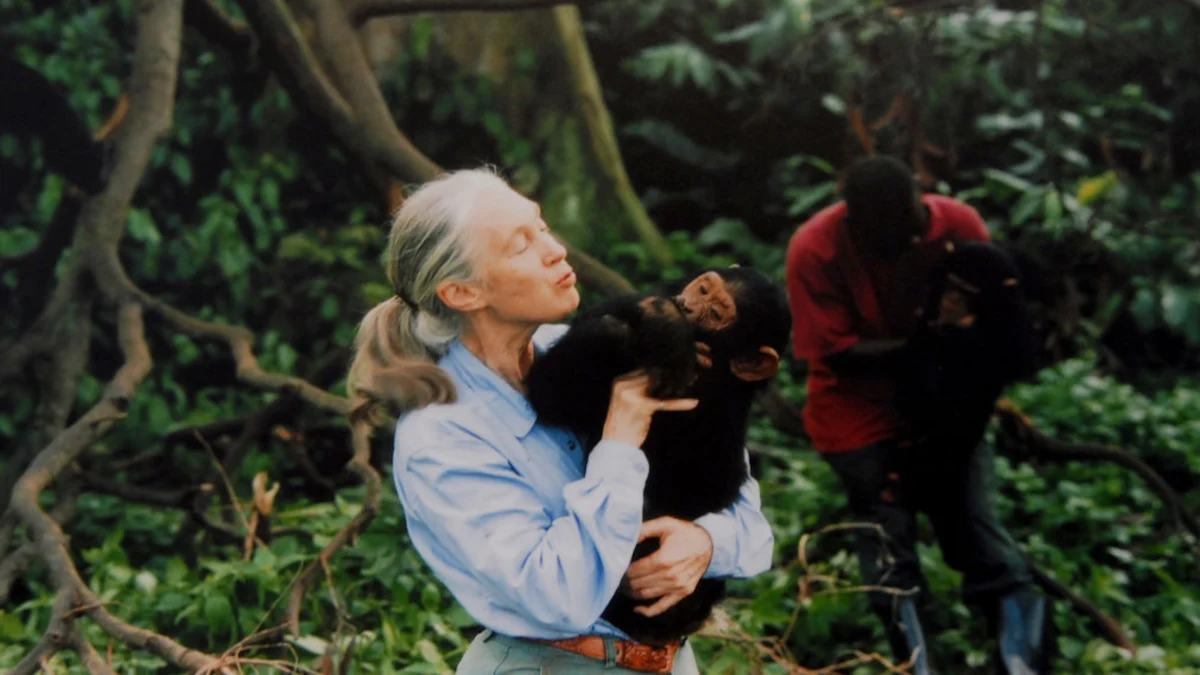
The posthumous release of a final interview filmed in the lush landscapes of Arusha, Tanzania, has provided the global scientific community and the public with a definitive look at the closing chapter of Dr. Jane Goodall’s extraordinary life. Published on April 30, 2026, the footage captures the world’s most renowned primatologist in a candid conversation with philanthropist Dax Dasilva just months before her passing. Dr. Goodall, who revolutionized the study of animal behavior and became a global icon for environmental activism, died peacefully of cardiac arrest in her sleep on October 1, 2025, at the age of 91. The newly released dialogue serves as both a farewell to the continent that defined her career and a strategic roadmap for the next generation of conservationists.
A Final Return to the Roots of Primatology
In July 2025, Dr. Jane Goodall embarked on what would be her final journey to East Africa, a region she first entered in 1960 under the mentorship of paleoanthropologist Louis Leakey. The trip was centered around Arusha and the nearby Gombe Stream National Park, the site of her seminal research on the Kasakela chimpanzee community. For over sixty years, Goodall’s presence in Gombe transformed the park into a living laboratory, yielding insights that dismantled the long-held belief that humans were the only species capable of tool use, complex social reasoning, and warfare.
During this final visit, Goodall was accompanied by Dax Dasilva, the founder of the environmental nonprofit Age of Union and a prominent figure in impact-driven philanthropy. The meeting took place against the backdrop of the rainy season, a period that highlights the vibrant, yet fragile, biodiversity of the Tanzanian ecosystem. For Goodall, the trip was less about new research and more about ensuring the continuity of the institutional frameworks she spent decades building. Her primary concern, as expressed in the interview, was the "handover" of her life’s work to the global community.
“I’m 91, so I don’t know how many more years I have,” Goodall remarked during the filming. “When I do die, I don’t want everything I’ve worked so hard for to stop.” This sentiment underscores the transition of the Jane Goodall Institute (JGI) from a founder-led organization to a decentralized global movement.
Redefining Activism: The Philosophy of Local Action
One of the most poignant segments of the Arusha interview involves Goodall’s critique of modern environmental rhetoric. Specifically, she addressed the overwhelming sense of "eco-anxiety" that often leads to paralysis among younger generations. When confronted with the magnitude of climate change, industrial pollution, and habitat loss, Goodall argued that the traditional mantra of "think globally, act locally" is fundamentally flawed.
“We have this stupid saying, ‘Think globally, act locally.’ But no, act locally first, and do something,” Goodall told Dasilva. She explained that thinking globally often leads to despair because the scale of the crisis appears insurmountable for a single individual. By reversing the order—acting locally first—individuals can see the immediate impact of their efforts, which provides the psychological fuel necessary to continue the struggle.
This philosophy has been the cornerstone of her "Roots & Shoots" program, which she founded in 1991. The program, which now operates in more than 60 countries, encourages youth to identify problems in their own communities and develop projects to address them. By the time of her death, the program had involved hundreds of thousands of students, creating a legacy of grassroots leadership that Goodall viewed as her most important achievement.
The Role of Philanthropy and the Age of Union
The partnership between Goodall and Dax Dasilva represents a significant shift in how conservation efforts are funded and managed in the 21st century. Dasilva, who considers Goodall a mentor, has integrated her holistic approach into his Age of Union foundation. During the final trip, Dasilva announced a $40 million commitment to conservation efforts, much of which is directed toward protecting high-biodiversity areas that are under immediate threat.
Dasilva’s approach mirrors Goodall’s evolution from a field researcher to a socio-environmental advocate. In the 1990s, Goodall realized that chimpanzees could not be protected without addressing the poverty and lack of resources facing the human populations living near their habitats. This led to the creation of the TACARE (Take Care) program, a community-centered conservation model. Dasilva’s Age of Union has adopted similar principles, focusing on "impact-driven" projects that combine technological innovation with local empowerment.
The $40 million pledge is intended to support the ongoing work of the Jane Goodall Institute, particularly in the Congo Basin and other critical habitats in Africa. These funds are designated for reforestation, the prevention of the illegal bushmeat trade, and the expansion of community-led monitoring systems that use satellite data to track deforestation in real-time.
A Chronology of a Revolutionary Life
To understand the weight of Goodall’s final reflections, it is necessary to examine the timeline of her contributions to science and global policy:
- 1934: Born in London, England.
- 1957: Travels to Kenya and meets Louis Leakey.
- 1960: Arrives at Gombe Stream Chimpanzee Reserve. Within months, she observes chimpanzees using grass stalks to "fish" for termites, the first recorded instance of non-human tool manufacture.
- 1965: Earns a PhD from Cambridge University without having an undergraduate degree, a rare exception made due to the significance of her work.
- 1977: Establishes the Jane Goodall Institute for Wildlife Research, Education, and Conservation.
- 1986: Following a conference in Chicago, she shifts her focus from research to full-time activism after realizing the extent of chimpanzee habitat destruction across Africa.
- 1991: Launches the Roots & Shoots program in Dar es Salaam, Tanzania.
- 2002: Appointed as a United Nations Messenger of Peace.
- 2025: Final trip to Tanzania and death on October 1.
Throughout this timeline, Goodall’s work provided the data that proved chimpanzees share 98% of their DNA with humans and exhibit emotions, social hierarchies, and distinct personalities. This research fundamentally shifted the ethical landscape regarding the treatment of animals in research and captivity.
Supporting Data: The State of Conservation in 2026
The data surrounding chimpanzee populations remains a stark reminder of the urgency behind Goodall’s final plea. At the turn of the 20th century, it was estimated that approximately one million chimpanzees lived in the wild. By 2026, census data suggests that number has dwindled to between 172,000 and 300,000. The primary drivers of this decline are habitat loss due to industrial agriculture, mining, and the fragmentation of forests, which isolates populations and reduces genetic diversity.
However, the "Goodall Effect" has shown measurable success in specific regions. In Gombe, the chimpanzee population has remained relatively stable due to intensive protection and the cooperation of local villages. The TACARE program has seen a 25% increase in forest cover in certain managed corridors outside the national park, demonstrating that community-led conservation can reverse environmental degradation.
Furthermore, the Jane Goodall Institute’s use of geospatial technology has mapped over 100 million acres of chimpanzee habitat, providing a "living map" that allows conservationists to intervene before illegal logging or poaching occurs. This data-driven approach is what Goodall referred to as the "marriage of the heart and the head" in her final interview.
Global Reactions and Scientific Implications
The release of the final interview has prompted a wave of responses from world leaders and the scientific community. UN Secretary-General’s office issued a statement noting that Goodall "did not just study the world; she changed the way we feel about our place within it."
Dr. Anthony Collins, a long-time researcher at Gombe, emphasized that Goodall’s death does not mark the end of the Gombe Stream Research Center. "Jane’s vision was always about the long-term. We have the longest-running continuous study of any wild animal group in the world, and that data set is more valuable today than ever as we track how climate change affects primate behavior," Collins stated.
Environmental analysts suggest that the $40 million commitment from Dax Dasilva and the Age of Union may signal a new era of "legacy philanthropy," where wealthy tech entrepreneurs move away from general donations and toward specific, measurable conservation milestones established by veteran activists like Goodall.
The Future of the Legacy
As the world processes the loss of its most famous naturalist, the focus has shifted to the institutional stability of the Jane Goodall Institute. The organization has spent the last decade diversifying its leadership and securing endowments to ensure that its work in Tanzania, Uganda, the Republic of Congo, and Senegal continues.
The final video from Arusha concludes with a message of hope, a theme Goodall championed even in the face of dire environmental statistics. She often spoke of the "four reasons for hope": the amazing human intellect, the resilience of nature, the power of young people, and the indomitable human spirit.
By emphasizing "local action" in her final months, Goodall sought to democratize conservation. She argued that the fate of the planet does not rest solely in the hands of scientists or politicians, but in the daily decisions of billions of individuals. As the footage fades to the misty forests of Tanzania, her voice remains a call to action: "Just do something."
The legacy of Jane Goodall is no longer confined to the archives of Gombe or the pages of National Geographic; it is active in the thousands of community projects, the millions of acres of protected forest, and the shifted consciousness of a global public that now views the natural world not as a resource to be exploited, but as a family to be protected. Her final trip to Africa was not a goodbye to the land, but a passing of the torch to a world she spent 91 years trying to save.




 Chandra Hamzah
 Tatiana Tantri Indah Sari
 Budi Mulyono
 Lukman Taruna Persada Ramadan