
 Anjar Salim
In the late summer of 2024, a team of researchers and volunteers ascended into the stark, oxygen-thin environment of California’s White Mountains to investigate a frontier of human physiology that has long been overlooked by high-altitude medicine. Led by Tatum Simonson, an associate professor and physiologist at the University of California, San Diego, the group established a base at Barcroft Station. This off-grid research facility, perched at 12,470 feet along the eastern edge of the Sierra Nevada, served as the backdrop for a study that could fundamentally change how mountaineers, elite athletes, and high-altitude workers manage the debilitating effects of Acute Mountain Sickness (AMS).
Within hours of their arrival, the familiar symptoms of elevation began to take hold among the participants. Pounding headaches, persistent nausea, and the restless, fragmented sleep characteristic of oxygen deprivation became common complaints. Historically, these symptoms have been treated through slow acclimatization or the use of acetazolamide, a carbonic anhydrase inhibitor commercially known as Diamox. However, Simonson’s research suggests that the key to managing these physiological stresses may not lie solely in the lungs or the blood, but within the trillions of microbes inhabiting the human digestive tract.
The Physiological Challenge of High-Altitude Environments
Altitude sickness occurs when the human body is unable to adapt quickly enough to the decreasing partial pressure of oxygen as elevation increases. As oxygen levels drop, the body initiates a series of compensatory mechanisms: heart rate increases, breathing becomes more rapid, and blood is diverted to vital organs. Despite these adaptations, nearly 80 percent of individuals ascending to high altitudes report at least one gastrointestinal symptom. These range from the colloquially named "high-altitude flatus expulsion" to severe nausea, vomiting, and diarrhea.
The prevailing scientific theory behind these symptoms involves intestinal hypoxia. When the body experiences low oxygen levels, the intestinal barrier—the lining responsible for containing bacteria and their metabolic byproducts—can begin to weaken or "break down." This compromised barrier allows tiny fragments of bacteria to enter the bloodstream, potentially triggering systemic inflammation. This inflammatory response may exacerbate the symptoms of AMS and contribute to the profound fatigue and cognitive fog often experienced by climbers.
A Chronology of Discovery: From the Tibetan Plateau to the White Mountains
The journey toward understanding the gut-microbiome’s role in altitude adaptation began 15 years ago on the Tibetan Plateau. Simonson was conducting fieldwork in Madou County, Qinghai province, at an elevation of 14,241 feet. Her primary focus was scanning the genomes of Tibetan populations—groups that have lived at extreme altitudes for millennia—to identify the genetic markers that allow them to thrive where others struggle.
During this period, Simonson experienced the physical toll of altitude firsthand while attempting to move heavy equipment at a rural hospital. The experience highlighted the limitations of current medical interventions. While Diamox was the standard recommendation, its side effects—most notably paresthesia, or a persistent tingling in the hands and feet—were a significant deterrent. This sparked a pivot in her research: if genetics provided the long-term blueprint for adaptation, perhaps the microbiome offered a more immediate, modifiable lever for short-term acclimatization.
By 2024, Simonson had expanded her research scope to include the Andes and began systematically collecting stool samples from high-altitude communities. The goal was to determine if the composition of gut bacteria, fungi, and other microbes—which outnumber human genes by an estimated 100 to one—could be influenced to improve oxygen sensing and systemic response in low-oxygen environments.
The Barcroft Station Study: Methodology and Empirical Findings
To test the hypothesis that probiotics could mitigate the effects of altitude, Simonson’s team recruited 17 volunteers for a controlled study at Barcroft Station. The participants were divided into two groups: one receiving a multi-strain probiotic and the other a placebo. The administration of these supplements began prior to the ascent and continued up to three times daily during their stay at the high-altitude lab.
The results, recently published in the journal iScience, provided a compelling look at the gut-brain-altitude axis. Researchers monitored oxygen saturation levels and sleep quality, both of which are critical indicators of successful acclimatization. The data revealed that participants who took the probiotic maintained significantly higher oxygen saturation levels compared to the placebo group. Notably, this advantage persisted even during sleep, a period when oxygen levels typically dip further at high altitudes, leading to the "periodic breathing" that often wakes climbers in distress.
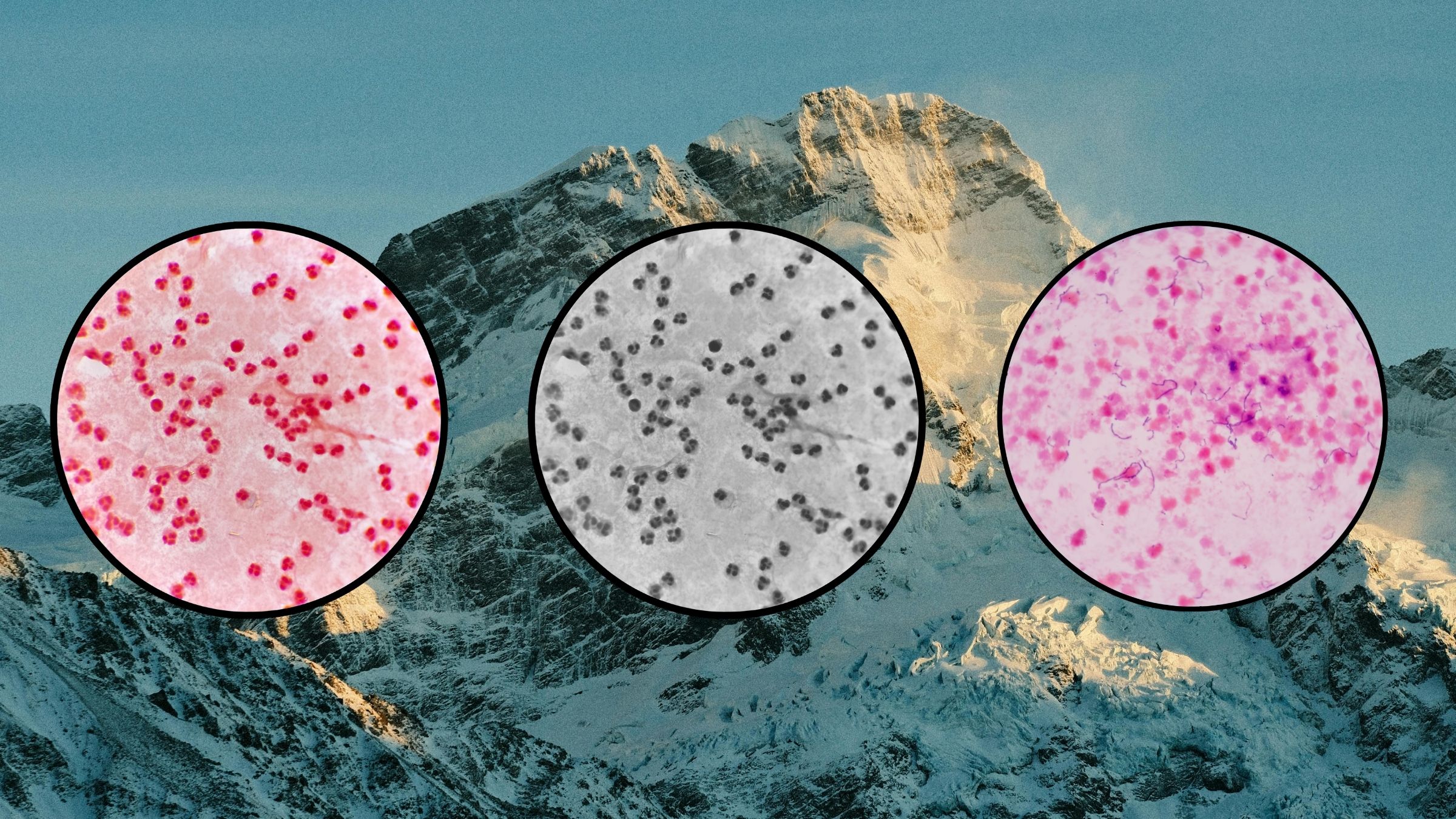
Simonson noted that these findings suggest the existence of signals traveling from the gut to the brain through the gut-brain axis—a complex network of nerves, hormones, and immune signals. By stabilizing the gut environment, the probiotics appeared to help the body maintain a more efficient respiratory and circulatory response to hypoxia.
Supporting Perspectives: The Reality of High-Altitude Professionalism
For professional mountain guides, the implications of this research are more than academic. Emilie Drinkwater, an IFMGA-certified guide with decades of experience in the Karakoram and Hindu Kush, has long struggled with the limits of traditional altitude management. Despite her elite fitness and experience, she reports a near-total inability to eat above 15,000 feet, accompanied by severe nausea and weight loss on long expeditions.
"My body doesn’t feel good at altitude," Drinkwater stated, noting that while hydration and Diamox help with headaches, they do little for her gastrointestinal distress. In a professional setting where a guide must remain "capable, competent, and strong" to manage the safety of a team, the inability to maintain caloric intake is a significant risk factor.
Zach McKenna, an assistant professor of exercise science at the University of Arkansas, emphasizes that while the connection between gut barrier function and AMS is not yet fully proven, the theoretical framework is sound. McKenna, who studies environmental stressors, points to oxidative stress and damage to the microvasculature (small blood vessels) as likely culprits for the gastrointestinal issues seen at altitude. If probiotics can protect cells from this oxidative damage—a benefit suggested by separate research published in Frontiers in Nutrition in 2025—they could serve as a vital tool for mountain safety.
Broader Implications and Future Research Directions
The study of the microbiome at altitude is an emerging frontier with implications that extend beyond mountaineering. Recent research into the gut-brain axis has already shown that probiotics can play a role in reducing cognitive decline in patients with neurodegenerative conditions such as Parkinson’s and Alzheimer’s. Because high altitude often induces cognitive impairment—impacting judgment and decision-making—maintaining gut health could be a primary strategy for preserving mental acuity in extreme environments.
However, the scientific community remains cautious. Simonson herself describes the Barcroft Station study as exploratory. Future research will need to address several variables, including:
- Strain Specificity: Determining which specific bacterial strains provide the most significant benefit for oxygen saturation.
- Timing and Dosage: Establishing the optimal window for beginning probiotic regimens before an ascent.
- Large-Scale Replication: Testing these findings across larger, more diverse populations to account for individual variations in microbiome composition.
Analysis of Impact on Mountain Safety and Policy
If further studies validate these results, the integration of probiotic protocols into high-altitude preparation could become standard practice. This would offer a non-pharmacological alternative or supplement to Diamox, reducing the burden of side effects that can hamper a climber’s performance.
Furthermore, the data suggests that gut health should be a central pillar of expedition planning. Beyond just carrying clean water and high-calorie food, future expeditions may prioritize "microbiome maintenance" to ensure that the body’s internal signaling remains robust under the stress of hypoxia. For organizations that manage high-altitude labor—such as mining operations in the Andes or scientific outposts in Antarctica—this research offers a potential pathway to improving worker health and productivity.
The conclusion of the Barcroft Station study marks a shift in perspective. Rather than viewing altitude sickness as a failure of the lungs or the blood, scientists are beginning to see it as a systemic challenge where the gut plays a pivotal role in the body’s "control center." As Simonson remarked, the trillions of microbes within us are not just passengers; they are active participants in our survival at the roof of the world. For those who venture into thin air, the next breakthrough in performance may not come from a new piece of gear or a potent drug, but from the microscopic allies living within them.




 Chandra Hamzah
 Tatiana Tantri Indah Sari
 Budi Mulyono

