
 Lukman Taruna Persada Ramadan
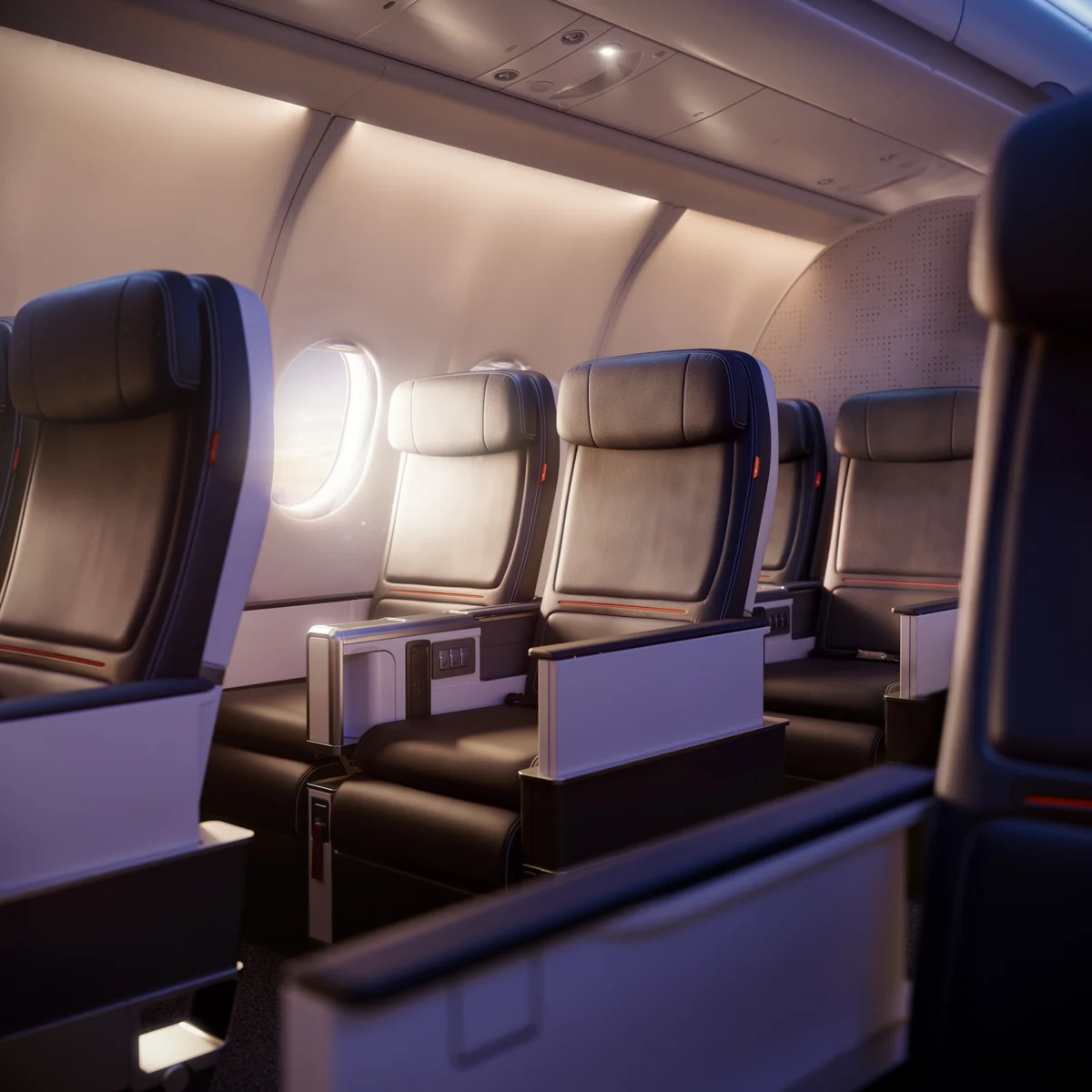
For decades, the intermediate cabin between standard coach and business class was treated as an afterthought. Often dismissed by industry veterans as little more than a standard economy seat with a few extra inches of legroom and a marginally better pour of wine, the product served primarily as a minor ancillary revenue stream rather than a core strategic offering. Today, however, that perception has completely evaporated. Driven by shifting consumer habits, post-pandemic travel trends, and a structural evolution in fleet design, premium economy has shed its middle-child identity to become one of the most lucrative and rapidly expanding sectors in long-haul aviation.
According to data from Going’s 2026 State of Travel and Flight Deals Report, premium economy has surged to become the single fastest-growing choice among surveyed travelers, climbing from 16 percent to 20 percent year-over-year preference. Furthermore, nearly six in ten travelers indicate that they actively plan to splurge on premium cabin seating. This surging demand has prompted carriers worldwide to reallocate their most valuable asset—aircraft real estate—significantly altering the economics of long-haul travel.
The Evolution of Aircraft Real Estate and Cabin Architecture

The transformation of premium economy is rooted in a fundamental shift in how airlines utilize cabin space. Rather than squeezing extra rows into existing footprints, major international carriers are investing billions of dollars to design aircraft explicitly around enlarged premium-economy cabins.
Data from global aviation analytics firm Cirium illustrates this dramatic physical expansion. Air France famously doubled its premium-economy capacity from 24 to 48 seats on a targeted series of retrofitted Boeing 777-300ER aircraft. Similarly, Cathay Pacific expanded its premium-economy footprint from 34 to 48 seats on its updated Boeing 777 fleet—a staggering 41 percent increase in cabin allocation. When airlines make structural adjustments of this magnitude, sacrificing potentially dense economy seating for a more spacious configuration, it signals a profound institutional belief in the long-term profitability of the cabin.
Seat design and onboard amenities have undergone a parallel revolution. Gone are the days of a simple recliner. Modern premium-economy products frequently rival the business-class experiences of previous generations. Lufthansa’s Allegris premium-economy product, for instance, utilizes a fixed-shell design that allows passengers to recline fully without encroaching upon the personal space of the traveler seated behind them. Complete with a generous 39-inch pitch, dedicated leg rests, high-definition 4K screens measuring 15.6 inches, integrated wireless charging ports, and enhanced personal storage compartments, these seats represent a masterclass in ergonomic efficiency.
Other global carriers are employing similar high-end strategies. EL AL Israel Airlines has made its Premium Class a cornerstone of its long-haul operations aboard its Boeing 787 Dreamliners and retrofitted Boeing 777s. Passengers enjoy adjustable headrests, footrests, and premium culinary offerings designed by Michelin-starred chef Assaf Granit, effectively bridging the gap between standard coach dining and fine-dining business-class catering.
Global Fleet Expansion and Future Infrastructure Plans
The aggressive deployment of premium economy is not limited to a select few carriers; it has become a global industry standard. Emirates is currently executing one of the most ambitious retrofit programs in aviation history. By the end of 2026, the Dubai-based carrier expects to make roughly four million premium-economy seats available annually—roughly double the capacity it projected just a year prior. This rollout spans a multibillion-dollar modernization initiative covering 219 aircraft, systematically refreshing Airbus A380s and Boeing 777s while integrating brand-new Airbus A350s into the fleet.
The infrastructure pipeline extends well into the latter half of the decade. Hawaiian Airlines has officially committed to introducing a dedicated premium-economy cabin aboard its Airbus A330 fleet beginning in 2028. This upcoming overhaul forms a central pillar of the carrier’s multi-year, $600-million-plus Kahuēwai Investment Plan. Alex Da Silva, communications director for the airline, noted that the decision was a direct response to the extraordinary performance of the airline’s legacy Extra Comfort product, proving that leisure and business travelers alike are hungry for elevated options.
Similarly, Turkish Airlines announced plans to introduce a dedicated premium-economy cabin starting in 2028 on newly delivered Airbus A350 aircraft, with subsequent retrofits slated for its broader wide-body fleet. In an official statement, a Turkish Airlines spokesperson acknowledged the structural shift in the marketplace: "For many years, our two-cabin model was well-suited to our network structure and competitive business-class proposition. What has changed is the maturity of the premium-economy market, the growth of premium leisure demand, and the evolution of passenger expectations."
The Consumer Verdict and Satisfaction Metrics
Passenger reception to these enhanced offerings has been overwhelmingly positive, though marked by evolving expectations. The JD Power 2026 North America Airline Satisfaction Study revealed that customer satisfaction among premium-economy passengers surged by 14 points year-over-year. This growth vastly outpaces the modest six-point gain observed in standard economy and basic economy categories, indicating that passengers perceive a tangible, worthwhile return on their investment.
In the 2026 study, Delta Air Lines claimed the highest ranking for premium-economy passenger satisfaction for the fourth consecutive year, achieving a score of 736. Alaska Airlines followed closely behind at 720, with JetBlue securing 701 points. This rebound follows a temporary dip in satisfaction metrics recorded in 2025, proving that airlines have successfully recalibrated their service delivery to meet heightened consumer standards.
Third-party booking platforms are capturing this momentum in real-time. Jimmy Yoon, head of Points Intelligence at point.me, reported a 30 to 40 percent increase in user clicks specifically for premium economy over a recent two-month window compared to the same period in the previous year.
Navigating the Price Gap and the "Display Problem"
Despite soaring popularity, the decision to book premium economy is becoming increasingly complex for travelers. As airlines refine the product, the cash and point requirements have begun creeping upward, occasionally narrowing the price gap between premium economy and traditional business class.
"For most travelers, I believe the decision comes down to value," Yoon explained. "Everyone wants more space, but the real question is where does premium economy land in terms of price, whether it’s in cash or points."
Frequent travelers note that the pricing calculus has fundamentally shifted. David Salamon, a frequent flyer who monitors long-haul fares closely, observed that on certain international routes, the price differential between premium economy and business class has compressed to the point where the upgrade choice requires careful calculation—a phenomenon that rarely occurred five years ago. Furthermore, discrepancies in fleet configurations mean that passengers must remain vigilant during the booking process, as an airline’s premium-economy hard product can vary significantly depending on the specific aircraft operating a given route.
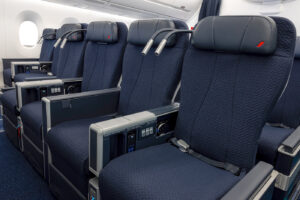
Airlines and distributors also face a unique marketing hurdle: the "display problem." Kelvin Fu, co-founder of travel distribution technology company Letsfly, notes that while carriers spend millions physically transforming their cabins, third-party online travel agencies (OTAs) and aggregate search engines often display the product merely as a generic "Premium Economy" tag accompanied by a steep price markup.
"If the traveler can’t visually see the upgraded meal, the extra legroom, or the lounge access right there on the checkout screen, they just think it’s an overpriced coach seat," Fu cautioned.
Segmentation and the Road Ahead
To capture diverse consumer budgets, airlines are beginning to experiment with tiered offerings within the cabin itself. Air Canada introduced "Premium Economy Basic" on select international routes, providing a lower-cost entry point that retains core physical benefits—such as the upgraded seat, meal service, and priority airport handling—while stripping away ancillary perks like complimentary advance seat selection, secondary checked baggage allowances, and refundability.
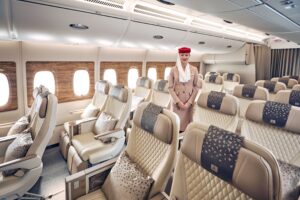
Industry analysts predict that premium economy will continue to mature as an essential bridge between standard coach and luxury business travel over the next five years. As Simon Newton-Smith, senior vice president of Americas for EL AL Israel Airlines, summarizes: "As aircraft and passenger expectations evolve, it will remain one of aviation’s fastest-growing segments, driven by travelers who prioritize comfort, convenience, and value."
With billions of dollars in retrofits underway and millions of new seats slated to enter service before the decade closes, premium economy has successfully transitioned from an experimental middle ground into the undisputed strategic frontier of modern commercial aviation.



 Gabriela Annisa

 Tatiana Tantri Indah Sari

 Anjar Salim


 Dwi Wanna
