
 Anjar Salim
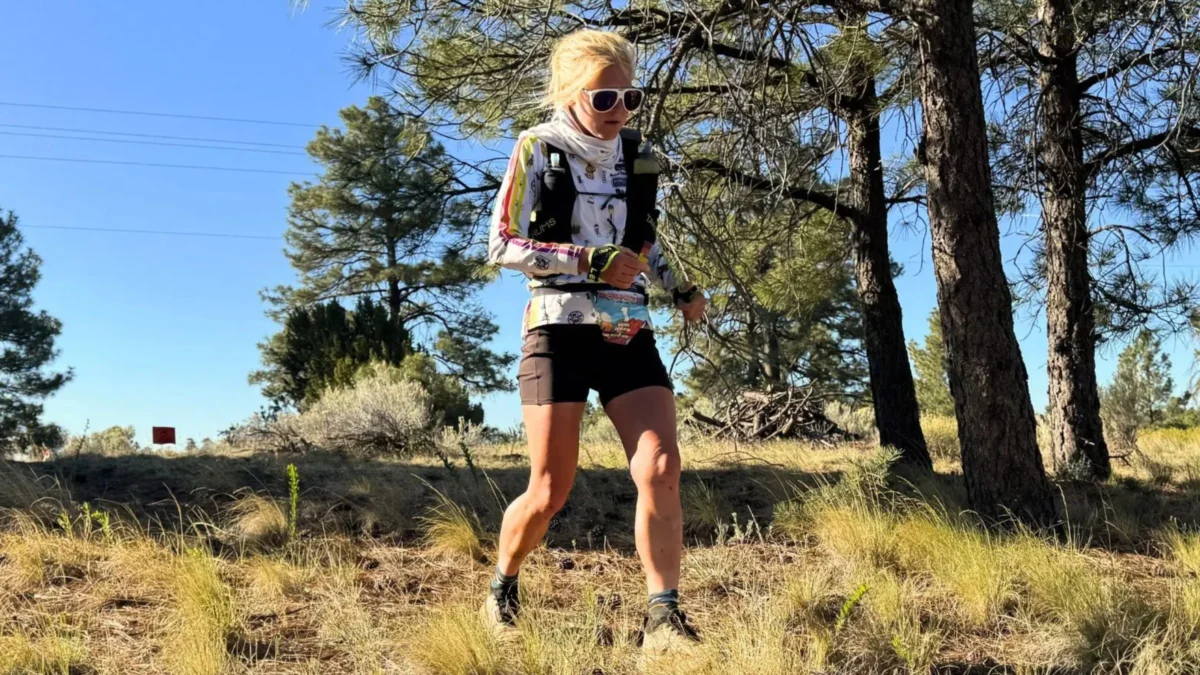
The global ultrarunning community has spent the past several years bearing witness to an unprecedented elevation of athletic endurance, and at the vanguard of this paradigm shift stands American athlete Rachel Entrekin. Recognized widely by her peers and fans as the "Queen of Cocodona," Entrekin has methodically dismantled preconceived notions regarding human physical and psychological limits over grueling multi-day events. Her ascent from a formidable regional competitor to an international powerhouse culminated in a historic string of performances spanning the Arizona desert to the technical, high-altitude trails of the French Alps. Through a potent combination of rigorous physiological preparation and a psychological framework she defines as "realistic positivity," Entrekin has established a new benchmark for success in the discipline of extreme endurance.
Main Facts of the Current Season
Entrekin’s competitive trajectory reached a critical juncture during the spring racing calendar when she achieved an outright victory at the Cocodona 250, a punishing 250-mile endurance event traversing the historic trails of Arizona. By crossing the finish line ahead of the entire elite men’s field—securing a margin of victory exceeding one hour—she etched her name into the annals of ultrarunning history as one of the few female athletes to conquer a major mixed-gender ultramarathon field in this manner.
Rather than resting following her desert campaign, Entrekin transitioned her training focus to prepare for her debut at the prestigious Ultra-Trail du Mont-Blanc (UTMB) in Chamonix, France. Racing against a globally recruited, highly competitive international field across the formidable alpine climbs and technical descents of the European mountain range, Entrekin secured a remarkable second-place finish in the women’s division, completing the arduous course in 22 hours and 15 minutes. This sequence of achievements has positioned her as one of the most versatile and resilient endurance athletes of her generation.
Chronology of an Unprecedented Rise
The foundation of Entrekin’s current success was laid over several years of calculated progression through the ultrarunning ranks. Her relationship with the Cocodona 250 serves as the primary spine of her competitive chronology.
Years prior to her historic outright victory, Entrekin entered the ultra-distance circuit quietly, focusing on pacing and recovery mechanics rather than immediate podium placement. Her breakthrough in the Arizona desert began with her inaugural victory at the Cocodona 250, a race notorious for its severe temperature fluctuations, punishing terrain, and staggering cumulative elevation gain. Rather than being a one-off performance, that initial victory was followed by a second consecutive win, solidifying her dominance over the 250-mile distance.
The turning point of her career occurred this spring during her third consecutive victory at the event. By outpacing every male and female competitor across the 250-mile expanse, Entrekin forced a structural reassessment of how gender performance gaps are viewed in ultra-distance running, where psychological fortitude, sleep deprivation management, and metabolic efficiency often outweigh traditional strength metrics.
Following her spring campaign in Arizona, the chronological focus shifted rapidly toward the European theater. Entrekin accepted an invitation to the UTMB, an event widely regarded as the unofficial world championship of trail running. Trading the arid heat of the American Southwest for the unpredictable, freezing microclimates of Mont-Blanc, Entrekin underwent a rigorous transition in her training regimen. The September race required a fundamental pivot from multi-day desert pacing strategies to a high-intensity, sub-24-hour mountain assault against athletes specifically conditioned for European alpine terrain. Her second-place finish in 22 hours and 15 minutes marked the culmination of this intense transitional phase.
Supporting Data and Physiological Demands
To contextualize Entrekin’s achievements, one must examine the staggering physiological and logistical data inherent to the races she dominates. The Cocodona 250 is not merely a test of running speed; it is an exercise in survival. Spanning approximately 250 miles, the course features tens of thousands of feet of climbing, exposing runners to extreme dehydration risks, severe sleep deprivation, and extreme thermal stress ranging from desert heat during daylight hours to near-freezing temperatures at night.
To win such an event outright—let alone beat a field of elite male endurance specialists by more than 60 minutes—requires an elite VO2 max, exceptional muscular endurance, and, crucially, a highly optimized metabolic system capable of processing thousands of calories while under extreme gastrointestinal distress.
Conversely, the UTMB presents an entirely different set of physiological challenges. Spanning roughly 106 miles (170 kilometers) with approximately 32,800 feet (10,000 meters) of elevation gain, the race demands relentless climbing and eccentric muscle loading during descents that can pulverize unconditioned quadriceps. Entrekin’s time of 22 hours and 15 minutes over such technical terrain against a dense, international field underscores an elite capacity for sustained aerobic output and rapid recovery under high-altitude hypoxia.
The Psychology of Realistic Positivity
While physical conditioning remains the baseline prerequisite for elite ultrarunning, sports psychologists and industry analysts point to psychological resilience as the decisive differentiator at distances exceeding 100 miles. In an in-depth profile published by Outside Magazine, writer Rebecca Byerly—who observed Entrekin’s mechanics firsthand while pacing another runner at Cocodona—delves into the internal mechanisms driving the athlete.
Entrekin’s operational philosophy relies heavily on what she terms "realistic positivity." Unlike the toxic positivity often promoted in motivational literature—which involves ignoring physical pain or pretending adversity does not exist—Entrekin’s approach is grounded in radical acceptance of suffering. When confronted with acute physiological breakdown, nausea, or debilitating muscle fatigue, Entrekin does not attempt to mask the reality of the situation. Instead, she acknowledges the severity of the challenge, breaks the remaining distance down into manageable micro-goals, and maintains a forward-looking mental orientation.
This psychological framework allows her to make critical tactical decisions during moments of high stress. Where other runners might panic or spiral into negative thought loops when experiencing severe pain or navigational errors, Entrekin maintains emotional equilibrium. Observers note that this steady demeanor extends to her support crew, creating a calm, highly efficient environment at aid stations that minimizes transition times and maximizes forward momentum.
Official Responses and Industry Analysis
The broader endurance sports community has responded to Entrekin’s recent performances with a mixture of professional respect and analytical fascination. Coaches and biomechanists have begun studying her pacing strategies, noting her ability to negative-split or maintain a remarkably flat pacing curve over terrain where most athletes experience severe performance degradation.
Prominent figures within the ultrarunning ecosystem have emphasized the broader cultural and competitive implications of her success. By winning the Cocodona 250 outright, Entrekin challenged historical assumptions regarding physiological performance disparities between men and women in multi-day ultra-endurance events. Sports physiologists note that while men generally retain advantages in absolute upper-body strength and certain explosive power metrics, ultra-distance events tend to level the playing field. Factors such as lower average body mass, efficient fat-oxidation rates, pain tolerance, and psychological pacing strategies often allow elite female athletes to rival or exceed male competitors over distances surpassing 200 miles.
Furthermore, Entrekin’s seamless transition from the ultra-long desert format to the high-speed alpine technicality of the UTMB highlights a growing trend among elite endurance runners: versatility. Historically, ultrarunners tended to specialize narrowly in either flat, runnable tracks, mountain loops, or multi-day desert survival events. Entrekin’s capacity to excel at both extremes suggests a new archetype of the modern ultrarunner—an athlete possessing both the metabolic stamina required for multi-day endurance and the technical alpine footwork necessary to contend with Europe’s elite mountain racers.
Broader Impact and Future Implications
The implications of Rachel Entrekin’s ongoing dominance extend far beyond the record books of specific races. Her success is driving increased media attention and corporate sponsorship interest toward the extreme fringe of ultrarunning, bringing events like the Cocodona 250 into the mainstream athletic consciousness. As the sport continues to professionalize, athletes like Entrekin are redefining the financial and operational support systems required to compete at the absolute highest level.
For aspiring endurance athletes, Entrekin provides a blueprint for sustainable success in a sport defined by high attrition rates. Her emphasis on realistic positivity, mental discipline, and intelligent pacing offers a counterweight to the "grit at all costs" mentality that frequently leads to career-ending injuries or psychological burnout. By treating her mind and body as an integrated system requiring both rigorous conditioning and compassionate self-awareness, she has forged a sustainable pathway to elite performance.
As the ultrarunning calendar moves toward the next major racing season, industry analysts and fans alike are left to speculate on what boundaries Entrekin will target next. Whether she chooses to defend her titles in the scorching expanses of the American Southwest or pursue further international glory on the technical trails of the European mountain circuits, Rachel Entrekin has permanently altered the landscape of human endurance. Through a rare synthesis of physical tenacity, tactical intelligence, and unyielding psychological clarity, she continues to demonstrate that the true limits of human potential are far beyond what current conventions suggest.



 Diana Nuri Rohmawati

 Gabriela Annisa

 Lukman Taruna Persada Ramadan

 Tatiana Tantri Indah Sari

