
 Budi Mulyono
The landscape of consumer and small business credit cards has undergone a significant transformation as cardholders increasingly prioritize simplicity and the elimination of recurring costs. While high-annual-fee "prestige" cards often dominate industry headlines, a growing segment of the market is pivoting toward a "$0 wallet" strategy. This approach focuses on maximizing rewards through cards that require no annual investment, thereby removing the pressure to "break even" on luxury travel credits or monthly lifestyle coupons. Central to this strategy is the American Express Blue Business Plus Credit Card, a product that has solidified its position as a foundational tool for both novice and experienced point-collectors due to its unique earning structure and access to the robust Membership Rewards ecosystem.
The Mechanics of the Catch-All Earning Strategy
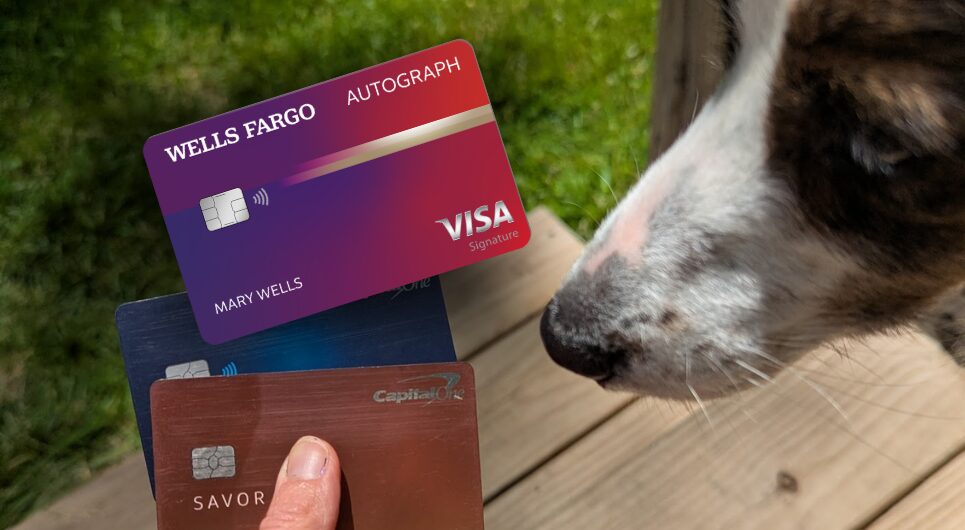
In the hierarchy of credit card rewards, most products are categorized as either "category-specific" or "catch-all" cards. Category cards, such as the Capital One Savor or the Wells Fargo Autograph, offer elevated rewards on specific sectors like groceries, dining, or fuel. However, the majority of consumer spending often falls into miscellaneous "non-bonused" categories, such as professional services, home repairs, or general retail.
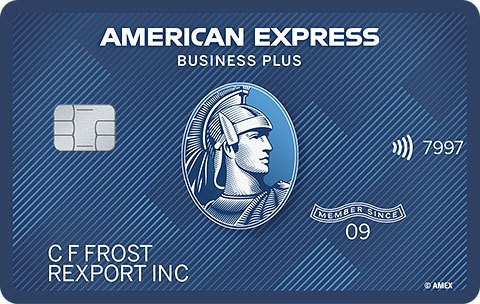
The American Express Blue Business Plus (BBP) addresses this gap by offering a flat 2X Membership Rewards points on all eligible purchases, up to a cap of $50,000 per calendar year. After this threshold is met, the earning rate reverts to 1X. For the average small business or a consumer managing personal expenses through a business entity, this 2X rate represents a 100% increase over the industry-standard 1% baseline. When valued at a conservative estimate of 1.6 cents per point—a standard "Reasonable Redemption Value" (RRV)—the BBP provides a 3.2% return on spend, outperforming many fee-bearing cards in the "everywhere else" category.
Comparative Analysis of Transferable Currency Ecosystems
A primary driver for the adoption of the Blue Business Plus card is the entry it provides into American Express Membership Rewards. In the current financial climate, credit card issuers are locked in a "currency war," with American Express, Chase, Capital One, and Wells Fargo competing to offer the most versatile transferable points.
While Wells Fargo and Capital One have made significant strides in expanding their transfer partner lists, American Express maintains a competitive edge through the sheer volume of its partners and the frequency of its transfer bonuses. For many cardholders, the transition from a 1.5X "base" card, such as the Capital One Spark Miles, to the 2X BBP is motivated by the desire to access specific airlines and hotel chains that are exclusive to the Amex network or offer better redemption ratios therein.
Key transfer partners that distinguish the Amex ecosystem from its competitors include:
- Delta SkyMiles: A critical partner for domestic U.S. travelers.
- ANA (All Nippon Airways): Widely regarded for offering some of the highest-value premium cabin redemptions to Asia.
- Hilton Honors: Frequently the subject of generous transfer bonuses.
The strategic value of these points is further amplified by periodic promotional windows. Data indicates that transfer bonuses typically range from 15% to 30%. For instance, projected promotional cycles for 2026 suggest a 15% bonus to Avianca LifeMiles, a 30% bonus to Virgin Atlantic Flying Club, and a 20% bonus to Hilton Honors. These bonuses effectively lower the "cost" of a free flight or hotel stay, allowing cardholders to stretch their earned points significantly further than they could with fixed-value cashback systems.
The Evolution of the Application Experience: Apply with Confidence
A significant barrier to entry for many potential cardholders is the "hard pull" on credit reports, which can temporarily lower a credit score regardless of whether the application is approved. In response to consumer demand for greater transparency, American Express introduced the "Apply with Confidence" feature. This mechanism allows applicants to submit their information and receive a decision without impacting their credit score initially.
Under this system, a "soft pull" is performed to determine eligibility. The applicant is then presented with an approval or denial. If approved, the applicant can choose to accept the card, at which point a hard inquiry is performed. If the applicant is denied or chooses not to proceed, no hard inquiry is recorded. This feature has proven particularly attractive to "re-entrants" in the points and miles hobby—individuals who may be cautious about their credit velocity or who have recently added other cards to their portfolio. For a consumer who has added multiple cards within a short four-month window, this transparency mitigates the risk of a wasted credit inquiry.
Portfolio Synergy and the No-Fee Stack
The efficacy of the Blue Business Plus card is best observed when it is integrated into a broader "no-fee" ecosystem. Financial analysts often point to the "Amex Trifecta" or similar "stacks" as the gold standard for optimization. In a $0 annual fee configuration, the BBP serves as the "anchor" card.
A sample optimized portfolio might include:
- Capital One Savor (No-Fee Version): Used for 3% back on dining and groceries.
- Wells Fargo Autograph: Used for 3X on travel, transit, and gas.
- Amex Blue Business Plus: Used for 2X on all other miscellaneous expenses.
This configuration ensures that almost every dollar spent earns at least a 3% return or its equivalent in transferable points, all while maintaining a $0 total annual fee. This "low-hassle" approach appeals to a demographic that values efficiency over the complex "coupon-optimization" required by high-fee cards like the Amex Platinum, which necessitates tracking various monthly credits to justify its $695 price tag.
Institutional and Market Implications
The continued popularity of the Blue Business Plus card carries broader implications for the credit card industry. As more consumers move toward business-designated cards for their high earning rates, issuers must balance the risk of "friendly fraud" (using business cards for personal spend) against the desire to capture market share.
Furthermore, the "no-annual-fee" trend challenges the traditional profitability model of banks, which has long relied on high annual fees to subsidize rewards. Instead, issuers are increasingly relying on "swipe fees" (interchange fees) and the long-term loyalty of customers within their ecosystem. By offering a high-earning no-fee card, American Express secures a "top-of-wallet" position, ensuring that the cardholder remains engaged with their platform for years, potentially leading to future interest revenue or the adoption of other financial products.
Targeted Incentives and Amex Offers
Beyond the base earning rate, the Blue Business Plus card serves as a gateway to "Amex Offers," a card-linked merchant program. This program provides statement credits or bonus points for spending at specific retailers, ranging from technology providers like Dell to travel brands like Marriott.
While these offers are variable and targeted based on individual spending patterns, they provide a layer of "passive" value that can often exceed the benefits of cashback cards. For a business owner, a single targeted offer for 10% back on insurance or office supplies can result in hundreds of dollars in savings annually, further cementing the card’s value proposition in a zero-fee environment.
Conclusion: The Future of Simplified Rewards
The American Express Blue Business Plus Credit Card represents a shift in the philosophy of rewards maximization. It proves that a "simple" strategy—focusing on high-base earning and no annual fees—can be just as effective, if not more so, than complex multi-card strategies involving high-cost products.
As the "miles and points" hobby continues to mature, the focus is shifting away from the "churning" of cards for one-time bonuses and toward the sustainable accumulation of valuable currencies. By providing 2X Membership Rewards on all spend, a transparent application process, and access to a premier transfer network, the BBP remains a benchmark for what a modern, consumer-friendly credit card should offer. For those re-entering the market or looking to streamline their financial lives, the data suggests that the path to maximum value often begins with the elimination of the annual fee.




 Anjar Salim
 Chandra Hamzah
 Tatiana Tantri Indah Sari
 Lukman Taruna Persada Ramadan
