
 Lukman Taruna Persada Ramadan
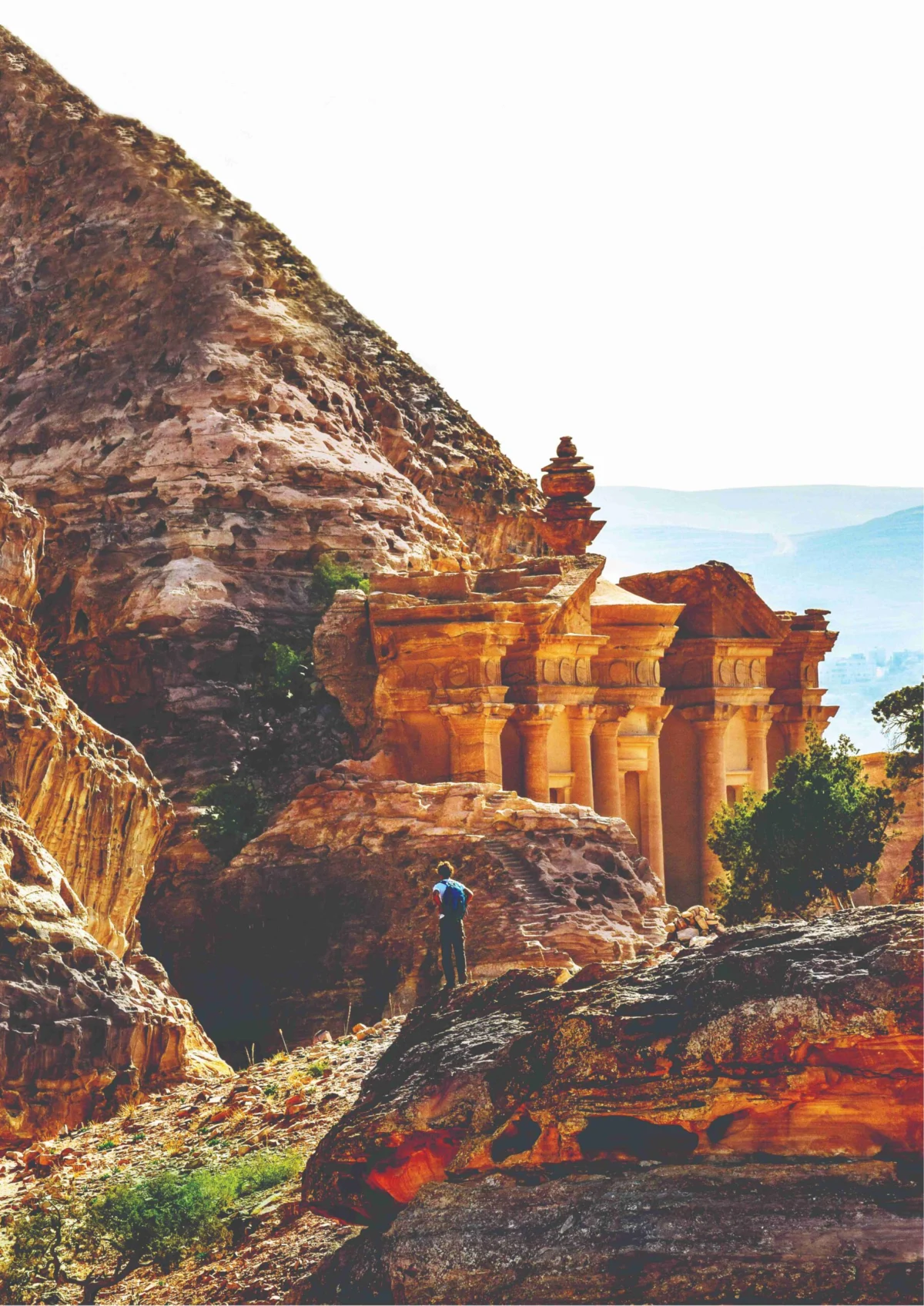
Jordan has long stood at the vital crossroads of the Middle East, serving as a geographic and cultural bridge connecting Africa, Asia, and Europe. Today, this historic Hashemite Kingdom is experiencing a sustained resurgence in global tourism, driven by a rare combination of prehistoric settlements, sprawling Greco-Roman ruins, deeply rooted Christian heritage, and a thriving culinary and cultural scene. From the rose-red city of Petra carved into sandstone cliffs to the modern, cosmopolitan avenues of Amman, the country offers travelers a unique opportunity to experience thousands of years of continuous human history within a remarkably compact and accessible destination.
Main Facts of Jordan’s Tourism Appeal
The enduring allure of Jordan lies in its stratigraphy of civilizations. The nation’s narrative is not confined to glass cases in museums; it is etched into canyon walls, preserved in ancient mosaic floors, and celebrated through daily culinary traditions and generational hospitality.
Tourism authorities note that visitors to Jordan can seamlessly transition from the sophisticated urban remnants of classical antiquity to serene desert landscapes and biblical landmarks in a matter of hours. The country’s tourism infrastructure combines modern luxury accommodations with deeply authentic heritage experiences, making it an increasingly popular destination for cultural explorers, history enthusiasts, and spiritual pilgrims alike.
Chronology of Civilizations: A Historical Timeline of Jordan
To understand Jordan’s profound historical depth, one must examine the chronological layers of civilizations that have inhabited and governed the region over millennia:

- Prehistoric Era: Long before recorded history, the region hosted some of the world’s earliest agricultural settlements, evidenced by excavations in regions such as Beidha and Wadi Faynan, dating back more than 10,000 years to the Neolithic period.
- The Nabataean Kingdom (circa 4th century BCE – 106 CE): The Nabataeans transformed the arid desert into a thriving empire centered on trade routes, carving monumental architecture such as the Treasury (Al-Khazneh) into the rose-red sandstone of Petra.
- The Roman and Byzantine Periods (106 CE – 7th Century CE): Following the annexation of the Nabataean Kingdom by Emperor Trajan, the region flourished under Roman rule. Major cities in the Decapolis league—such as Gerasa (modern-day Jerash) and Gadara (Umm Qais)—were constructed with grand colonnaded streets, theaters, temples, and hippodromes. This era later transitioned into the Byzantine period, leaving behind remarkable Christian architecture and intricate mosaic floors.
- The Islamic Caliphates (7th Century – 16th Century): The arrival of Islam brought the Umayyad, Abbasid, and Mamluk dynasties. The Umayyads, in particular, established desert castles (such as Qasr Amra, a UNESCO World Heritage site) and integrated the region into a vast, prosperous global trade network.
- The Ottoman Period (16th Century – 1918): For four centuries, the region was administered by the Ottoman Empire, leaving architectural legacies in cities such as As-Salt, characterized by distinct yellow-stone buildings, arches, and stairways.
- The Modern Era (1921 – Present): Following the collapse of the Ottoman Empire and the subsequent establishment of the Emirate of Transjordan, the nation gained full independence in 1946 as the Hashemite Kingdom of Jordan, evolving into a stable, modern constitutional monarchy renowned for regional diplomacy and hospitality.
Key Archaeological and Cultural Highlights
Jordan’s diverse landscape is dotted with world-class heritage sites, many of which hold prestigious UNESCO recognition.
In the rugged north, Umm Qais occupies the elevated site of the ancient city of Gadara, offering panoramic views of the Sea of Galilee and the Golan Heights. Visitors can walk along basalt-paved streets, explore an impressive western theater, and view the remnants of an ancient mausoleum. A short distance away, Jerash remains one of the largest and best-preserved Roman provincial cities in the world. Its Oval Plaza, the Street of Columns, the South Theater, and the Temple of Artemis provide an extraordinarily vivid look at urban planning and engineering from antiquity.
Further south, the capital city of Amman provides a living study in architectural juxtaposition. At the historic Amman Citadel, perched atop Jabal al-Qal’a, visitors encounter architectural layers spanning the Roman Temple of Hercules, a Byzantine church, and the monumental Umayyad Palace complex. Below the Citadel, the Roman Theater continues to stand as a testament to the city’s classical past.
For art and religious history enthusiasts, the town of Madaba is internationally celebrated for its Byzantine and Umayyad mosaics. Chief among them is the sixth-century Madaba Map located within the Greek Orthodox Church of Saint George—the oldest surviving cartographic depiction of the Holy Land, meticulously crafted from millions of colored stone pieces.
Just west of Madaba lies Mount Nebo, an elevation offering sweeping vistas across the Jordan Valley, the Dead Sea, and, on clear days, the distant spires of Jerusalem. Traditionally revered as the burial site of Moses, Mount Nebo features an early Christian church complex adorned with remarkable floor mosaics.
Further cementing Jordan’s significance to global pilgrimage, the Baptism Site of Jesus Christ (Al-Maghtas), situated on the eastern bank of the Jordan River, is a UNESCO World Heritage site comprising monastic ruins, baptismal pools, and ancient churches that draw hundreds of thousands of faithful visitors annually.

Supporting Data and Tourism Metrics
Jordan’s tourism sector has historically been a cornerstone of its national economy, contributing significantly to the gross domestic product (GDP) and supporting tens of thousands of direct and indirect jobs. According to regional tourism data, Jordan welcomed millions of international visitors prior to global travel disruptions, with cultural, historical, and religious tourism serving as the primary drivers.
The country’s strategic investments in aviation networks, hospitality infrastructure, and promotional campaigns—such as the Jordan Pass, which bundles entry fees for dozens of cultural sites and waives visa fees for qualifying travelers—have successfully streamlined access for international tourists. Furthermore, sustainable tourism initiatives spearheaded by organizations like the Royal Society for the Conservation of Nature (RSCN) ensure that natural reserves and historical ecosystems are safeguarded against the pressures of growing visitor numbers.
Official Perspectives and Industry Responses
Industry leaders emphasize that Jordan’s primary competitive advantage lies in the depth and accessibility of its historical narrative.
“Jordan has always been a destination where travelers can experience history not simply by visiting monuments, but by walking through it, tasting it, and meeting the people who continue its traditions,” said Ahmad Kraishan, area marketing manager for the Jordan Tourism Board. “Our historic cities, archaeological sites, and Christian heritage offer an extraordinary diversity of experiences within a remarkably compact destination.”
This sentiment is echoed by international tourism development experts who analyze shifting consumer preferences toward educational and immersive travel.

“Jordan is a destination that rewards curiosity and invites travelers to learn,” stated Danny Cohanpour, founder and CEO of Trove Tourism Development Advisors. “Its greatest strength is the diversity of its historical and cultural experiences. Every city, archaeological site, and community reveals another chapter of Jordan’s story.”
Implications and Future Outlook for Global Travelers
As global travel trends increasingly favor destinations that offer meaningful, educational, and unhurried experiences over mass tourism, Jordan is uniquely positioned to capture the interest of modern explorers. The country’s ongoing commitment to preserving its archaeological treasures while modernizing its hospitality sector ensures that ancient sites remain intact for future generations while delivering world-class comfort to contemporary visitors.
By bridging ancient heritage with dynamic culinary traditions, vibrant local communities, and modern sustainability practices, Jordan offers a masterclass in how nations can leverage their historical capital. For travelers seeking a destination where every horizon tells a story and every monument is part of a living continuum, the Hashemite Kingdom remains an essential chapter in the history of human travel.




 Gabriela Annisa

 Tatiana Tantri Indah Sari

 Anjar Salim


 Dwi Wanna
