
 Anjar Salim
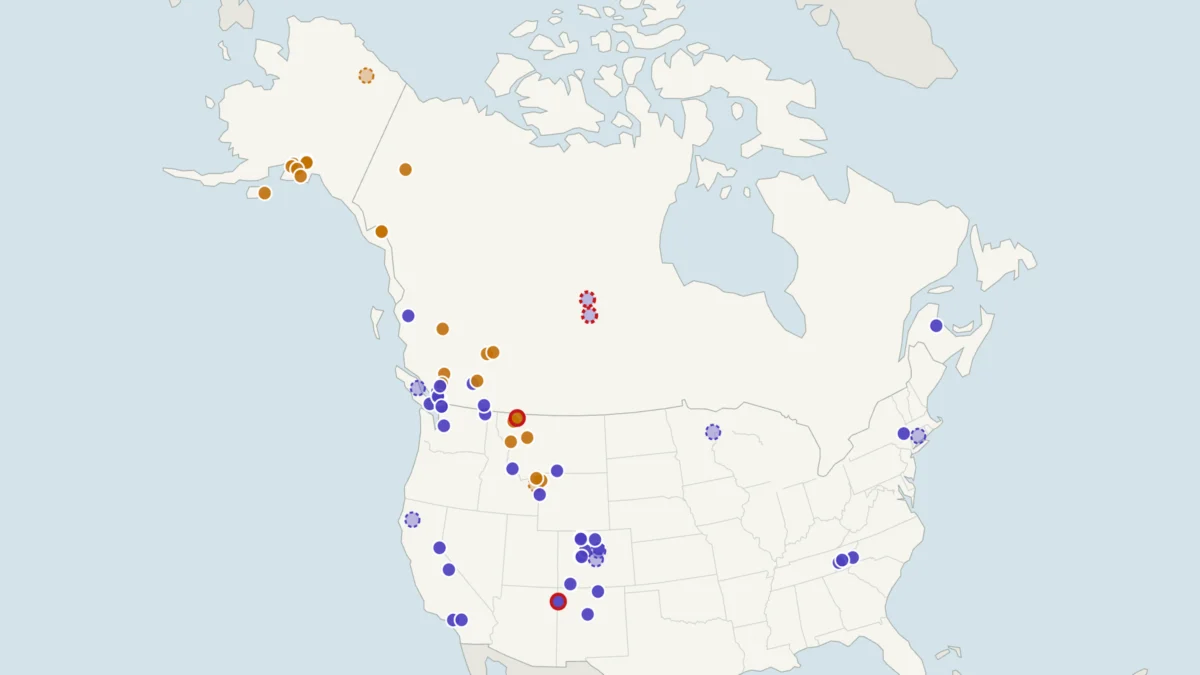
Environmental pressures, shifting weather patterns, and an unprecedented surge in outdoor recreation have dramatically accelerated the frequency of human-bear encounters across North America. As wild habitats experience severe degradation due to prolonged drought and unpredictable climate shifts, black and grizzly bears are increasingly venturing out of remote forests and into suburban neighborhoods in a desperate search for calories. This modern ecological squeeze has heightened safety concerns for residents and outdoor enthusiasts alike, yet a startling institutional blind spot persists: no centralized, unified federal agency in the United States systematically tracks bear attacks, aggressive encounters, or wildlife-human conflicts on a national scale.
Instead of a cohesive federal tracking mechanism, monitoring responsibilities are fractured across a patchwork of state wildlife departments, provincial agencies, and local game wardens. Recognizing this critical information gap, 71-year-old Texas outdoorsman and writer Mike Dickerson took matters into his own hands. By meticulously aggregating public news reports, daily media alerts, and direct accounts from professional wildlife managers and hunters, Dickerson constructed an independent, comprehensive log of bear attacks and close encounters across North America for the year 2026. His crowdsourced initiative has brought national attention to a growing crisis, exposing the limitations of current wildlife management data collection and sparking urgent conversations among conservationists and public safety officials.
The Human Toll: A Terrifying Morning in Idaho
The stark reality of this escalating crisis was underscored in the predawn hours of October 7, 2026. Around 3:30 A.M., a female black bear accompanied by her two cubs breached a residential home near Salmon, Idaho. Awakened by the commotion and driven by an immediate instinct to protect his sleeping wife and two daughters, local resident Brian Heidemann confronted the adult bear directly. In a harrowing sequence that unfolded like a cinematic thriller, Heidemann tackled the aggressive sow and managed to subdue the animal in a physical chokehold long enough for his family to remain out of harm’s way.
The physical toll of the encounter was severe. Heidemann sustained deep gashes and extensive bite wounds across his head, torso, and shoulders, requiring urgent medical intervention. Following the incident, state wildlife officials responded to the scene and ultimately euthanized the mother bear and her two cubs, citing public safety risks and the animals’ dangerous habituation to human infrastructure.
The Heidemann family’s ordeal is far from an isolated event. Throughout 2026, similar narratives of intrusion and confrontation have played out from the rugged back-country of the Pacific Northwest to the rural peripheries of Eastern Canada, highlighting an aggressive trend driven primarily by nutritional stress and vanishing wild forage.
Quantifying the Conflict: Dickerson’s 2026 Log
Frustrated by the absence of a unified national dataset, Mike Dickerson began his independent tracking project early in the year after receiving concerning informal reports from professional wildlife managers, particularly in the western United States. What started as a personal inquiry snowballed into an extensive regional database, which Dickerson initially published on social media before drawing the attention of national outdoor journalism outlets.
Dickerson’s comprehensive 2026 log documents at least 73 distinct bear encounters and attacks spanning 13 U.S. states, four Canadian provinces, and the Yukon Territory. Within this dataset, 64 incidents crossed the threshold from passive encounters into direct attacks resulting in physical human injury or fatality. The log captures a wide spectrum of aggressive wildlife behaviors, ranging from surprise defensive maulings in deep timber to aggressive residential foraging and bluff charges along popular hiking corridors.
Because Dickerson gathered his data primarily through automated media alerts, local news archives, and professional networks, his methodology was inherently conversational rather than academic. Yet, the sheer volume of documented incidents provides a compelling snapshot of an unusually volatile year for human-bear coexistence.
Expert Analysis and Data Breakdown
To evaluate the statistical validity of Dickerson’s crowdsourced database, outdoor journalism publication Outside submitted the log to Chris Servheen, the retired national grizzly bear recovery coordinator for the U.S. Fish and Wildlife Service. Servheen subjected the raw numbers to expert analysis, revealing critical behavioral patterns and risk factors embedded within the data.
According to Servheen’s review, more than two-thirds of the total incidents documented in Dickerson’s log involved black bears rather than grizzlies, a reflection of the vastly broader geographic range and higher population density of black bears across North American human-wildlife interfaces. Furthermore, domestic dogs played a surprisingly significant role in the data, appearing as a compounding factor in approximately one-quarter of all recorded bear attacks. Wildlife biologists have long noted that dogs off-leash can provoke defensive behavior in bears or inadvertently lead a pursuing bear directly back to its human owners.
Servheen emphasized a vital caveat regarding the dataset’s underlying bias toward catastrophic outcomes. "Remember that these are usually reported due to an injury or a serious event," Servheen noted during his evaluation. "Most minor encounters are not reported. That means that this list is biased toward serious events. There are countless minor encounters that are not reported and do not make it into such a list."
Dickerson readily concedes that his project lacks the formal academic rigor of a peer-reviewed scientific study, reinforcing that his primary motivation was simply to establish accountability and visibility where official government data streams fall short.
Broader Historical Context and Ecological Drivers
The elevated frequency of bear attacks observed in 2026 aligns with a broader, multi-decade upward trajectory in human-wildlife conflict across North America. Historical data reveals that bear attacks, while statistically rare, are becoming more numerous as human populations expand deeper into traditional wildlife corridors.
A landmark 2019 study published in scientific literature documented 183 brown bear attacks globally between 2000 and 2015, averaging roughly 11 incidents per year in North America. When examining long-term mortality trends, records compiled by specialized bear research organizations indicate that black and grizzly bears killed at least 150 people across the continent between 1990 and 2019. Alarmingly, historical trend analyses suggest that fatal attacks have occurred at a higher frequency in recent decades compared to a century ago, driven not by aggressive evolutionary shifts in the animals, but by overlapping population dynamics between expanding human communities and recovering bear populations.
The acute spike observed in 2026, however, is heavily tied to immediate environmental pressures. Climate change, prolonged regional droughts, and erratic weather patterns have severely impacted the productivity of native vegetation, creating an exceptionally poor natural food year for bears. Natural forage items such as huckleberries, acorns, and whitebark pine seeds have experienced widespread crop failures in key regions.
"It is a bad food year for bears due to drought and climate change reducing natural foods for bears," Servheen explained. "This brings people and bears into increased encounters. There are more people living and recreating in bear habitat, and that results in increased encounter frequency and more reports and events."
Implications for Wildlife Management and Public Safety
The grassroots success of Mike Dickerson’s tracking initiative underscores a systemic vulnerability in modern wildlife management: the lack of a standardized, real-time national database for human-wildlife conflicts. Without comprehensive federal or multi-agency tracking systems, wildlife managers struggle to allocate resources effectively, identify emerging regional hotspots, or implement targeted public safety campaigns before minor habituation problems escalate into violent encounters.
As recreational tourism in public lands reaches all-time highs and residential developments continue to push outward into wildland-urban interfaces, the friction between humans and large carnivores is projected to intensify. Experts emphasize that mitigating this crisis will require a multi-pronged approach, including stricter municipal ordinances regarding residential waste management, mandatory use of certified bear-resistant containers in backcountry and front-country campgrounds, and increased funding for state wildlife agencies to relocate habituated animals before lethal interventions become necessary.
Ultimately, Dickerson’s independent log serves as both a warning and a call to action. It demonstrates that while individual citizens can temporarily bridge information gaps through sheer persistence, systemic solutions require institutional commitment. Until government agencies establish unified, cross-jurisdictional databases to monitor and analyze human-wildlife interactions, stories like Brian Heidemann’s early morning struggle in Idaho will remain the stark, dangerous cost of sharing a rapidly changing landscape with North America’s largest predators.




 Gabriela Annisa

 Lukman Taruna Persada Ramadan

 Tatiana Tantri Indah Sari


 Dwi Wanna
