
 Lukman Taruna Persada Ramadan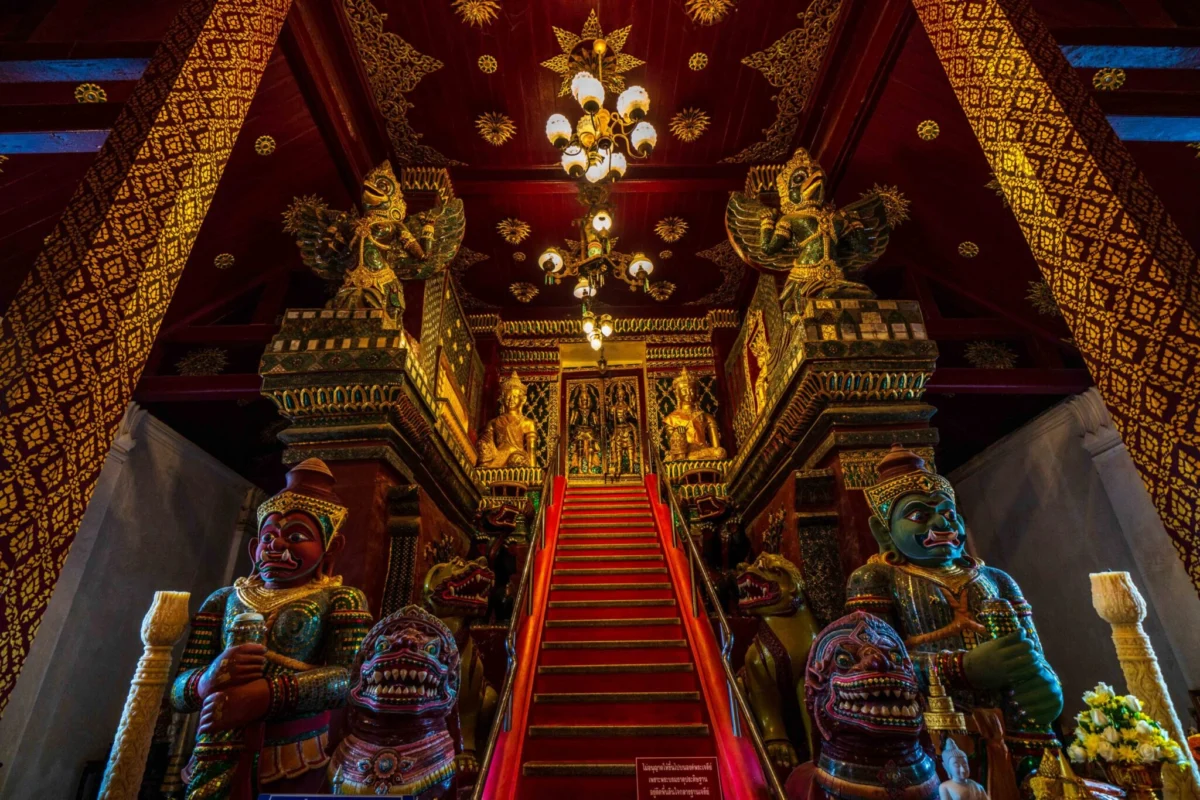
The United Nations Educational, Scientific and Cultural Organization has officially inducted 25 new properties into its esteemed World Heritage List during its annual committee session, expanding humanity’s catalog of protected cultural and natural treasures to global prominence. Among this year’s most anticipated designations are the industrial architecture of Aalto Works in Finland, a synchronized network of historic Italian-style condominio theaters spanning central Italy, and the deeply revered Buddhist monastic complex of Wat Phra Mahathat Woramahawihan in southern Thailand. These additions join a diverse cohort of newly minted global landmarks, ranging from ancient archaeological capitals in Asia to sacred burial mounds and natural wildlife refuges across the Americas and Europe.
The expansion of the World Heritage List reflects an ongoing global commitment to preserving sites of exceptional universal value. UNESCO’s expert advisory bodies, including the International Council on Monuments and Sites (ICOMOS) and the International Union for Conservation of Nature (IUCN), spent months evaluating dossier submissions, inspecting structural integrity, and verifying management plans before forwarding their recommendations to the World Heritage Committee. The resulting 25 new sites represent a cross-section of human ingenuity, architectural evolution, and ecological diversity that defines the shared history of our planet.
Chronology and Selection Process of the 2026 World Heritage Additions
The path to World Heritage inscription is a rigorous, multi-year administrative and diplomatic marathon. Governments typically spend a decade or more preparing tentative lists before submitting formal nominations to the UNESCO World Heritage Centre in Paris.
The evaluation cycle for the current intake began years prior, culminating in rigorous field missions conducted by technical experts throughout the previous calendar year. During these missions, inspectors assess factors such as authenticity, legal protection, community engagement, and vulnerability to environmental or anthropogenic threats.
Once evaluations are compiled, the 21 member states comprising the World Heritage Committee convene to debate the merits of each nomination. The recent session saw intense deliberation over cultural landscapes, industrial heritage sites, and transboundary natural reserves. Following formal adoption by the committee, the inscriptions were officially announced, setting off nationwide celebrations in host countries ranging from Japan and Palestine to the United States and Mongolia.

Architectural and Cultural Significance of Key Inscriptions
Thailand’s newly inscribed Wat Phra Mahathat Woramahawihan, situated within Nakhon Si Thammarat Province on a narrow coastal strip historically bridging major maritime trade routes, stands as a premier testament to cross-cultural syncretism. Founded in the eighth century, the monastery complex has served as a central pillar of Southeast Asian Buddhism for well over a millennium. Architectural elements and ritual practices embedded within the site reflect an intricate fusion of Hinduism, Brahmanism, Mahayana Buddhism, and Theravada Buddhism. The enduring continuity of traditions—such as the regional chronicle writing system, the annual cloth-wrapping ceremony of the Great Reliquary, and the dynamic Nora dance drama—demonstrates how living heritage can be preserved alongside monumental architecture.
In Europe, the collective inscription of 10 Italian-style condominio theaters—constructed between the mid-18th and late 19th centuries across the regions of Emilia-Romagna, Umbria, and Marche—highlights a unique socio-economic model of cultural patronage. Unlike grand royal or state-sponsored opera houses, these venues were funded through a collective condominio system that combined public municipal investment with private citizen shares. This innovative financial structure empowered small- and medium-sized towns to build sophisticated performance spaces featuring tiered boxes, advanced wooden staging machinery, and acoustically optimized auditoriums. Structures like Teatro Mariani in Emilia Romagna, widely regarded as Italy’s oldest surviving wooden theater, served not only as entertainment hubs but as critical civic forums where public discourse and community identity were forged.
Global Scope: From Ancient Capitals to Natural Refuges
Beyond Southeast Asia and southern Europe, the 2026 list encompasses a broad spectrum of global geography and historical epochs. In East Asia, the ancient capitals of Asuka and Fujiwara in Japan earned recognition for their pivotal roles in the formation of the early Japanese state and urban planning systems. Meanwhile, in Central Asia, the monumental cemetery complexes of the Xiongnu Nobility in Mongolia offer profound archaeological insights into the nomadic empires that once dominated the Eurasian steppe.
The Middle East is represented by the ancient city of Sebastia in Palestine, a site layered with centuries of Hellenistic, Roman, Byzantine, and Islamic history. In North America, the Okefenokee National Wildlife Refuge—straddling the border of Georgia and Florida in the United States—was inscribed for its irreplaceable ecological value, protecting vast peat wetlands, rare aquatic species, and unique hydrological systems. Europe also saw the inclusion of the poignant beaches of the D-Day Landings in Normandy, France, cementing the physical landscape of the 1944 Allied invasion as a globally protected monument to modern peace and reconciliation.
Supporting Data and Comparative Analysis of World Heritage Growth

The inclusion of these 25 properties pushes the total number of UNESCO World Heritage sites well past the 1,200 mark, distributed across more than 160 nations. Cultural sites continue to make up the vast majority of designations, hovering around 75 percent of the total list, while natural and mixed properties account for the remainder.
Geographic distribution remains a focal point of ongoing policy debates within UNESCO. Historically, European and North American nations held a disproportionate share of inscriptions, prompting strategic initiatives to encourage nominations from underrepresented regions, particularly across Africa, the Pacific, and parts of Central Asia. The 2026 intake reflects this diversifying trend, with significant representation from Southeast Asian ritual landscapes, East Asian imperial ruins, and nomadic archaeological traditions.
Furthermore, economic impact data compiled by cultural economists indicates that World Heritage status frequently serves as a catalyst for sustainable regional development. Inscriptions typically generate a measurable increase in heritage tourism, which, when properly managed, injects vital revenue into local economies, funds conservation initiatives, and spurs investment in hospitality infrastructure.
Official Responses and Institutional Reactions
Governments, heritage foundations, and local municipalities have responded to the announcement with widespread enthusiasm and renewed pledges of stewardship. National tourism authorities and cultural ministries emphasized that inscription is not merely an honorary accolade, but a binding legal commitment to long-term preservation.
In Thailand, the Ministry of Culture issued a comprehensive statement noting that the recognition of Wat Phra Mahathat Woramahawihan validates centuries of spiritual devotion and safeguards intangible cultural traditions for future generations. Regional officials in Nakhon Si Thammarat outlined plans to upgrade visitor facilities while strictly enforcing zoning laws to protect the buffer zones surrounding the monastery complex.
Similarly, regional leaders across Emilia-Romagna, Umbria, and Marche praised the recognition of the condominio theaters. Italian cultural preservation agencies highlighted that the trans-regional serial nomination underscores the collaborative spirit of historic Italian civic life. Local mayors and theater associations announced coordinated preservation strategies aimed at restoring deteriorating stage mechanics and expanding educational programming for younger generations.

Implications for Tourism, Preservation, and Sustainable Development
The conferral of World Heritage status carries complex implications that extend far beyond prestige. While increased international visibility drives economic growth, it also introduces significant management challenges, chief among them the threat of overtourism and environmental degradation.
Heritage experts stress that site managers must balance accessibility with carrying capacity. For fragile ecosystems like the Okefenokee National Wildlife Refuge, increased tourist traffic requires strict ecological monitoring to prevent disruption to native flora and fauna. For delicate historical structures—such as the wooden interiors of Italy’s condominio theaters or the ancient stone reliefs of Asian monastic complexes—micro-climate control, visitor caps, and continuous structural monitoring are essential to prevent irreversible wear.
Moreover, inscribed properties are subject to periodic reactive monitoring reports by UNESCO. If a site fails to maintain its conservation standards or allows uncontrolled urban encroachment, it risks being placed on the List of World Heritage in Danger, or ultimately, losing its status entirely—a rare but consequential disciplinary action designed to enforce global accountability.
As the international community absorbs the significance of these 25 new additions, the overarching objective remains clear: to safeguard the irreplaceable physical and cultural touchstones of human history against the pressures of time, climate change, and modernization, ensuring they endure as a shared inheritance for generations to come.




 Anjar Salim
 Chandra Hamzah
 Tatiana Tantri Indah Sari
 Budi Mulyono
