
 Budi Mulyono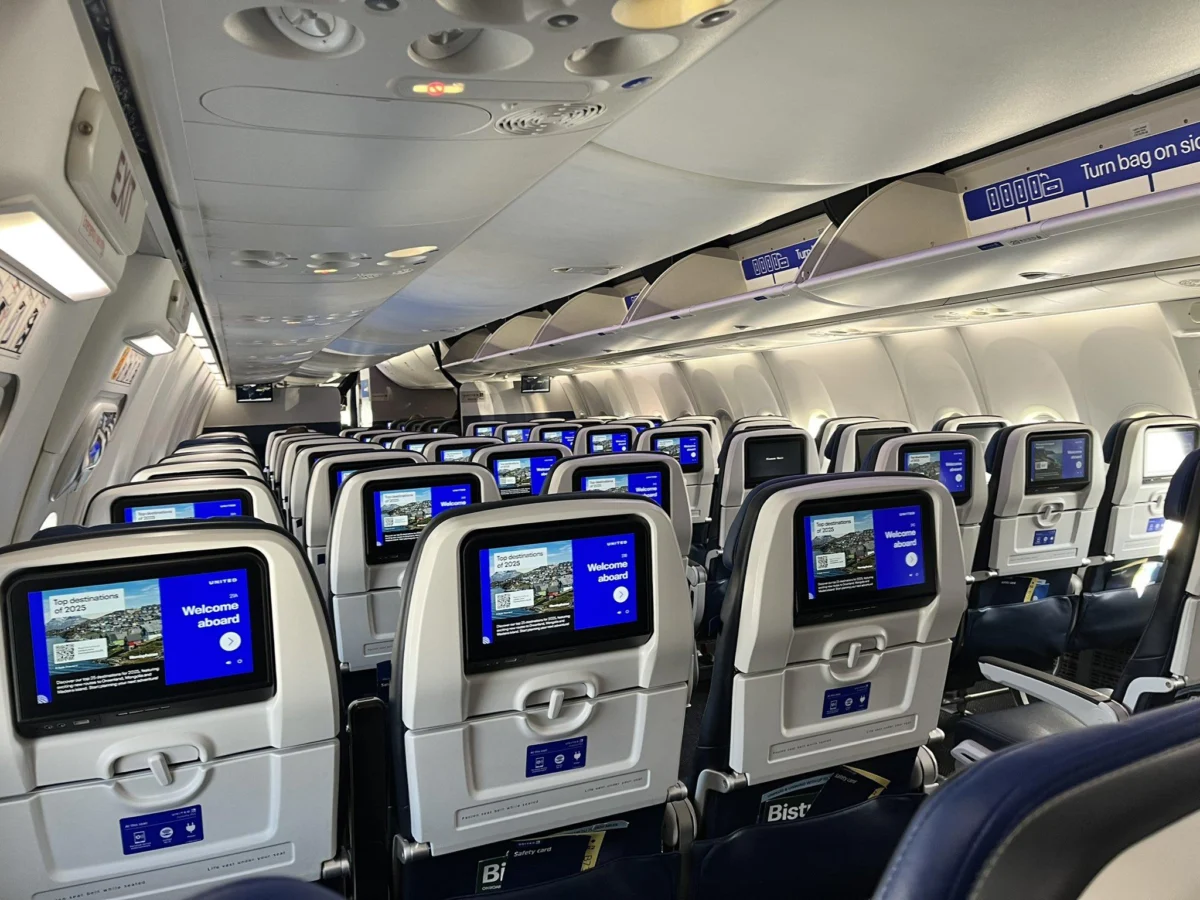
The leadership of United Airlines has recently come under increased scrutiny from aviation analysts and industry observers regarding its public stance on ticket pricing and market dynamics. Scott Kirby, the Chief Executive Officer of United Airlines, has frequently asserted that airfares in the United States are lower than they should be, suggesting that the industry’s reluctance to aggressively raise prices stems from internal organizational dysfunction rather than market forces. However, a retrospective analysis of Kirby’s predictions over the past several years suggests a recurring disconnect between executive rhetoric and the fundamental economic realities of the aviation sector.
At the core of the current debate is Kirby’s assertion that airlines are too "timid" to charge what passengers are willing to pay. In recent communications, Kirby has posited that United Airlines possesses a unique boldness in its pricing strategy, while competitors are allegedly held back by marketing and government relations departments that fear the public or regulatory backlash of fare hikes. This narrative, however, challenges the established principles of revenue management, where prices are primarily dictated by the iron law of supply and demand rather than executive willpower.
The Evolution of Kirby’s Economic Theory: A Chronological Overview
To understand the current tension between United’s leadership and market performance, one must examine the timeline of Kirby’s public projections. This is not the first instance in which the CEO has predicted a seismic shift in ticket pricing that failed to materialize.
In 2018, while serving as the President of United Airlines, Kirby introduced a theory that airfares should effectively double. His reasoning was based on the observation that air travel’s share of the United States’ Gross Domestic Product (GDP) had fallen to approximately half of its historical levels. He argued that lowering fares was a "self-defeating" strategy that failed to stimulate enough new sales to offset the loss in revenue per ticket. Despite this bold stance, the following years saw a continued trend of competitive pricing across the industry, with United frequently matching lower fares offered by competitors to maintain load factors.
In 2021, Kirby made another significant projection regarding United’s loyalty program, MileagePlus. He informed analysts that the company had set a goal to grow the program’s revenue by 50% within a four-year window. As of 2024, industry data indicates that this ambitious target remains unfulfilled, mirroring his earlier predictions about the doubling of fares.
By early 2024, the narrative shifted toward organizational "dysfunction" at other carriers. Kirby suggested that at many airlines, the decision-making process for fare increases is hindered by non-revenue departments. This claim was indirectly addressed by competitors; for example, American Airlines Chief Financial Officer Devon May clarified in an earnings call that their head of government relations, Nate Gatten, does not involve himself in revenue management or pricing decisions. This suggests that the "timidity" Kirby identifies in others may simply be a standard adherence to market-clearing prices.
The Fundamental Economics of the Empty Seat
The primary obstacle to Kirby’s vision of significantly higher fares is the perishable nature of the airline product. An empty seat on a departing aircraft represents a total loss of potential revenue that can never be recovered. Consequently, airlines are economically incentivized to lower prices to fill capacity, especially when competitors are doing the same.
In a perfectly competitive market, prices gravitate toward the marginal cost of providing the service. While airline CEOs may desire a pricing model that reflects a fixed percentage of GDP or covers total average costs plus a guaranteed profit margin, the reality is more complex. Nobel laureate economist Vernon Smith demonstrated that competitive pricing can emerge in markets with as few as four buyers and sellers. With several major carriers and various low-cost entrants competing on the same routes, the U.S. domestic market remains highly sensitive to price fluctuations.
Airlines do not typically set fares by adding a markup to their operating costs. Instead, fuel price increases or labor cost hikes influence fares indirectly: if costs become too high, airlines reduce capacity by cutting marginal routes. This reduction in supply, assuming demand remains constant, eventually forces prices upward. However, if an airline attempts to raise prices without a corresponding reduction in industry-wide capacity, it risks losing market share to competitors who maintain lower price points to fill their planes.
The Decoupling of GDP and Air Travel
One of the most significant flaws identified in Kirby’s "GDP-share" theory is the changing nature of the global economy. The assumption that air travel spend must remain a constant percentage of GDP ignores the shift toward a digital and service-oriented economy.
In previous decades, economic growth was closely tied to industrial expansion and physical commerce, which necessitated significant business travel. In the modern era, GDP growth is increasingly driven by sectors like Artificial Intelligence, software development, and high-tech manufacturing. These sectors can generate billions of dollars in value with relatively small workforces and less reliance on physical mobility. For instance, the capital expenditure required for AI data centers and semiconductor procurement from companies like Nvidia or TSMC does not trigger a proportional increase in corporate travel budgets.
Furthermore, the rise of high-quality video conferencing and remote collaboration tools has permanently altered the "travel intensity" of business operations. As a result, the historical correlation between GDP and airfare spend has weakened, rendering Kirby’s 2018 benchmarks less relevant to the current economic landscape.
Comparative Strategies: United vs. Delta and American
While Kirby emphasizes the need for broad fare increases, United’s primary competitors are pursuing different avenues for revenue optimization. Delta Air Lines, for example, has pivoted toward a sophisticated technological approach. Rather than calling for industry-wide price hikes, Delta is utilizing Artificial Intelligence to refine its revenue management.
Delta’s "AI super-analyst" models are designed to offer targeted, personalized pricing. By analyzing vast amounts of consumer data, the airline can identify specific segments where price elasticity is lower, allowing them to capture higher margins without alienating price-sensitive travelers. This approach acknowledges that the "will" to raise prices is less effective than the "data" required to price segments accurately.
Meanwhile, American Airlines has focused on simplifying its distribution model and reducing overhead, focusing on direct-to-consumer sales to bypass third-party costs. These strategies suggest that while United’s leadership focuses on the macro-level "underpricing" of the industry, its peers are finding ways to improve profitability through micro-level efficiency and technological integration.
Market Realities and Consumer Sentiment
The consumer response to airfare fluctuations also plays a critical role. Demand for air travel is not static; it is highly sensitive to broader economic conditions. If high fuel prices or aggressive executive pricing lead to a recession or a decline in consumer confidence, demand will inevitably drop.
Wealth effects also influence travel patterns. When the stock market performs well, leisure travel typically increases. Conversely, during periods of economic uncertainty, consumers are more likely to prioritize essential spending over discretionary trips. If an airline attempts to double its fares in such an environment, as Kirby suggested in 2018, it would likely face a catastrophic drop in load factors, forcing a rapid reversal of the strategy.
Data from the Bureau of Transportation Statistics (BTS) shows that, when adjusted for inflation, the average domestic airfare has generally trended downward over the last 25 years. This long-term decline is a result of increased fuel efficiency, the rise of low-cost carriers, and the transparency provided by online booking engines, which have empowered consumers to shop for the lowest possible price.
Broader Implications and Future Outlook
The persistent gap between Scott Kirby’s rhetoric and the actual movement of airfares raises questions for United Airlines’ investors. While Kirby is credited with making several correct calls during the COVID-19 pandemic regarding the industry’s recovery, his track record on pricing theory suggests a tendency toward optimism that the market does not always support.
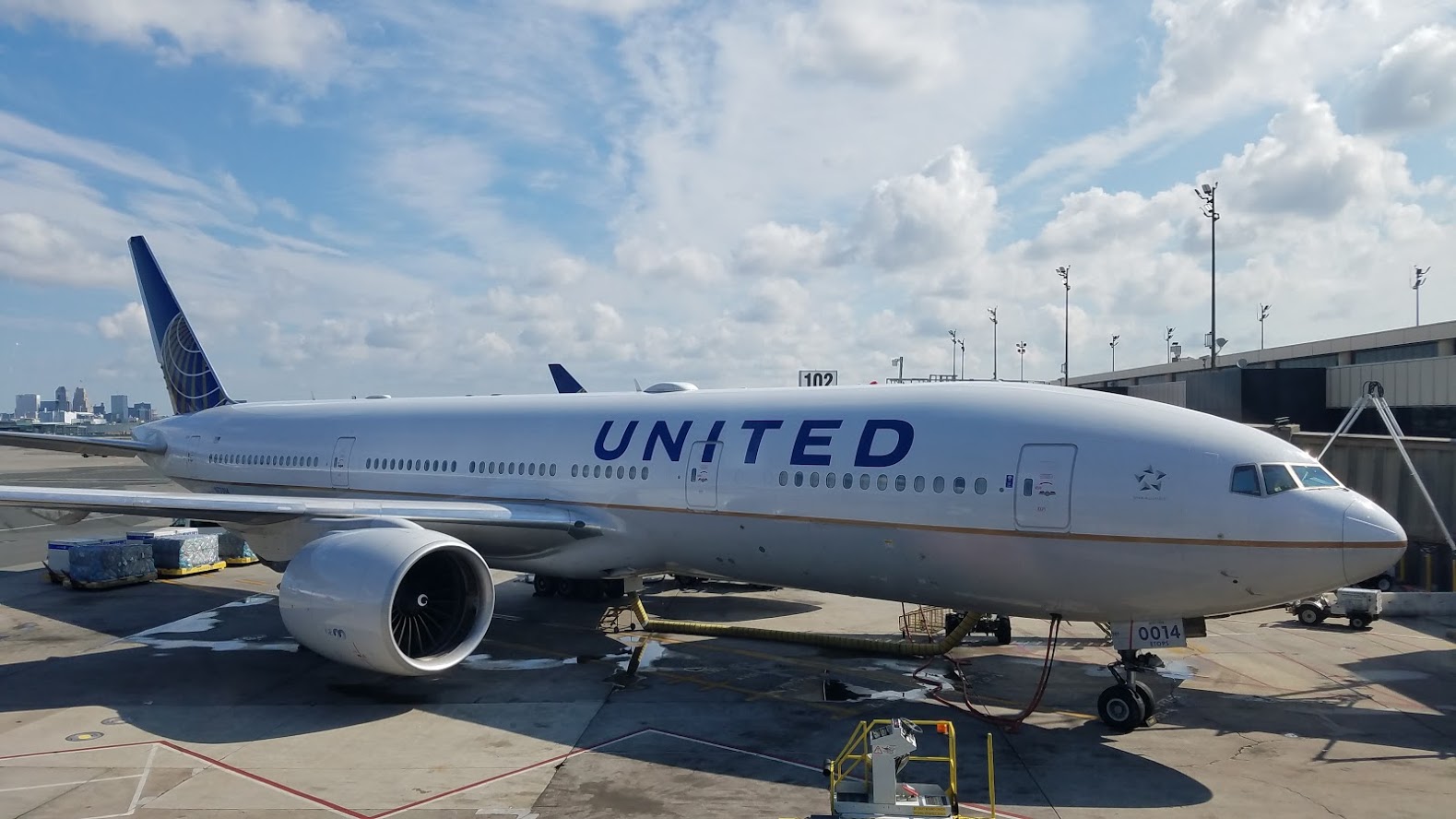
For the aviation industry at large, the "Kirby Theory" serves as a case study in the limits of executive influence over macro-market forces. No single airline, regardless of its size or the "boldness" of its CEO, can unilaterally shift the pricing equilibrium of a deregulated, competitive market.
As United Airlines moves forward, the industry will be watching to see if the company can finally achieve the revenue growth and fare levels Kirby has long promised. However, if historical trends and basic economic principles hold true, the "supply and demand" reality will continue to override executive aspirations. For now, the evidence suggests that the "timidity" Kirby sees in the industry is actually a rational response to a market that remains stubbornly focused on filling seats at prices the public is willing to pay.




 Anjar Salim
 Chandra Hamzah
 Tatiana Tantri Indah Sari
 Lukman Taruna Persada Ramadan
