
 Tatiana Tantri Indah Sari
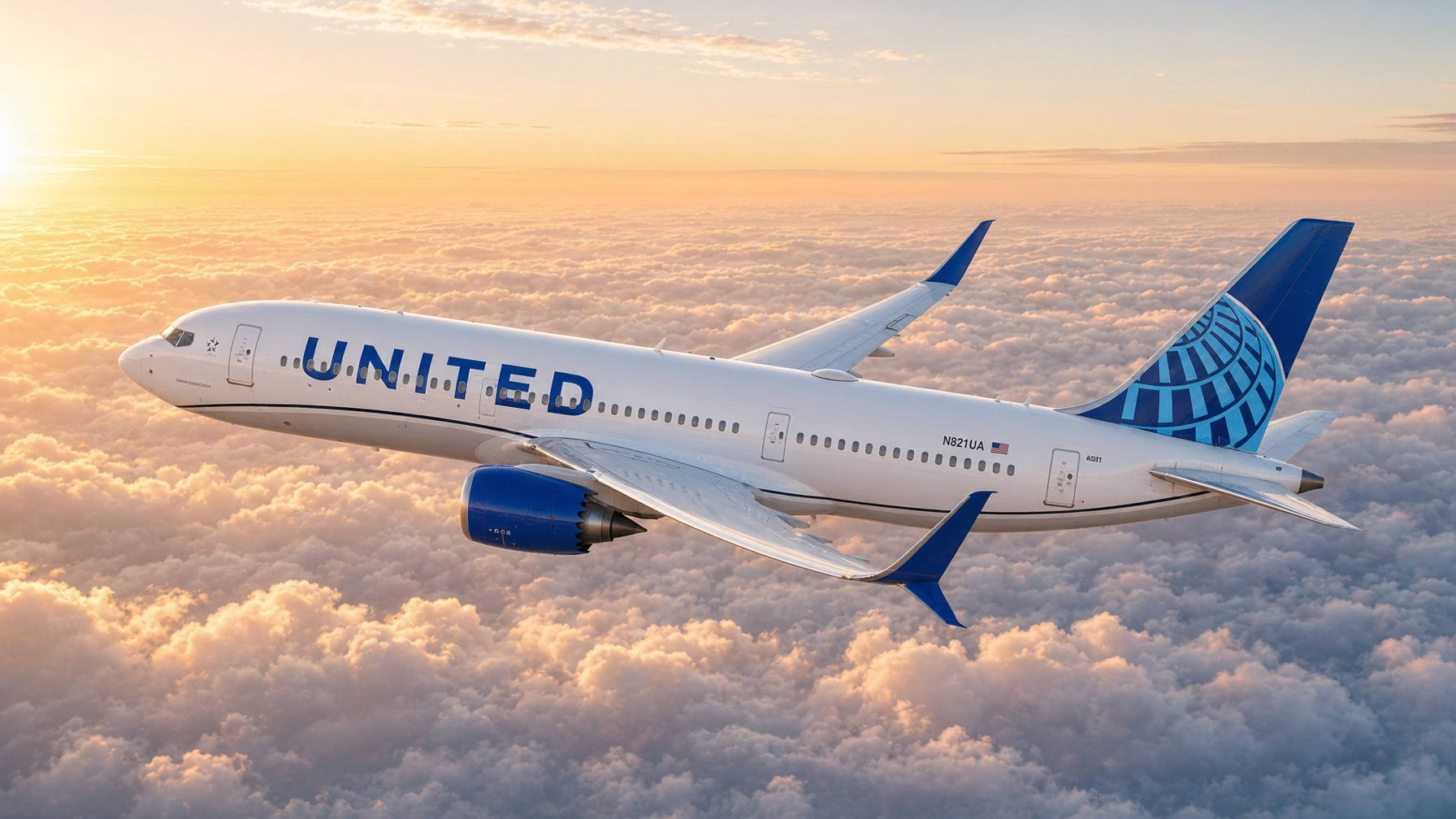
United Airlines has initiated a targeted status match campaign designed to attract elite frequent flyers from competing carriers American Airlines and Delta Air Lines, leveraging its ongoing, aggressive rollout of high-speed Starlink inflight connectivity. The airline is actively inviting premier status holders from its primary domestic rivals to experience its upgraded cabin internet infrastructure, aiming to convert dissatisfied frequent travelers into long-term loyalists through superior technological amenities.
This strategic maneuver comes as the commercial aviation industry faces a fundamental shift in passenger expectations regarding inflight connectivity. Traditional satellite-based internet systems, which have long been plagued by high latency, limited bandwidth, and frequent disconnections, are rapidly being superseded by low-earth orbit (LEO) satellite constellations capable of delivering terrestrial-grade broadband speeds at 35,000 feet. By positioning itself at the forefront of this technological transition, United is attempting to capture market share in the lucrative corporate and high-frequency travel sectors, where reliable connectivity is no longer viewed as a luxury, but as an essential productivity tool.
Rapid Deployment of Low-Earth Orbit Technology
United Airlines is aggressively scaling its partnership with SpaceX to equip its mainline and regional fleets with Starlink hardware. According to the carrier’s deployment metrics, more than 600 aircraft currently feature the advanced satellite system, with an ambitious corporate target of outfitting upwards of 1,000 aircraft by the conclusion of the calendar year. This rapid implementation places United significantly ahead of its primary competitors in the race to modernize legacy inflight entertainment and connectivity (IFEC) networks.
The contrast in connectivity strategies among the legacy "Big Three" U.S. carriers has created a distinct competitive divergence within the domestic aviation market. While United accelerates its LEO adoption via SpaceX, its competitors are pursuing vastly different timelines and technological pathways. American Airlines has announced that its own fleetwide rollout of next-generation high-speed connectivity will not commence until 2027, leaving a multi-year window during which its premium passengers will continue to rely on legacy air-to-ground or older geostationary satellite solutions.
Meanwhile, Delta Air Lines has elected to partner with alternative satellite providers, encountering immediate scrutiny from industry analysts and frequent travelers alike. Delta’s chosen infrastructure relies heavily on unproven LEO networks that have yet to undergo rigorous, large-scale commercial flight testing. This technological gamble has already generated consumer friction and skepticism among business travelers who depend on seamless, uninterrupted data streams for remote work, video conferencing, and cloud-based applications while airborne.
The Evolution of Inflight Connectivity: A Chronology
The transformation of commercial aviation Wi-Fi has evolved through distinct technological eras, shifting from an expensive, highly restrictive novelty to a baseline utility expected by modern passengers.
In the early 2000s, inflight internet relied primarily on air-to-ground (ATG) tower networks, which offered painfully slow speeds, high latency, and severe geographical limitations over oceans and remote landmasses. As geostationary (GEO) satellites emerged, coverage expanded globally, but the immense distance—approximately 22,236 miles above the Earth’s surface—resulted in unacceptable latency for modern applications like Voice over IP (VoIP) and Virtual Private Network (VPN) tunneling.
The paradigm shifted dramatically with the commercial viability of Low-Earth Orbit satellite constellations operating at altitudes between 100 and 1,200 miles. By drastically reducing the physical distance data must travel between the aircraft, the satellite, and ground stations, LEO networks reduce latency from hundreds of milliseconds to under 30 milliseconds. This technical leap eliminates the frustrating buffering, dropped connections, and multi-login requirements that have historically frustrated frequent flyers.
United’s decisive pivot toward Starlink represents the culmination of years of consumer dissatisfaction with legacy providers. By capitalizing on SpaceX’s rapidly expanding satellite density, United has secured a temporary, yet substantial, technological monopoly on reliable, high-bandwidth streaming and working environments at cruising altitude.
Industry Implications and Competitive Dynamics
The introduction of United’s targeted status match campaign—paired directly with a tangible, hardware-based value proposition—introduces a new vector of competition in airline loyalty programs. Historically, status matches have relied on predictable perks such as priority boarding, complimentary upgrades, lounge access, and waived baggage fees. While these traditional benefits remain powerful retention tools, the inclusion of superior operational infrastructure, specifically high-speed, complimentary or low-cost Wi-Fi, elevates the competitive stakes.
Frequent flyers who spend hundreds of hours annually inside commercial aircraft cabins increasingly evaluate airlines based on their daily work environment. For consultants, executives, and remote professionals, the ability to conduct uninterrupted video conferences, upload massive files, and maintain stable corporate server connections directly impacts their professional productivity. When an airline can guarantee a terrestrial internet experience at 35,000 feet, the psychological cost of switching carriers is significantly reduced.
Industry analysts note that United’s aggressive posture could force American and Delta to re-evaluate their capital expenditures and technology deployment schedules. If United successfully captures a measurable percentage of high-value corporate travelers solely on the basis of superior connectivity, competing airlines may be forced to accelerate their own infrastructure upgrades, potentially incurring higher capital costs or rushing unvetted technologies to market in an effort to staunch passenger defections.
Customer Experience and Technical Performance
The core of United’s current marketing narrative rests on the stark difference in user experience between legacy Wi-Fi systems and Starlink. Traditional airline Wi-Fi configurations frequently enforce strict data caps, block streaming services, and throttle bandwidth during periods of heavy cabin utilization. Furthermore, the authentication process often requires passengers to navigate multiple captive portals, re-enter payment credentials, or suffer persistent disconnections when crossing regional coverage boundaries.
In contrast, Starlink’s architecture utilizes phased-array antennas mounted on the aircraft fuselage to track multiple low-earth orbit satellites simultaneously. This dynamic handoff mechanism ensures a continuous, high-capacity data stream regardless of the aircraft’s geographic location, whether flying over dense continental landmasses, vast oceanic expanses, or remote polar routes.
Passengers utilizing the upgraded United fleet have reported the ability to seamlessly stream 4K video, engage in real-time multi-party video conferencing, and maintain persistent connections to enterprise software without interruption. For an industry segment that views airplane time as a continuation of the office, this reliability transforms the travel experience from a productivity blackout into a fully functional mobile workspace.
Broader Economic and Operational Impacts
Beyond passenger satisfaction, the rapid adoption of high-speed LEO connectivity carries significant operational implications for commercial airlines. Modern connected aircraft generate vast quantities of real-time telemetry, engine performance data, and predictive maintenance diagnostics that can be transmitted instantaneously to ground-based engineering teams. With high-bandwidth pipelines now installed across hundreds of aircraft, United gains an enhanced ability to monitor fleet health, optimize fuel efficiency, and proactively address mechanical anomalies before they result in flight delays or cancellations.
Moreover, the enhancement of digital infrastructure lays the groundwork for more sophisticated, personalized in-flight entertainment and retail platforms. As passengers experience frictionless digital connectivity, airlines are better positioned to integrate ancillary service offerings, dynamic seat-selection upgrades, and destination-based commerce directly into the passenger’s personal device ecosystem.
Strategic Outlook and Future Challenges
As United Airlines continues its push toward the 1,000-aircraft threshold by the end of the year, the primary challenge will shift from deployment scale to network congestion management. As more passengers log onto the Starlink network simultaneously during peak travel banks, maintaining consistent per-user bandwidth will require continuous optimization of the satellite handoff algorithms and onboard distribution systems.
Simultaneously, competitors are unlikely to cede the high-end business travel market without a fight. How American Airlines compresses its 2027 rollout timeline and how Delta resolves the technical stability of its chosen LEO architecture will heavily influence the domestic airline landscape over the next several years.
For the present moment, however, United Airlines has successfully weaponized technological innovation, turning a routine cabin amenity upgrade into a potent acquisition engine for its elite frequent flyer ecosystem. By directly inviting frustrated customers from American and Delta to test the future of inflight connectivity, United has set a new benchmark for how airlines compete for loyalty in the digital age.




 Gabriela Annisa

 Lukman Taruna Persada Ramadan

 Anjar Salim

 Dwi Wanna
