Tatiana Tantri Indah Sari
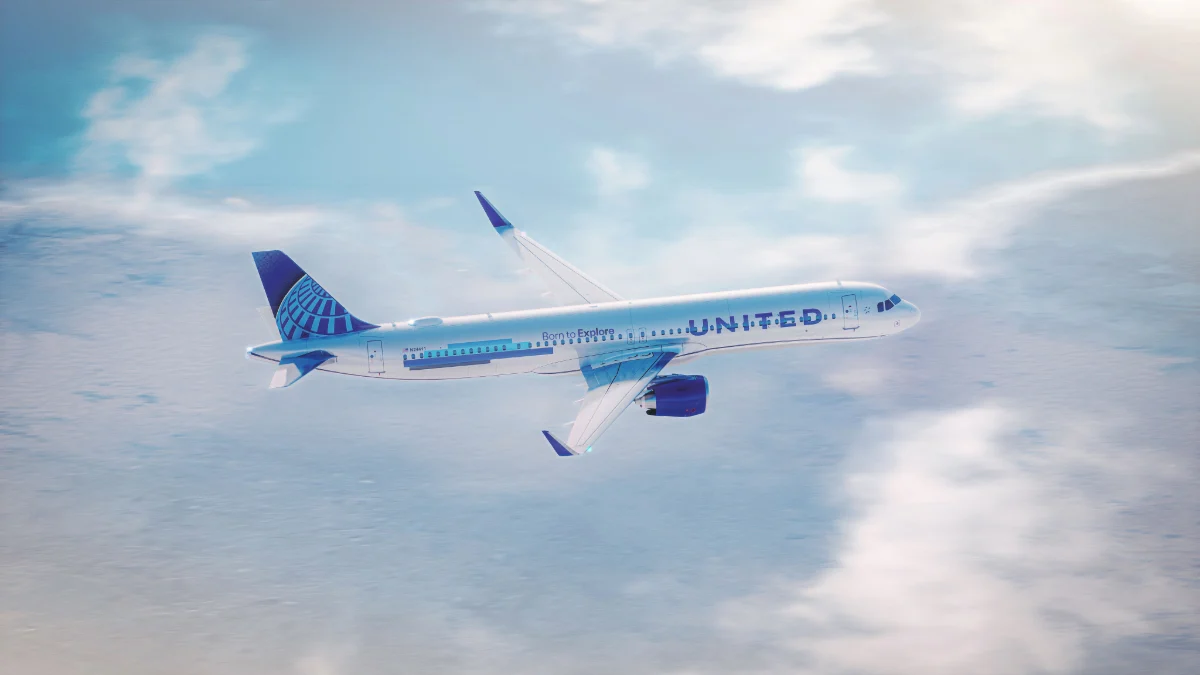
United Airlines has officially announced a targeted status match promotion directed at elite frequent flyers of its chief domestic competitors, American Airlines and Delta Air Lines. Revealed on Thursday, the aggressive campaign is designed to entice loyalists from rival carriers to experience United’s newly integrated high-speed inflight internet service, powered by SpaceX’s Starlink satellite network. The carrier has deployed a dedicated promotional webpage carrying the tagline, "Don’t keep buffering: switch to United and get the fastest Wi-Fi in the sky," marking a significant escalation in the ongoing domestic battle for high-value business and leisure travelers.
Under the terms of the newly launched program, qualifying members of American Airlines AAdvantage and Delta Air Lines SkyMiles loyalty programs who hold elite status can apply for a direct status match with United MileagePlus. To secure and maintain this status through January 2028, participants must meet specific spending thresholds and fulfill a minimum flight requirement on United-operated services within a strict 90-day window following enrollment.
Qualification Tiers and Financial Thresholds
The structure of United’s status match introduces clear monetary commitments across four distinct Premier tiers. To successfully transition elite privileges from a competitor to United, applicants must invest the following amounts on qualifying flights within the designated 90-day promotional period:
- Premier Silver: $1,500 in qualifying flight spending
- Premier Gold: $3,000 in qualifying flight spending
- Premier Platinum: $4,500 in qualifying flight spending
- Premier 1K: $7,000 in qualifying flight spending
In addition to meeting these financial criteria, participants must also complete a requisite number of flight segments operated by United or United Express during the 90-day trial phase to fully validate the status extension through the beginning of 2028. This design ensures that the airline is not merely distributing complimentary perks, but actively capturing passenger volume and revenue during the evaluation period.
The Strategic Imperative of Inflight Connectivity
The timing of this status match campaign underscores a broader strategic pivot within the commercial aviation sector, where inflight connectivity has rapidly evolved from an auxiliary amenity into a core competitive differentiator. For years, airline passengers have contended with sluggish, latency-heavy satellite internet that struggled to support basic business functions such as video conferencing, large file transfers, or high-definition streaming.
By integrating Starlink’s low-Earth orbit (LEO) satellite constellation, United is positioning its onboard digital experience as an industry benchmark. Unlike traditional geostationary (GEO) satellites, which orbit thousands of miles above the Earth and cause noticeable transmission delays, LEO satellites operate much closer to the planet’s surface. This proximity translates to significantly higher bandwidth, lower latency, and speeds capable of rivaling terrestrial broadband connections.
United’s leadership recognized that marketing a superior technical product requires getting high-value travelers onto the aircraft to experience the upgrade firsthand. Because elite frequent flyers spend a disproportionate amount of time in the air, they represent the most critical demographic for testing and validating high-speed connectivity. By offering an accessible pathway to status matching, United is effectively leveraging its elite loyalty infrastructure as a funnel to drive awareness and adoption of its new technological capabilities.
Competitive Dynamics in the U.S. Airline Industry
The domestic airline landscape has long been defined by fierce competition between the "Big Three" legacy carriers: American Airlines, Delta Air Lines, and United Airlines. While network reach, schedule frequency, and lounge access remain foundational pillars of airline loyalty, the battleground has increasingly shifted toward product differentiation and digital ecosystems.
Delta Air Lines has historically commanded strong brand loyalty through consistent operational performance and heavy investments in cabin refreshes, coupled with its widespread rollout of free messaging and sponsored Wi-Fi options in partnership with T-Mobile. American Airlines, meanwhile, has maintained a massive domestic footprint through its extensive hub network and the integrated scale of the American-JetBlue partnership history, alongside ongoing loyalty refinements to its AAdvantage program.
United’s aggressive pursuit of competitor elites through a targeted status match represents a direct challenge to this status quo. By focusing the campaign on the promise of superior Wi-Fi, United is directly targeting business travelers—a lucrative segment that relies heavily on uninterrupted connectivity to maintain productivity while traveling. If successful, the campaign could siphon valuable corporate revenue away from American and Delta at a time when business travel demand continues to normalize post-pandemic.
Industry Reactions and Expert Analysis
Aviation analysts and industry observers have noted that United’s strategy is both innovative and calculated. Status matches are a well-established mechanism in the airline industry used to capture disaffected customers or entice travelers who frequently fly multiple airlines. However, tying a status match directly to the marketing of a specific onboard product—in this case, Starlink Wi-Fi—demonstrates a more integrated approach to product marketing and loyalty acquisition.
"Airlines are realizing that loyalty programs are no longer just about free flights and seat upgrades; they are about total ecosystem experience," said an independent aviation consultant who spoke on the condition of anonymity. "By using status as a hook to showcase Starlink, United is addressing a major pain point for frequent flyers. Slow Wi-Fi is one of the most common complaints among business travelers. If United can consistently deliver high-speed, reliable internet across its fleet, it gives them a distinct psychological and functional edge over competitors who are still transitioning to next-generation connectivity solutions."
Competitors are unlikely to sit idly by as United attempts to poach their elite customer base. While neither American nor Delta has announced an immediate counter-promotion specifically aimed at reclaiming Starlink-curious flyers, both carriers continue to refine their own inflight entertainment and connectivity roadmaps. Delta, for instance, has previously signaled its intention to bring fast, free streaming-capable Wi-Fi to its entire mainline fleet through partnerships with various providers, though operational timelines and technical implementations vary across the industry.
Broader Implications for Passenger Experience
As United rolls out its Starlink integration and processes applications from incoming American and Delta elites, the broader implications for the passenger experience will become clearer. The success of the campaign will hinge not only on the operational reliability of the status match platform and customer service desks, but also on the actual performance of the Wi-Fi network under peak usage conditions.
With thousands of new elite members expected to test the system over the coming months, network congestion and bandwidth allocation will face rigorous real-world stress tests. If the technology performs as advertised, United could secure long-term loyalty conversions, permanently shifting market share in key competitive hubs. Conversely, any technical hiccups during this crucial window could blunt the intended marketing impact.
For now, the message from Chicago is clear: United Airlines is doubling down on innovation and aggressively courting its rivals’ most valuable customers, betting that the promise of the fastest Wi-Fi in the sky will be enough to turn loyalty on its head.



 Lukman Taruna Persada Ramadan

 Anjar Salim
 Budi Mulyono