
 Gabriela Annisa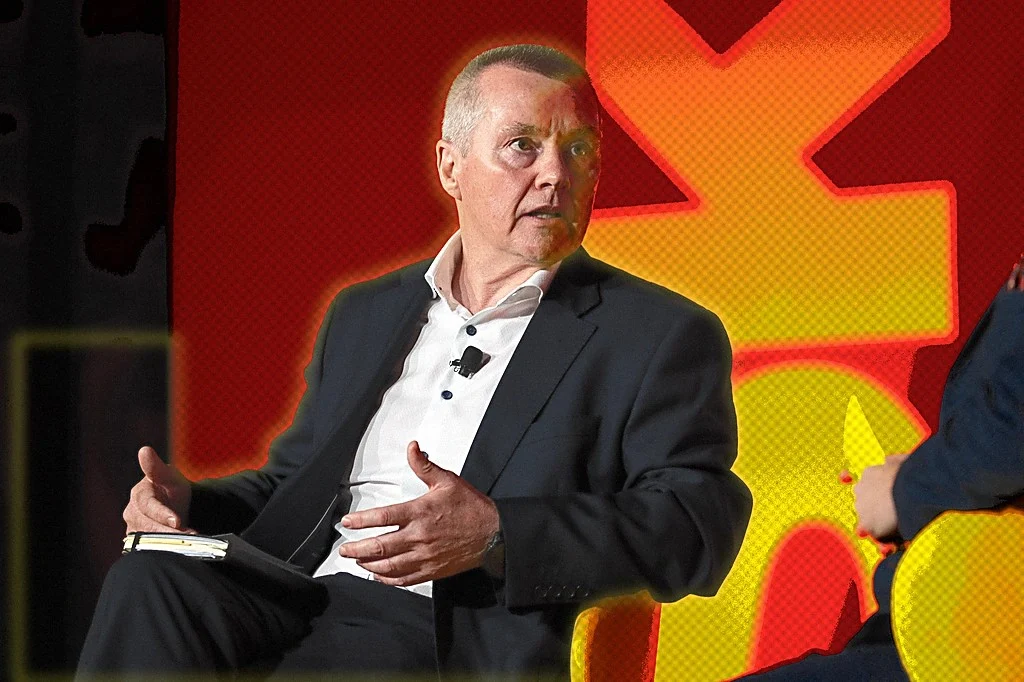
Willie Walsh, the former director general of the International Air Transport Association (IATA) and former CEO of International Airlines Group (IAG), officially assumes his position at the helm of IndiGo this Monday. As the airline approaches its 20th anniversary, Walsh inherits a company that has redefined the aviation landscape in South Asia. However, the transition occurs at a pivotal juncture where the carrier’s domestic dominance is being challenged by the complexities of its international expansion ambitions and persistent operational headwinds.
The appointment of a veteran industry figure like Walsh signals that IndiGo’s board of directors is prioritizing global strategic alignment and institutional maturity. Yet, the task ahead is formidable. While IndiGo maintains a commanding share of the Indian domestic market—often exceeding 60%—the carrier’s path to becoming a global, long-haul player is fraught with structural obstacles that have historically stymied regional carriers attempting to pivot to international prestige.
A Legacy of Rapid Growth
IndiGo’s ascent since its inaugural flight in August 2006 has been nothing short of a case study in efficiency. By adhering to a rigorous low-cost carrier (LCC) model, the airline successfully capitalized on the burgeoning Indian middle class, which had previously been underserved by legacy carriers burdened with high costs and operational inefficiencies.
The airline’s growth has been defined by a consistent fleet strategy, largely centered on the Airbus A320 family. This standardization has allowed IndiGo to maintain one of the most cost-effective operating structures in the world. As of mid-2026, the airline operates a fleet of over 380 aircraft, with a staggering backlog of orders that will see the fleet size double by the end of the decade. This aggressive expansion, however, has recently begun to clash with the reality of supply chain volatility and engine manufacturing constraints that have plagued the industry globally.
The Operational Bottleneck
One of the most pressing items on Walsh’s desk will be the management of IndiGo’s aircraft groundings. For several quarters, the airline has been forced to park a significant portion of its fleet due to issues related to Pratt & Whitney engine reliability. These groundings have not only constrained capacity but have also necessitated expensive short-term lease arrangements to maintain network integrity.
Industry analysts note that while the airline has been resilient, the cost of these operational inefficiencies is mounting. Walsh must navigate delicate negotiations with original equipment manufacturers (OEMs) to ensure that IndiGo is adequately compensated for the lost revenue and the increased maintenance burden. His background at IATA provides him with the diplomatic weight necessary to address these supplier-side issues at the highest levels of global aerospace management.
The Long-Haul Dilemma
While IndiGo has successfully dominated the short-haul international market—connecting Indian cities to hubs in the Middle East and Southeast Asia—the "messy long-haul roll-out" mentioned in the current strategic assessment represents a significant pivot. The introduction of the Airbus A321XLR and the recent, more ambitious entry into widebody operations via the Airbus A350 represent a departure from the traditional, simplified LCC business model.
Integrating widebody aircraft requires a fundamental shift in corporate DNA. It demands a different approach to cabin service, distribution channels, and alliance strategy. Historically, pure-play LCCs have struggled to transition into the "hybrid" model. Walsh’s tenure at IAG—the parent company of British Airways, Iberia, and Aer Lingus—provides him with the exact expertise required to manage a multi-brand, multi-model portfolio. The question remains whether IndiGo can maintain its signature cost-advantage while layering on the complexity of long-haul, premium-cabin services.
Geopolitical and Economic Context
India’s aviation market does not operate in a vacuum. Geopolitical tensions in the Middle East and Central Asia have forced rerouting of flights, increasing fuel consumption and flight times. Furthermore, the Indian rupee’s volatility against the U.S. dollar poses a constant threat to profitability, as the vast majority of aviation costs—fuel, leasing, and maintenance—are denominated in dollars.
Walsh must also contend with a changing regulatory landscape in India. The Ministry of Civil Aviation has been actively pushing for the development of international hubs within the country, aiming to capture the traffic that currently flows through transit hubs like Dubai, Doha, and Singapore. IndiGo is central to this national agenda, and its success is effectively synonymous with the success of India’s civil aviation policy.
Strategic Timeline and Challenges
- 2006: IndiGo begins operations with its first Airbus A320.
- 2019: The airline achieves a record-breaking domestic market share, consistently holding over 50%.
- 2023: IndiGo places a historic order for 500 Airbus A320 family aircraft, cementing its commitment to fleet expansion.
- 2024-2025: Operational difficulties peak due to global supply chain shortages and engine grounding issues.
- August 2026: Willie Walsh takes the helm, tasked with stabilizing operations and overseeing the widebody transition.
The Path Forward: What Walsh Brings
Walsh is widely recognized as a "hard-nosed" operator who is not afraid to make difficult structural decisions. During his time at IAG, he successfully consolidated several national carriers while maintaining their distinct identities, all while driving significant cost synergies.
At IndiGo, he is expected to:
- Refine the Widebody Strategy: Determine whether the current A350 order book is sufficient or if a more radical fleet restructuring is required to compete with Middle Eastern carriers.
- Optimize the Supply Chain: Use his industry leverage to resolve the ongoing engine maintenance issues that have stalled capacity growth.
- Institutionalize Leadership: Transition IndiGo from a founder-led culture to a global, process-driven organization capable of sustaining itself for the next twenty years.
- Strengthen Global Alliances: With the rise of codeshare agreements, Walsh’s experience in the Oneworld alliance may provide a blueprint for how IndiGo should position itself within the global connectivity ecosystem.
Market Implications and Investor Sentiment
Investors have reacted with cautious optimism to the news of Walsh’s appointment. While the airline’s stock has remained resilient, there is a clear appetite for stability. Analysts from major financial institutions suggest that the focus for the next 18 months should be on "margin protection" rather than "top-line growth." The airline has grown fast enough; now, it must prove that it can grow profitably in a higher-cost environment.
From an institutional perspective, the government of India views IndiGo as a strategic asset. Any move by Walsh to streamline operations or optimize routes will likely be met with intense scrutiny from regulators who view the airline as the primary vehicle for India’s global aviation connectivity.
Conclusion
Willie Walsh’s tenure at IndiGo begins with the domestic machine humming, but the external environment is increasingly volatile. The airline is no longer a small, scrappy startup; it is a global aviation giant with complex dependencies. The "in-tray" is indeed overflowing, but the tools for success are present.
Whether Walsh can replicate his past successes in the distinct, high-growth, and often high-friction Indian market remains the most compelling question in global aviation today. His ability to balance the airline’s foundational low-cost identity with the necessary complexities of a modern, widebody-equipped global carrier will determine if IndiGo becomes the world’s next true international aviation powerhouse or if it hits the ceiling of its own rapid expansion. As the airline hits the two-decade mark, the transition from a regional leader to a global player is not just a strategic goal—it is an existential imperative.



 Anjar Salim
 Chandra Hamzah
 Tatiana Tantri Indah Sari
 Budi Mulyono
 Lukman Taruna Persada Ramadan
