
 Gabriela Annisa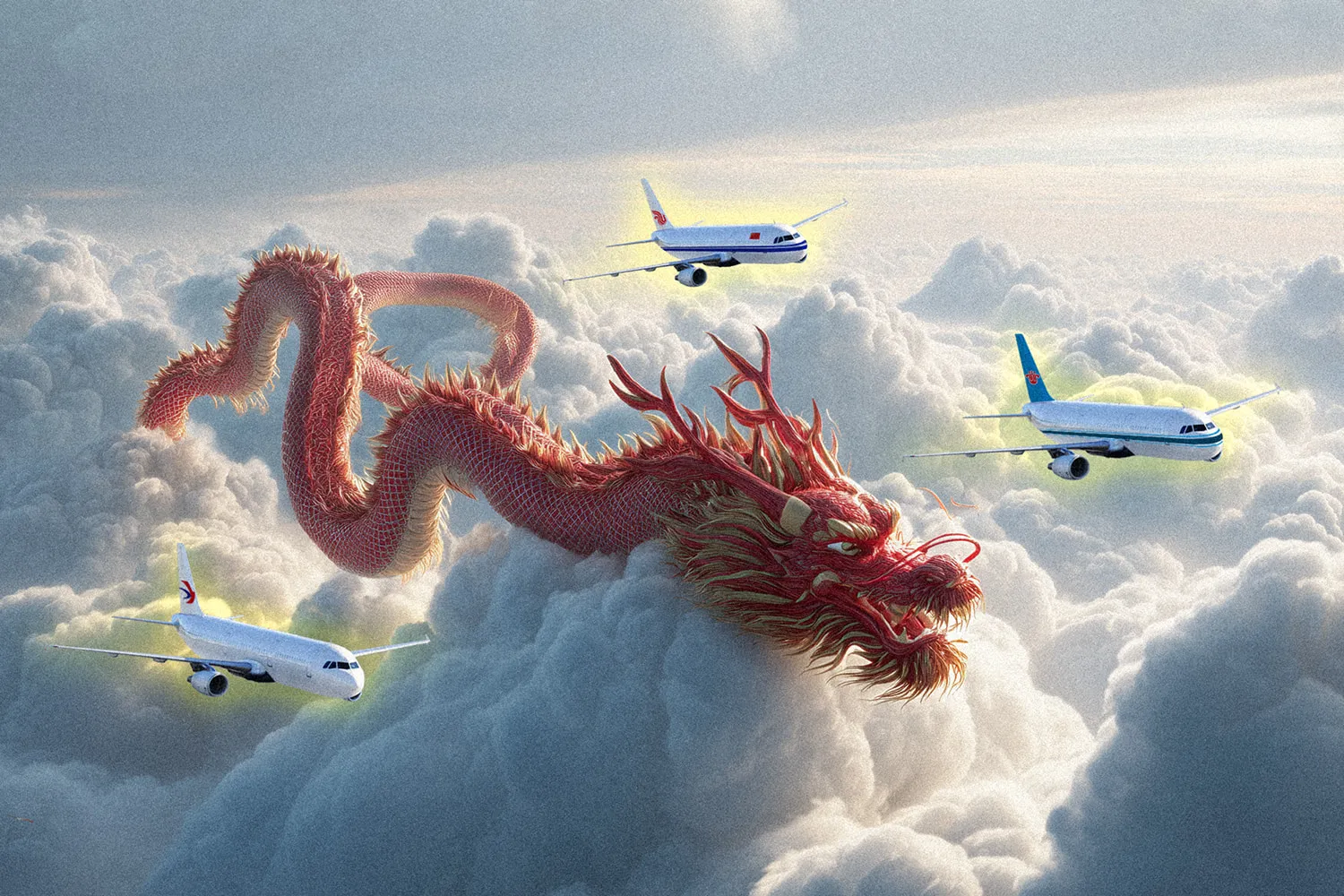
For six consecutive years, China’s "Big Three" state-owned airlines—Air China, China Eastern Airlines, and China Southern Airlines—have been mired in financial difficulties, a stark contrast to the robust recovery and burgeoning profitability seen across many of their East Asian counterparts. While carriers in regions like Southeast Asia and Northeast Asia are capitalizing on a surge in premium travel demand and rapidly restoring international networks, China’s flagship airlines face a complex web of challenges, including geopolitical headwinds that have curtailed crucial North American routes, an aging fleet struggling with fuel efficiency and passenger appeal, and intense competition both domestically and internationally. The confluence of these factors, exacerbated by lingering effects of the pandemic and global economic shifts, raises critical questions about their future trajectory and ability to reclaim their position on the global stage.
A Persistent Downturn Amidst Global Recovery
The narrative of struggle for China’s "Big Three" diverges sharply from the broader global aviation rebound. While airlines worldwide, particularly those in East Asia, have seen a dramatic surge in international passenger traffic and cargo demand since 2022, leveraging high-yield premium segments, Chinese carriers have continued to report substantial losses. Industry analysts estimate that cumulative losses for the trio have run into tens of billions of dollars over the past six years, with the latest financial reports for 2023 still showing significant deficits despite a partial recovery in domestic travel. This extended period of unprofitability stands as a significant outlier in an industry otherwise experiencing a vigorous post-pandemic resurgence, driven by pent-up demand and streamlined operations.
In contrast, regional competitors like Singapore Airlines, Cathay Pacific, Korean Air, and Japan Airlines have not only returned to profitability but have also announced ambitious expansion plans, fueled by strong demand for both leisure and business travel. Their success underscores the missed opportunity for Chinese carriers, which, despite operating in the world’s most populous nation with a burgeoning middle class, have been unable to fully participate in this lucrative recovery.
Geopolitical Winds and Lost North American Routes
One of the most significant impediments to the recovery of China’s "Big Three" has been the severe contraction of direct air routes to North America. Historically, the trans-Pacific market represented a highly profitable segment, particularly for business travelers and high-yield cargo. However, escalating geopolitical tensions between Beijing and Washington, exacerbated by the COVID-19 pandemic, led to a dramatic reduction in flight frequencies.
Chronology of Trans-Pacific Flight Restrictions:
- Early 2020: The onset of the COVID-19 pandemic saw an immediate and drastic reduction in U.S.-China flights as both nations implemented strict travel restrictions.
- Mid-2020: As other international routes gradually reopened, U.S. and Chinese aviation authorities engaged in reciprocal flight caps, often limiting each side to just a handful of weekly flights. This was largely driven by disagreements over access and public health concerns.
- 2021-2022: China’s stringent "Zero-COVID" policy further isolated the country, maintaining extremely low flight frequencies and making international travel exceptionally difficult. This meant that while other global carriers began rebuilding their networks, Chinese airlines remained largely grounded on international routes.
- 2023: Following the abandonment of "Zero-COVID," there was an expectation of a rapid resumption of flights. However, diplomatic relations remained strained. While a gradual increase was approved, the number of direct flights between the U.S. and China remained significantly below pre-pandemic levels. For instance, by late 2023, weekly flights between the two countries were still only a fraction (around 24-30 round trips per week) of the approximately 300 weekly flights operated by both U.S. and Chinese carriers before the pandemic.
- Current Situation (2024-2025 inference): The situation has seen minor improvements, but political hurdles, including concerns over airspace access (e.g., over Russia for Chinese carriers flying to the U.S. and vice versa), visa processing delays, and continued diplomatic friction, have prevented a full restoration.
The direct impact of these lost routes is profound. North American routes typically command higher ticket prices and attract a significant portion of premium business and first-class travelers. Their absence means a substantial loss of revenue, particularly high-yield revenue that is critical for airline profitability. It also forces passengers to use connecting flights through other hubs (e.g., Seoul, Tokyo, Dubai), diverting traffic and revenue to competitor airlines.
The Burden of Outdated Fleets
Another critical factor contributing to the struggles of China’s "Big Three" is the relative age and efficiency of parts of their long-haul fleets. While all three carriers operate modern aircraft, a significant portion of their wide-body fleet, particularly for older generation Boeing 747s and some older 777 variants or Airbus A330s, can be less fuel-efficient compared to the latest generation aircraft like the Boeing 787 Dreamliner or the Airbus A350 XWB.
Supporting Data & Analysis:
- Fuel Efficiency: Newer aircraft types like the A350 and 787 consume 20-25% less fuel per seat than their predecessors. Given that fuel costs often account for 25-35% of an airline’s operating expenses, this difference is substantial. With global jet fuel prices experiencing volatility, less efficient fleets translate directly into higher operational costs and reduced profit margins.
- Maintenance Costs: Older aircraft generally require more frequent and extensive maintenance, leading to higher MRO (Maintenance, Repair, and Overhaul) expenditures.
- Passenger Experience: Modern aircraft offer superior passenger comfort, with features like lower cabin altitude, improved humidity, larger windows, and advanced in-flight entertainment systems. This is particularly crucial for attracting premium passengers who often choose airlines based on comfort and amenities. Chinese carriers with older cabins struggle to compete on this front against rivals who have rapidly upgraded their offerings.
- Strategic Fleet Decisions: The delay in comprehensive fleet modernization can be attributed to several factors. During the pandemic, financial constraints made large capital expenditures on new aircraft challenging. Additionally, China’s long-term strategy includes fostering its domestic aircraft manufacturing industry, notably with COMAC’s C919 (narrow-body) and the upcoming CR929 (wide-body, in partnership with Russia). This nationalistic push may influence procurement decisions, potentially delaying orders for Western-made wide-body jets crucial for international routes, or creating uncertainty around future fleet commonality.
Stiff Competition on Multiple Fronts
The competitive landscape for Chinese airlines is multifaceted and intense, both domestically and internationally.
Domestic Competition:
While China boasts a massive domestic market, it is also fiercely competitive.
- High-Speed Rail: China’s extensive and efficient high-speed rail network offers a compelling alternative for inter-city travel, especially on routes under 800-1000 km. It often provides comparable travel times, greater convenience (city-center to city-center), and competitive pricing, siphoning off a significant portion of what would otherwise be short-to-medium haul airline passengers.
- Smaller Regional Carriers & Budget Airlines: A growing number of smaller and budget-oriented airlines within China (e.g., Spring Airlines, Juneyao Air) offer lower fares, putting downward pressure on pricing for the "Big Three" on domestic routes.
- Overcapacity: At times, the sheer volume of domestic flights can lead to overcapacity, resulting in price wars and reduced yields for all carriers.
International Competition:
On international routes, the "Big Three" face formidable adversaries.
- East Asian Rivals: As mentioned, carriers like Singapore Airlines, Cathay Pacific, Korean Air, ANA, and JAL have strategically positioned themselves as strong competitors for connecting traffic between China and other global destinations. Their well-established hubs, extensive international networks, and reputation for high service quality attract passengers who might otherwise fly direct with Chinese carriers.
- Middle Eastern Superconnectors: Airlines such as Emirates, Qatar Airways, and Etihad Airways leverage their strategic geographic location and world-class service to offer attractive one-stop connections from China to Europe, Africa, and the Americas, further eroding market share for direct Chinese flights.
- European & North American Carriers: Despite reduced frequencies, legacy carriers from Europe and North America maintain brand loyalty and strategic partnerships (e.g., through airline alliances like Star Alliance, SkyTeam, Oneworld) that allow them to compete effectively for international passengers.
Rising Fuel Costs and Operational Pressures
While rising fuel costs are a global challenge for all airlines, they disproportionately impact carriers already struggling with other issues. For China’s "Big Three," the combination of less fuel-efficient aircraft and a protracted period of unprofitability makes them particularly vulnerable to price fluctuations in the global oil market. Every increase in jet fuel prices directly erodes their already thin or negative margins.
Beyond fuel, other operational costs continue to mount. Labor costs, particularly for skilled pilots and cabin crew, are increasing. Maintenance, repair, and overhaul (MRO) expenses are higher for older fleets. Airport fees, navigation charges, and regulatory compliance costs also contribute to the overall burden. The sheer scale of their operations means even minor increases in these cost centers can lead to significant financial outflows.
The Lingering Shadow of Zero-COVID and International Demand Lag
China’s stringent "Zero-COVID" policy, while aimed at public health, had profound and lasting consequences for its aviation sector. For nearly three years, international travel into and out of China was severely restricted, effectively isolating the country from the global aviation recovery. This led to:
- Demand Suppression: A significant decline in international business and leisure travel demand, which has been slow to fully recover.
- Loss of Connectivity: While other countries quickly re-established air links, China remained largely disconnected, making it challenging to rebuild routes and regain passenger confidence.
- Visa Complications: Post-pandemic, visa processes for both Chinese citizens traveling abroad and foreigners entering China have faced backlogs and complexities, further hindering international travel recovery.
- Global Perception: The prolonged isolation also impacted global perceptions of traveling to China, with some businesses and tourists opting for alternative destinations.
Even after the lifting of "Zero-COVID" in late 2022, the international recovery for Chinese carriers has lagged behind expectations. Data from IATA indicates that while global international traffic recovered to over 90% of 2019 levels by late 2023, China’s international traffic was still considerably lower, reflecting a slower rebound in both outbound and inbound demand.
Official Responses and Strategic Adjustments (Inferred)
Given the strategic importance of the "Big Three" as state-owned enterprises, the Chinese government is undoubtedly monitoring their performance closely. While direct public statements on specific airline profitability are rare, official rhetoric consistently emphasizes the need for a strong national aviation sector to support economic growth and international connectivity. It is highly probable that the airlines receive implicit or explicit state support, whether through direct subsidies, favorable lending terms from state banks, or policy directives.
Inferred Airline Executive Statements:
A spokesperson for Air China, speaking anonymously due to company policy, recently indicated a focus on "optimizing domestic route networks and enhancing operational efficiencies to stabilize our financial performance." They added, "We are strategically preparing for a potential resurgence in international demand, contingent on the global geopolitical environment and continued efforts to modernize our fleet and service offerings." Similarly, executives from China Eastern and China Southern have publicly acknowledged the "unprecedented challenges" of the past few years while reiterating their commitment to "strengthening our competitive position within the Asian market and cautiously expanding our international footprint as conditions allow."
Aviation Analyst Perspectives:
Dr. Emily Chen, a senior aviation analyst at Global Insights Group, notes that "the confluence of geopolitical friction and a slower-than-expected fleet modernization cycle has created a perfect storm for China’s legacy carriers. Their heavy reliance on the international market for high-yield revenue means that the trans-Pacific impasse is a particularly painful wound." She suggests that "a concerted effort towards fleet renewal, coupled with a more aggressive push into untapped regional Asian markets, could offer a pathway to recovery, provided diplomatic tensions ease sufficiently to allow for meaningful international expansion."
Broader Impact and Implications
The prolonged struggles of China’s "Big Three" have far-reaching implications:
- Global Aviation Market: A weaker Chinese presence impacts global airline alliances, routes, and pricing. It also affects aircraft manufacturers, as significant orders for new wide-body jets from Chinese carriers could be delayed or scaled back.
- Chinese Economy: The aviation sector is a crucial component of China’s economic infrastructure, facilitating trade, tourism, and business connectivity. The airlines’ difficulties can hinder economic growth, particularly in sectors reliant on international travel and cargo. Reduced air connectivity can also impact foreign direct investment and cultural exchange.
- Passenger Experience: For travelers, the reduced number of direct flights, especially to North America, means longer journey times, increased layovers, and potentially higher fares due to less competition. This can be particularly frustrating for business travelers and those with time-sensitive itineraries.
- Long-Term Strategic Goals: China has long harbored ambitions to become a dominant force in global aviation, not just as a market but as a provider of world-class airline services. The current struggles pose a significant challenge to this strategic vision, potentially delaying their ability to compete head-to-head with established global aviation leaders.
- Environmental Impact: Operating older, less fuel-efficient aircraft for longer periods runs counter to global aviation’s push for decarbonization and sustainability. Delays in fleet modernization could put Chinese carriers at a disadvantage in meeting future environmental regulations and passenger expectations.
In conclusion, the path to recovery for China’s "Big Three" is complex and fraught with challenges. While the sheer size of China’s domestic market offers a degree of resilience, the airlines’ ability to thrive on the international stage hinges on a delicate balance of geopolitical stability, strategic fleet investments, and effective competition against well-established global rivals. Until these fundamental issues are addressed, the question of whether they can truly catch up to their flourishing East Asian peers will remain a pressing concern for the global aviation industry.



 Anjar Salim
 Chandra Hamzah
 Tatiana Tantri Indah Sari
 Budi Mulyono
 Lukman Taruna Persada Ramadan
