
 Gabriela Annisa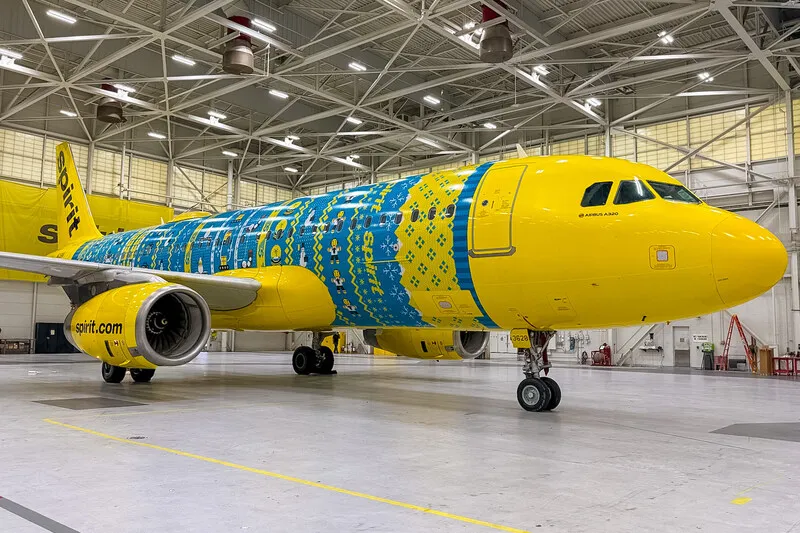
The U.S. airline industry is currently navigating a period of intense volatility, with two prominent carriers, Spirit Airlines and Alaska Air Group, exemplifying the divergent challenges and strategic pivots shaping the sector. Spirit Airlines finds itself at a critical juncture, grappling with significant financial losses, a recent bankruptcy filing, and the specter of liquidation, drawing the attention of even the highest levels of government. Concurrently, Alaska Air Group reported a challenging first quarter, primarily due to soaring fuel costs and regional demand shifts, even as it presses forward with ambitious international expansion plans and integrates its recent acquisition of Hawaiian Airlines.
Spirit Airlines: A Carrier on the Brink
Spirit Airlines, a pioneer in the ultra-low-cost carrier (ULCC) model in the United States, is confronting what many analysts describe as an existential crisis. The airline has been embroiled in financial turmoil for an extended period, exacerbated by a complex interplay of operational challenges, post-pandemic demand shifts, and intense market competition. The situation escalated following the collapse of its proposed merger with JetBlue Airways, a deal that had been seen by many as a potential lifeline for the struggling carrier. The U.S. Department of Justice successfully blocked the merger on antitrust grounds, leaving Spirit to face its formidable headwinds alone.
Financial Distress and Mounting Losses
The severity of Spirit’s financial predicament is underscored by staggering losses. Over the past four fiscal years (2022-2025, with 2025 likely representing a projected loss within bankruptcy filings or the most recent full fiscal year reporting), the airline has accumulated operating losses totaling approximately $2.1 billion. In a recent fiscal year, the operating loss alone reached $896 million, translating to a negative 24% operating margin. This figure places Spirit at the very bottom of global airline profitability rankings, highlighting the deep structural issues it faces.
A significant driver of these losses has been the dramatic escalation in fuel prices. While Spirit’s original turnaround plan, devised during its bankruptcy proceedings, made assumptions based on fuel costs as low as $2.20 per gallon, current prices have soared to over $4.20 per gallon in many regions. This discrepancy has rendered the initial recovery strategy largely untenable, eroding the airline’s already thin margins and accelerating its cash burn. Beyond fuel, ULCCs like Spirit have also contended with persistent labor shortages, rising maintenance costs, and supply chain disruptions, all contributing to an unfavorable operating environment.
The Aftermath of a Failed Merger
The failed merger with JetBlue was a pivotal moment for Spirit. The protracted legal battle and eventual injunction by a federal judge in January 2024 left Spirit without the anticipated capital injection and operational synergies that the deal promised. The merger, valued at $3.8 billion, was intended to create a more robust competitor to the dominant legacy carriers. Its collapse forced Spirit to reassess its standalone viability, leading to a scramble for alternative solutions to shore up its balance sheet and operational efficiency. The ruling emphasized the government’s increasing scrutiny of airline consolidation, signaling a more challenging regulatory environment for future mergers.
Creditors’ Dilemma: Liquidation or Restructuring?
With its financial health rapidly deteriorating, Spirit’s creditors have become central to its fate. Recent reports indicate that creditors have commissioned a liquidation analysis, a sobering step that evaluates the potential value of selling off the airline’s assets – including aircraft, real estate, and other holdings – should it cease operations. While a liquidation analysis does not guarantee this outcome, it signifies that creditors are seriously considering whether the business might be worth more "dead than alive." This assessment is driven by the airline’s inability to generate consistent profits and its substantial debt load.
The alternative to liquidation is a comprehensive restructuring plan, aimed at cutting costs, renegotiating contracts, and reducing debt. Spirit has attempted such turnarounds in the past, but external factors like the recent fuel price spike have consistently undermined these efforts. The airline’s current website, spiritrestructuring.com, maintains a public stance of "business as usual" for consumers, offering updates and resources. However, the internal discussions among creditors reflect a stark reality that demands immediate and drastic action.
Government Intervention: A Political Lifeline?
In an unexpected development, former President Donald Trump recently weighed in on Spirit’s plight during an interview on CNBC’s Squawk Box. He remarked, "I don’t mind mergers. I would love someone to buy Spirit, for example. Spirit’s in trouble. It’s 14,000 jobs. Maybe the federal government should help that one out." This statement ignited speculation about potential government intervention, reminiscent of federal aid packages during the COVID-19 pandemic or strategic investments in critical industries like semiconductors (e.g., the U.S. government’s stake in Intel).
The idea of a government bailout for a single airline, particularly one facing pre-existing financial difficulties, presents a complex political and economic dilemma. While proponents might argue for preserving jobs and maintaining competition in the ULCC segment, critics would question the principle of bailing out private companies, especially in a capitalist system that traditionally allows for market-driven failures. The current administration’s stance on such targeted aid, particularly outside of a systemic crisis, remains uncertain, though broader discussions about support for low-cost carriers grappling with fuel inflation have reportedly taken place.
Market Confidence and Consumer Impact
The public discussion surrounding Spirit’s future, particularly comments from high-profile figures, carries significant implications for consumer confidence. The perception of an airline being on the brink can create a "self-fulfilling prophecy," as travelers become hesitant to book flights, fearing potential disruptions or the loss of their tickets. Although credit card protections typically mitigate financial losses for consumers, the inconvenience of canceled travel plans can severely damage an airline’s reputation and further depress bookings. This erosion of trust could accelerate Spirit’s cash drain, making recovery even more challenging. The human impact, affecting 14,000 employees, also adds a critical social dimension to the ongoing crisis.
Potential Paths Forward
As Spirit navigates this critical period, several paths could emerge:
- Government Intervention: A direct financial aid package or equity stake from the federal government, as suggested by former President Trump.
- Liquidation: Creditors decide to dismantle the company and sell its assets to recoup losses.
- Acquisition: Another airline, perhaps a smaller, more focused carrier like Allegiant or Sun Country, acquires Spirit’s assets (e.g., planes, slots, pilots) at a significantly discounted price, potentially focusing on specific routes or regions.
- Successful Restructuring: Against the odds, Spirit’s creditors approve a revised turnaround plan that, perhaps with a more favorable fuel price environment or significant operational overhauls, allows the airline to emerge as a viable, albeit smaller, entity.
The timeline for a definitive outcome is expected to be short, with a resolution likely emerging within weeks or months, given the urgency of the financial situation.
Alaska Air Group Navigates Q1 Headwinds
In contrast to Spirit’s existential struggle, Alaska Air Group, which now includes Hawaiian Airlines, is facing challenges of a different magnitude, primarily driven by the volatile operating environment of the first quarter. While not facing an immediate threat to its existence, the airline reported a "lousy" Q1 performance, reflecting broader industry pressures.
Challenging First Quarter Performance
Alaska Air Group recorded a negative 7.5% operating margin in the first quarter, a significant decline compared to healthier periods. First quarters are historically weaker for airlines due to seasonal travel patterns, but this performance was notably poor. The company’s earnings call, which was underway as initial reports emerged, aimed to provide more granular detail on the financial results and future outlook. The acquisition of Hawaiian Airlines, while strategically significant for long-term growth and loyalty, also added complexity to its recent financial reporting.
Fuel Costs: A West Coast Burden
A primary factor in Alaska’s challenging Q1 was the disproportionately high cost of jet fuel. The airline paid an average of $2.98 per gallon, considerably higher than some of its peers, such as Delta Air Lines, which reported $2.62 per gallon. This disparity is largely attributable to Alaska’s geographic operational base. The Alaska Air Group sources approximately 55% of its fuel from the West Coast, 20% from Singapore, and 25% from other regions.
The West Coast refining margins have historically been among the highest and most volatile globally due to regional supply constraints and regulatory factors. Furthermore, Singapore, traditionally a low-cost source for jet fuel, has seen prices surge by over 400% since early February levels, severely impacting Alaska’s procurement strategy for its Pacific operations. This unique fuel sourcing profile has placed Alaska at a significant cost disadvantage compared to carriers with more diversified or favorably priced fuel supply chains.
Strategic Capacity Adjustments
In response to the elevated operating costs and demand fluctuations, Alaska Air Group has initiated strategic capacity adjustments. The airline has suspended its full-year financial guidance, signaling significant uncertainty beyond the immediate quarter. For the second quarter, it projects a modest 1-2% growth in overall capacity. However, its domestic (North American, including Hawaii) capacity is expected to shrink, with overall growth driven primarily by the introduction of new long-haul international routes. This move reflects a broader industry trend where airlines are trimming less profitable domestic routes to manage costs in a high-fuel environment.
The Promise and Peril of International Expansion
Alaska is embarking on an ambitious international expansion, launching new long-haul flights to destinations such as Rome, London, and Iceland, alongside existing routes to Tokyo and Seoul. These routes, operated by wide-body aircraft, represent a significant increase in available seat miles (ASM) and are crucial for future growth. However, they also carry substantial risk due to their highly competitive nature and high operating costs.
Initial commentary on these international ventures has been cautiously optimistic but vague. The airline stated that "international booking trends are building in line with expectations," and that the Seattle to Narita (Tokyo) route was "profitable in March" with load factors above 90% for both Tokyo and Seoul. While a reported profit is positive, the lack of specific details on the nature of the profit (e.g., operating profit, cash contribution) and the inherent limitations of load factor as a sole profitability metric leave analysts seeking more clarity. The success of these trans-oceanic routes will be critical in determining whether they become profitable growth engines or drain on resources.
Anchors of Strength: Corporate, Loyalty, and Premium
Despite the Q1 challenges, Alaska Air Group maintains several key strengths. Its corporate travel segment appears robust, particularly due to its strong presence in Seattle, home to major corporate spenders like Amazon (the world’s top business air travel spender) and Boeing (number eight). The airline also benefits from its significant footprint in the San Francisco Bay Area, capturing a substantial share of corporate travel from the tech and consultancy sectors. This strong corporate demand helps offset leisure market volatility.
Furthermore, Alaska’s loyalty program, "Atmos Rewards Program," has shown "incredible loyalty growth." This program, bolstered by a lucrative partnership with Bank of America and the recent addition of Hawaiian Airlines to its portfolio, provides a stable revenue stream and fosters customer retention. The airline’s premium segment also continues to perform well, consistent with broader industry trends favoring higher-yield cabins and services. These revenue drivers are crucial for mitigating the impact of rising costs.
Regional Demand Shifts
Alaska Air Group has also noted specific regional demand challenges. Civil unrest in Mexico has deterred some travelers, impacting routes to that destination. Additionally, natural disasters, including heavy rains and flooding in Hawaii, have led to decreased demand for travel to the islands. These localized issues add another layer of complexity to demand forecasting and capacity planning, requiring agile adjustments to its network strategy.
Broader Industry Implications
The contrasting situations of Spirit Airlines and Alaska Air Group highlight the multifaceted challenges facing the U.S. airline industry. Fuel price volatility remains a dominant factor, disproportionately affecting carriers based on their sourcing and operational profiles. The intensified regulatory scrutiny on mergers, as demonstrated by the JetBlue-Spirit block, indicates a shift in government policy that could reshape the competitive landscape. Meanwhile, airlines continue to grapple with labor costs, supply chain disruptions, and the need for strategic adaptation to evolving travel demands.
The next few weeks will be crucial for Spirit Airlines as its creditors determine its ultimate fate, potentially setting a precedent for government intervention in the face of market failure. For Alaska Air Group, the focus will be on optimizing its cost structure, proving the profitability of its international expansion, and successfully integrating Hawaiian Airlines to leverage its long-term strategic benefits. The dynamic nature of the aviation sector ensures that constant adaptation and resilience remain paramount for survival and success.



 Anjar Salim
 Chandra Hamzah
 Tatiana Tantri Indah Sari
 Budi Mulyono

