
 Anjar Salim
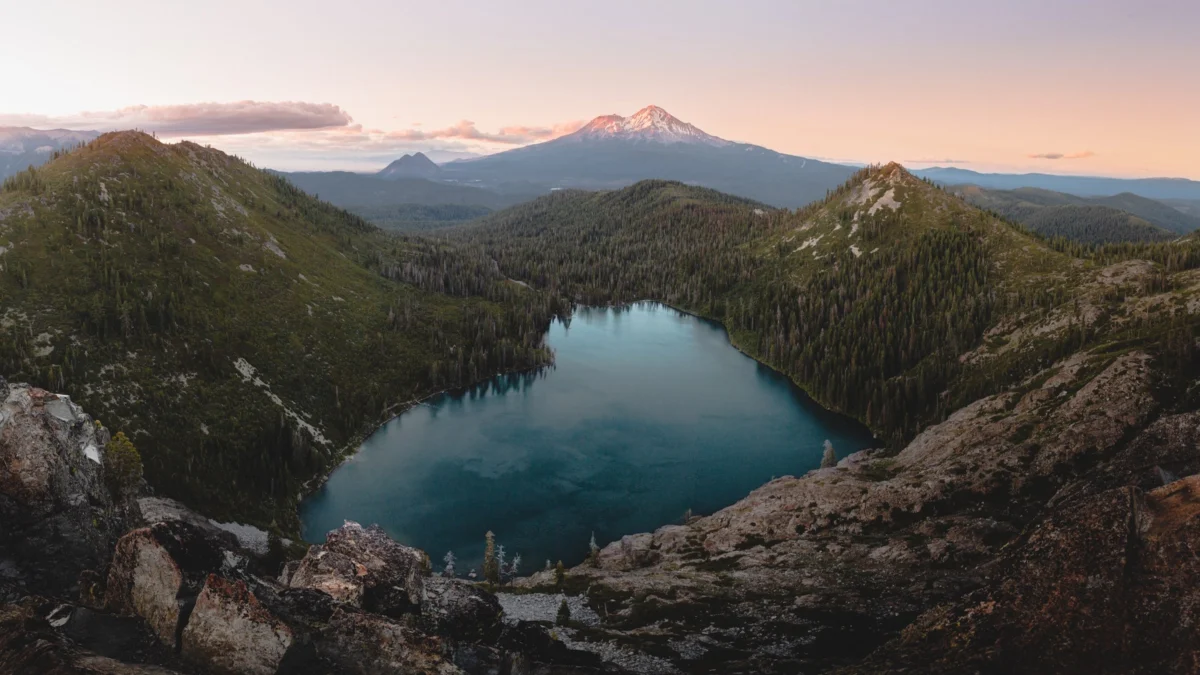
The margins between a routine day in the outdoors and a life-threatening survival scenario are often razor-thin, defined entirely by topography, preparation, and chance. For 72-year-old Mary Beth Granbery of Mount Shasta, California, that boundary vanished on September 28, 2026, when a misstep sent her tumbling 100 feet down a severe embankment near the Pacific Crest Trail. What followed was a grueling six-day ordeal characterized by sub-50-degree nighttime temperatures, severe dehydration, and profound isolation in the rugged terrain of the Shasta-Trinity National Forest.
Granbery’s eventual rescue on October 4 by joint search-and-rescue teams from Siskiyou and Shasta counties has been hailed as a remarkable testament to human resilience. Yet, beyond the dramatic narrative of her survival, the incident has reignited critical conversations among wilderness safety experts regarding the hidden hazards of seemingly benign trails, the vital importance of multi-layered emergency preparedness, and the protocols governing solo backcountry travel.
Main Facts and the Incident Overview
The sequence of events began when Granbery embarked on a planned multi-day camping and hiking excursion in northern California. An experienced local resident familiar with the region, she parked her camper van at the Cabin Creek Trailhead, a popular access point connecting directly to the Pacific Crest Trail (PCT) within the Shasta-Trinity National Forest.
The Cabin Creek Trail itself is frequently categorized by local recreation guides as a manageable route. Situated at an elevation of roughly 3,000 feet, the trail requires minimal technical mountaineering expertise, demanding only a short walk from the trailhead to the PCT before climbing approximately 1,700 feet toward Girard Ridge and descending into the Sacramento River Canyon. However, outdoor professionals emphasize that trail ratings can be deceptive. While the maintained path poses few obstacles for steady hikers, stepping even a short distance off the designated route introduces extreme hazards, including loose scree, unstable soils, and dense, concealing tree cover.
During her excursion, Granbery suffered a catastrophic fall, dropping approximately 100 feet down a steep, heavily wooded embankment. The impact left her with severe injuries, immobile at the bottom of the ravine. Cut off from standard communication channels and unable to climb back up the precipitous slope, she was forced to endure six consecutive nights exposed to the elements. Nighttime temperatures in the region dropped below 50 degrees Fahrenheit, compounding the physical toll of her traumatic injuries, lack of food, and critical water deprivation.
Chronology of the Search and Rescue Operation
The timeline of Granbery’s disappearance and subsequent discovery highlights the standard protocols and challenges faced by local law enforcement agencies when dealing with overdue campers in remote terrain.
- September 28: Granbery departs for her multi-day camping trip, utilizing her camper van as a base camp near the Cabin Creek Trailhead, approximately a 30-minute drive south of the town of Mount Shasta. She is initially scheduled to return home within four days.
- October 2: As the targeted return window closes without contact, friends and family members grow increasingly concerned for her safety, eventually alerting local authorities.
- October 3: Deputies and search personnel initiate a formal investigation. Rescuers locate Granbery’s unoccupied camper van parked at the Cabin Creek Trailhead. Officials acknowledge that they face an information vacuum, possessing no specific itinerary or designated route for her hike. Search operations commence across a broad geographic zone.
- October 4: Search-and-rescue teams locate Granbery at the base of a steep, densely forested embankment near the trail. She is conscious but severely disoriented, hypothermic, and suffering from acute dehydration and multiple fall-related injuries. Emergency responders execute a technical helicopter airlift, transporting her directly to a regional hospital for urgent medical care.
- Post-Rescue: Medical evaluations confirm Granbery is in stable condition, beginning a slow recovery from her physical trauma.
Supporting Data and Environmental Factors
The Shasta-Trinity National Forest encompasses millions of acres of rugged terrain, steep canyons, and dynamic weather patterns typical of northern California’s interior mountain ranges. While autumn daytime temperatures can remain mild and inviting for outdoor enthusiasts, nighttime conditions frequently plummet, especially at elevations exceeding 3,000 feet and within deep, shadowed river canyons where cold air pools.
According to search-and-rescue representatives, Granbery’s ability to survive six nights in these conditions was primarily attributed to two factors: her possession of multiple clothing layers and the foundational supplies contained within her day pack. Although she was not equipped for an extended backcountry emergency, carrying adequate apparel allowed her to mitigate the onset of advanced hypothermia during the freezing nocturnal temperature drops.
Search-and-rescue data consistently demonstrates that hypothermia remains one of the primary killers in wilderness accidents. When the human body is subjected to prolonged exposure at temperatures below 50 degrees Fahrenheit—particularly when compromised by trauma, shock, and a lack of caloric intake—metabolic reserves deplete rapidly. Medical professionals note that Granbery’s internal fortitude, commonly referred to by rescue personnel as the "will to live," played an indispensable role in maintaining vital functions until help arrived.
Official Responses and Interagency Statements
Local emergency management and law enforcement authorities have expressed profound relief regarding the positive outcome of an operation that could easily have ended in tragedy.
Tom Campbell, the head of the Shasta County Office of Emergency Services, spoke candidly to reporters about the nature of the terrain and the remarkable character of the survivor. "She was very cold, hypothermic. She was dehydrated. She had injuries consistent with a fall," Campbell stated. Highlighting her endurance, he added, "My hat’s off to her; she had a will to live."
Campbell also cautioned the public against underestimating regional trails based on their general accessibility ratings. "It’s a fairly easy hike, but as soon as you are off trail, it can be treacherous," he explained, pointing out that the slope Granbery tumbled down featured thick, obstructive vegetation that effectively hid her from casual view by passing hikers or initial search sweeps.
Sage Milestone, a spokesperson for the Siskiyou County Sheriff’s Office, underscored the critical role that basic preparedness played in the incident. While Granbery lacked an emergency locator beacon or satellite communication device—tools that have become increasingly vital for backcountry travelers—her decision to pack multiple clothing layers and foundational day-hiking provisions provided the essential margin of survival during the six-night ordeal.
Broader Impact and Implications for Wilderness Safety
The rescue of Mary Beth Granbery serves as a powerful case study for outdoor safety organizations across the United States. As participation in hiking, camping, and backcountry exploration continues to rise among older demographics, safety advocates emphasize the necessity of adapting risk-management strategies to individual physical capabilities and environmental realities.
Emergency management agencies routinely emphasize the "Ten Essentials" of wilderness survival, which include navigation tools, sun protection, extra clothing, illumination, first-aid supplies, fire-starting gear, repair tools, nutrition, hydration, and emergency shelter. While day hikers frequently omit items such as emergency shelter and robust signaling devices under the assumption that a trip will last only a few hours, incidents like Granbery’s fall illustrate that accidents instantly transform a day outing into an extended backcountry emergency.
Furthermore, search-and-rescue officials reiterate the fundamental importance of trip-filling protocols. Providing a reliable third party with a detailed itinerary—including the specific trailheads utilized, intended routes, and strict return deadlines—remains the single most effective way to accelerate emergency response times. In Granbery’s case, the absence of a specific route plan compounded the initial hours of the search, forcing personnel to sweep vast tracts of forested terrain before locating her vehicle and narrowing the search grid.
As Granbery continues her recovery in stable condition, her ordeal stands as both a stark reminder of the unforgiving nature of the wilderness and an inspiring testament to the endurance of the human spirit when confronted with the unexpected.




 Gabriela Annisa

 Lukman Taruna Persada Ramadan

 Tatiana Tantri Indah Sari


 Dwi Wanna
