
 Anjar Salim
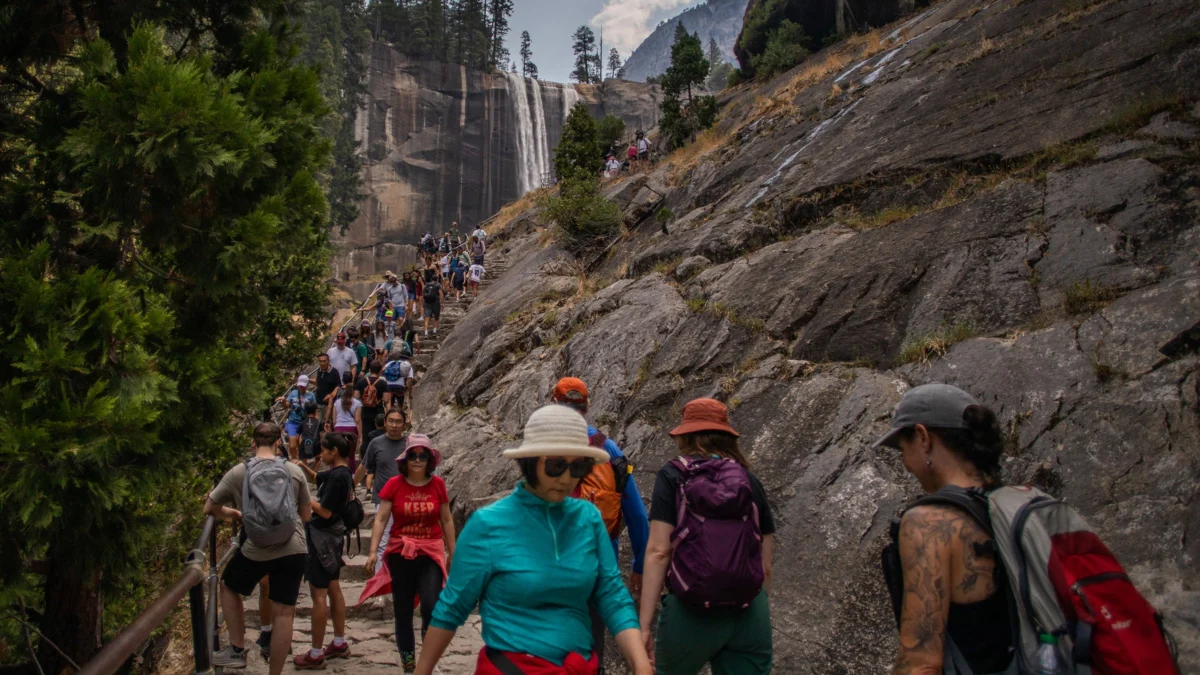
America’s national parks have long been celebrated as the crown jewels of public land conservation, a democratic birthright where every citizen theoretically enjoys equal access to breathtaking wilderness, majestic peaks, and tranquil forests. However, a comprehensive new scientific study reveals a troubling paradox at the heart of modern conservation management. As the National Park Service (NPS) grapples with unprecedented visitation numbers, the increasingly common implementation of reservation and permitting systems may be unintentionally erecting socioeconomic barriers, disproportionately favoring wealthier visitors over lower-income Americans.
Published in the open-access scientific journal Nature Communications, the study investigates the demographic patterns of visitors securing access to high-demand national parks between 2021 and 2024. The findings indicate that individuals who successfully navigate these digital gatekeeping systems to secure competitive permits or advance bookings consistently hail from higher-income zip codes. As public land managers attempt to protect fragile ecosystems from the devastating impacts of overcrowding, the debate over how to fairly allocate access to America’s shared natural heritage has taken center stage.
The Scope and Findings of the New Research
Led by Jonathan Hughes, an economist at the University of Colorado, the research evaluated 11 distinct reservation systems across seven iconic national parks, including Acadia in Maine, Glacier in Montana, and Rocky Mountain National Park in Colorado. The investigation specifically targeted timed-entry systems and vehicle access permits for congested thoroughfares, such as the famous Cadillac Summit Road in Acadia, while intentionally excluding overnight campground reservations.
The data revealed a clear correlation between financial privilege and the successful acquisition of park access. Visitors who secured the most competitive permits came from zip codes with median incomes tracking three to five percent higher than those who sought less-competitive options. Furthermore, the timing of the reservation played a critical role. Permits purchased six months in advance of a planned trip favored residents living in zip codes with a median income roughly five percent higher than those who relied on same-day or last-minute permits.
According to Hughes, these disparities highlight the complex unintended consequences of well-intentioned public policies. While administrators implement these restrictions to protect flora, fauna, and the visitor experience, the structural mechanics of how permits are distributed ultimately shape who gets to recreate on public lands. The fundamental mission of the NPS mandates that these sites be managed for the benefit and enjoyment of all people, raising critical legal and ethical questions about equity in the modern era of conservation.
The Evolution of Overcrowding and the Rise of Permits
To understand why the National Park Service turned to reservation systems, one must examine the staggering surge in public visitation over the past decade. In 2024, the NPS logged more than 331 million recreational visits, shattering historical records and placing immense strain on park infrastructure, trail systems, wildlife populations, and local search-and-rescue teams.
For decades, the standard management approach relied on an open-door policy, allowing visitors to enter popular parks at will. However, this model resulted in severe ecological degradation, miles of illegal roadside parking, overwhelmed sanitation facilities, and compromised wildlife behaviors. Visitors frequently complained of congested roadways, packed trailheads, and an inability to experience the solitude and tranquility that national parks are intended to provide.
In response, park superintendents began experimenting with advanced reservation frameworks. Systems modeled after commercial ticketing platforms were introduced at heavily impacted destinations like Arches National Park in Utah, Yosemite in California, and Glacier in Montana. These programs successfully reduced traffic congestion, restored ecological stability to overused areas, and enhanced the overall quality of the visitor experience for those who successfully obtained entry.
Yet, the management strategy remains a work in progress. Signaling the ongoing challenges of fine-tuning these systems, the NPS notably abandoned its timed-entry pilot program at Arches National Park, illustrating the volatile trial-and-error phase defining contemporary park administration.
Structural Drivers of Socioeconomic Inequality in Permit Systems
The revelation that reservation systems favor wealthier individuals is not the result of malicious intent by park officials, but rather a byproduct of systemic socioeconomic advantages embedded in modern daily life. Researchers and public land experts have identified several primary drivers contributing to this digital and logistical divide.
First, occupational flexibility plays a decisive role. Higher-earning professionals frequently possess greater autonomy over their schedules, allowing them to plan and request extended vacations many months in advance. Conversely, hourly wage earners, service-industry workers, and gig economy participants often face rigid, unpredictable schedules where shifts are finalized only days or hours prior to the work week. This lack of scheduling predictability makes advance bookings nearly impossible.
Second, the mechanics of high-demand digital sales heavily favor those with specific resources. When competitive permits are released for sale at an exact minute on platforms like recreation.gov, securing a spot requires immediate internet access and uninterrupted free time. Lower-income workers may be restricted from using personal devices during working hours, or they may lack access to high-speed, reliable broadband connections. Studies indicate that lower-income demographics are significantly more likely to rely on smartphones rather than desktop computers or high-speed home internet for web access, creating a disadvantage when navigating clunky interfaces or competing against automated bots and rapid-fire desktop users.
Finally, digital literacy and familiarity with complex federal reservation platforms can present psychological and practical hurdles. Navigating recreation.gov, understanding multi-tiered permit release schedules, and managing user accounts require a baseline of digital proficiency that may alienate older, rural, or economically disadvantaged populations who do not regularly interact with online booking ecosystems.
Expert Solutions: Lotteries, Waves, and Ethical Education
As the scientific community and the public confront these equity gaps, researchers are actively proposing alternative management frameworks designed to reconcile ecological preservation with democratic accessibility.
Will Rice, an associate professor at the University of Montana who specializes in equity issues regarding public lands recreation, advocates for structural modifications to the current permit allocation models. Rice strongly supports the implementation of lottery systems, which decouple the acquisition of permits from internet speed and precise timing windows, offering every applicant an equal statistical chance regardless of their socioeconomic status or occupation.
However, Rice acknowledges that lotteries are not a silver bullet. While they promote fairness, they introduce logistical frustrations, often forcing visitors to accept dates that do not align with their ideal travel timelines or annual leave allowances. To mitigate this drawback, Rice champions a phased-release model. Under this approach, parks distribute permits in rolling waves—staggering availability across months, weeks, and final-day blocks. This hybrid strategy accommodates both advance planners and spontaneous travelers while maintaining ecological caps.
Beyond structural redesigns, experts emphasize the urgent need for robust public education campaigns focused on permit etiquette. Modeled after the Leave No Trace principles that govern physical behavior in the backcountry, new ethical frameworks are needed for the digital realm. Rice points out that negligent behaviors, such as individuals hoarding multiple permits to create personal buffer zones or failing to cancel unused reservations, artificially inflate scarcity and lock out legitimate visitors. Cultivating a culture of shared responsibility and digital consideration is essential for maintaining the integrity of public land access.
Broader Implications for the Future of Public Lands
The debate surrounding national park reservation systems touches on a much larger philosophical question: Who owns America’s public lands, and what does true public access look like in the twenty-first century?
As climate change concentrates visitation into narrower seasonal windows and population growth continues to drive millions of Americans toward outdoor recreation, the pressure on national parks will only intensify. Federal land managers face an unenviable balancing act. If they abandon restrictions in the name of absolute egalitarianism, ecological degradation and overcrowding will ruin the very resources they are sworn to protect. Conversely, if they implement rigid rationing systems without accounting for socioeconomic equity, they risk transforming America’s most democratic spaces into exclusive playgrounds for the privileged.
Addressing these disparities will require a concerted effort from the Department of the Interior, the National Park Service, and academic researchers. Potential policy adjustments could include setting aside specific blocks of permits exclusively for low-income families, partnering with community organizations to subsidize travel costs, expanding public transit options to reduce vehicle-permit dependencies, and drastically simplifying mobile interfaces for reservation platforms.
Ultimately, the findings from Nature Communications serve as an urgent wake-up call for conservationists and policymakers alike. Protecting America’s natural wonders requires safeguarding not only the physical landscape, but also the democratic promise that these majestic spaces truly belong to everyone.



 Gabriela Annisa

 Lukman Taruna Persada Ramadan

 Tatiana Tantri Indah Sari


 Dwi Wanna
