
 Walid Sujud Trenggono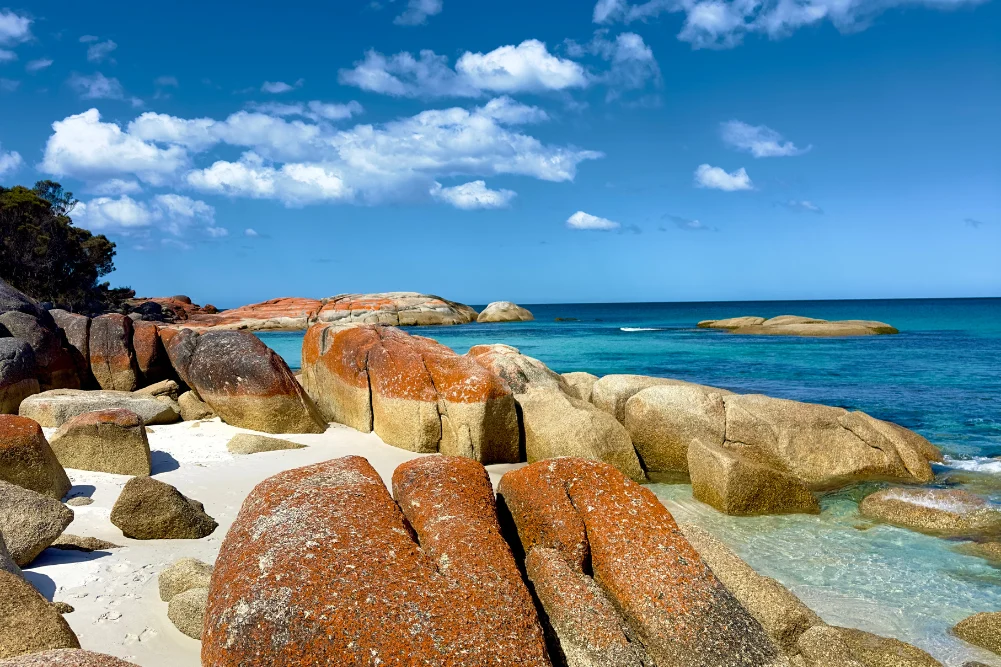
The Bay of Fires, a 50-kilometer stretch of coastline on Tasmania’s northeast, has solidified its reputation as a global destination for ecotourism, recently earning the title of Australia’s most beautiful beach for 2025. Characterized by its crystal-clear turquoise waters, blindingly white sands, and iconic granite boulders encrusted with orange lichen, the region—known to the local Palawa people as Larapuna—serves as a primary draw for the state’s burgeoning "soft adventure" market. Guided treks, such as those operated by Intrepid Travel, have become a cornerstone of the local economy, offering a curated experience that balances rugged wilderness exploration with high-end logistical support, including professional guides, chef-prepared meals, and fixed-base accommodations in nearby St Helens.
Historical and Cultural Context
The nomenclature of the Bay of Fires dates back to 1773, when Captain Tobias Furneaux, sailing on the HMS Adventure, observed numerous fires along the coastline. These fires were the traditional land management and cooking fires of the Aboriginal Palawa people, who have inhabited the region for thousands of years. Today, the "fires" are often associated with the vibrant orange lichen (Caloplaca marina) that covers the coastal granite. This symbiotic organism thrives in the nutrient-rich, salt-sprayed environment of the Tasman Sea, creating a visual spectacle that defines the region’s aesthetic.
Larapuna holds significant spiritual and historical value for the Tasmanian Aboriginal community. Modern guided tours often integrate these cultural narratives, acknowledging the deep connection between the land and its original custodians. The integration of indigenous history into the tourism framework is part of a broader state-wide initiative to promote respectful and educational engagement with Tasmania’s past.
The Three-Day Expedition: A Chronological Overview
The logistical framework of a typical Bay of Fires trek begins in Launceston, Tasmania’s northern hub. Participants are transported to St Helens, the largest town on the northeast coast, which serves as the primary base for operations.
Day One: Humbug Point and the Skeleton Bay Track
The initial phase of the trek involves the Skeleton Bay Track leading to Dora Point within the Humbug Point Conservation Area. This section introduces hikers to the variable Tasmanian climate, colloquially referred to by locals as experiencing "four seasons in one day." The coastal heathland here transitions into dense forests of ferns, paperbarks, banksia, and tea trees. This stage is designed to acclimatize walkers to the terrain, covering several kilometers of undulating coastal paths while providing views of the southern Tasman Sea.
Day Two: Eddystone Point and the 12-Kilometer Coastal Push
The second day represents the technical heart of the journey. Hikers are transported to Eddystone Point, home to a 35-meter-high lighthouse constructed from pink granite in 1889. This landmark marks the northern boundary of the Bay of Fires. From this point, the trek proceeds southward along Eddystone Beach.
This 12-kilometer segment is defined by its exposure to the elements, with wind gusts frequently exceeding 50 kilometers per hour. The terrain includes "shell coves," where deep deposits of cockle and clam shells create a unique, shifting walking surface. This day emphasizes the region’s biodiversity, with sightings of Pacific gulls, oystercatchers, and sandpipers. The day concludes with a transition from the beach to inland fire trails, highlighting the contrast between the maritime environment and the fragrant Tasmanian bushland.
Day Three: Mount William National Park and Stumpy’s Bay
The final day of the itinerary focuses on the Mount William National Park, a refuge for Tasmanian wildlife. The 6-kilometer loop near Stumpy’s Bay—named for the chunky rock formations rather than the local fauna—is a prime location for spotting wombats and echidnas. The trek concludes with a return to Launceston, often featuring stops at inland landmarks like the Little Blue Lake and the town of Derby.
Regional Flora and Fauna
Tasmania’s northeast coast is a biodiversity hotspot. The region is home to approximately one million common wombats (Vombatus ursinus), a population that nearly doubles the state’s human residency. These marsupials are known for their distinctive cubic scat, a biological adaptation that prevents the droppings from rolling off the rocks used to mark their territory.
The Tasmanian echidna (Tachyglossus aculeatus setosus) also features prominently in the regional ecosystem. These monotremes are notably larger and possess thicker fur than their mainland Australian counterparts, an evolutionary necessity for the cooler Tasmanian climate. The avian population is equally diverse, including the splendid fairy-wren, green rosellas, and various honeyeaters, which contribute to the "seaside symphony" often noted by visitors.
Geological and Environmental Features
The granite boulders that define the Bay of Fires are part of a massive igneous formation that dates back hundreds of millions of years. The orange lichen that coats these rocks is not merely decorative; it is a hardy pioneer species that can survive extreme UV exposure and salt saturation.
A notable environmental anomaly visited by many tours is the Little Blue Lake. Located in the South Mount Cameron region, the lake is a remnant of the Endurance tin mine, which operated from the 1870s until the early 1980s. The striking "electric blue" color of the water is a result of suspended white clay (kaolin) particles and mineral deposits. While aesthetically pleasing and highly photographed, the water’s mineral content and acidity make it unsuitable for swimming, serving as a visual reminder of the region’s industrial mining heritage.
Economic Impact and the Transition of Coastal Towns
The rise of guided trekking has significantly impacted the economic landscape of northeast Tasmania. St Helens, traditionally known as the state’s game fishing capital, has successfully diversified into a premium ecotourism hub. The town’s hospitality sector benefits from the influx of hikers, with local businesses providing high-quality seafood, including southern rock lobster and oysters from Lease 65, a renowned local aquaculture site.
Similarly, the town of Derby has undergone a radical transformation. Once one of the world’s richest tin-mining centers, Derby has pivoted to become a premier destination for mountain biking and adventure tourism. This shift from extractive industry to sustainable recreation is often cited by economic analysts as a model for rural revitalization in Australia.
Tourism Logistics and Safety
Guided tours in the Bay of Fires are typically seasonal, running from October to April to take advantage of the southern hemisphere’s warmer months. These tours cater to a demographic seeking "adventure with a soft center," meaning they provide the physical challenge of hiking without the burden of heavy packs or backcountry camping.
Safety is a critical component of these operations. Guides are trained in wilderness first aid, and the proximity to St Helens ensures that emergency services are accessible if needed. The inclusion of diverse participants—from 75-year-old seasoned trampers to individuals training for more grueling international treks like the Kokoda Track—underscores the accessibility of the Bay of Fires trail.
Analysis of Implications for Ecotourism
The success of the Bay of Fires as a tourist destination highlights a growing global trend toward experiential travel that emphasizes environmental conservation and local heritage. By offering "pack-free" hiking, operators have opened the wilderness to a broader age demographic, ensuring the longevity of the industry.
However, the popularity of the region also necessitates careful management to prevent environmental degradation. The Tasmania Parks and Wildlife Service monitors the impact of foot traffic on the fragile coastal heathlands and sand dunes. The balance between maintaining the "pristine" nature of the Bay of Fires and accommodating increasing visitor numbers remains a primary focus for state planners.
Conclusion
The Bay of Fires represents a unique intersection of natural beauty, geological history, and modern sustainable tourism. As Tasmania continues to position itself as a world-class destination for hikers, the northeast coast serves as its flagship. Through a combination of rigorous conservation efforts, historical storytelling, and high-quality logistical infrastructure, the region provides an immersive experience that resonates with both domestic and international travelers. Whether viewed through the lens of its Palawa history, its unique wildlife, or its status as a modern trekking haven, the Bay of Fires remains a vital and vibrant part of the Australian landscape.




 Chandra Hamzah
 Tatiana Tantri Indah Sari
 Budi Mulyono
 Anjar Salim

