
 Budi Mulyono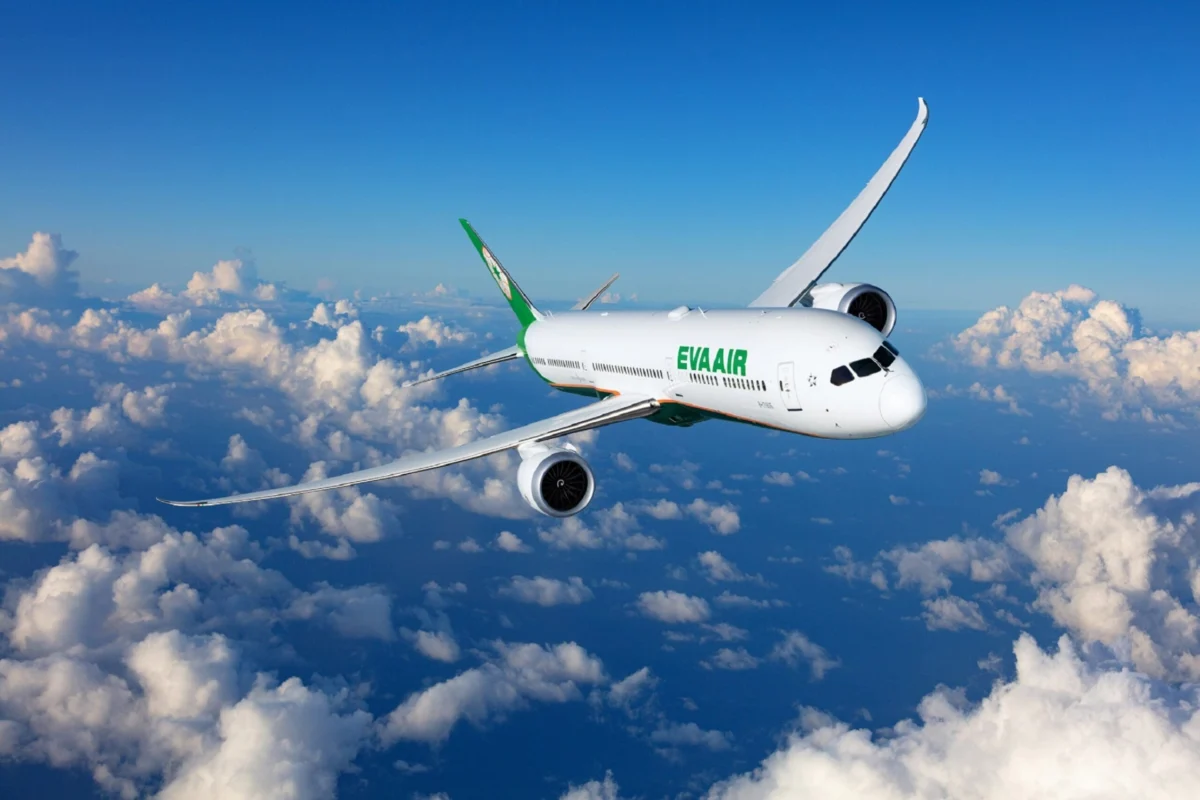
EVA Air has officially inaugurated its highly anticipated nonstop service between Taiwan Taoyuan International Airport (TPE) and Washington Dulles International Airport (IAD), marking a significant milestone in transpacific aviation. The service, which commenced on June 26, operates four times weekly and represents the first-ever nonstop passenger route between the capital of Taiwan and the capital of the United States operated by a Taiwanese carrier. This strategic expansion increases EVA Air’s North American footprint to 10 gateways and brings its total weekly frequency to the region to 98 flights. By establishing this direct link, the airline addresses a long-standing void in the market, providing a streamlined travel option for government officials, business travelers, and tourists alike, while leveraging its partnership within the Star Alliance network to offer enhanced connectivity through United Airlines’ East Coast hub.
The new route utilizes the Boeing 787-9 Dreamliner, an aircraft specifically selected for its range, fuel efficiency, and passenger comfort on ultra-long-haul sectors. The flight covers a distance of approximately 7,864 miles, placing it among the longest routes in EVA Air’s global network. While the distance is slightly less than the carrier’s service to Houston’s George Bush Intercontinental Airport (IAH), operational planners anticipate longer flying times for the Washington D.C. route due to specific routing constraints and seasonal wind patterns. The introduction of this service is the culmination of several months of logistical preparation, following the initial announcement of the route’s development in February.
Chronology of the Route Development and Launch
The journey toward establishing a direct link between Taipei and Washington D.C. began in early 2024 when EVA Air identified a growing demand for premium transpacific travel to the U.S. Mid-Atlantic region. On February 20, the airline first signaled its intention to launch the route, citing the strategic importance of connecting two major political and economic centers. Over the subsequent months, the airline worked closely with the Metropolitan Washington Airports Authority (MWAA) and the Taiwan Taoyuan International Airport Corporation to finalize slot allocations and ground handling logistics.
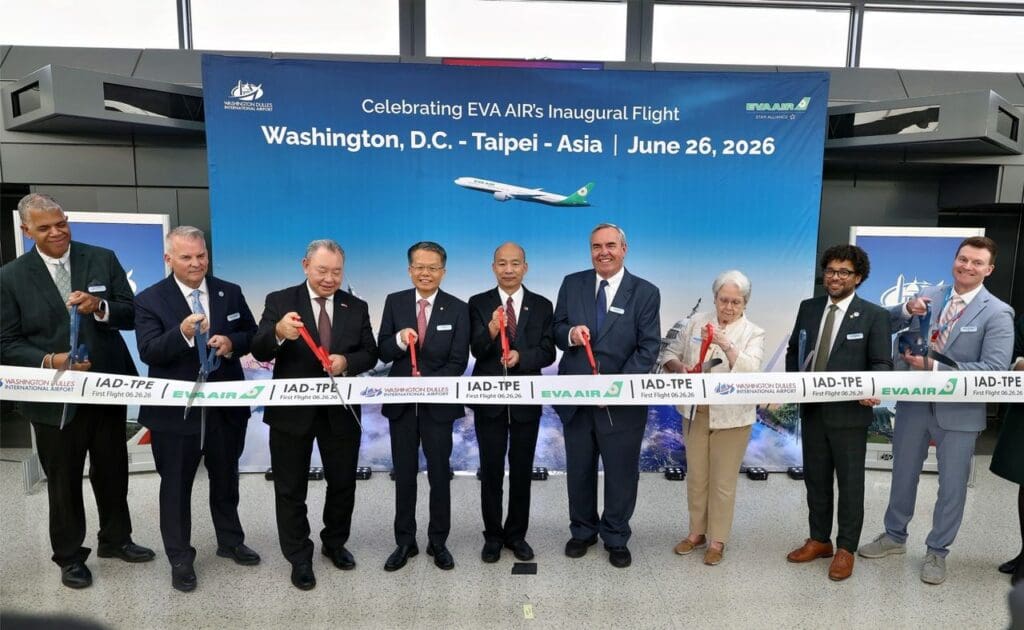
The inaugural flight arrived at Washington Dulles International Airport on the afternoon of June 26, greeted by the traditional aviation welcome of a water cannon salute. On the tarmac, a formal ceremony was held to commemorate the historic occasion. Jack Potter, President and CEO of the MWAA, joined EVA Air President Clay Sun to welcome the first arriving passengers. The event featured a traditional dragon and lion dance, symbolizing prosperity and good fortune. To solidify the partnership, an exchange of gifts took place: Sun presented a precision model of the Boeing 787-9 Dreamliner in EVA Air’s signature livery, while Potter gifted a framed map of Washington, D.C., representing the destination’s readiness to host Taiwanese visitors.
Passengers on the inaugural flights were also presented with limited-edition souvenirs, a collaborative effort between EVA Air and the Taiwan Tourism Administration. These items were designed to highlight Taiwan’s cultural heritage and encourage further tourism between the two nations.
Technical Specifications and Cabin Configuration
The deployment of the Boeing 787-9 Dreamliner on the TPE-IAD route is a core component of EVA Air’s fleet modernization strategy. The aircraft is configured with a three-class layout, totaling 278 seats, designed to cater to a diverse range of traveler needs.
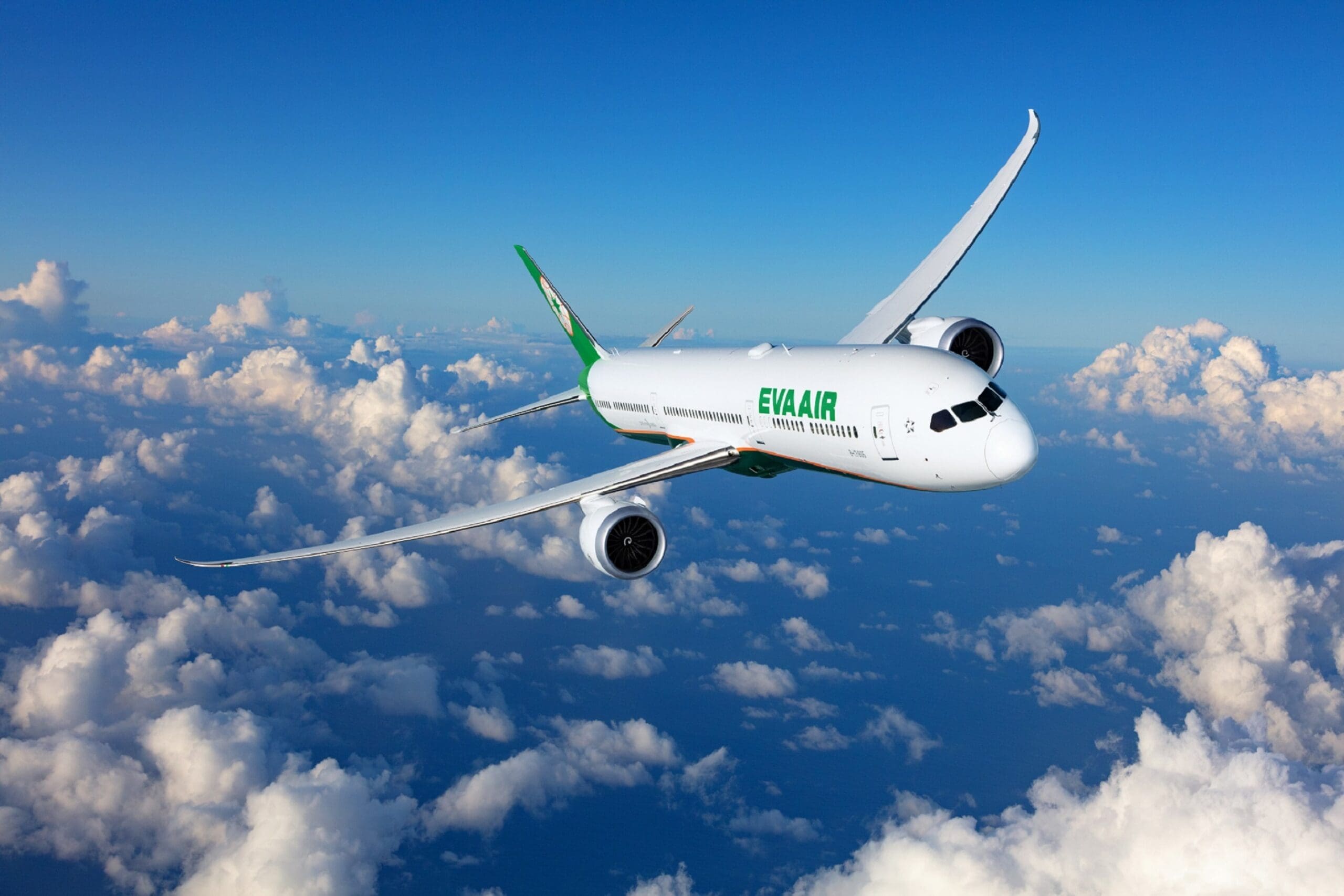
In the Royal Laurel Class (Business Class), there are 26 private suites arranged in a 1-2-1 configuration, ensuring direct aisle access for every passenger. These seats convert into fully flat beds and feature high-definition entertainment screens and enhanced privacy dividers. The Premium Economy cabin consists of 28 seats in a 2-3-2 layout, offering increased legroom, wider seats, and dedicated amenities that bridge the gap between standard economy and business class. The remaining 224 seats are located in the Economy Class cabin, which utilizes an ergonomically designed 3-3-3 configuration.
The Boeing 787-9 is particularly suited for this route because of its advanced composite materials, which allow for lower cabin altitude pressure and higher humidity levels. These features are critical for reducing passenger fatigue on flights exceeding 15 hours. Furthermore, the aircraft’s GEnx engines provide a significant reduction in carbon emissions and noise pollution compared to previous generation wide-body aircraft, aligning with EVA Air’s sustainability objectives.
Strategic Importance of the Washington Dulles Gateway
The selection of Washington Dulles International Airport as the 10th North American destination for EVA Air is a calculated strategic move. As a primary hub for United Airlines, a fellow Star Alliance member, Dulles provides EVA Air passengers with seamless "behind-the-gateway" connectivity to dozens of cities across the U.S. East Coast, the South, and parts of Canada. This synergy allows travelers from Taiwan and Southeast Asia to reach destinations such as Richmond, Norfolk, Charlotte, and Raleigh-Durham with a single stop and coordinated baggage transfers.
Conversely, the route serves as a vital artery for the "Capital-to-Capital" connection. Washington, D.C., is not only the seat of the U.S. federal government but also a hub for international organizations, defense contractors, and educational institutions. Taiwan’s position as a global leader in semiconductor manufacturing and high-tech industries creates a natural demand for direct travel for corporate executives and diplomatic missions. Prior to this launch, travelers between the two capitals were forced to transit through West Coast hubs like Los Angeles or San Francisco, or through New York’s JFK or Newark airports, often adding several hours to their total travel time.
Competitive Landscape and Market Analysis
The launch of the Taipei-Washington D.C. route places EVA Air in a unique competitive position within the Taiwanese aviation market. Historically, the transpacific market from Taiwan has been dominated by three major players: EVA Air, China Airlines (a SkyTeam member), and the relatively new entrant, STARLUX Airlines. By securing the first nonstop link to the U.S. capital, EVA Air has effectively pre-empted its competitors in a high-yield market.
Market analysts suggest that EVA Air’s extensive network in Southeast Asia is a key factor in the viability of the IAD route. The airline’s hub at Taoyuan International Airport is designed for efficient transfers, drawing passengers from cities such as Bangkok, Ho Chi Minh City, Manila, and Jakarta. For many travelers in Southeast Asia, EVA Air now offers one of the most efficient ways to reach the U.S. Mid-Atlantic region.
While China Airlines currently serves major gateways like Los Angeles, San Francisco, and New York, it has yet to announce plans for a Washington D.C. service. STARLUX Airlines, while expanding rapidly with new routes to Seattle and Los Angeles, currently lacks the fleet size and the deep alliance partnerships required to sustain a four-times-weekly service to a specialized market like Dulles. Consequently, EVA Air is expected to enjoy a period of market exclusivity on this route, allowing it to capture a significant share of the premium and government travel sectors.
Economic and Diplomatic Implications
Beyond the aviation sector, the new flight service has broader implications for U.S.-Taiwan relations. The existence of a direct flight between national capitals is often viewed as a barometer of the strength of bilateral ties. Economic data suggests that trade between the U.S. and Taiwan continues to grow, with Taiwan remaining one of the United States’ largest trading partners. The ability to move people and high-value cargo—such as electronic components—directly between the Mid-Atlantic region and Taiwan is expected to bolster these economic activities.
The Taiwan Tourism Administration has also expressed optimism that the route will increase the number of American visitors to Taiwan. By reducing the friction of travel, the agency hopes to promote Taiwan as a premier destination for "bleisure" (business and leisure) travel, highlighting the island’s culinary scene, mountainous landscapes, and cultural heritage.
Future Outlook and Network Expansion
With the addition of Washington D.C., EVA Air’s North American network now includes Los Angeles, San Francisco, Seattle, New York, Houston, Chicago, Vancouver, Toronto, and Honolulu (seasonal/charter). The airline has indicated that it will continue to monitor the performance of the IAD route with the potential to increase frequency to daily service if demand meets expectations.
Furthermore, EVA Air is in the process of receiving additional Boeing 787-10 aircraft, which may be deployed on other high-demand North American routes, freeing up more 787-9 units for further secondary-market expansion. As the global aviation industry continues its post-pandemic recovery, EVA Air’s aggressive expansion into the U.S. East Coast signals a confidence in the long-term growth of transpacific travel and reinforces the airline’s status as a leading global carrier.
The successful launch of the Taipei-Washington D.C. service serves as a testament to the evolving dynamics of international aviation, where specialized, long-haul routes are becoming increasingly viable through advanced aircraft technology and strategic alliance partnerships. For the traveling public, the new service offers a welcome increase in choice, convenience, and comfort on one of the world’s most significant air corridors.




 Anjar Salim
 Chandra Hamzah
 Tatiana Tantri Indah Sari
 Lukman Taruna Persada Ramadan
