
 Budi Mulyono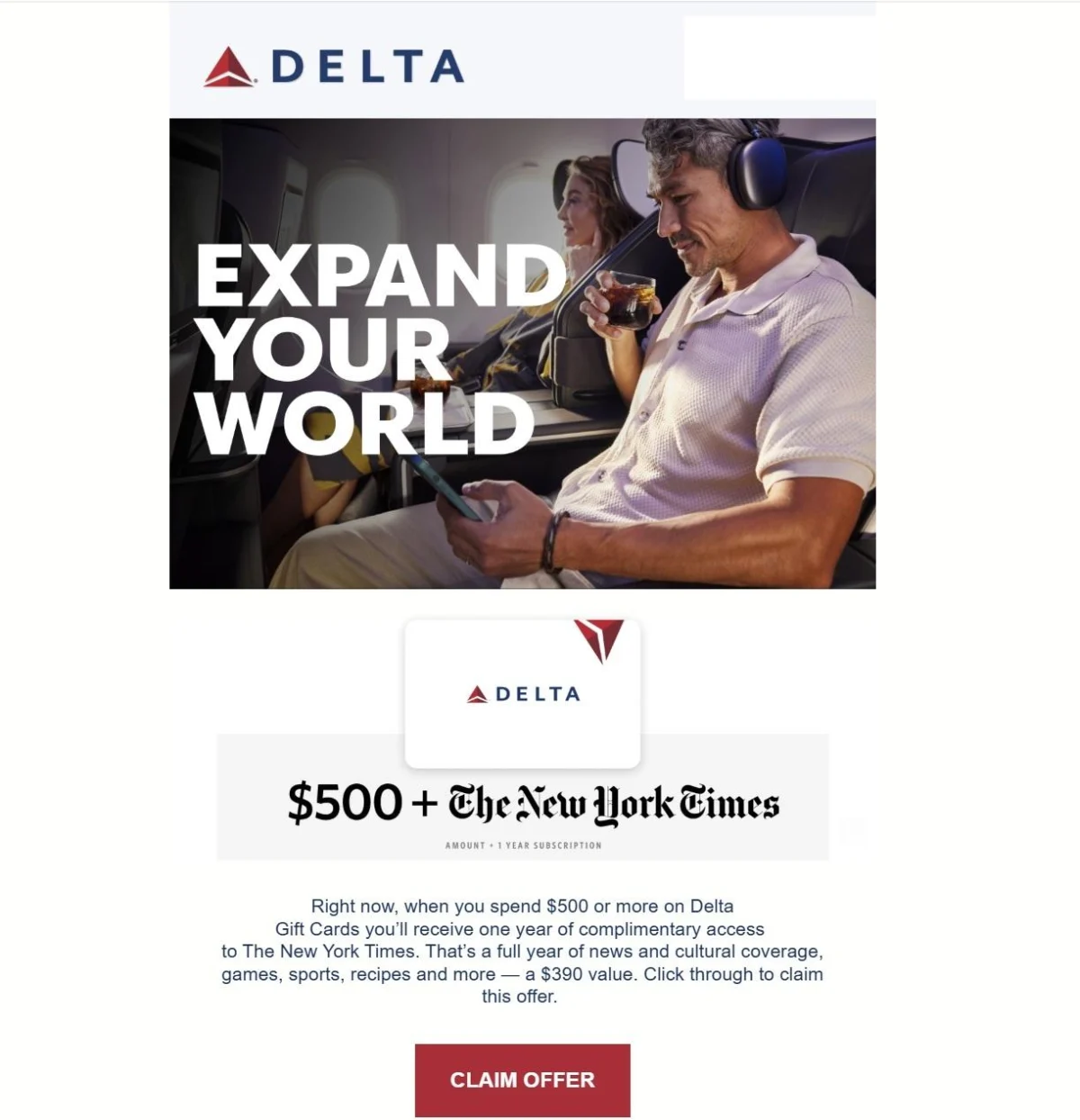
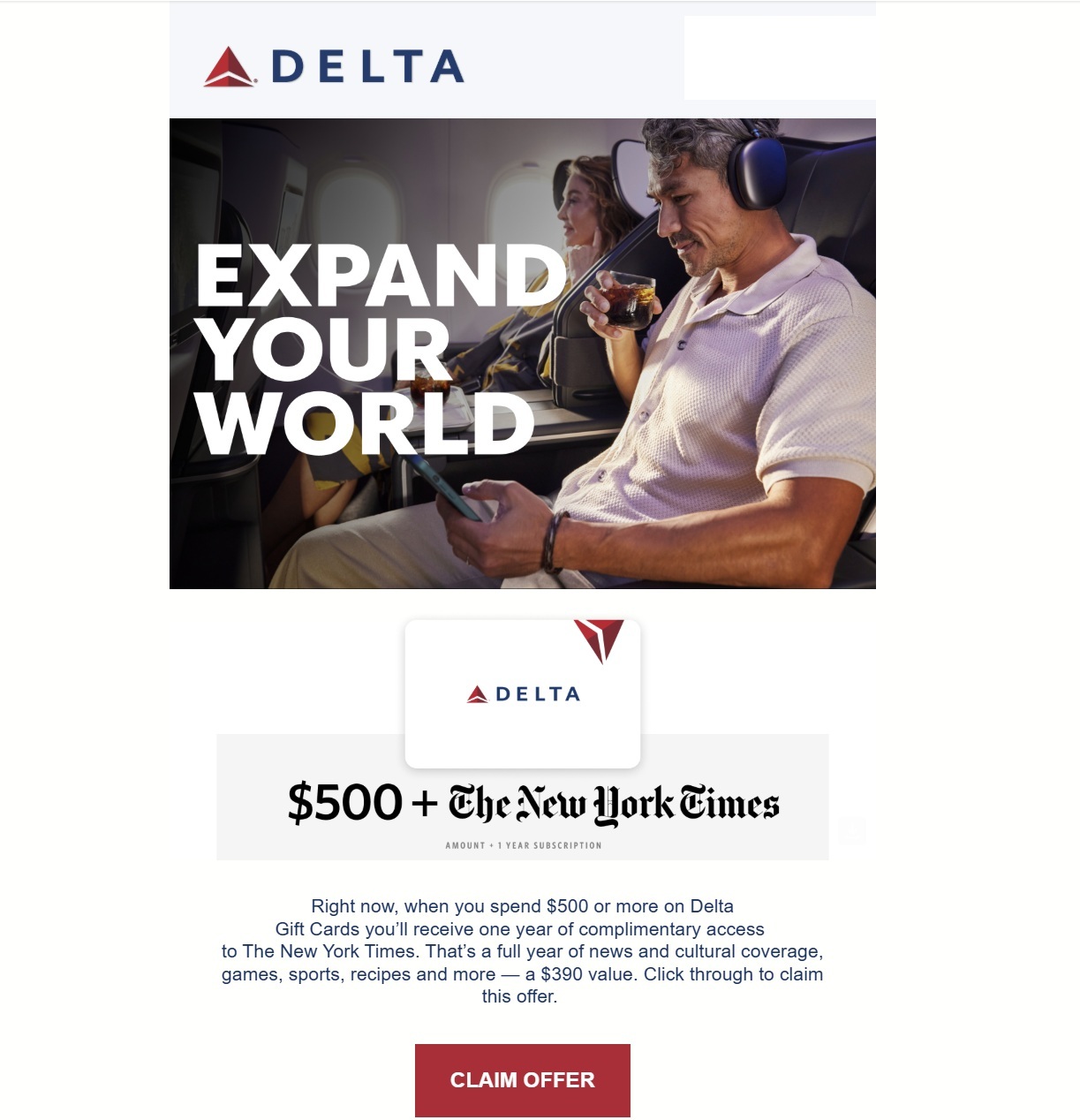
Delta Air Lines has officially launched a strategic promotional partnership with The New York Times, offering SkyMiles members a complimentary one-year "All-Access" digital subscription upon the purchase of a Delta gift card valued at $500 or more. This initiative, communicated to eligible members via targeted email campaigns, represents a growing trend in the travel industry where airlines seek to provide value-added lifestyle benefits beyond traditional flight-related rewards. The offer is delivered through a unique, one-time-use link, ensuring that the promotion remains exclusive to the recipient and preventing the mass distribution of redemption codes.
By integrating high-value media content with financial products like gift cards, Delta is positioning itself as more than a transportation provider, aiming instead to become a central figure in the premium lifestyle of its frequent flyers. The "All-Access" tier of The New York Times subscription includes not only the standard news coverage but also specialized products such as NYT Cooking, NYT Games (including the popular Wordle and Crossword), Wirecutter, and The Athletic. This comprehensive bundle is designed to appeal to the demographic overlap between frequent business travelers and consumers of premium digital journalism.
Financial Valuation of the Promotional Offer
To understand the economic impact of this deal for the consumer, it is necessary to examine the current pricing structure of The New York Times digital products. While the publication frequently offers introductory rates—often cited at approximately $1 per week or $52 for the first year—the standard retail price for the "All-Access" bundle typically rises significantly after the initial 12-month period. For many long-term subscribers or those who have previously utilized introductory offers, the full price can exceed $25 per month, totaling more than $300 annually.
For a consumer who is already planning to spend $500 on Delta travel, the inclusion of a subscription valued at a minimum of $52 (at promo rates) or up to $300 (at standard rates) represents a significant return on investment. Furthermore, the promotion addresses a common pain point in digital subscriptions: the "auto-renewal trap." Delta has specified that these promotional subscriptions will not automatically renew at the end of the one-year term. This transparency removes the burden from the consumer to manually cancel the service to avoid unexpected charges, a move that enhances brand trust for both Delta and The New York Times.
Strategic Objectives for Delta Air Lines
The primary objective for Delta in this campaign is the stimulation of gift card sales, which serves several financial purposes. First, the sale of gift cards provides the airline with immediate cash flow. In the accounting of major carriers, gift card sales are recorded as deferred revenue, representing a liability on the balance sheet until the travel is actually booked and flown. However, the liquid capital is available for immediate operational use.
Second, gift cards are a tool for "lock-in." Once a consumer holds a $500 Delta gift card, they are significantly more likely to choose Delta for their next flight over a competitor, even if a rival airline offers a slightly lower fare. This reduces price sensitivity and strengthens brand loyalty. Finally, the airline benefits from "breakage"—a term referring to the percentage of gift cards that are lost, forgotten, or never fully redeemed. While breakage rates have declined due to improved digital tracking, they remain a factor in the overall profitability of gift card programs.
The New York Times and the Quest for Digital Growth
For The New York Times, the partnership serves as a powerful customer acquisition vehicle. The publication has set ambitious goals for digital subscriber growth, aiming to reach 15 million subscribers by 2027. By partnering with Delta, the Times gains access to a high-income, educated demographic that is highly likely to engage with its diverse content offerings.
Even if a portion of these subscribers does not renew at the end of the complimentary year, the Times benefits from the data collected during the subscription period. Understanding the reading habits of Delta’s premium travelers allows the publication to refine its content strategy and targeted advertising. Moreover, the "All-Access" bundle is a key part of the Times’ "bundle strategy," which has proven to increase subscriber retention compared to news-only subscriptions. Once a user becomes accustomed to using NYT Games or NYT Cooking daily, the "stickiness" of the subscription increases, making them more likely to convert to a paying subscriber in the future.
Integration with the Broader Credit Card Ecosystem
The value proposition of this Delta promotion must also be viewed through the lens of the current credit card rewards landscape. Many Delta frequent flyers also hold the American Express Platinum Card, which offers a $20 monthly digital entertainment credit. This credit can already be applied to The New York Times, effectively making the subscription "free" for those cardholders.
However, for travelers who use their American Express credit for other eligible services—such as Hulu, Disney+, or Peacock—the Delta gift card promotion offers a way to secure a New York Times subscription without exhausting their monthly credit. This creates a layered benefit system where savvy consumers can maximize their rewards across multiple platforms. For the segment of Delta’s audience that does not carry high-fee premium credit cards, this promotion provides a rare opportunity to access premium news content without an out-of-pocket monthly expense.
Chronology of Airline-Media Partnerships
This collaboration is not an isolated incident but rather the latest evolution in a series of partnerships between the travel and media sectors. Historically, airlines provided physical newspapers in premium cabins and lounges. As the industry shifted toward digitalization, these partnerships moved into the In-Flight Entertainment (IFE) systems.
- Early 2010s: Airlines began offering limited digital access to newspapers via onboard Wi-Fi portals.
- Mid-2010s: Partnerships like the one between United Airlines and Apple Music or American Airlines and TikTok began to emerge, focusing on entertainment.
- 2020-Present: The focus shifted toward long-term digital subscriptions. Delta’s recent move to provide free high-speed Wi-Fi for all SkyMiles members has acted as a catalyst for these types of partnerships, as passengers now have the bandwidth to consume high-quality digital content throughout their journey.
The current Delta and NYT deal represents a more transactional approach, linking the subscription directly to a financial commitment (the gift card purchase) rather than just "passive" loyalty.
Consumer Considerations and Redemption Mechanics
The redemption process for this offer is designed to be streamlined but requires careful attention to the terms and conditions. Upon purchasing the $500 gift card through the unique link provided in the email, the member receives a redemption code or a direct activation link for The New York Times.
Key constraints often associated with such deals include:
- Eligibility: The offer is typically restricted to new subscribers or those who do not currently have an active All-Access subscription.
- One-Time Use: The link provided in the initial email is tied to the member’s SkyMiles account, preventing the sharing of the offer on public forums or deal-aggregation sites.
- Time Sensitivity: There is usually a window (often 30 to 90 days) in which the gift card must be purchased and the subscription activated.
Consumers are advised to verify that the email originated from an official Delta.com address to avoid phishing attempts, which frequently target high-value loyalty programs.
Broader Implications for Loyalty Marketing
The Delta-NYT partnership signals a shift in how loyalty programs define "value." For decades, the primary currency was the mile. However, as "mileage inflation" has made it more difficult for casual travelers to earn meaningful rewards, airlines are turning to immediate gratification through third-party services.
This "Lifestyle Loyalty" model focuses on the 365-day relationship with the customer, rather than just the days the customer is on an airplane. By providing a daily-use product like a news and games subscription, Delta remains "top of mind" for the consumer every morning when they open their phone. This constant brand presence is invaluable in a competitive market where consumer attention is fragmented.
Furthermore, this deal highlights the importance of the "gift card" as a strategic tool in the travel sector. During periods of economic uncertainty, consumers may be hesitant to book a specific flight but willing to lock in travel funds for the future, especially when incentivized by a premium bonus.
Conclusion
The partnership between Delta Air Lines and The New York Times is a sophisticated example of modern cross-brand marketing. It provides Delta with an immediate infusion of capital through gift card sales, offers The New York Times a pipeline of high-value digital subscribers, and provides the consumer with a tangible, high-utility benefit that extends far beyond the airport terminal. As airlines continue to evolve into broader lifestyle brands, it is highly probable that similar partnerships involving streaming services, fitness platforms, and educational tools will become a standard feature of the travel rewards ecosystem. For now, SkyMiles members planning future travel have a unique opportunity to subsidize their media consumption through their choice of carrier.




 Anjar Salim
 Chandra Hamzah
 Tatiana Tantri Indah Sari
 Lukman Taruna Persada Ramadan
