
 Anjar Salim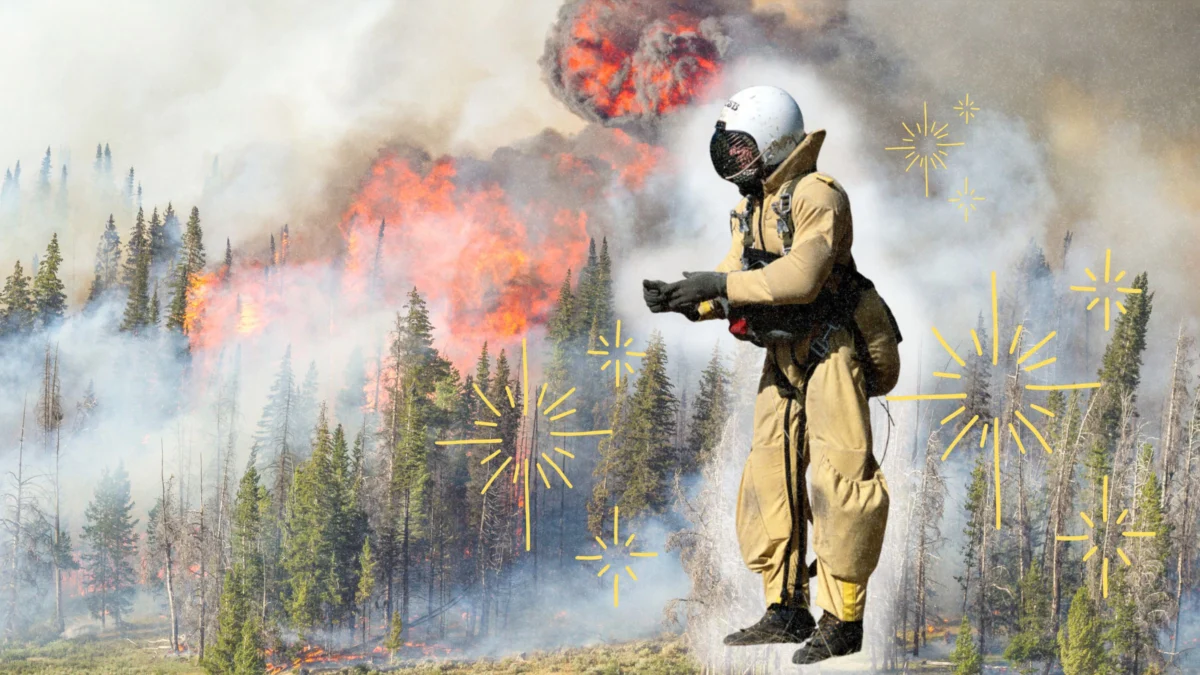
As the North American wildfire season intensifies under the pressure of shifting climatic patterns, the role of the smokejumper—an elite tier of aerial wildland firefighters—has moved from a niche specialized service to a critical pillar of national disaster response. These professionals are tasked with a logistical nightmare: responding to reports of remote ignitions by parachuting into inaccessible terrain, often miles from the nearest road, to suppress fires before they escalate into uncontrollable conflagrations. Operating in environments where temperatures can exceed 1,100 degrees Fahrenheit, smokejumpers represent the federal government’s most aggressive tool for initial attack. However, as of July 2026, this vital workforce faces a dual crisis of systemic underfunding and increasingly hazardous operational conditions that threaten the stability of the nation’s fire management strategy.
The Mechanics of Aerial Deployment
The operational protocol of a smokejumper base is defined by a state of constant, high-stakes readiness. Federal agencies, primarily the U.S. Forest Service (USFS) and the Bureau of Land Management (BLM), maintain a handful of these bases across the American West, including locations in Montana, Idaho, California, and Alaska. The mandate is speed: upon receiving a dispatch call, a crew of six to eight jumpers must be fully suited in Kevlar-reinforced jumpsuits and specialized gear within two minutes. Within ten minutes, the transport aircraft—often a DeHavilland Twin Otter or a Sherpa—is airborne.
Unlike ground-based "hotshot" crews, who rely on vehicular transport and heavy machinery, smokejumpers are dropped into the wilderness with only what they can carry or what can be parachuted in via "paracargo" boxes. Their primary objective is to "catch" a fire while it is small, using hand tools such as Pulaskis and chainsaws to cut a fireline—a strip of bare mineral soil that starves the fire of fuel. This work is performed in isolation, with no immediate promise of extraction. It is not uncommon for crews to remain on the line for 14 to 18 days, sleeping in the dirt and subsisting on rationed supplies until the fire is contained or ground reinforcements can hike into the area.
The Economic Paradox of High-Risk Labor
Despite the elite status and extreme physical demands of the profession, the economic reality for smokejumpers is starkly disconnected from the value of the service they provide. As of 2026, the base pay for an entry-level smokejumper remains approximately $16 per hour. While veteran jumpers can earn between $30,000 and $100,000 annually, the higher end of that spectrum is entirely dependent on "hazard pay"—a 25% premium earned only when actively working on an uncontrolled wildfire—and extensive overtime.
This pay structure creates a precarious financial cycle. During "slow" fire years with low lightning activity, smokejumpers may struggle to earn a living wage, leading many to live out of vehicles or seek secondary employment in the off-season. Furthermore, the federal government does not currently provide hazard pay for practice jumps, despite the inherent risks of parachuting into timbered, rocky, or high-altitude drop zones. This lack of financial stability has contributed to a burgeoning retention crisis within the federal wildland firefighting ranks.
Rigorous Training and the Culture of Self-Reliance
The path to becoming a smokejumper is one of the most competitive in the federal service. Most applicants already possess years of experience on hotshot crews or helitack teams. National smokejumper bases receive hundreds of applications annually for fewer than 20 rookie slots. The subsequent six-week training program is designed to be a "black box" of physical and psychological stress, intentionally shrouded in mystery to test how candidates react to the unknown.
The attrition rate for these programs typically hovers around 50%. Those who survive the training are indoctrinated into a culture of extreme self-reliance. This is perhaps best exemplified in "the loft," the facility where smokejumpers maintain their equipment. Uniquely among airborne units, smokejumpers are responsible for manufacturing and repairing their own gear. They sew their own harnesses, risers, and jumpsuits using industrial sewing machines. Before a rookie is cleared for operational jumps, they must rig at least 20 parachutes under strict supervision; their 21st jump is performed using a parachute they have rigged themselves, a rite of passage that ensures absolute accountability for their own safety.
The Growing Shadow of Climate Change and Budgetary Cuts
The 2026 fire season arrives amidst a troubling convergence of environmental and political factors. Scientific data indicates that climate change has lengthened the average wildfire season by nearly 80 days since the 1970s. Fires are burning hotter, moving faster, and exhibiting "extreme fire behavior" that was once considered rare. This includes the phenomenon of crown fires, where flames move through the forest canopy at speeds that can outpace a running human, and the creation of pyrocumulus clouds that generate their own localized weather systems and lightning.
Compounding these environmental hazards is a significant reduction in federal fire service capacity. Earlier this year, a series of federal funding cuts resulted in the loss of approximately 25% of the Forest Service workforce. This reduction has gutted support services and left many jump bases understaffed. The implications of understaffing are profound: when fewer jumpers are available for initial attack, small fires are more likely to grow into "mega-fires" that cost hundreds of millions of dollars to suppress and cause catastrophic property damage.
The Human Toll: Safety and Loss in the Field
The inherent danger of the profession was underscored just last week by a tragedy in Western Colorado. Three members of a helitack crew—firefighters who deploy via helicopter—were killed when a blaze overran their position. Two others were hospitalized with severe injuries. For the smokejumper community, such events serve as a grim reminder of the thin margin for error.
The risks are not limited to the flames. The act of jumping itself carries a high probability of orthopedic injury. Navigating a round or square parachute into a "tight hole" in a dense forest often results in landings on steep slopes or in the tops of trees. Shattered ankles, knee ligament tears, and spinal compressions are common occupational hazards. Moreover, the psychological toll of the job is significant. Jumpers frequently witness the death or injury of colleagues, leading to long-term issues with PTSD and survivor’s guilt. The anonymity of the service often means these individuals process these traumas within their own tight-knit circles, relying on the "family" of the base rather than external mental health resources.
Analysis of Broader Implications
The current state of the smokejumper program reflects a broader tension in American land management. While the federal government relies on these elite units to protect billions of dollars in timber, infrastructure, and watershed health, the investment in the human capital required to do so is dwindling. Analysts suggest that if the "pay cliff"—the expiration of temporary pay incentives—is not addressed by Congress, the Forest Service may face a mass exodus of experienced personnel to municipal fire departments or private utility companies that offer better pay and more predictable schedules.
Furthermore, the 25% reduction in staffing suggests a shift toward a more reactive, rather than proactive, fire strategy. By reducing the number of "boots on the ground" capable of rapid initial attack, the government may inadvertently be committing to a future of larger, more destructive fires. The economic impact of this shift is measurable: the cost of suppressing a massive wildfire is exponentially higher than the cost of maintaining a well-staffed smokejumper base.
The Motivation Behind the Risk
Despite the low pay, the physical grueling labor, and the constant threat of injury or death, the smokejumper community remains remarkably resilient. When interviewed, veterans of the service rarely cite the "adrenaline rush" as their primary motivator. Instead, they speak of a "blue-collar" sense of duty and a profound connection to the landscape they protect.
The "stoke," as it is known in the community, refers to the high-energy atmosphere of a base during a busy summer. It is a culture built on mutual admiration and a shared sense of purpose that is difficult to replicate in the private sector. For many, the ability to serve their community and work in the nation’s most beautiful wilderness areas outweighs the financial drawbacks. However, as the 2026 season continues to break records for heat and dryness, the question remains: how long can the nation rely on the heroism of a few hundred individuals to compensate for systemic neglect?
The smokejumpers will continue to suit up within two minutes and fly into the smoke, but without a significant shift in federal support and a stabilization of the climate, the "nightmare scenario" of an uncontrollable wilderness may become a permanent reality for the American West. The brave men and women jumping into the 1,100-degree inferno are doing their part; the remaining question is whether the systems behind them will do theirs.




 Chandra Hamzah
 Tatiana Tantri Indah Sari
 Budi Mulyono
 Lukman Taruna Persada Ramadan