
 Budi Mulyono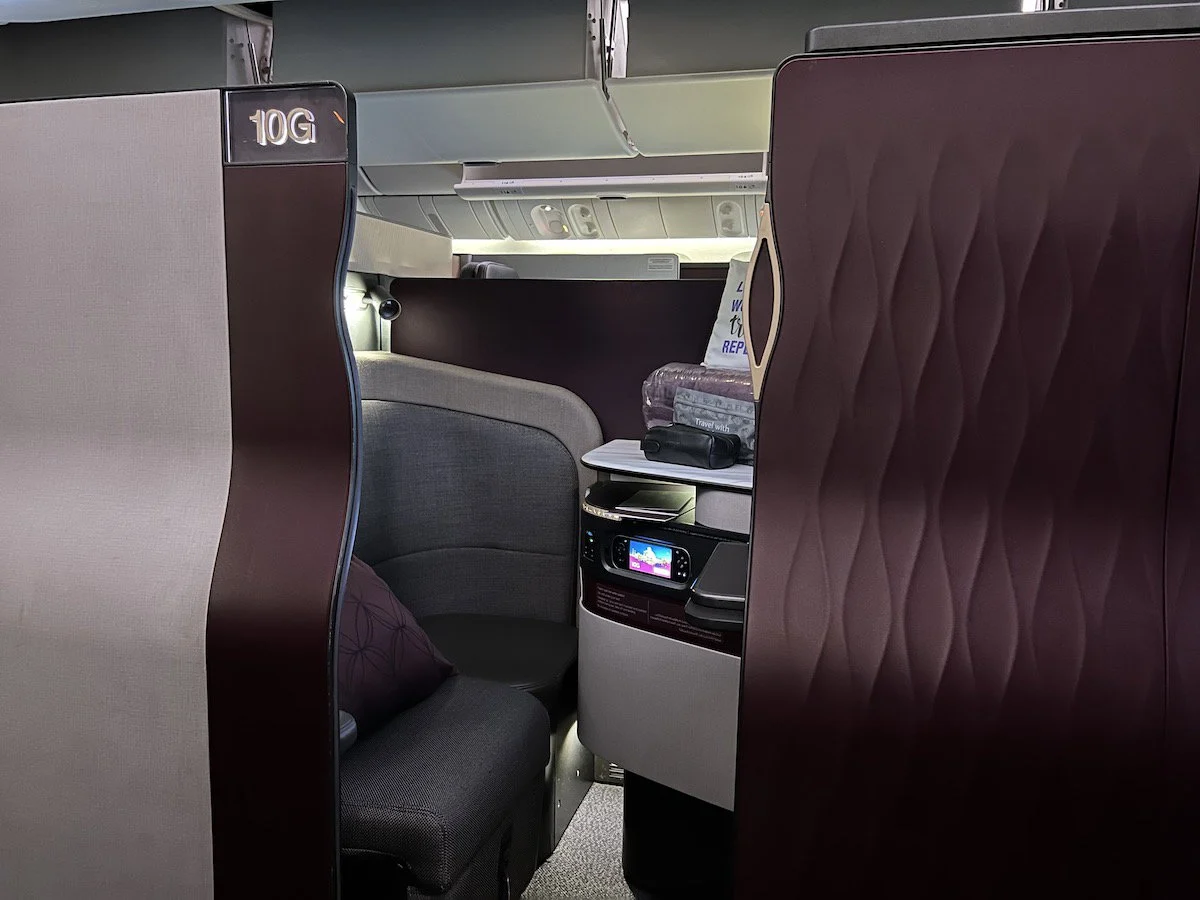
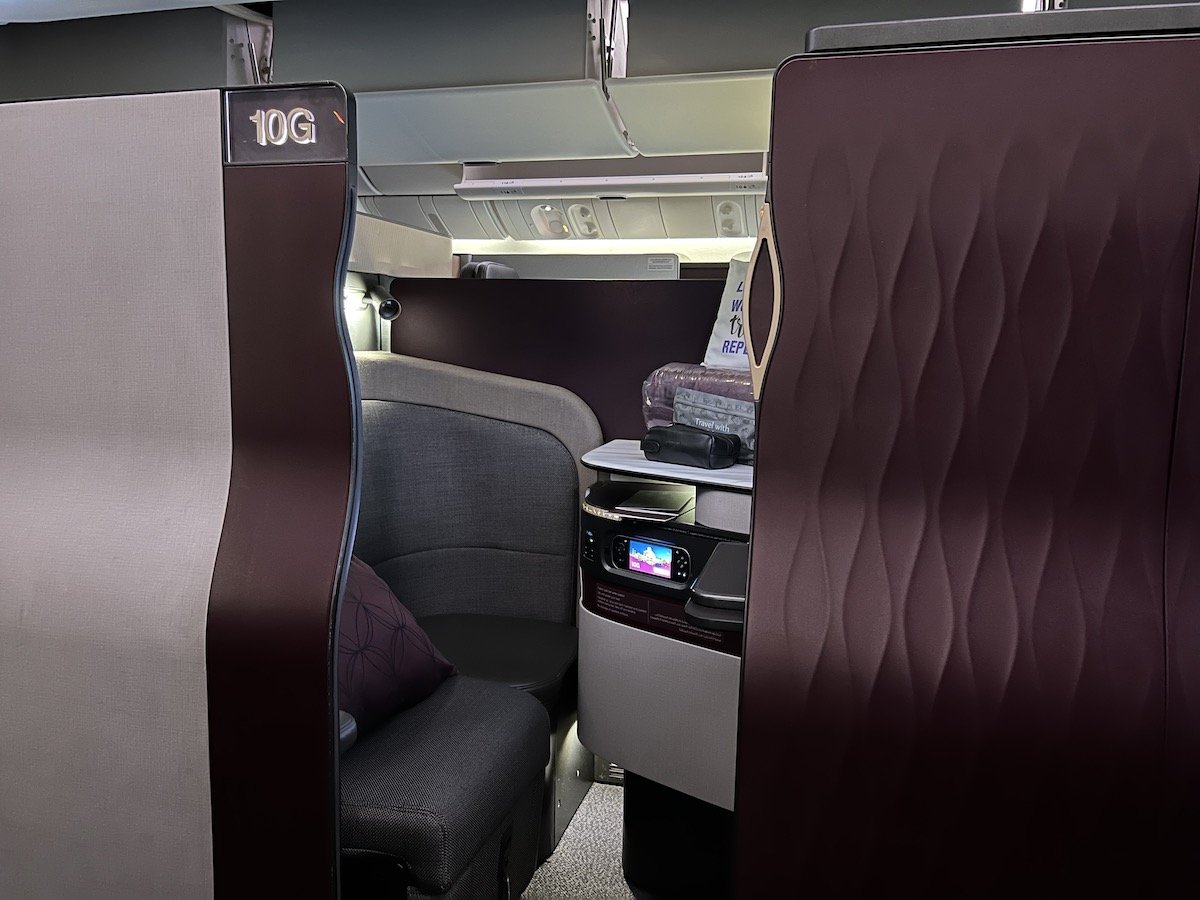
The global aviation industry is currently undergoing a significant transformation in cabin design, characterized by the widespread adoption of "mini-suites" in business class cabins. These configurations, which feature sliding doors and high partitions, represent a departure from the traditional open-cabin layouts that defined the premium travel experience for decades. As major international carriers such as Qatar Airways, Delta Air Lines, British Airways, and Air France continue to retrofit their long-haul fleets with these enclosed products, the move has sparked a wider debate regarding the necessity of physical barriers in the sky and the balance between cabin density and passenger comfort.
The integration of doors into business class seats is no longer a niche luxury reserved for first-class passengers; it has become the new benchmark for competitive international service. This shift is driven by a combination of evolving passenger expectations, technological advancements in seat manufacturing, and a strategic effort by airlines to differentiate their premium offerings in an increasingly crowded market. While the trend is largely welcomed by travelers seeking enhanced privacy, it also presents unique engineering and regulatory challenges for the aviation sector.
The Chronological Evolution of Premium Cabin Privacy
To understand the current dominance of the business class door, one must look at the progression of cabin architecture over the last thirty years. In the 1990s, business class was defined by the "cradle" seat—a recliner with limited pitch and no privacy. The introduction of the lie-flat seat by British Airways in 2000 revolutionized the industry, but these seats were often arranged in dense configurations where passengers remained visible to one another.
The mid-2010s marked the beginning of the "Suite Era." In 2016, Delta Air Lines announced the Delta One Suite, the first business class product in the world to feature a sliding door on a wide-body aircraft. Shortly thereafter, in 2017, Qatar Airways unveiled its Qsuite, which featured not only doors but also the ability to combine four seats into a "quad" configuration. These products effectively blurred the lines between traditional business class and international first class.
By 2019, British Airways had followed suit with its Club Suite, a move that signaled the end of the airline’s long-standing open-cabin "Ying-Yang" layout. Since then, the momentum has accelerated. In 2022 and 2023, carriers like Air France, Etihad, and American Airlines announced or debuted new business class products where doors were a standard feature rather than an optional luxury. This chronology demonstrates a rapid industry-wide pivot toward total enclosure as the baseline for premium travel.
Engineering and Regulatory Constraints of Cabin Doors
The addition of a door to a business class seat is an complex engineering feat that involves more than just aesthetics. Aircraft seats must undergo rigorous certification by regulatory bodies such as the Federal Aviation Administration (FAA) and the European Union Aviation Safety Agency (EASA). These organizations mandate strict rules regarding passenger safety during takeoff, landing, and emergency evacuations.
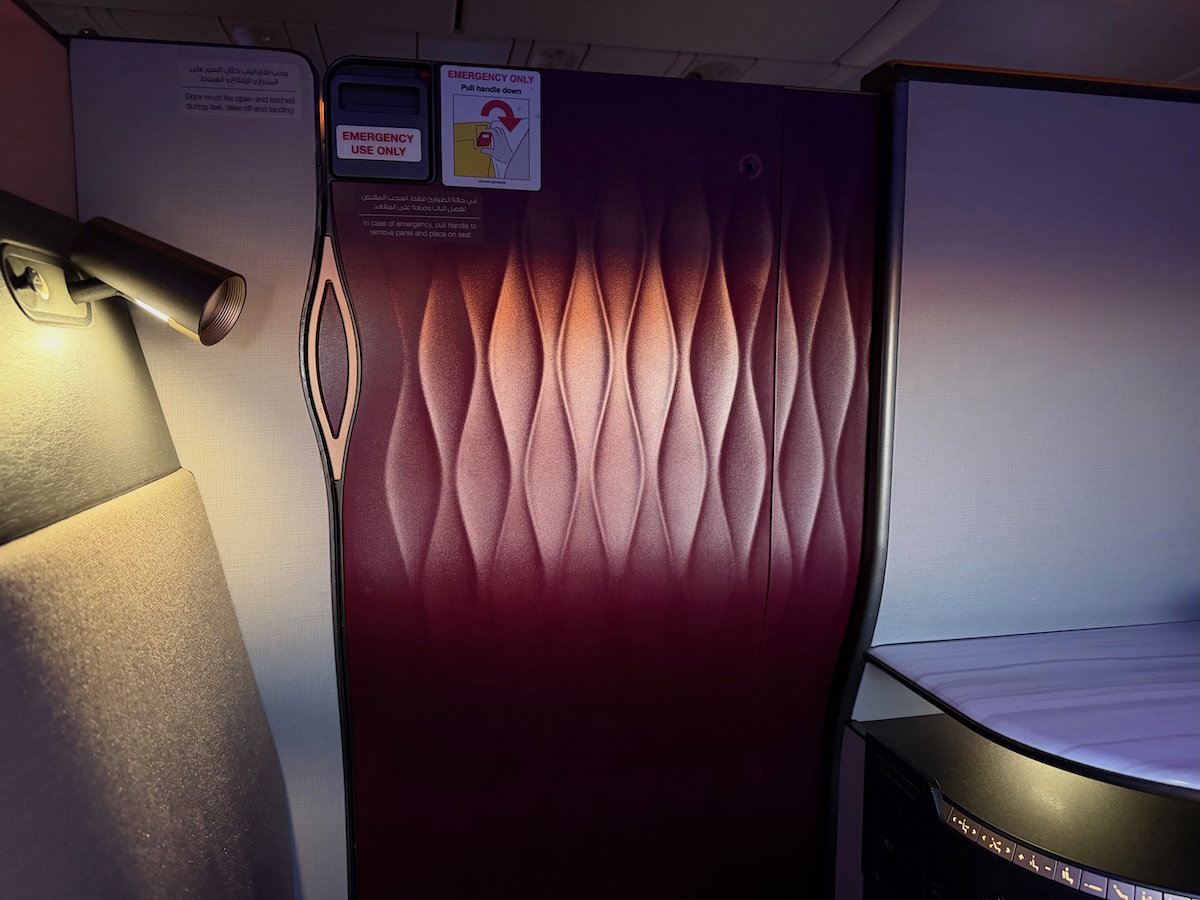
One of the primary challenges with doors is the "egress" requirement. In the event of an emergency, a door must not impede a passenger’s ability to exit the seat. Consequently, most business class doors are designed with a "fail-safe" mechanism, ensuring they stay open during taxi, takeoff, and landing. Furthermore, many doors are not full-height; they typically stand between 40 and 50 inches tall. This height allows flight attendants to maintain a line of sight into the suite for safety checks while still providing the passenger with a sense of seclusion when seated or lying down.
Weight is another critical factor. A sliding door mechanism and the reinforced partitions required to support it add significant weight to the aircraft. For a Boeing 777 or Airbus A350 carrying 30 to 40 business class suites, the cumulative weight increase can impact fuel efficiency. Aviation analysts estimate that every additional kilogram of weight on a long-haul aircraft can cost thousands of dollars in extra fuel over the lifespan of the plane. Airlines must therefore weigh the marketing benefits of a "door-equipped" cabin against the increased operational costs.
Consumer Psychology and the Demand for Personal Space
The demand for doors is rooted in the psychological comfort of "defensible space." In a crowded environment like an airplane cabin, the ability to control one’s environment is a significant luxury. Industry surveys consistently show that privacy and direct aisle access are the two most valued features for business class travelers.
The privacy offered by a door serves several practical functions. It minimizes visual "noise," such as the movement of other passengers in the aisle or the light from a neighbor’s television screen. It also provides a psychological barrier against the proximity of strangers, which became a heightened concern following the COVID-19 pandemic. For business travelers, the enclosure creates a more focused environment for work, mimicking the privacy of a small office.
However, a vocal minority of passengers and industry critics argue that the "obsession" with doors is misplaced. These critics suggest that doors can make a cabin feel claustrophobic and that the added privacy is unnecessary given that passengers are already separated by high shells. Some argue that if a passenger requires that level of seclusion, they should seek out private aviation. Nevertheless, cabin load factors and booking data suggest that aircraft equipped with suites often command higher yields, indicating that the market at large favors the enclosed design.
Market Segmentation and the Decline of First Class
The rise of the business class suite has had a profound impact on the viability of international first class. As business class seats become more luxurious—offering doors, high-end bedding, and gourmet dining—the "gap" between business and first class has narrowed significantly.
Many airlines, including United Airlines and Delta, have eliminated first class entirely, opting instead for a "Business Plus" or "Premium Business" model. Even carriers that maintain first class, such as Lufthansa and Air France, are being forced to innovate further to justify the price premium over their new business class suites. This has led to the development of "First Class Suites," which are essentially larger versions of the business class product, often featuring floor-to-ceiling walls and even more internal real estate.
Data from the International Air Transport Association (IATA) suggests that premium cabin revenue is a vital component of airline profitability. While premium seats may only make up 10% to 15% of total cabin capacity, they can account for up to 40% or 50% of an airline’s total revenue on certain long-haul routes. By adding doors, airlines are effectively "future-proofing" their most profitable assets against competitors.
Broader Implications for the Future of Cabin Design
As we look toward the next decade of aviation, the "door" trend is likely to evolve in several directions. First, we are seeing the introduction of "smart" doors. Future designs may include integrated sensors that automatically open the door when a flight attendant approaches or doors that change opacity at the touch of a button, similar to the windows on a Boeing 787 Dreamliner.
Second, sustainability will play a larger role in suite design. Manufacturers are exploring lightweight composite materials to reduce the fuel penalty associated with heavy partitions and sliding mechanisms. The goal is to provide the same level of privacy while minimizing the carbon footprint of the premium cabin.
Finally, the trend is beginning to trickle down to narrower aircraft. As airlines like JetBlue and TAP Air Portugal use single-aisle aircraft like the Airbus A321LR for transatlantic flights, they are installing "mini-suites" with doors to ensure that the narrow-body experience matches the wide-body standard. This indicates that the expectation of privacy is no longer confined to the largest jets in the fleet.
Conclusion and Industry Outlook
The transition to business class seats with doors represents a definitive shift in the philosophy of air travel. What began as a bold experiment by a few leading carriers has become an industry standard that balances the need for high-density seating with the passenger’s desire for an individualized experience. While the debate over the "necessity" of these doors will likely continue among frequent flyers and enthusiasts, the economic and competitive reality is clear: privacy sells.
Airlines that fail to invest in these modern configurations risk losing high-value corporate contracts and loyal premium travelers to competitors who offer a more secluded environment. As engineering continues to solve the weight and safety challenges associated with these products, the "door" will likely remain a permanent fixture of the long-haul business class landscape, further cementing the cabin’s role as a private sanctuary in the sky. For the modern traveler, the ability to close a door and "shut out the world" at 35,000 feet has become the ultimate symbol of the 21st-century premium flight experience.




 Anjar Salim
 Chandra Hamzah
 Tatiana Tantri Indah Sari
 Lukman Taruna Persada Ramadan