
 Tatiana Tantri Indah Sari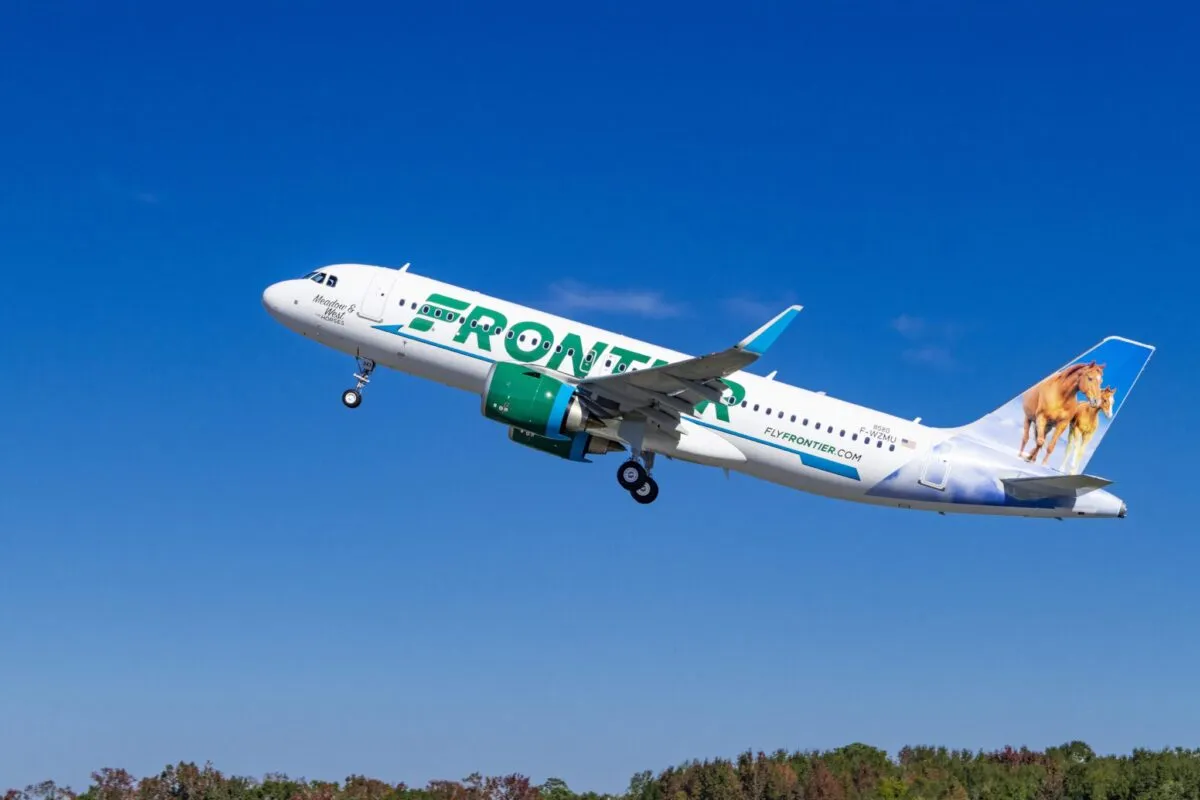
Frontier Airlines has announced its decision to integrate Starlink satellite internet across its entire fleet, a move that positions it as the first ultra-low-cost carrier (ULCC) in the United States to adopt the advanced in-flight connectivity technology. This strategic initiative, revealed in an announcement on Tuesday, signals a notable evolution in the ULCC business model, traditionally characterized by unbundled services and a deliberate omission of non-essential amenities like in-flight Wi-Fi. The airline anticipates having Starlink operational on its initial aircraft by 2027, with the service managed directly by Starlink, offering passengers seamless access to high-speed internet during their flights.
The Shifting Paradigm for Ultra-Low-Cost Carriers
Historically, ultra-low-cost carriers have built their business models on the premise of offering the absolute lowest possible base fares, achieved by unbundling virtually every service. Passengers pay extra for checked bags, seat selection, priority boarding, and even refreshments. In-flight entertainment and Wi-Fi have long been considered luxuries that do not align with the core ULCC philosophy of minimizing operational costs and maximizing efficiency. For years, the absence of Wi-Fi on airlines like Frontier, Spirit, and Allegiant was an accepted trade-off for significantly cheaper tickets.
However, the airline industry has been witnessing a steady trend where "premium products" are increasingly becoming significant drivers of profit, even for carriers operating on thin margins. This phenomenon isn’t limited to full-service legacy airlines, which have long relied on business and first-class cabins, premium economy offerings, and enhanced connectivity to boost their bottom lines. Passenger expectations have evolved considerably in the digital age. Travelers, whether flying for business or leisure, now expect to remain connected, productive, or entertained throughout their journey, viewing reliable in-flight Wi-Fi as a standard amenity rather than a luxury.
Frontier’s decision to embrace Starlink is a direct response to this shifting consumer demand and a strategic move to future-proof its offerings. While the ULCC model remains focused on affordability, the airline appears to recognize that certain amenities, when offered strategically, can enhance the overall passenger experience and potentially generate new ancillary revenue streams, thereby reinforcing profitability without fundamentally altering its low-cost structure. The investment in Starlink suggests a calculated risk and an acknowledgment that even the most cost-conscious travelers are increasingly willing to pay for connectivity.
Starlink’s Technological Edge in Aviation
Starlink, a satellite internet constellation operated by SpaceX, has emerged as a disruptive force in the in-flight connectivity market. Unlike traditional air-to-ground (ATG) systems, which rely on cell towers on the ground, or older geostationary satellite systems, Starlink utilizes a vast network of low Earth orbit (LEO) satellites. This LEO constellation offers several distinct advantages that are particularly appealing to the aviation sector:
Firstly, low latency: Because LEO satellites orbit much closer to Earth than geostationary satellites, the signal travel time is significantly reduced. This results in much lower latency, meaning faster response times and a more fluid internet experience akin to what users expect on the ground. This is critical for applications like video conferencing, online gaming, and seamless web browsing.
Secondly, high bandwidth and capacity: The sheer number of satellites in the Starlink constellation, combined with their advanced phased array antennas, allows for substantial bandwidth delivery to individual aircraft. This ensures that multiple passengers can simultaneously stream high-definition content, work on cloud-based applications, or make voice calls without significant degradation in service quality.
Thirdly, global coverage: Starlink’s growing constellation aims for near-global coverage, which is a significant advantage for airlines operating on diverse routes, including over oceans and remote areas where traditional ATG systems are non-existent and older satellite systems may have gaps or slower speeds. This consistent coverage across flight paths enhances the reliability and usability of the service.
These technological superiorities explain why Starlink has rapidly gained traction within the aviation industry. Several airlines have already announced partnerships or trials with Starlink. JSX, a semi-private jet service, was an early adopter. Hawaiian Airlines has committed to Starlink for its transpacific fleet, and carriers like Qatar Airways and Air Baltic have also indicated plans to implement the technology. Frontier’s entry into this growing list underscores the LEO satellite system’s increasing acceptance as the preferred solution for next-generation in-flight Wi-Fi.
A Detailed Timeline of In-Flight Connectivity Evolution
The journey of in-flight connectivity has been a gradual one, marked by significant technological advancements:
- Early 2000s: The first rudimentary in-flight internet services began to appear, primarily using early air-to-ground (ATG) systems. These were often slow, expensive, and unreliable, primarily catering to business travelers with basic email and web browsing needs.
- Mid-2000s to Early 2010s: Development of more robust ATG systems and the introduction of early geostationary satellite (GEO) systems. Companies like Gogo and Panasonic Avionics became prominent players. Speeds improved, but capacity remained limited, leading to often frustrating user experiences, especially on full flights.
- Mid-2010s: Increased demand for streaming and richer content pushed the need for higher bandwidth. Airlines began experimenting with more advanced GEO systems and hybrid solutions. Passenger willingness to pay for Wi-Fi started to solidify, but prices remained relatively high.
- Late 2010s: The concept of LEO satellite constellations, particularly Starlink, began to gain serious attention for its potential to revolutionize connectivity. Initial tests and regulatory approvals for aviation applications commenced.
- Early 2020s: Starlink officially entered the aviation market, securing partnerships with various airlines. Its promise of high-speed, low-latency global coverage quickly distinguished it from competitors.
- 2023-2024: Frontier Airlines announces its partnership with Starlink, signifying a pivotal moment as a ULCC commits to this advanced technology. The announcement highlights an expected rollout of the first few aircraft by 2027, indicating the complexities of fleet-wide installation and certification processes.
This chronology illustrates a consistent drive towards better, faster, and more ubiquitous connectivity, ultimately culminating in solutions like Starlink that meet the demands of modern digital consumers.
Statements and Industry Reactions
While specific official statements beyond the initial announcement have not been widely detailed, industry reactions and inferred comments from key stakeholders would likely highlight several critical points:
A Frontier Airlines spokesperson or executive would likely emphasize the airline’s commitment to enhancing the passenger experience while maintaining its core value proposition of affordability. They might state, "Our decision to partner with Starlink underscores our dedication to providing our passengers with the best possible travel experience. We understand that in today’s connected world, reliable in-flight Wi-Fi is no longer a luxury but an expectation. By integrating Starlink, we are not only future-proofing our fleet but also ensuring that our customers can stay connected, productive, and entertained throughout their journey, all while upholding our commitment to low fares." They might also hint at the possibility of a tiered pricing model for Wi-Fi, aligning with their ancillary revenue strategy.
A Starlink/SpaceX representative would likely express enthusiasm for the partnership, stating, "We are thrilled to welcome Frontier Airlines as our latest aviation partner. This collaboration is a testament to Starlink’s unparalleled capabilities in delivering high-speed, low-latency internet globally, even for the most demanding applications. Partnering with a leading ultra-low-cost carrier like Frontier demonstrates the versatility and economic viability of Starlink for all segments of the airline industry, enabling more passengers to experience truly modern connectivity."
Aviation industry analysts would likely view this move as a significant development, predicting a ripple effect. John Smith, a senior airline industry analyst at Aero Insights Group, might comment, "Frontier’s adoption of Starlink is a game-changer for the ULCC segment. It signals that even the most cost-sensitive airlines recognize the imperative of in-flight connectivity. This isn’t just about offering Wi-Fi; it’s about competitive positioning and unlocking new ancillary revenue streams. Other ULCCs like Spirit and Allegiant will undoubtedly be watching closely, and pressure will mount for them to follow suit to avoid falling behind in passenger amenity offerings." Smith might further add, "The 2027 timeline for initial deployment suggests a careful, phased approach, allowing Frontier to manage the significant investment and technical integration required for a fleet-wide rollout."
Broader Impact and Implications
Frontier’s move carries several profound implications for the airline industry, passenger experience, and the competitive landscape:
1. Intensified Competition Among ULCCs:
The most immediate impact will be on other U.S. ultra-low-cost carriers. Spirit Airlines and Allegiant Air, direct competitors to Frontier, currently do not offer fleet-wide Wi-Fi. Frontier’s embrace of Starlink will place considerable pressure on these airlines to re-evaluate their own strategies. If Frontier can successfully integrate and monetize Starlink without significantly impacting its low-fare structure, it could gain a distinct competitive advantage, attracting a segment of travelers who previously avoided ULCCs due to the lack of connectivity.
2. Ancillary Revenue Growth:
For Frontier, Starlink represents a potent new avenue for ancillary revenue. While the initial investment is substantial, the airline can implement various pricing models for Wi-Fi access – from basic browsing packages to premium streaming options. This aligns perfectly with the ULCC model of unbundling services, allowing passengers to customize their experience and pay for what they value. Given the strong demand for connectivity, this could become a significant and consistent income stream, offsetting some of the capital expenditure.
3. Enhanced Passenger Experience and Brand Perception:
Offering reliable, high-speed Wi-Fi will undoubtedly elevate the passenger experience on Frontier flights. Business travelers can remain productive, leisure travelers can stay entertained, and everyone can stay connected with friends and family. This enhancement could lead to improved customer satisfaction scores and a more positive brand perception, potentially attracting a broader demographic of travelers who prioritize connectivity. It helps shed the "no-frills" stereotype to some extent, even while maintaining a low-cost structure.
4. Operational Considerations and Challenges:
The integration of Starlink is not without its challenges. The installation process involves modifying aircraft, which requires significant engineering, regulatory approvals, and ground time. With a projected rollout starting in 2027, Frontier has a substantial undertaking ahead. Furthermore, ongoing maintenance, subscription costs, and potential for technical glitches will need to be meticulously managed to ensure a seamless service for passengers.
5. Accelerated Technology Adoption Across the Industry:
Frontier’s commitment to Starlink could accelerate the broader adoption of LEO satellite technology throughout the airline industry. As more carriers demonstrate the feasibility and benefits of these systems, others will be encouraged to follow suit, potentially leading to a new standard for in-flight connectivity across all airline segments, from ULCCs to premium international carriers. The success of Starlink on a ULCC could prove the scalability and cost-effectiveness of the technology on a wider scale.
In conclusion, Frontier Airlines’ decision to equip its fleet with Starlink Wi-Fi marks a pivotal moment in the evolution of the ultra-low-cost carrier model. It signifies a strategic adaptation to changing passenger expectations and a calculated move to leverage advanced technology for competitive advantage and new revenue streams. While the 2027 rollout date indicates a significant logistical challenge, the implications for Frontier, its competitors, and the broader aviation industry are profound, heralding an era where even budget-conscious travelers can expect to remain seamlessly connected in the skies.




 Anjar Salim
 Chandra Hamzah
 Budi Mulyono
 Lukman Taruna Persada Ramadan
