
 Walid Sujud Trenggono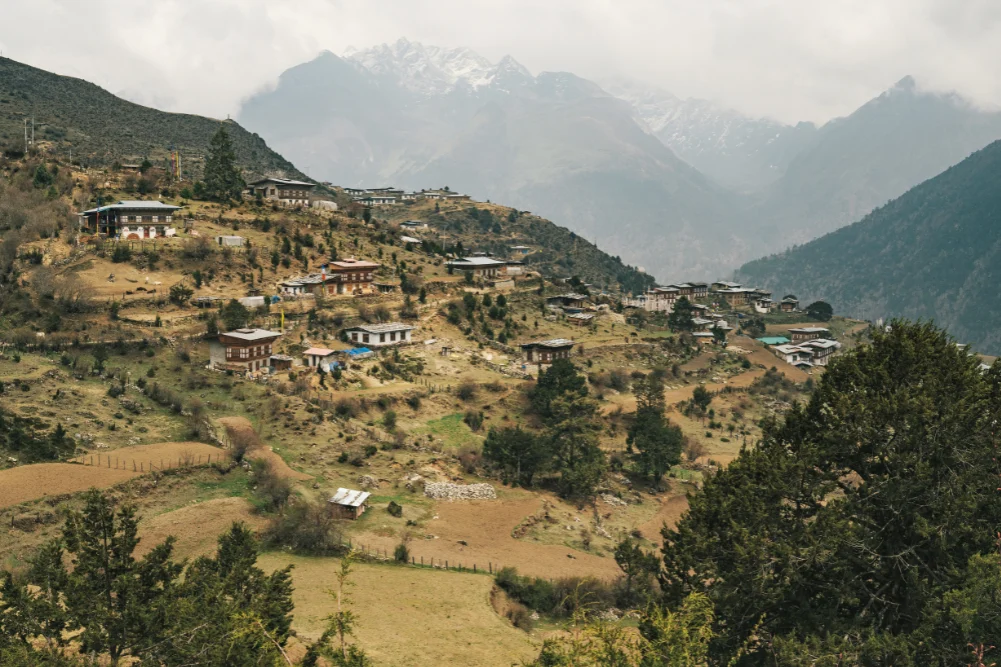
The Kingdom of Bhutan, a landlocked nation nestled in the Eastern Himalayas, has long maintained a reputation for its idiosyncratic approach to modernization, prioritizing collective well-being over traditional economic metrics. For many international observers and visitors, the country serves as a living laboratory for Gross National Happiness (GNH), a developmental philosophy that has governed the nation’s policy-making since the 1970s. Recent reports from the region, including first-hand accounts of immersive travel into the remote highlands of Laya and the monastic centers of the Thimphu district, highlight a society that remains steadfast in its rejection of globalized consumerism in favor of ecological stewardship and communal cohesion. As the world’s first carbon-neutral country, Bhutan’s model offers a stark contrast to the high-stress, digitally saturated environments of Western industrialized nations.
Historical Context and the High Value Low Volume Tourism Policy
Bhutan’s journey into the modern era began significantly later than its neighbors, India and China. The kingdom remained largely isolated from the outside world until the mid-20th century, only permitting foreign visitors to enter in 1974. This isolation was a deliberate strategy to protect the nation’s sovereignty and its unique Buddhist culture. The introduction of television and the internet did not occur until 1999, making Bhutan one of the last nations on Earth to adopt these technologies.
To manage the potential negative impacts of globalization, the Bhutanese government implemented a "High Value, Low Volume" tourism policy. This strategy involves a mandatory Sustainable Development Fee (SDF) for international tourists—currently set at $100 USD per night for most adult visitors—which funds free healthcare, free education, and environmental conservation efforts. This policy ensures that tourism remains a sustainable resource rather than a source of cultural or ecological degradation.
Infrastructure and the Geography of the Himalayas
The logistical challenges of visiting Bhutan begin at Paro International Airport, widely considered one of the most demanding airports for pilots globally. Surrounded by peaks reaching up to 18,000 feet, the runway requires manual navigation through narrow mountain passes. This physical barrier serves as a metaphor for the country’s protective geography. Upon arrival, visitors are often struck by the lack of traditional modern infrastructure; Bhutan famously has no traffic lights, even in its capital, Thimphu, and the national speed limit rarely exceeds 20 kilometers per hour.
The landscape is characterized by its 70 percent forest cover, a constitutional mandate that requires at least 60 percent of the country remain forested for all time. This commitment to the environment is not merely aesthetic but foundational to the national identity, fostering a "carbon-sink" status where the country absorbs more carbon dioxide than it emits.
Monastic Life and Spiritual Foundations
A critical component of the Bhutanese experience involves engagement with the nation’s spiritual infrastructure. The Dodedrak Monastery, a 12th-century institution located on a steep ridge overlooking the Thimphu valley, serves as an example of the living history that defines the kingdom. Accessible only by a rigorous hike, the monastery provides a sanctuary where dozens of monks, adorned in traditional burgundy robes, maintain a schedule of prayer and meditation that has remained largely unchanged for centuries.
The practice of Vajrayana Buddhism is deeply integrated into daily life. Rituals such as the lighting of butter lamps and the chanting of ancient scriptures are not reserved for special occasions but are daily occurrences. For the visitor, the transition from a high-tempo urban environment to the rhythmic, contemplative pace of a monastery represents a psychological "reset." Observers note that the physiological effects of this environment—lowered heart rates and reduced cortisol levels—are often immediate, reflecting the restorative power of silence and intentionality.
The Remote Highlands: A Case Study of Laya
For those seeking the most authentic experience of Bhutan’s isolation, the village of Laya offers a unique perspective. Located at an altitude of 3,800 meters, Laya is one of the most remote inhabited settlements on Earth. Until recently, the village was only reachable by multi-day treks, though limited access for yaks and ponies remains the primary mode of transport for goods.
Laya is home to the Layap people, an indigenous community with distinct Tibetan roots, known for their unique conical bamboo hats and yak-wool garments. The social fabric of Laya is built on a "gift economy" and mutual aid. Local guides, such as Pema Wangchuk, report that hospitality is a central tenet of the community; when a new home is constructed, the entire village participates in the labor, operating on the principle that kindness and communal support are reciprocal.
The Bumkor Festival, held every two years in Laya, serves as a significant cultural milestone. During this event, villagers carry sacred Buddhist texts in a grand procession through the fields to ensure a prosperous harvest. The festival is a display of communal synchronicity, where dancing, singing, and shared meals reinforce the bonds of the 1,600-strong population. For outsiders, the festival highlights a sense of "belonging" that is often absent in the fragmented social structures of the West.
The Philosophy of Enough: Gross National Happiness in Practice
The Bhutanese concept of happiness is often misunderstood as a fleeting emotional state. In reality, Gross National Happiness (GNH) is a rigorous framework based on four pillars: sustainable and equitable socio-economic development, environmental conservation, preservation and promotion of culture, and good governance.
According to the 2022 GNH Index, approximately 48.1 percent of the population is classified as "deeply or extensively happy." The index measures nine domains, including psychological well-being, health, time use, and community vitality. A core takeaway from local interactions—such as those with Am Pem, a village elder in Laya—is the "philosophy of enough." In a society where healthcare and education are provided by the state, the drive for excessive material accumulation is tempered by a focus on contentment. "To be happy, don’t be greedy," Am Pem observed. "If we have enough rice to eat, then we are happy."
This perspective challenges the Western consumerist model, which relies on the constant creation of new desires. In Bhutan, the measure of success is not the variety of products available in a refrigerator but the strength of the social safety net and the health of the natural world.
Natural Medicine and the Gasa Hot Springs
The integration of nature and health is further exemplified by the Gasa Tsachu (hot springs). Unlike the luxury spas found in Western tourism hubs, these springs are public, communal baths believed to possess medicinal properties. Legend dictates that a 13th-century saint blessed the waters, which are frequented by locals who travel for days to treat various ailments.
The experience of the hot springs is one of radical equality; laborers, students, and elders share the same water, emphasizing the matriarchal and egalitarian leanings of Bhutanese society. Scientific research into "forest bathing" and thermal therapy supports the Bhutanese intuition that these natural resources are vital for nervous system regulation and physical recovery.
The Role of Mortality in Daily Productivity
One of the more startling aspects of Bhutanese culture to Westerners is the open discussion of death. Bhutanese citizens are encouraged to contemplate mortality five times a day. Far from being a morbid practice, this is viewed as a tool for productivity and presence. By acknowledging the impermanence of life, individuals are motivated to act with kindness and to prioritize meaningful engagement over trivial distractions. This cultural acceptance of death reduces the anxiety associated with aging and loss, fostering a more resilient psychological state.
Broader Implications and Global Analysis
As global rates of burnout and digital fatigue continue to rise, the Bhutanese model offers significant insights for international policy and personal well-being. The kingdom’s insistence on "slow travel" and "slow living"—manifested in its low speed limits and emphasis on hiking—serves as a counter-narrative to the "bullet-train" tempo of modern life.
However, Bhutan faces its own set of challenges. The tension between preserving tradition and the aspirations of a younger, more connected generation remains a focal point for the government. As more Bhutanese youth look toward opportunities in Australia and the Middle East, the kingdom must find ways to evolve the GNH framework to remain relevant in a globalized economy.
Despite these challenges, the impact of the Bhutanese experience on visitors is often profound and long-lasting. The "awakening" described by many who return from the Himalayas suggests that the values of community, environmental stewardship, and "enoughness" are not merely local traditions but essential components of a sustainable human future. Six months after returning to their high-stress environments, many travelers report that the "mental architecture" of Bhutan—the memory of prayer flags, monastic chants, and communal dances—provides a lasting toolkit for navigating the complexities of modern life.
In conclusion, Bhutan remains a beacon of alternative development. Its commitment to the happiness of its citizens over the growth of its GDP provides a compelling case study for any nation or individual seeking a way back to presence and purpose in an increasingly distracted world.


 Anjar Salim
 Chandra Hamzah
 Tatiana Tantri Indah Sari
 Budi Mulyono

