
 Tatiana Tantri Indah Sari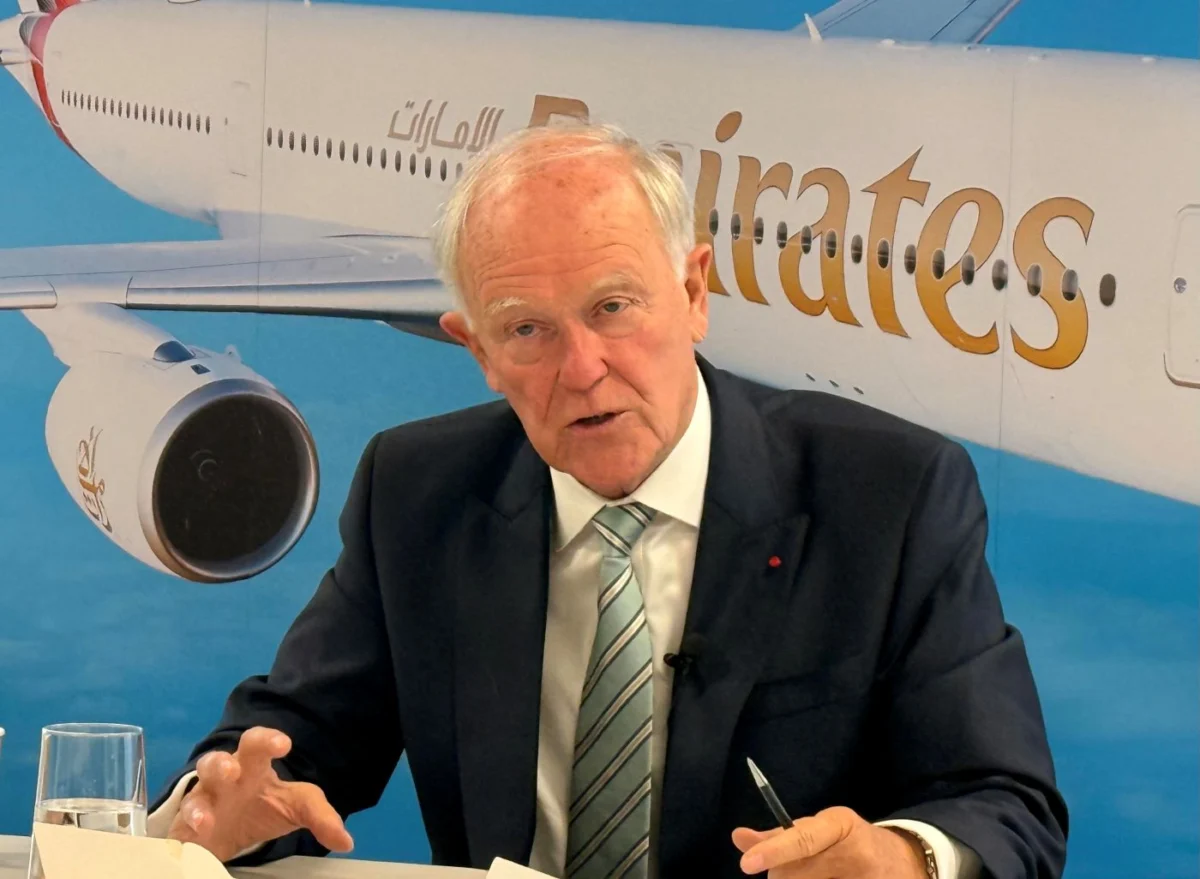
Farnborough Airshow, UK – Sir Tim Clark, the venerable President of Emirates Airline, has firmly stated that his retirement is not on the immediate horizon, providing a definitive response to long-standing speculation about his departure from one of the world’s most influential airlines. Speaking to Skift on Tuesday at the prestigious Farnborough Airshow, Clark emphasized that while his team is fully prepared for a future without him, the time for that transition has not yet arrived, thereby extending one of aviation’s most persistent succession narratives.
"It’s not time to talk about retirement. Succession is there," Clark declared, pointing to the experienced leadership team surrounding him. He added with characteristic confidence, "If any one of us steps out for any reason, there will be a closing of ranks and things will continue. They will know what they have to do, they will know what the plan is, from the macro to the micro." This assertion aims to reassure stakeholders, partners, and the broader industry about the operational continuity and strategic stability of Emirates, irrespective of future leadership changes. His remarks come amidst a period of robust recovery for Emirates, which has seen the airline post record profits following the unprecedented challenges of the global pandemic. The financial year ending just prior to these remarks was a testament to the airline’s resilience and strategic acumen under his leadership.
The Announcement at Farnborough: Context and Significance
The Farnborough Airshow serves as a critical biennial platform for major announcements, strategic discussions, and the unveiling of new technologies within the aerospace and defense industries. Clark’s presence and subsequent comments at such a high-profile event underscore the importance of his statement. His words carry significant weight, not only for Emirates but for the entire global aviation ecosystem, given the airline’s pivotal role in connecting continents and its substantial aircraft orders with both Airbus and Boeing. The decision to address the succession question directly at Farnborough signals a deliberate move to manage perceptions and reinforce confidence in Emirates’ future direction. It also highlights the persistent nature of the rumors, which have followed Clark for several years as he has approached and surpassed traditional retirement ages.
A Legacy of Leadership: Sir Tim Clark’s Enduring Influence
Sir Tim Clark’s tenure at Emirates is nothing short of legendary. Having joined the airline in 1985 as a founding member, he ascended to the role of President in 2003. His career spans the entirety of Emirates’ meteoric rise from a nascent regional carrier to a global aviation behemoth. Clark is widely recognized as the principal architect behind Emirates’ distinctive hub-and-spoke model, leveraging Dubai’s strategic geographic location to create an unparalleled network connecting East and West.
His most audacious and often debated strategic move was his unwavering advocacy for the Airbus A380 superjumbo. Emirates became, by far, the largest operator of the double-decker aircraft, making it the cornerstone of its long-haul strategy. Despite the A380’s eventual discontinuation by Airbus, Clark consistently defended its operational efficiency and passenger appeal, crediting it with enabling Emirates to command significant market share on high-density routes and offer a premium passenger experience. His vision transformed Dubai International Airport (DXB) into one of the world’s busiest international hubs, handling tens of millions of passengers annually and facilitating global trade and tourism. Clark’s leadership has been characterized by an acute understanding of market dynamics, a relentless pursuit of operational excellence, and a bold approach to fleet planning, often placing multi-billion-dollar orders that have reshaped the aircraft manufacturing landscape.
Emirates’ Strategic Trajectory and Post-Pandemic Resilience
Emirates has demonstrated remarkable agility and resilience in the wake of the COVID-19 pandemic, which brought global aviation to an unprecedented standstill. The airline, under Clark’s guidance, swiftly adapted its operations, streamlined costs, and strategically resumed services as travel restrictions eased. This strategic pivot allowed Emirates to quickly capitalize on pent-up travel demand.
For the fiscal year 2022-23, Emirates Group announced record-breaking profits of AED 10.9 billion (US$ 3.0 billion), a stark turnaround from the previous year’s losses. This financial rebound was driven by significant increases in passenger traffic and cargo volumes, as the airline restored its global network and increased frequencies. Emirates transported 43.6 million passengers in 2022-23, more than double the 19.6 million carried in the previous year, demonstrating a robust return to pre-pandemic operational levels. The airline’s capacity, measured in Available Seat Kilometers (ASKM), increased by 32%.
Looking ahead, Emirates continues its ambitious fleet modernization and expansion plans. The airline has significant orders placed for new generation aircraft, including 50 Airbus A350-900s, 30 Boeing 787-9 Dreamliners, and 126 Boeing 777X aircraft. These new additions are crucial for enhancing fuel efficiency, reducing emissions, and further expanding Emirates’ network capabilities, ensuring its competitive edge in the long-haul segment. The airline has also embarked on a multi-billion-dollar retrofit program to upgrade the interiors of its existing A380 and Boeing 777 fleets, demonstrating a commitment to enhancing the passenger experience even on its current aircraft. This blend of new technology and existing fleet refurbishment underscores a strategic vision for sustained growth and premium service delivery.
The Perpetual Succession Narrative
The question of Sir Tim Clark’s successor has been a persistent topic in aviation circles for well over a decade, intensifying as he passed his 70th birthday. Replacing a leader of Clark’s stature, who has been intimately involved in shaping Emirates from its inception, presents unique challenges. His influence extends beyond operational management to strategic vision, aircraft procurement, and even diplomatic relations critical for an airline operating in a complex geopolitical environment.
The succession debate is not merely about finding a new CEO; it is about identifying an individual who can maintain the airline’s distinctive culture, its aggressive growth strategy, and its commitment to luxury service, while navigating future industry shifts. Various names, both internal and external, have been floated in speculative reports over the years, but no official indication has ever been given. The fact that Emirates is a state-owned entity, part of The Emirates Group, adds another layer of complexity, as ultimate decisions often involve governmental oversight and strategic national interests. This context elevates any leadership transition from a corporate event to a matter of national economic significance for Dubai and the UAE.
Internal Mechanisms: Emirates’ Succession Framework
Clark’s statement at Farnborough offered a crucial insight into Emirates’ internal preparedness. His emphasis on a "closing of ranks" and a team that "knows what to do" suggests a deeply ingrained institutional knowledge and a robust internal talent development program. This implies that the airline has invested significantly in cultivating a strong second-tier leadership capable of stepping up when the time comes.
This approach aligns with best practices in corporate governance, where succession planning is not merely about identifying a single successor but about building a resilient organizational structure with distributed leadership capabilities. For an airline of Emirates’ scale and global reach, continuity is paramount. Any abrupt change or perceived lack of readiness could destabilize operations, impact investor confidence, and potentially disrupt long-term strategic initiatives, including major aircraft orders and network expansion plans. Clark’s confidence in his team signals that Emirates is not reliant on a single individual but possesses a collective leadership strength designed to withstand transitions.
Industry Reactions and Analyst Perspectives
Clark’s clarification is likely to be met with a collective sigh of relief across the aviation industry. For aircraft manufacturers like Boeing and Airbus, it signals stability in a key customer relationship. Emirates’ large orders are critical for their production lines, and continuity in leadership means continuity in strategic vision for these orders.
Industry analysts will likely interpret Clark’s remarks as a positive indicator for Emirates’ short to medium-term stability. Sascha König, an aviation analyst at Aerotask, noted, "Clark’s continued presence provides a steady hand at a time when the industry is still navigating post-pandemic shifts, inflationary pressures, and environmental mandates. His experience is invaluable." Observers also suggest that the clear articulation of a succession plan, even if the timeline remains undefined, addresses governance concerns and bolsters confidence among financial institutions that deal with Emirates’ bonds and other financial instruments. The announcement reinforces the image of Emirates as a well-managed entity with foresight, rather than one facing an imminent leadership vacuum.
Broader Implications for Global Aviation
The decision by Sir Tim Clark to continue leading Emirates carries broader implications for the global aviation landscape. Emirates, under his leadership, has consistently pushed boundaries, challenging traditional airline models and often setting new benchmarks in service and network expansion. His continued presence means that Emirates will likely maintain its aggressive growth trajectory and innovative spirit, continuing to exert competitive pressure on other global carriers.
Furthermore, Clark’s longevity at the helm of a major airline is increasingly rare in an industry often characterized by high executive turnover. His continued leadership serves as a testament to his unique ability to adapt, innovate, and maintain relevance over decades. It also sends a message about the value of experienced leadership in navigating complex global challenges, from economic downturns to pandemics and geopolitical tensions. For the Middle East aviation sector, Clark’s ongoing commitment reinforces Dubai’s position as a dominant global aviation hub, maintaining momentum in the region’s ambitious economic diversification plans.
Looking Ahead: The Road Beyond Clark
While Sir Tim Clark’s recent statements have provided clarity on his immediate future, the eventual transition at Emirates remains a topic of considerable interest. His commitment to ensuring a robust succession plan underscores that even he recognizes the inevitability of change. The coming years will undoubtedly see Emirates continue to evolve, responding to emerging technologies, changing passenger preferences, and the imperative for sustainable aviation.
The legacy Clark has built — an airline synonymous with luxury, global connectivity, and strategic ambition — will serve as a formidable foundation for his eventual successor. The challenge will be to build upon that legacy, adapting Emirates to a future aviation landscape that will be fundamentally different from the one he helped shape. For now, the aviation world can rest assured that one of its most influential figures remains firmly at the controls of Emirates, steering it through its next phase of growth and innovation, with a well-prepared team ready to take the baton when the time finally comes.



 Budi Mulyono
 Anjar Salim
 Chandra Hamzah

 Lukman Taruna Persada Ramadan