
 Walid Sujud Trenggono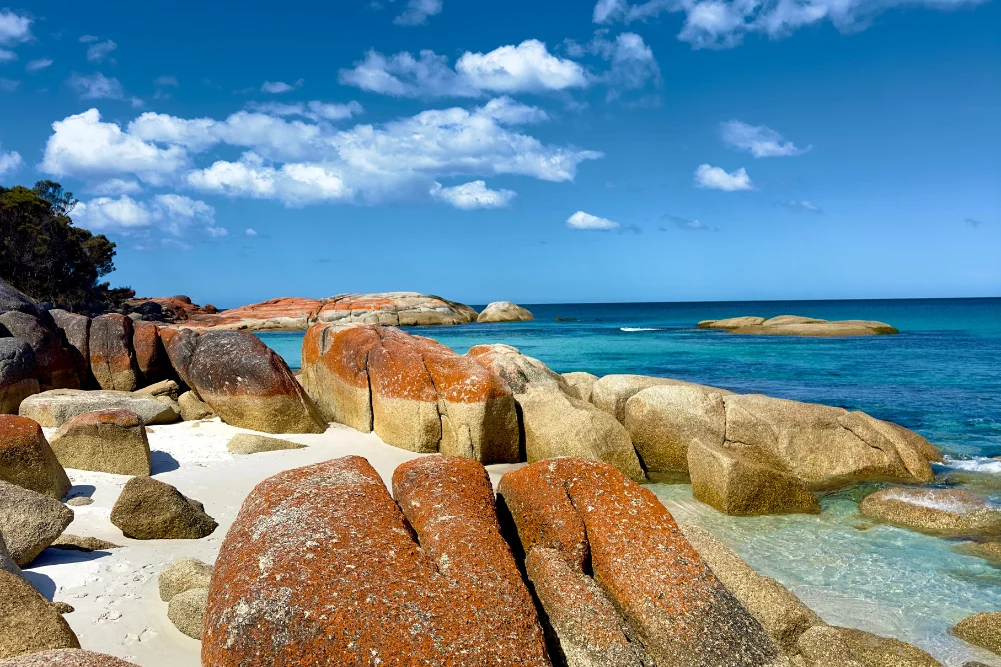
Tasmania is widely celebrated as a sanctuary for outdoor enthusiasts, offering some of the most dramatic and ecologically diverse coastal landscapes in the Southern Hemisphere. Among its premier attractions is the Bay of Fires, known locally as Larapuna, a breathtaking stretch of coastline in the island’s northeast that recently earned recognition as one of Australia’s finest natural environments. For travelers seeking a balance between rugged wilderness immersion and contemporary creature comforts, guided expeditions offer a structured pathway through this remote terrain. Operator-led itineraries have increasingly bridged the gap between strenuous physical endurance and accessible luxury, drawing participants from across the globe to navigate the region’s unique geography.
Main Facts and Itinerary Overview
Intrepid Travel operates a specialized three-day guided walking tour along the Bay of Fires designed for participants seeking an active outdoor itinerary without the logistical burdens of independent trekking. The journey commences in Launceston, Tasmania’s second-most populous city, serving as the primary departure hub for travelers arriving via direct commercial routes from major mainland metropolitan centers including Sydney, Melbourne, and Adelaide.
The expedition is strategically structured to progressively increase physical demand. The itinerary begins with moderate coastal walks, intensifies through more challenging dune and headland traverses on the second day, and concludes with steady looped circuits within national park boundaries. Rather than carrying heavy multi-day packs, participants walk unburdened, supported by a dedicated support vehicle and expert guides who manage logistics, navigation, and nutritional needs. Base camp for the tour is established in St Helens, the largest settlement on Tasmania’s northeast coast and a renowned hub for commercial fishing and marine tourism.
Chronology of the Expedition
Day One: The Coastal Introduction
The tour departs Launceston with a two-hour transfer eastward to St Helens, traversing changing elevations and vegetation zones before reaching the coast. The inaugural trekking phase takes place along the Skeleton Bay Track within the Humbug Point Conservation Area. This introductory walk exposes travelers to the region’s characteristic maritime microclimate—locally referred to as "liquid sunshine" or intermittent coastal mist—which nourishes a dense mosaic of coastal heath, flowering paperbarks, banksia, tea trees, and eucalyptus forests.
The defining visual characteristic of the Bay of Fires is its striking geological formations: vast granite boulders crusted with vibrant orange lichen, which contrast sharply against pristine white quartz sand and deep azure waters of the Tasman Sea. The coastline derives its historical name from 1773, when British navigator Captain Tobias Furneaux, commanding the HMS Adventure, observed numerous fires lit along the shore by the indigenous Palawa people. Today, these geological landmarks serve as natural monuments along a protected coastal ecosystem that supports diverse endemic wildlife, including coastal bird species such as honeyeaters, wattlebirds, green rosellas, and fairy wrens. The day concludes with an evening stay in St Helens, offering participants access to regional culinary specialties centered on cool-water seafood, including fresh Pacific oysters and southern rock lobster.
Day Two: The Eddystone Point Endurance Test
The second day represents the physical apex of the itinerary, requiring participants to cover approximately 12 kilometers and log upward of 25,000 steps. The morning begins with a scenic drive inland and northward to Eddystone Point Lighthouse, a 35-meter-high pink granite pillar constructed in 1889 to guide vessels past a notoriously hazardous stretch of coastline. Operating under challenging weather conditions characterized by high-velocity coastal winds, the group undertakes a demanding 6-kilometer trek along Eddystone Beach.
The coastal fringe here acts as a natural museum of marine activity, featuring weathered shell coves, intricate patterns of mineral-leached sand dunes, and dense strandlines of beaded Neptune’s necklace seaweed. Avian fauna is notably active, with resident oystercatchers, Pacific gulls, and sandpipers populating the shore break. The afternoon transitions away from the exposed coastline onto a sheltered fire trail, where hikers navigate inland bush tracks characterized by dense native flora and ambient warmth before rejoining the transport vehicle. Evenings are supported by regional dining establishments highlighting local produce, including artisanal wraps and contemporary Tasmanian cuisine.
Day Three: Mount William National Park and Regional Return
The final leg of the expedition centers on Mount William National Park, located in Tasmania’s far northeast. The park is renowned for its high concentration of native marsupials, particularly free-roaming wombats, which outnumber human residents across the island state. The final walking route spans a 6-kilometer loop around Stumpy’s Bay, offering participants opportunities to observe regional wildlife tracks and coastal vistas.
Following the morning trek, the return journey to Launceston incorporates cultural and geological waypoints. The route includes a stop at the Little Blue Lake, an artificial body of water colored an intense, luminous blue due to suspended white clay particles and mineral residue resulting from historical tin mining operations dating back to the late 19th century. The tour concludes in the historic township of Derby, a former global tin-mining center transformed into a world-renowned mountain-biking and eco-tourism destination, before arriving back in Launceston.
Supporting Data and Regional Infrastructure
The economic and ecological framework surrounding the Bay of Fires highlights Tasmania’s broader transition toward sustainable nature-based tourism. According to regional tourism metrics, multi-day guided walks generate substantial revenue for coastal communities like St Helens and Derby, supporting hospitality venues, accommodation providers, and local food producers.
Geographically, the northeast coast features specific environmental challenges and safety considerations. Coastal trails expose hikers to rapidly shifting maritime weather patterns, high-velocity winds originating from the Southern Ocean, and undulating terrain consisting of loose sand, granite boulder fields, and dense scrub. Professional guiding operations mitigate these risks through continuous meteorological monitoring, satellite communication equipment, and first-aid support. Furthermore, Tasmania’s strict biosecurity protocols play a critical role in preserving the pristine nature of conservation areas like Humbug Point and Mount William National Park, ensuring minimal ecological disturbance from increasing visitor volumes.
Official Responses and Participant Demographics
Participants on the Intrepid Travel itinerary represent a diverse cross-section of demographics, unified by an interest in active travel paired with structured support. Professional backgrounds among travelers often vary widely; groups frequently comprise individuals from emergency services, healthcare sectors, and independent travel backgrounds.
Betsy, a 75-year-old seasoned trekker from New Zealand participating in the tour, noted the psychological and physical benefits of structured group expeditions. "My nature is to be in my solitude," Betsy observed, reflecting on the experience. "But I like it now, not having the responsibility of thinking where I’m going next or what I’m going to eat. This hike has been absolutely gorgeous. We’ve had rain, sunshine, wind, sand in our faces, all the coastal elements. It’s so good for the body and the mind."
Similarly, younger participants preparing for intensive international treks—such as the 96-kilometer Kokoda Track in Papua New Guinea—utilize the Bay of Fires terrain for endurance conditioning. Completing significant daily mileage across variable coastal surfaces provides valuable preparation for high-altitude and remote-area trekking environments.
Broader Impact and Economic Implications
The success of guided coastal treks in northeastern Tasmania underscores a wider trend in global tourism: the demand for carbon-conscious, regionally integrated travel experiences. By partnering with local accommodation providers, bakeries, and seafood leases, tour operators ensure that economic benefits are distributed directly throughout local supply chains.
The historical backdrop of the region—ranging from Palawa heritage sites and early British navigation to the remnants of 19th-century penal settlements like Sarah Island and industrial tin mining ventures at Derby and Endurance—adds significant educational value to outdoor itineraries. These historical narratives contextualize Tasmania’s evolution from an isolated penal colony and resource extraction frontier into a premier global destination for wilderness conservation, ecological education, and sustainable adventure tourism. As interest in domestic and international soft-adventure travel continues to grow, structured expeditions along the Bay of Fires remain a benchmark for balancing environmental preservation with high-quality visitor engagement.




 Anjar Salim
 Chandra Hamzah
 Tatiana Tantri Indah Sari
 Budi Mulyono
 Lukman Taruna Persada Ramadan
