Walid Sujud Trenggono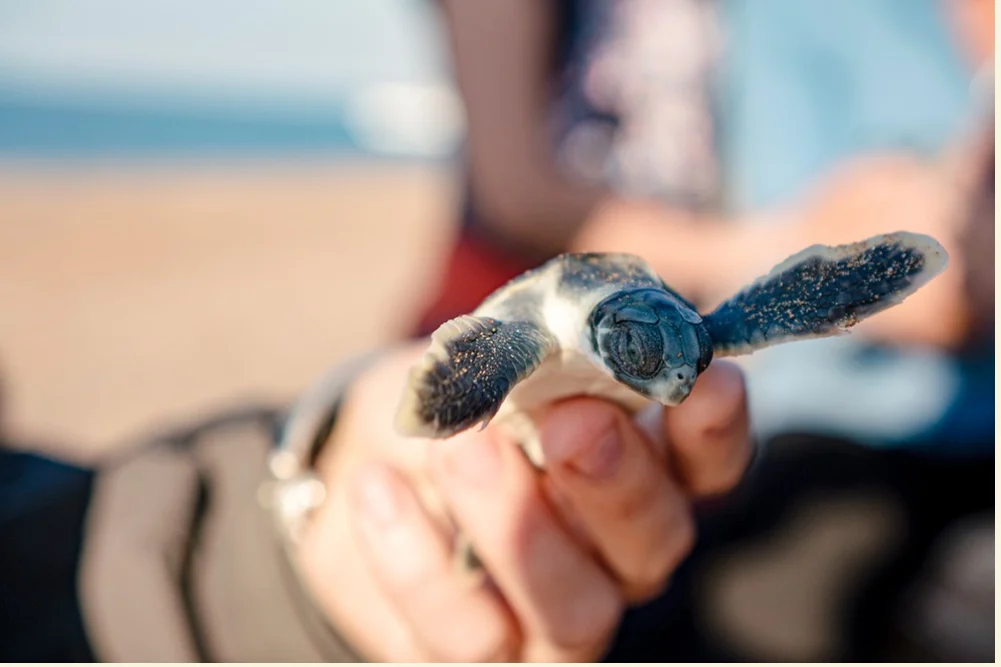
Bare Sand Island, a remote wind-swept sliver of sand and reef situated on the edge of the Joseph Bonaparte Gulf, transforms into a nocturnal laboratory each winter. Here, roughly 650 middle-aged Australian flatback turtles (Natator depressus) return annually to the shores of their birth. Operating under the cover of the Milky Way, a coalition of scientists, marine biology students, and passionate volunteers from the AusTurtle research group coordinate intensive, round-the-clock monitoring during the southern hemisphere’s winter solstice. This remote island, historically utilized as a military firing range and now recognized as traditional Kenbi land known locally as Ngulbitjik, serves as a vital sentinel outpost for a species whose future remains clouded by the dual pressures of climate change and a persistent lack of ecological data.
The logistical reality of the Bare Sand Island pop-up research camp is defined by austerity and a strict zero-impact ethos. Erected annually between May and September—the peak of the flatback nesting window—the camp prohibits ground fires, tent pegs, and even washing water. Volunteers surrender an entire week of sleep, enduring Spartan conditions that include sandy sleeping bags and mandatory community labor. Situated just far enough from Darwin to be thoroughly isolated, the island is flanked by rich waters frequented by queenfish and trevally, alongside a territorial three-legged saltwater crocodile named Graham, who maintains a vigilant presence along the reef’s edge. Despite these hazards, the pull of the island remains irresistible, with research stints consistently booking out six months in advance.
Chronology of a Midnight Migration
The nightly operational window for researchers and nesting flatbacks is strictly dictated by the tides. Flatbacks rely on a four-hour window—spanning two hours either side of high tide—to minimize the energy expended during their slow, deliberate lumber up the abrasive sand.
As the tide recedes, the nocturnal rhythm of the island accelerates. The chronology of a typical night unfolds in distinct phases:
- Midnight: Researchers patrol the shoreline under the illumination of red headlamps, which avoid disorienting the marine life. As the first clusters of female flatbacks land, the team timestamps their tracks, etching identification numbers in the sand to establish an orderly queue.
- 2:00 AM: The peak of the nesting phase. Individual turtles methodically clear multiple sites before selecting an optimal location. Using slow, dexterous movements of their hind flippers, they excavate deep egg chambers to deposit clutches of approximately 50 oversized white eggs—the largest relative egg size of any sea turtle species.
- Post-Laying: Once oviposition begins, researchers intervene with minimal disturbance. They record nest temperatures, measure carapaces, scan for existing identification tags, apply new tags to unmarked specimens, and remove accumulated barnacles.
- Pre-Dawn: The team transitions from data collection to rescue operations. They patrol for nests that hatched overnight, extracting trapped hatchlings from collapsed chambers to ensure their release under the safety of darkness on subsequent high tides.
The Enigma of Natator Depressus
Natator depressus is uniquely distinguished by its flat, horizontally smooth carapace and remains the only sea turtle species entirely endemic to Australian waters. Yet, despite decades of localized study, fundamental aspects of its life history remain shrouded in mystery. Scientists estimate a daunting one-in-1,000 survival rate from hatching to adulthood, but the true baseline population metrics remain largely unknown.
Both the Northern Territory government and the International Union for Conservation of Nature (IUCN) Red List formally classify the flatback turtle as "data deficient." Furthermore, the exact migratory pathways and developmental habits of juveniles during the 30-year gap between their initial ocean departure and their first return to nest on natal beaches remain a critical knowledge gap for marine biologists. For over three decades, AusTurtle’s volunteer-driven initiatives have chipped away at these unknowns, gathering empirical data designed to shift the species’ conservation framework from ambiguity to actionable protection.
Indigenous Heritage and Modern Conservation Dynamics
The recent history of Bare Sand Island is deeply intertwined with the rights of its traditional custodians. Following the longest-running Aboriginal land claim in Australian history, native title over Ngulbitjik was formally awarded to the Kenbi clan in 2016. Today, Kenbi elders regularly visit the island during the winter months, accompanied by younger generations, to harvest turtle eggs for traditional consumption.
This practice occasionally creates complex optics for conservationists accustomed to Western interventionist models. Observers note the juxtaposition of volunteers carefully guarding hatchlings alongside community members unearthing fresh nests for harvest. However, seasoned researchers like Andrew Raith, who boasts a two-decade association with AusTurtle, emphasize that Indigenous utilization operates within sustainable historical parameters.
"These people have been living and using this resource for millennia, and these sea turtles are still here," Raith states. "Harvesting a few nests gives the turtle nests of this island a value to those people, who will not over-harvest because it’s not in their interest to stop further generations getting access to the eggs and their protein."
Raith maintains that such subsistence use pales in comparison to the systemic, macro-level threats currently confronting marine chelonians across the globe.
Broader Environmental Implications and Climate Vulnerability
While local harvest and predation present localized challenges, the existential threats facing Natator depressus are global and systemic. According to climate scientists and marine ecologists, flatback populations in the Northern Territory occupy a particularly precarious geographic niche. Nesting extensively across northern Australia from Broome to Brisbane, Northern Territory flatbacks cannot easily mitigate rising temperatures by migrating to cooler, southern latitudes, as they are already positioned at the absolute northern limit of their historical range.
This geographic constraint exposes the species directly to two primary manifestations of climate change:
- Sea-Level Rise: Accelerated coastal erosion and rising tides threaten to inundate and drown low-lying rookeries before incubation can complete.
- Temperature-Dependent Sex Determination: Elevated ambient sand temperatures skew the thermal equilibrium of incubating nests. Because warmer temperatures produce predominantly female hatchlings, sustained thermal increases threaten to create an unsustainable sex ratio imbalance, eventually leading to demographic collapse.
Researchers warn that the implications of such a decline extend far beyond the flatback itself. As an indicator species, Natator depressus plays a fundamental role in maintaining coastal and marine trophic structures. The loss of the species would trigger cascading effects throughout the ecosystem, impacting the invertebrates, corals, and marine algae harvested by turtles, as well as the apex predators that rely on them.
"Sea turtles are an indicator species," Raith notes, framing the broader stakes. "So, if flatbacks go, you weaken the entire ecosystem and it won’t just be the turtles that disappear. It will be the invertebrates, the corals, the algae that sea turtles harvest and their predators too… Humans are part of that ecosystem. We often see ourselves as being separate from that, but really we’re not."
Visitor Access and Participation Framework
For individuals seeking to engage with ongoing conservation efforts, several structured pathways exist to experience Bare Sand Island’s unique ecosystem responsibly:
- Research Placements: AusTurtle operates weekly volunteer research camps from June through July. These week-long placements cost $800 per participant and include round-trip boat transfers from Darwin, basic tent accommodations, and shared meals. Bookings must be secured well in advance via the official AusTurtle portal.
- Day-Visitor Eco-Tours: Commercial operators such as Sea Darwin provide guided turtle-watching excursions. These tours depart Darwin at 4:00 PM, providing a 90-minute transit to the island, guided educational encounters with nesting turtles, and an evening meal under the stars before returning to the mainland by midnight.




 Anjar Salim
 Chandra Hamzah
 Tatiana Tantri Indah Sari
 Budi Mulyono
 Lukman Taruna Persada Ramadan