
 Tatiana Tantri Indah Sari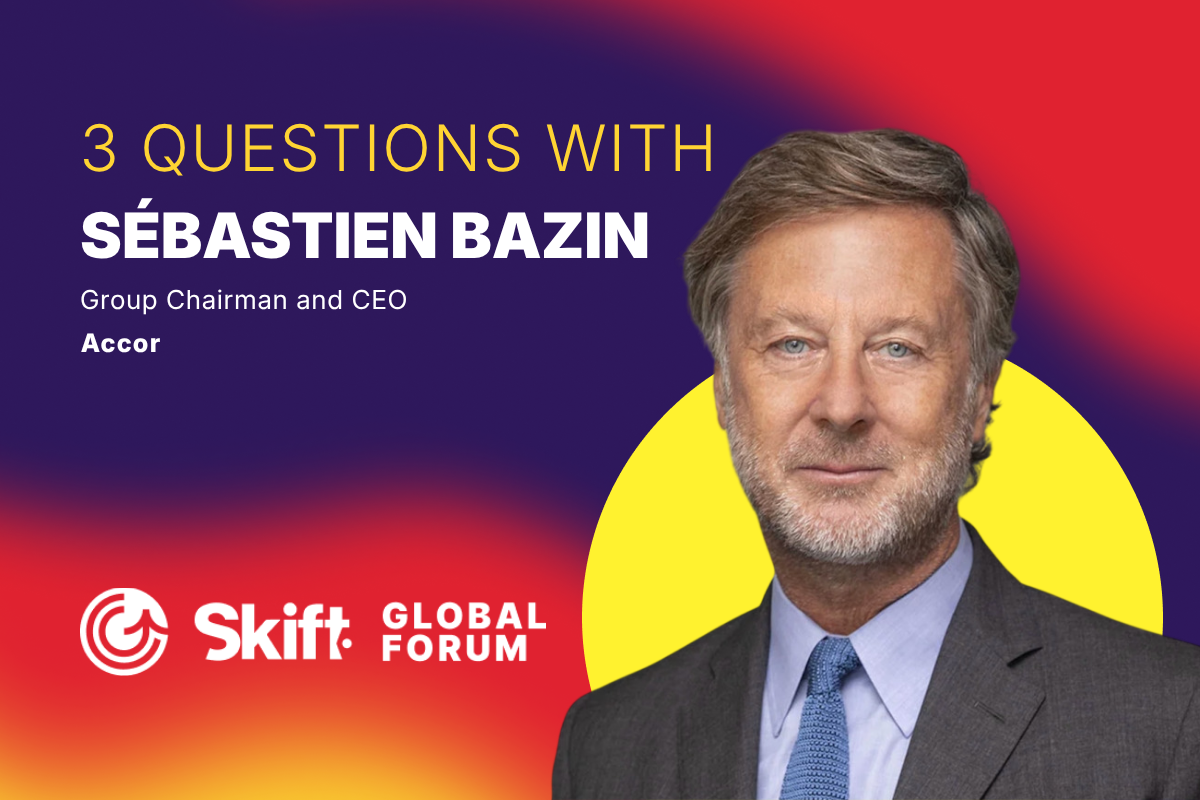
The global hospitality landscape continues to navigate an era of unprecedented technological disruption, shifting consumer demands, and rapid macro-economic fluctuations. At the helm of one of the world’s largest and most geographically diverse lodging conglomerates, Accor Chief Executive Officer Sébastien Bazin has spent over a decade refining a distinct leadership philosophy. Managing a portfolio spanning more than 45 distinct brands and encompassing roughly 5,800 properties across over 110 countries, Bazin relies on a measured approach that weights human intuition alongside advanced technological integration. As the industry prepares for the upcoming Skift Global Forum—scheduled to take place from September 22 to 24, 2026, in New York—industry observers are examining how major hospitality executives reconcile data-driven decision-making with the irreplaceable elements of human connection.
Main Facts of Leadership Strategy at Accor
Sébastien Bazin assumed the role of CEO at Accor in 2013, guiding the French multinational hospitality company through significant structural transformations, asset-light business model adaptations, and massive global expansion. Throughout his tenure, Bazin has maintained a consistent governance rule regarding strategic decision-making at scale: data serves to sharpen executive choices rather than dictate them.
In an industry increasingly governed by predictive algorithms, automated revenue management systems, and centralized digital booking channels, Bazin advocates for a tri-part decision-making hierarchy. According to the CEO, strategic evaluation must begin with instinct, progress through empathy regarding human impact, and finally utilize quantitative analysis to determine timing and execution. This framework challenges the prevailing tech-centric narrative adopted by many modern multinational corporations, which often rely entirely on automated predictive modeling to forecast market trends and consumer behavior.
Chronology and Historical Context of Bazin’s Tenure
Bazin’s executive career at Accor reflects a sustained effort to modernize a legacy European hotelier into an agile, lifestyle-oriented hospitality ecosystem.
- August 2013: Sébastien Bazin, then serving as the European CEO of Colony Capital and a member of Accor’s board, was appointed as Chairman and CEO of Accor, succeeding Yann Caillère. His early mandate focused heavily on restructuring the group’s financial model, leading to the division of the company into HotelInvest (real estate ownership and asset management) and HotelServices (hotel operations and brand management), a split formalized in 2014 and later unified following subsequent portfolio optimizations.
- 2016–2019: Accor aggressively pursued brand diversification through high-profile acquisitions and partnerships. The group acquired FRHI Hotels & Resorts—bringing luxury flagships like Fairmont, Raffles, and Swissôtel under its umbrella—as well as Mantra Group, Mövenpick Hotels & Resorts, and a stake in Ennismore, creating a dedicated lifestyle division.
- 2020–2022: The onset of the global COVID-19 pandemic severely disrupted international travel, forcing Accor to pivot its strategic focus toward domestic tourism, digital operational efficiencies, and health-security protocols. Bazin restructured the organization to enhance operational agility, reduce overhead costs, and accelerate the rollout of the ALL (Accor Live Limitless) loyalty platform.
- 2023–Present: Accor has emphasized asset-light growth, expanding its footprint in the Middle East, Asia-Pacific, and North America while integrating artificial intelligence across customer service touchpoints, revenue forecasting, and loyalty personalization.
Supporting Data and Industry Metrics
To understand the scale at which Bazin’s leadership philosophy operates, one must examine the operational metrics of Accor. As of the most recent financial disclosures, the group manages a vast network encompassing:
- Approximately 5,800 hotels, resorts, and residences.
- Over 800,000 guest rooms distributed across more than 110 countries.
- A brand portfolio exceeding 45 distinct labels, ranging from economy brands like Ibis and Formule 1 to premium and luxury properties including Sofitel, Pullman, MGallery, and the aforementioned Fairmont and Raffles portfolios.
- The ALL (Accor Live Limitless) loyalty ecosystem, which serves tens of millions of active members globally, acting as a primary driver of direct bookings and customer data aggregation.
Market analysts note that managing such a sprawling portfolio requires immense technological infrastructure. However, Bazin’s public stance cautions against over-reliance on quantitative metrics alone. In complex operational environments, delaying strategic choices while waiting for complete, flawless data sets can render an enterprise sluggish. Instead, Bazin argues that optimal outcomes emerge when executive intuition is nourished, rather than replaced, by robust data analytics.
The Intersection of Artificial Intelligence and the Traveler Journey
The integration of artificial intelligence into the travel and hospitality sectors represents a pivotal point of discussion for industry leaders. Modern travelers increasingly expect hyper-personalized experiences, seamless digital check-ins, and intuitive discovery tools that anticipate their preferences before they articulate them.
Bazin has acknowledged that artificial intelligence is fundamentally transforming the customer journey, particularly within the discovery, planning, and booking phases. As generative AI models and advanced machine learning algorithms become standard features of online travel agencies and hotel brand websites, the friction in travel planning diminishes.
However, this technological acceleration introduces a distinct paradox. As digital touchpoints proliferate, the risk of depersonalizing the guest experience increases. Bazin addresses this challenge by asserting that technological advancements should not substitute for human interaction, but rather liberate hotel staff from administrative burdens, allowing them to focus entirely on direct guest engagement. In his view, as automation becomes ubiquitous across the service economy, genuine human hospitality emerges as a primary differentiator for luxury and lifestyle brands.
Socio-Economic Implications and the Role of Hospitality as a Social Elevator
Beyond financial performance and digital transformation, industry leaders face growing scrutiny regarding their broader social impact. Hospitality is uniquely positioned as a major global employer, providing entry-level opportunities, professional training, and career advancement pathways for individuals from diverse educational and socio-economic backgrounds.
Bazin frequently emphasizes that the hospitality industry functions as a vital social elevator. Unlike industries requiring specialized academic credentials from elite institutions, hotels have historically offered upward mobility based on dedication, emotional intelligence, and operational proficiency.
As global hospitality groups accelerate their adoption of automated kiosks, robotic operational support, and AI-driven guest communication channels, labor market dynamics are shifting. Bazin argues that industry executives must consciously protect and elevate the human element within their organizations. Ensuring that technological integration supports rather than displaces front-line personnel is vital to preserving the industry’s historical role as a catalyst for community development and social mobility.
Broader Industry Context and Perspectives at Skift Global Forum
The discussions championed by Bazin align with broader strategic conversations taking place across the global travel sector. At upcoming industry gatherings such as the Skift Global Forum in New York, executives representing competing global giants will debate similar operational challenges.
Industry counterparts—including Expedia Group CEO Ariane Gorin, Wyndham Hotels & Resorts CEO Geoff Ballotti, and Qatar Airways Group executives such as Hamad Al-Khater—are navigating parallel pressures. These leaders must balance the massive capital expenditures required for digital transformation with the realities of staffing shortages, rising consumer expectations, and demands for sustainable business practices.
The convergence of these industry titans provides a comprehensive platform for examining the future of travel. While digital infrastructure, distribution channels, and data privacy frameworks dominate corporate boardrooms, the underlying consensus among seasoned hospitality leaders remains centered on the enduring value of human-to-human connection.
Analysis of Implications for the Future of Hospitality
The operational philosophy articulated by Bazin offers several critical takeaways for the broader travel and tourism economy:
- Data as an Advisor, Not a Dictator: In fast-moving consumer markets, organizations that paralyze decision-making processes in pursuit of absolute statistical certainty risk losing market share to agile competitors. Using data to inform intuition rather than replace it represents a balanced governance model for modern enterprises.
- The Premium on Human Capital: As automated technologies standardize baseline expectations for efficiency and convenience, physical properties must elevate service quality. True luxury and lifestyle differentiation will increasingly rely on empowered, highly trained staff capable of delivering authentic, personalized human engagement.
- Protecting Social Mobility: Corporate responsibility in the hospitality sector extends beyond environmental sustainability to include labor stewardship. Integrating artificial intelligence must be managed carefully to preserve career progression pathways for entry-level workers, maintaining the industry’s historic function as a socioeconomic equalizer.
As Accor continues to expand its global footprint through its multi-brand strategy, the tension between scalable technological automation and intimate hospitality delivery will remain a defining theme of Bazin’s executive tenure. The upcoming dialogue in New York will offer further insight into how legacy hospitality groups intend to navigate this complex terrain in the years ahead.



 Anjar Salim
 Chandra Hamzah
 Budi Mulyono
 Lukman Taruna Persada Ramadan
