Tatiana Tantri Indah Sari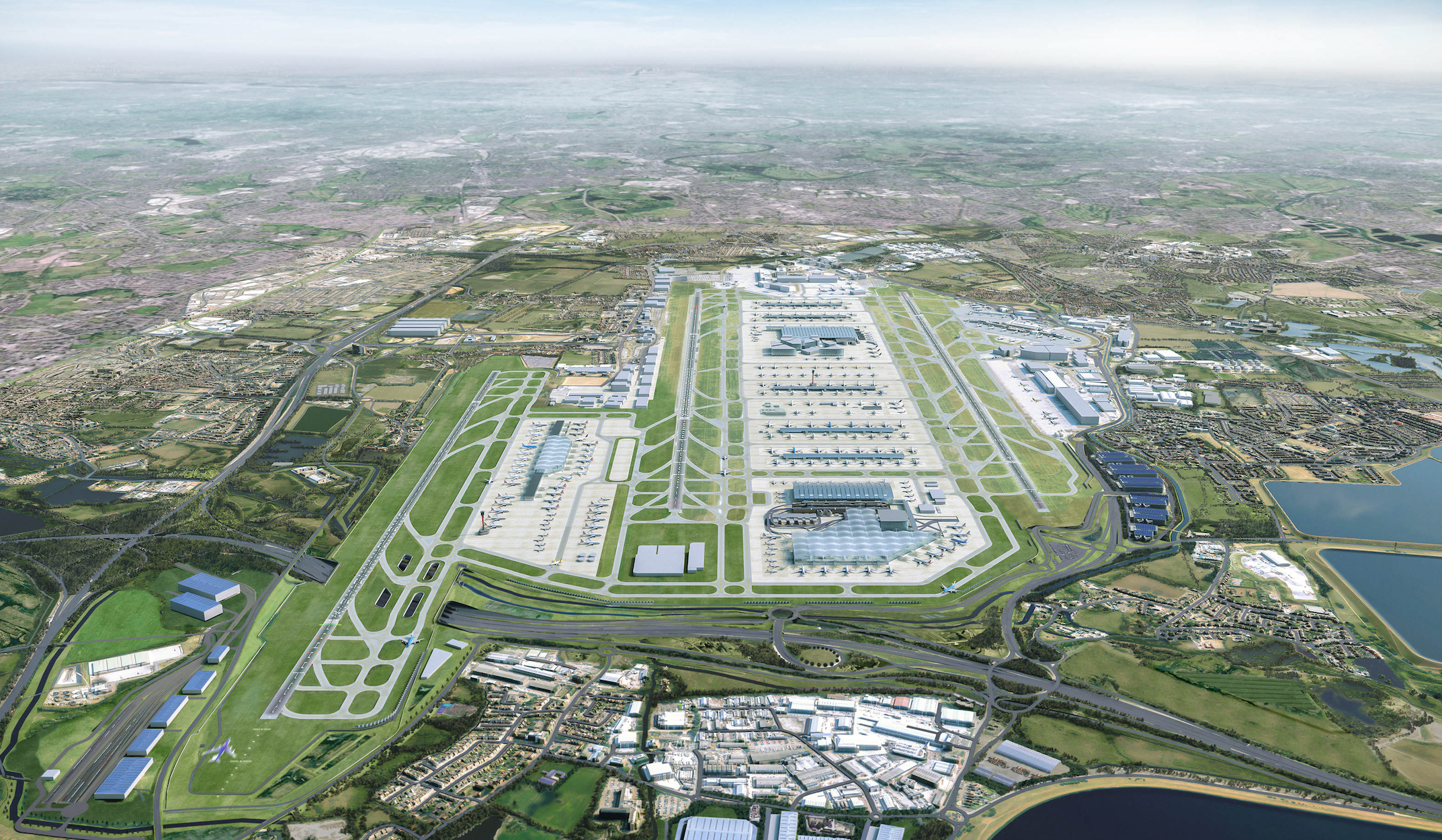
The debate surrounding the proposed expansion of London Heathrow Airport has entered a critical new phase, forcing policymakers to confront an increasingly polarized dilemma: how to reconcile multi-billion-dollar infrastructure growth with the United Kingdom’s legally binding climate commitments. As the government weighs the economic benefits of increased global connectivity against soaring aviation emissions, a growing consensus among climate scientists, economists, and government advisers suggests that the only viable path forward may involve a radical measure—curbing passenger demand itself.
This stark warning was underscored this week by prominent United Kingdom climate experts, most notably representatives from the Climate Change Committee (CCC), the government’s official independent adviser on tackling global warming. According to the committee, the expansion of Europe’s busiest aviation hub is fundamentally incompatible with the nation’s trajectory toward net-zero greenhouse gas emissions by 2050. As aviation continues to outpace other sectors in technological decarbonization, the friction between economic expansion and environmental preservation has never been more pronounced.
The Core Dilemma: Growth Versus Emissions
At the heart of the controversy is a fundamental mathematical and environmental mismatch. Aviation currently accounts for approximately 2.5 percent of global carbon dioxide emissions, a figure that grows significantly when considering non-CO2 warming effects such as high-altitude contrails and nitrogen oxide releases. Within the United Kingdom, international and domestic aviation represents a substantial and rising share of the national carbon footprint.
Proponents of the Heathrow expansion—including major airline groups, regional business leaders, and freight forwarders—argue that a third runway is essential for maintaining the UK’s competitive edge in global trade, tourism, and diplomacy. They contend that restricting airport capacity forces traffic to rival European hubs like Amsterdam Schiphol, Frankfurt, and Paris Charles de Gaulle, effectively exporting economic activity while doing little to curb global flight frequency.
Conversely, environmental advocates and government advisors argue that building additional infrastructure inevitably stimulates more demand, locking the nation into decades of high-emission trajectories. Nigel Topping CMG, chair of the Climate Change Committee, laid out the severity of the challenge during recent parliamentary and public briefings.
"Emissions from flying are projected to rise, even without Heathrow expansion, and the UK does not currently have a credible plan to bring them down. That poses a serious challenge to our climate commitments," Topping stated. He explicitly warned that proceeding with the Heathrow project in its current form is "not currently compatible with the UK’s Net Zero target."
Furthermore, Topping emphasized the economic accountability of the sector, noting that structural reforms are urgently required. "Government needs to ensure that the aviation industry takes responsibility for the emissions it creates and bears the costs of decarbonisation. Those conditions do not exist today," he added.
A Chronology of Heathrow’s Expansion Battles
To understand the gravity of the current debate, it is necessary to examine the protracted timeline of the Heathrow expansion saga, which has spanned decades of political shifting, legal challenges, and shifting environmental standards.
The proposal to build a third runway at Heathrow is not a recent concept. Its origins and milestones trace a complex path through British modern political history:
- 2003: The UK government publishes a white paper on the future of air transport, first identifying the need for additional runway capacity in the South East of England, signaling that Heathrow and Gatwick are nearing capacity limits.
- 2009: Under the Labour government led by Gordon Brown, official approval is granted for a third runway at Heathrow, triggering widespread opposition from local residents, environmental groups, and local authorities.
- 2010: Following a change in government, the incoming Conservative-Liberal Democrat coalition officially scraps the plans for the third runway, fulfilling a prominent pre-election pledge made by Prime Minister David Cameron, who famously declared, "No ifs, no buts, no third runway."
- 2012–2015: Recognizing the escalating congestion at London airports, the government establishes the independent Airports Commission, chaired by Sir Howard Davies. In July 2015, the commission unanimously recommends expanding Heathrow by constructing a third runway, citing it as the option that delivers the greatest economic benefit.
- 2016–2018: Following lengthy policy reviews, the Conservative government under Theresa May formally supports the expansion. In June 2018, Parliament votes overwhelmingly in favor of the National Policy Statement (NPS) supporting the Heathrow expansion, overriding localized political resistance.
- 2020: In a landmark legal development, the Court of Appeal rules that the government’s approval of the Heathrow expansion was unlawful because ministers failed to adequately account for the UK’s commitments under the Paris Agreement on climate change.
- December 2020: The Supreme Court overturns the Court of Appeal’s decision, ruling in favor of the government and Heathrow Airport Ltd, declaring that the expansion plans could proceed through the formal planning application process.
- 2021–Present: The landscape shifts dramatically following the codification of stricter net-zero targets into UK law. Post-pandemic aviation recovery, coupled with heightened energy costs and acute pressure from the Climate Change Committee, forces a re-evaluation of whether the legal green light granted in 2020 remains tenable in a climate-conscious policy environment.
Supporting Data: The Aviation Emissions Challenge
The technical hurdles facing the decarbonization of commercial aviation are formidable, reinforcing the arguments put forward by the Climate Change Committee. Unlike the automotive sector, which has charted a relatively clear path toward widespread electrification via battery-powered passenger vehicles, aviation faces distinct thermodynamic and weight constraints.
Commercial jet aircraft require energy-dense liquid fuels to travel intercontinental distances. While Sustainable Aviation Fuels (SAFs)—derived from biological waste, used cooking oils, or captured carbon dioxide—offer a drop-in replacement for conventional fossil jet fuel, their current production levels are infinitesimal compared to global demand. SAFs currently account for less than 0.1 percent of total global jet fuel consumption. Scaling production to meet the demands of an expanded Heathrow, alongside global fleet growth, requires massive capital investments, renewable energy infrastructure, and decades of supply chain development.
Hydrogen-powered aviation, while heavily researched, remains decades away from commercial viability for long-haul routes—the very routes that drive Heathrow’s economic model and international hub status. Electric commercial aircraft are similarly restricted to short-haul, regional routes with small passenger loads, rendering them useless for transatlantic or Asia-Pacific flights.
Consequently, any immediate or medium-term increase in airport capacity translates almost directly into an increase in absolute carbon emissions. According to Department for Transport projections, baseline UK aviation emissions are expected to rebound past pre-pandemic levels and continue climbing upward unless deliberate demand-management policies are implemented.
Official Responses and Stakeholder Reactions
The confrontation between climate imperatives and aviation growth has drawn sharp battle lines across various sectors of British society.
The aviation industry, represented by bodies such as Airlines UK and Heathrow Airport Ltd., maintains that technological innovation, rather than artificial capacity restriction, is the correct mechanism for achieving sustainability. Airport operators have pointed to their own net-zero roadmaps, which rely heavily on airspace modernization, operational efficiencies, fleet renewals, and the scaling of SAF mandates enforced by the government.
"Heathrow is fully committed to playing its part in the transition to net-zero aviation," a Heathrow spokesperson noted in response to recent climate warnings. "We are already working with airline partners to accelerate the adoption of sustainable fuels and improve efficiency across our airfield. Stopping infrastructure investment risks stranding the UK’s global connectivity and handing market share to foreign competitors who lack our environmental ambitions."
Conversely, environmental NGOs and local community groups have intensified their campaigns against the expansion. Organizations such as Greenpeace UK and Friends of the Earth argue that relying on unproven technologies or future technological breakthroughs to justify high-emission infrastructure is a dangerous gamble. They contend that throttling passenger demand—through measures such as frequent flyer levies, distance-based passenger taxes, or a moratorium on airport expansions—is the only scientifically robust mechanism remaining.
Economic and Policy Implications
The debate over Heathrow’s third runway extends far beyond aviation policy; it serves as a litmus test for the UK government’s broader economic and environmental credibility.
If the government chooses to heed the advice of the Climate Change Committee and blocks or severely curtails the Heathrow expansion, it risks signaling to international investors that major infrastructure projects in the UK face unpredictable regulatory roadblocks tied to shifting environmental metrics. Such a move could chill foreign direct investment in transport and logistics.
On the other hand, if the government allows the expansion to proceed without securing verifiable, enforceable guarantees that emissions will fall in tandem with passenger growth, it risks breaching its own statutory carbon budgets and undermining its international standing as a leader in climate diplomacy. This tension is particularly acute as the UK prepares to defend its climate targets on the global stage.
Furthermore, the concept of "throttling demand" introduces complex socio-economic questions. Implementing punitive taxes on air travel or restricting flight slots risks making flying once again an exclusive luxury available only to the wealthy, sparking backlash from working-class consumers and regional communities who rely on affordable air connectivity.
Conclusion: A Definitive Crossroads
As policymakers navigate this complex terrain, the question facing London Heathrow is no longer merely logistical or financial. It is a fundamental inquiry into the limits of growth in a carbon-constrained world. Whether through technological breakthroughs that materialize faster than currently projected, or through government-mandated constraints on passenger growth, the future of Heathrow will serve as a global bellwether for how modern economies attempt to balance the irrepressible urge for global mobility with the absolute boundaries of our planetary climate system.



 Anjar Salim
 Chandra Hamzah
 Budi Mulyono
 Lukman Taruna Persada Ramadan