
 Tatiana Tantri Indah Sari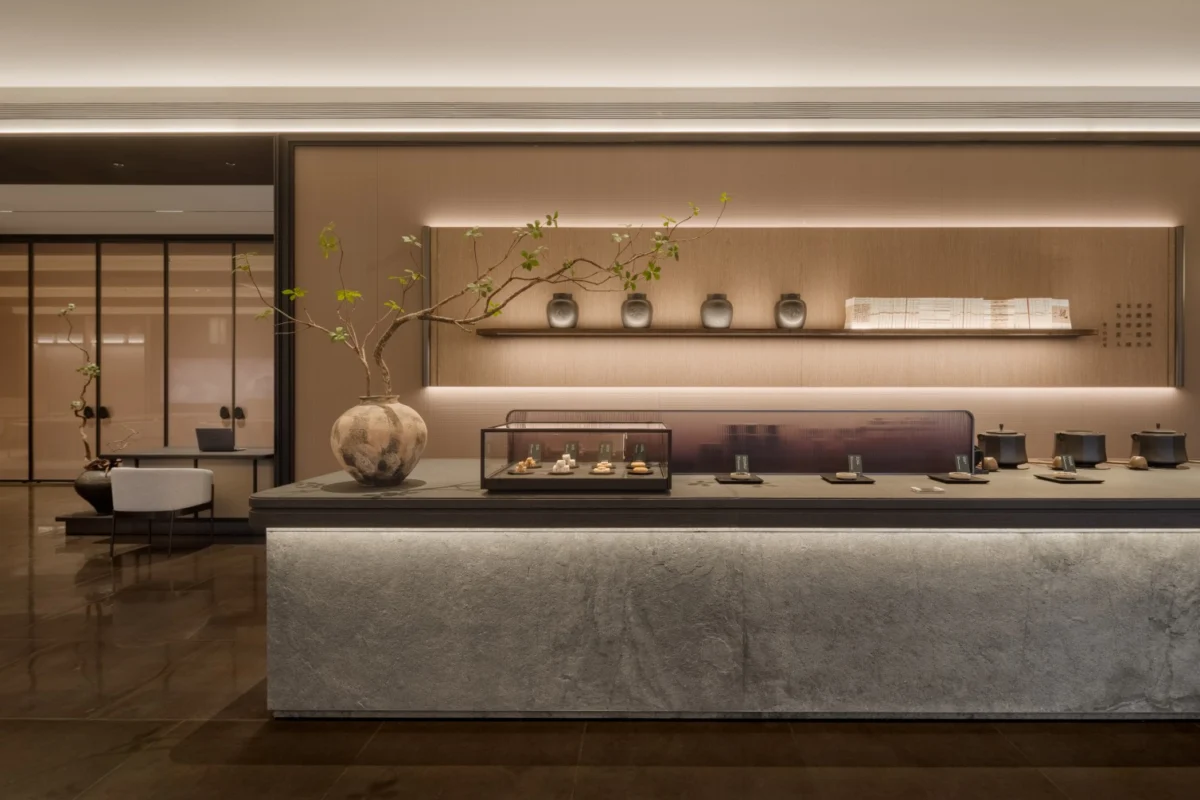
The global hospitality landscape is undergoing a profound structural evolution, driven by shifting consumer demands that favor experiential depth, psychological well-being, and cultural authenticity over standardized luxury formulas. At the forefront of this transformation is H World Group, one of the largest hotel management companies in the world, which has officially introduced its newest premium lodging concept: Grand Ji Hotel. Representing a strategic pivot toward contemporary, design-forward upper-midscale accommodations, the brand seeks to marry a distinct Chinese design philosophy with the immense operational muscle, technological infrastructure, and robust supply chains of its parent organization.
With more than 13,500 hotels and 1.3 million rooms globally—anchored by massive flagship brands such as JI Hotel and Hanting—H World Group is utilizing its vast market penetration to scale a culturally grounded hospitality model. As of mid-2026, the company operates two flagship Grand Ji properties totaling 441 rooms, alongside an active development pipeline of 18 additional properties. This strategic expansion reflects a broader industry trend wherein major hospitality conglomerates are moving away from monolithic Western luxury templates in favor of localized, narrative-driven guest experiences that resonate deeply with modern travelers.
The Genesis of Grand Ji Hotel and the Evolution of Premium Travel
The conceptualization of Grand Ji Hotel stems from a fundamental reassessment of what constitutes high-end value for today’s sophisticated consumer. According to Kuang Ming (Ray) Chou, chief designer at H World Group, contemporary premium travelers are no longer interested in conspicuous consumption or excessive square footage. Instead, their definitions of luxury are increasingly intangible, hinging upon privacy, environmental quietude, health consciousness, and frictionless convenience.
This philosophy is especially pronounced among modern travelers navigating high-density urban environments. For these guests, a premium hotel stay must function as a sanctuary from sensory overload. Grand Ji Hotel addresses this psychological need by meticulously engineering the physical and spatial journey of the guest, treating architecture, interior design, and operational choreography as unified elements of restorative hospitality.
Rather than relying on superficial tropes or decorative clichés, the brand’s design framework is deeply rooted in a contemporary interpretation of traditional Chinese aesthetics. The conceptual architecture is anchored by five fundamental elements drawn from the natural world: water, clouds, tea, pine, and stone. Each element is chosen not merely for its visual appeal, but for its philosophical resonance. Water symbolizes adaptability and inner strength, tea represents mindfulness and communal bonding, and pine evokes enduring resilience and natural landscapes. By translating these ancient motifs into modern spatial design, H World Group aims to offer a holistic sensory experience that engages guests on intellectual, emotional, and physical levels.
Architectural Restraint, Spatial Privacy, and the Architecture of Quiet
One of the most defining characteristics of the Grand Ji Hotel model is its deliberate departure from the cavernous, fully open-plan layouts typical of conventional business and luxury hotels. In response to post-pandemic shifts in spatial psychology and a heightened demand for personal space, Grand Ji incorporates innovative architectural partitions throughout public zones such as lobbies, dining areas, and wellness facilities. These subtle, light partitions create acoustic and visual buffers, reducing direct exposure to strangers and offering guests an enhanced sense of seclusion and psychological safety.
This ethos of restraint is evident from the moment a guest approaches the property. Exterior layouts frequently feature low architectural walls that obstruct direct lines of sight from the street, compelling visitors to transition gradually along thoughtfully landscaped pathways flanked by welcoming pine trees and minimalist masonry. Transition spaces often incorporate architectural elements infused with natural materials, such as bricks compressed from tea leaves, allowing subtle olfactory cues to signal the beginning of the guest’s transition from the chaotic outside world into a zone of absolute calm.
Inside the guest rooms and shared spaces, the design language relies heavily on negative space, muted color palettes, and balanced proportions. This intentional minimalism yields unexpected behavioral changes among visitors; internal company observations indicate that guests naturally moderate their volume and speak more quietly when moving through Grand Ji properties, even in the absence of explicit behavioral signage.
Crucially, this pervasive quietness is tied directly to H World Group’s foundational belief that the primary purpose of a hotel is restorative sleep. By treating acoustic engineering, comprehensive soundproofing, superior indoor air quality, and rigorous cleanliness as core pillars of brand identity rather than ancillary amenities, Grand Ji Hotel aligns high-end interior architecture with fundamental human well-being.

Sensory Arrival and Cultural Immersion Through Gastronomy
The guest journey at Grand Ji Hotel begins long before check-in concludes. Rejecting the traditional high-counter reception desk, the brand utilizes an understated arrival area anchored by a long, traditional tea table. Here, freshly brewed tea is prepared and ceremoniously offered to incoming visitors. For domestic travelers, the ritual provides an immediate sense of cultural familiarity and comfort; for international visitors, it functions as an accessible, immersive introduction to traditional Chinese hospitality customs.
This philosophy extends directly into the property’s culinary offerings. The daily breakfast service thoughtfully bridges global culinary expectations with regional Chinese comfort foods, emphasizing nourishing, steaming selections such as artisanal broths and freshly prepared regional delicacies. By embedding cultural heritage into tactile, sensory experiences—allowing guests to taste, smell, and physically inhabit the design—Grand Ji Hotel avoids the trap of treating culture as mere decorative wallpaper.
Invisible Technology and Operational Efficiency
While Grand Ji Hotel places heavy emphasis on analog comfort and sensory grounding, advanced technology underpins the entire guest experience. However, H World Group maintains a strict philosophy regarding technological implementation: technology must function seamlessly in the background, serving to eliminate friction points without ever dominating the physical environment or distracting from human interaction.
Guests enjoy contactless convenience through mobile-integrated access controls, voice-activated room management systems, and autonomous service robots capable of delivering amenities directly to guest rooms. These technological integrations serve dual purposes: they accelerate service delivery while simultaneously preserving guest privacy by minimizing unnecessary staff interruptions, such as traditional room knocks for routine deliveries. By allowing technology to "disappear beside the guest," Grand Ji preserves the visual and emotional dominance of its natural materials, curated art pieces, and architectural minimalism.
Scaling the Vision: Supply Chain Mechanics and Franchise Consistency
Translating a bespoke, highly nuanced design concept into a scalable commercial enterprise represents one of the most formidable challenges in modern hospitality management. However, Grand Ji Hotel benefits immensely from the formidable industrial infrastructure of H World Group. As of the second quarter of 2026, H World commanded an extensive network of 13,539 operational hotels worldwide, complemented by a substantial development pipeline consisting of 3,089 properties. Within China alone, the corporation’s upper-midscale portfolio experienced robust expansion, registering 1,738 operational and pipeline properties—a year-over-year increase exceeding 13 percent.
The viability of Grand Ji Hotel as a scalable brand relies heavily on H World’s sophisticated supply chain capabilities and modular construction methodologies. By manufacturing critical architectural and interior elements off-site in controlled factory environments before delivering them for assembly, the company ensures exceptional quality control, reduces construction timelines, and simplifies long-term property maintenance.
This rigorous adherence to standardized manufacturing aligns with H World’s overarching "one brand, one design" operational philosophy. Whether a traveler visits a property in a bustling northern commercial hub like Harbin or a tropical southern destination like Sanya, the core brand identity, spatial integrity, and sensory signature remain uncompromised. This consistency has already proven successful for the group; recent global hospitality rankings for 2026 position H World’s flagship brands, JI Hotel and Hanting, at first and second place worldwide by total room count, validating the company’s capacity to scale distinct lodging concepts without diluting product integrity.
Broader Market Implications and the Chinese Renaissance in Global Hospitality
The emergence of Grand Ji Hotel is symptomatic of a broader macroeconomic and cultural phenomenon that industry analysts describe as a modern "Chinese Renaissance." This cultural resurgence involves a systematic reexamination of historical design philosophies, aesthetic traditions, and social rituals, followed by their deliberate adaptation to contemporary global lifestyles.
Hotels serve as uniquely effective laboratories for this cultural translation, functioning as microcosms of society that reflect contemporary standards of living, domestic architecture, communal interaction, and spatial hierarchy. By pioneering an upper-midscale brand that proudly articulates a distinctly domestic philosophical framework rather than mimicking Western luxury conventions, H World Group is effectively charting a new course for Asian hospitality conglomerates expanding onto the international stage.
As Grand Ji Hotel continues to expand its footprint from its initial openings toward its active pipeline of 18 properties, the primary metric of success will be its ability to maintain uncompromising attention to detail across an expanding portfolio. If H World Group successfully balances its immense operational scale with the intimate, contemplative ethos of the Grand Ji concept, the brand could establish a new benchmark for how hotel companies define premium hospitality—proving that profound luxury can be achieved not through excess, but through precision, cultural resonance, and quiet design.




 Anjar Salim
 Chandra Hamzah
 Gabriela Annisa
 Susilo Edi Turonggo
 Walid Sujud Trenggono