
 Anjar Salim
As a compounding succession of climate-fueled natural disasters—ranging from intense wildfire seasons and seismic upheavals to brewing Super El Niño meteorological phenomena—continues to test the limits of global infrastructure, emergency management agencies are confronting an unprecedented operational landscape. In an era where extreme weather events frequently strike unprepared regions with devastating force, billions of worldwide citizens find themselves vulnerable to extended disruptions in basic services. Recognizing that traditional humanitarian response models are often too slow to cope with sudden systemic failures, private-sector logistics giants are stepping in to redefine crisis management. Leading this evolution is Amazon, which has leveraged its sophisticated global supply chain, cloud computing infrastructure, and specialized rapid response technologies to fundamentally alter how communities recover from catastrophe.
The Anatomy of Modern Disaster Infrastructure Failures
When catastrophic events strike, the immediate aftermath is characterized not just by physical destruction, but by a cascading series of infrastructure collapses. First responders frequently encounter scenarios where standard lines of communication are completely severed, electrical grids are rendered entirely non-functional, and access to fundamental necessities such as potable water and nourishing food is instantaneously restricted.
Jeffrey Schweitzer, Amazon’s disaster relief innovation lead, identified these recurring vulnerabilities through extensive consultations with frontline emergency personnel. The persistent operational bottlenecks—specifically the inability to communicate effectively, deploy rapid relief, or secure essential resources—highlighted an urgent need for decentralised, portable technology that could bypass crippled local grids.
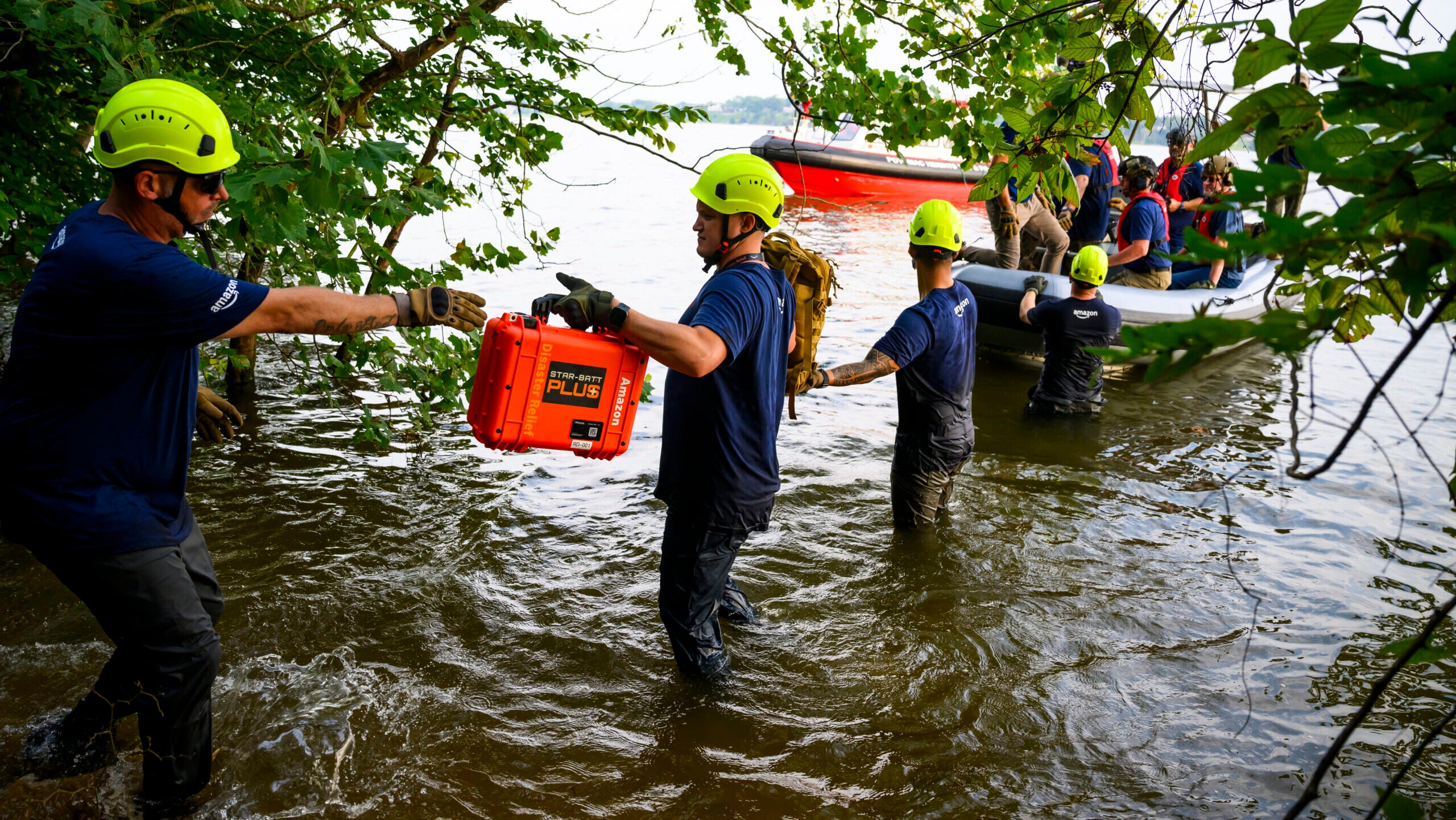
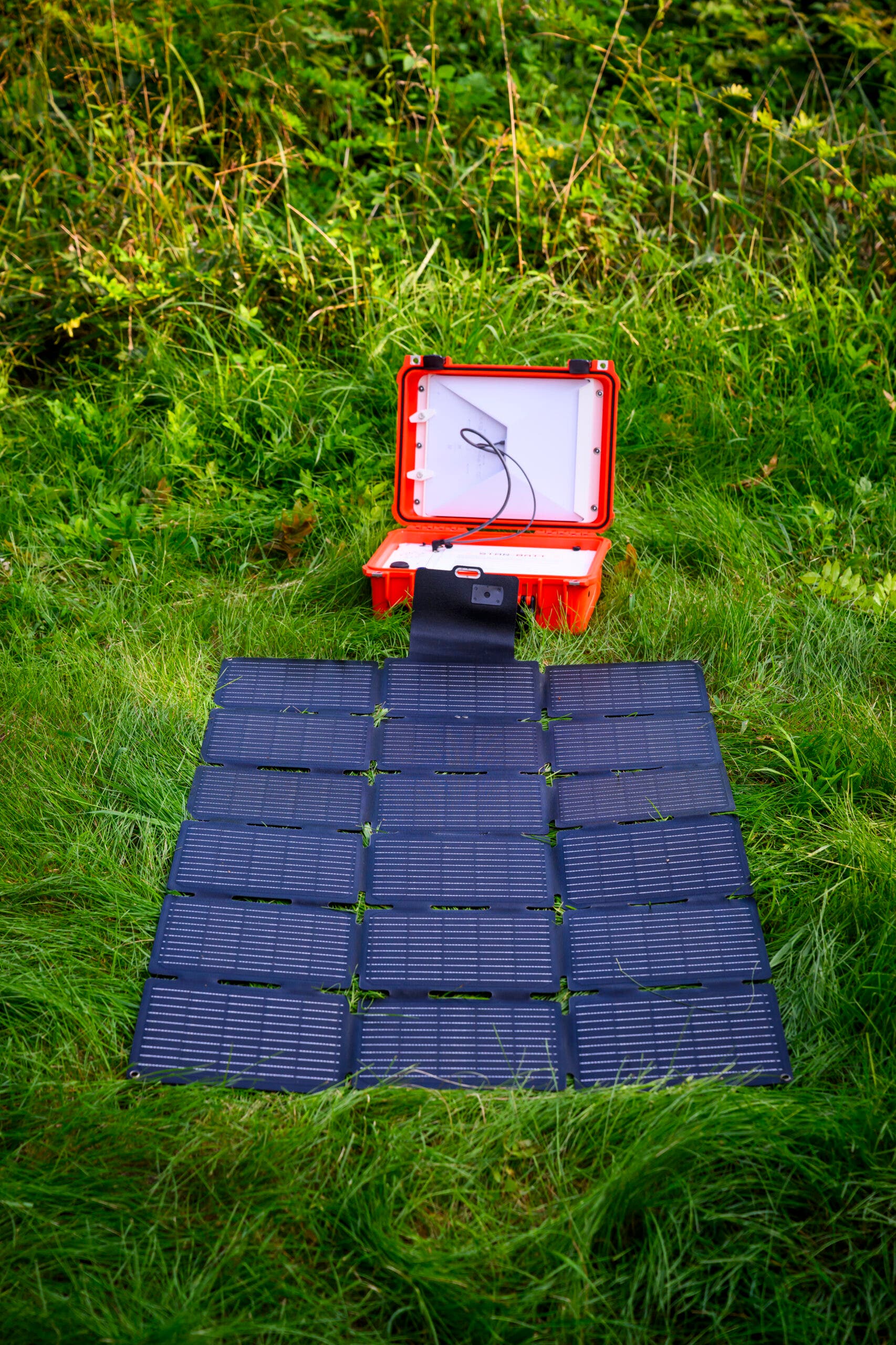
To address these vulnerabilities, Schweitzer and his engineering teams collaborated closely with nonprofit organizations to develop highly specialized, modular rapid response technology systems. Designed to fit entirely inside suitcase-sized packages, these units can be easily transported by a single individual and fully operationalized within minutes of arrival at a disaster zone. Each system integrates multiple configurations tailored to specific crisis needs, including deployable solar microgrids, satellite-powered Wi-Fi hotspots, advanced water purification devices, and high-end terrain-mapping drones.
While individual components—such as specialized commercial mapping drones valued at up to $250,000—represent significant capital investments, Amazon provides these assets to vetted humanitarian partners at no financial cost. Furthermore, the equipment is engineered for sustainability and reuse. Following the conclusion of active disaster response missions, nonprofits return the hardware to Amazon facilities for rigorous inspection, refurbishment, and restocking, ensuring that a single deployment package can serve multiple communities across successive global emergencies.
Real-World Deployments and Operational Impact
The efficacy of Amazon’s rapid response technology has been demonstrated in several recent international and domestic humanitarian crises. Following twin earthquakes in Venezuela that completely severed telecommunications infrastructure near the epicenter in La Guaira, Amazon coordinated with on-the-ground nongovernmental organizations (NGOs) to deliver portable Wi-Fi systems. These units immediately re-established critical data links for emergency medical clinics, temporary shelters, and community command hubs. In one instance, a portable connectivity unit was temporarily mounted on a vehicle roof to provide localized communications and screen morale-boosting movies for displaced children.
Similarly, in the wake of Hurricane Melissa in Jamaica, portable solar battery units and satellite communication terminals restored power and connectivity within minutes. This rapid intervention enabled medical professionals to securely coordinate emergency patient care and allowed organizations like World Central Kitchen to power mobile food trucks, facilitating the preparation and distribution of hot meals well after dark.
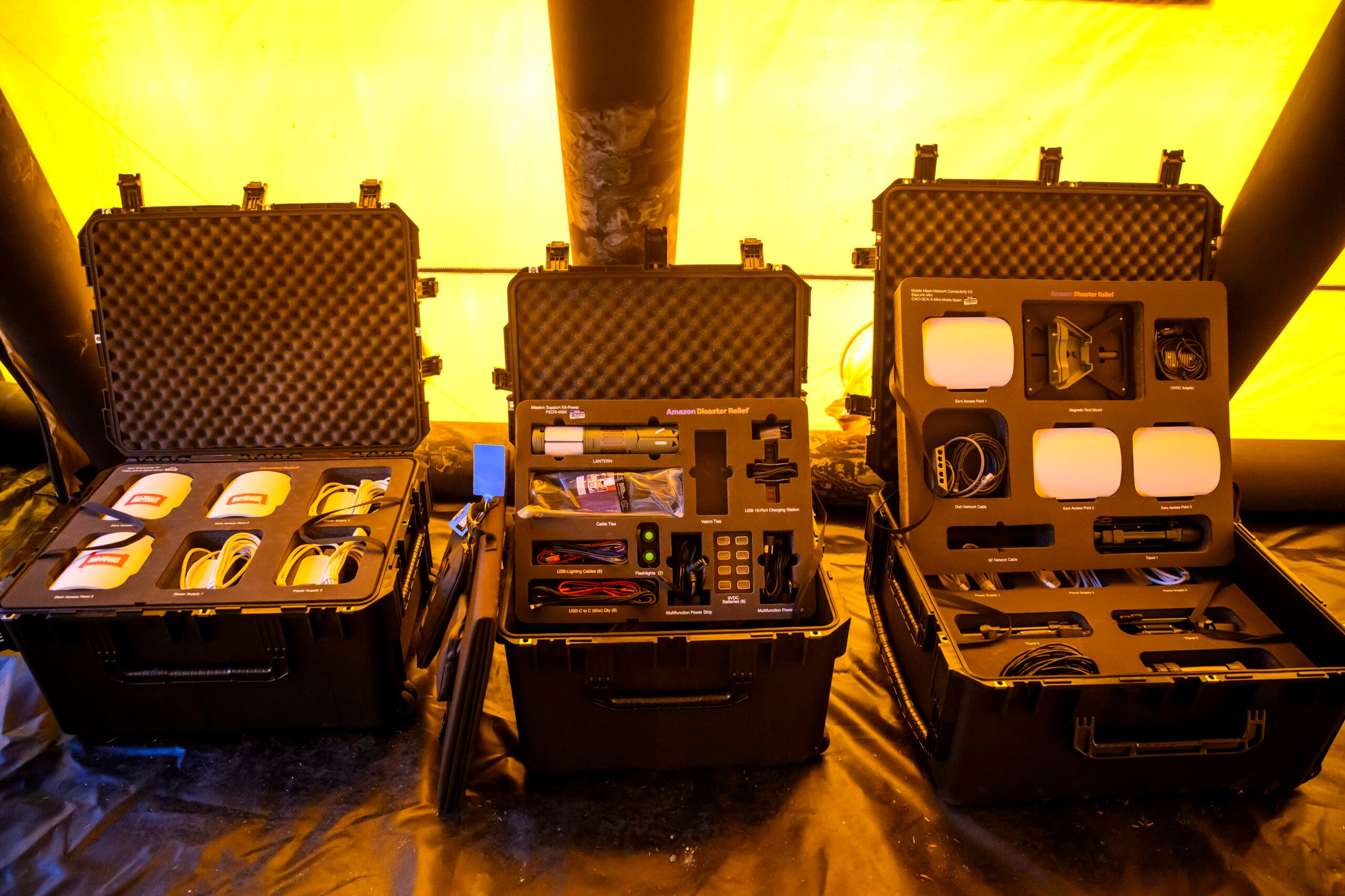
The technical specifications of the deployed hardware underscore their robust utility in high-stress environments. A single power configuration is capable of maintaining continuous operations for a 50-bed field hospital for 72 hours, or producing more than 2,600 hot meals. By providing these resources ahead of traditional government supply chains, the initiative aims to shorten the critical window between disaster occurrence and community stabilization.
Chronology of Amazon’s Humanitarian Evolution
Amazon’s formal entry into institutional disaster relief represents a methodical scaling of its core business competencies rather than an ad-hoc philanthropic effort. A review of the company’s humanitarian timeline highlights its progressive integration into the global emergency response framework:
- 2017: Amazon formally initiates its disaster relief program, utilizing its established distribution network, transportation fleet, and cloud infrastructure to donate and deliver emergency commodities.
- 2017–2026: Over a nearly decade-long span, the corporation donates and distributes more than 30 million emergency relief items in response to over 200 distinct global disasters.
- 2026: Amazon scales its technological innovations, introducing suitcase-sized rapid response kits featuring solar microgrids, satellite Wi-Fi, and purification units. The company hosts major multi-agency training exercises, such as a multi-organizational simulation in Maryland, to test logistics and foster inter-agency cohesion.
- 2027 (Projected): Amazon plans to expand its inventory, making 2,000 rapid response technology systems available to global nonprofit partners, with an initial batch of 800 units staged for immediate deployment from its Tennessee disaster relief hub ahead of the upcoming hurricane season.
Cross-Sector Coordination and Training Exercises
Effective disaster response requires more than advanced hardware; it necessitates established relationships and seamless coordination among diverse stakeholders who often have no prior history of working together. Abe Diaz, senior manager for disaster relief at Amazon, emphasizes that true preparedness relies on "prepositioning"—maintaining trained personnel, pre-packaged commodities ranging from baseline hygiene supplies to satellite communications, and established operational protocols long before a crisis manifests.
To cultivate these operational synergies, Amazon recently convened a comprehensive training exercise in a rural Maryland community. The simulation brought together approximately two dozen distinct entities, encompassing local fire and rescue services, national nonprofit partners, state and federal government agencies, and the United States military.
Participants engaged in complex, multi-phase operational missions. These included executing tactical river crossings to deliver aid to isolated communities cut off by simulated floodwaters, conducting coordinated search-and-rescue operations, and managing helicopter-assisted supply drops. The exercise provided local emergency managers and corporate partners with hands-on experience utilizing Amazon’s rapid response technology under simulated field conditions.
Military and emergency management specialists highlighted the critical importance of these preparatory exercises. Major Alex Haseley of the U.S. Army Civil Affairs noted the operational hazards of attempting inter-agency collaboration for the first time during an active crisis. According to Haseley, pre-disaster training builds institutional trust and establishes communication channels that prove decisive when seconds matter.
The Psychosocial Dimension of Humanitarian Logistics
While physical survival remains the primary objective in any disaster zone, humanitarian experts increasingly recognize the profound psychological importance of restoring normalcy, dignity, and morale to affected populations.
During the Maryland training exercise, the national nonprofit Operation BBQ Relief utilized Amazon’s modular power and technology systems to operate commercial-grade food preparation equipment, serving hot meals to displaced residents and local first responders alike. Chris Huggins, head of logistics and inventory for Operation BBQ Relief, emphasized the symbolic and psychological value of nourishment during times of acute stress. By providing a hot, comforting meal, humanitarian organizations signal to survivors that they are not forgotten and that recovery is achievable.

Broader Implications and Economic Analysis
The integration of private-sector technological capabilities into public-sector emergency management signifies a paradigm shift in disaster economics. Historically, disaster response has relied heavily on bureaucratic procurement cycles and linear supply chains, which are frequently bottlenecked by damaged regional infrastructure. By decentralizing aid through pre-positioned, reusable, and modular technology kits, private corporations can bridge the critical gap between the initial impact of a catastrophe and the arrival of sustained government assistance.
As climate projections indicate an increased frequency and severity of extreme weather events, the scalability of initiatives like Amazon’s—projecting 2,000 deployed systems by 2027—will serve as a crucial stress test for public-private humanitarian models. Analysts note that while corporate-led relief cannot replace comprehensive national disaster preparedness policies, it offers a highly agile, technologically advanced supplementary framework capable of mitigating loss of life, preserving critical infrastructure, and accelerating the socio-economic recovery of vulnerable communities worldwide.




 Chandra Hamzah
 Gabriela Annisa
 Tatiana Tantri Indah Sari
 Walid Sujud Trenggono
 Cholid Fahmi Thalib