
 Tatiana Tantri Indah Sari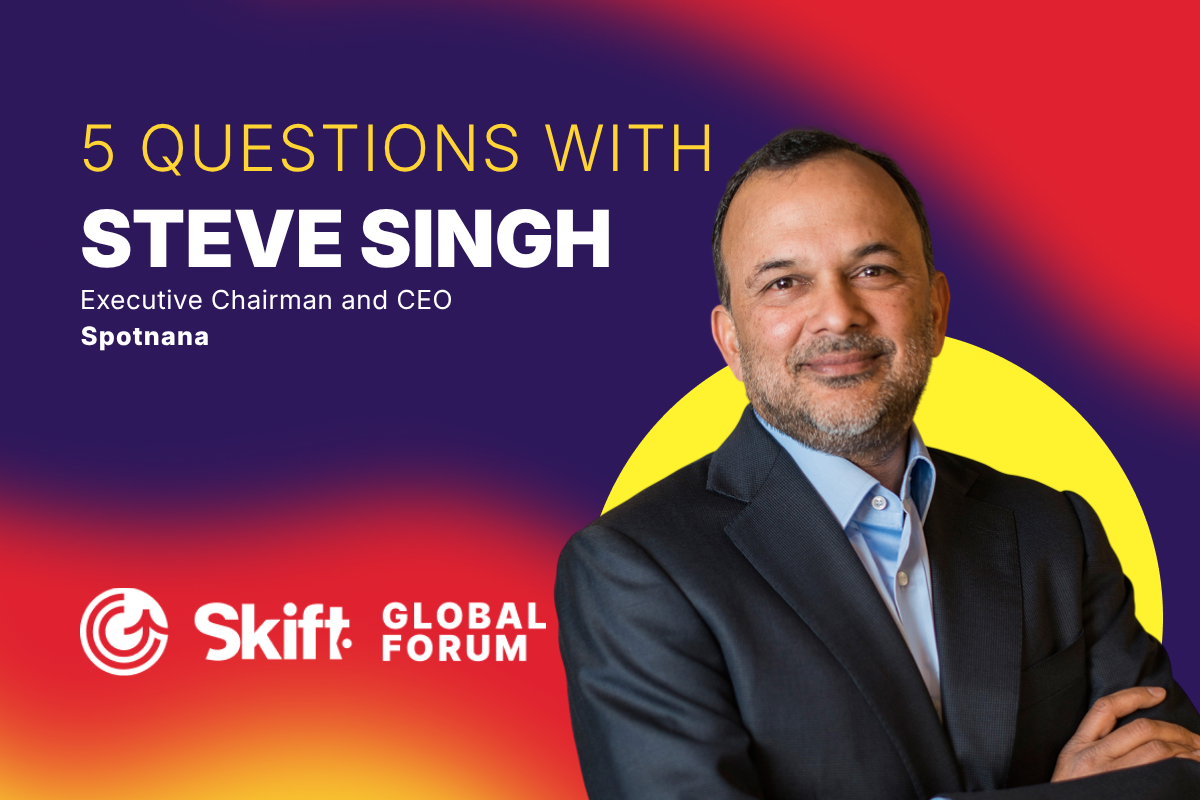
The global travel industry has long directed the vast majority of its capital, technological innovation, and marketing budgets toward the front end of the consumer journey: search, discovery, distribution, and booking. However, as artificial intelligence fundamentally restructures enterprise operations, a growing contingent of industry leaders argues that the true financial margin and customer loyalty are won or lost long after a transaction is completed. Steve Singh, executive chairman and chief executive officer of travel-as-a-service platform Spotnana, is leading this charge, asserting that automation and AI-driven post-purchase servicing can slash operational overhead by half while dramatically enhancing the traveler experience.
This thesis, which is set to take center stage at the upcoming Skift Global Forum in New York City, challenges decades of travel technology dogma. While legacy systems have historically treated post-booking changes, cancellations, refunds, and disruptions as tedious administrative burdens handled by sprawling call centers, Singh and other technological innovators view these touchpoints as the ultimate test of brand trust. As generative AI matures from an experimental novelty into an enterprise-grade utility, the economics of travel operations are undergoing a quiet, yet radical, transformation.
The Overlooked Half of the Travel Lifecycle
For decades, traditional travel management companies (TMCs) and online travel agencies (OTAs) operated on a simple paradigm: get the user to book on the platform, collect the commission or fee, and hand off the heavy lifting of customer service to human agents when things inevitably go awry. This model created massive labor bottlenecks. A significant percentage of human agent queues historically consisted of repetitive, high-volume, low-complexity tasks: processing unticketed flights, managing schedule changes, executing simple cancellations, and issuing refunds.
According to data and operational metrics highlighted by Spotnana, the integration of AI agents into these workflows is shifting the paradigm entirely. Routine administrative queries that once clogged human queues are now managed autonomously in real time. By deploying artificial intelligence capable of executing complex multi-step backend actions—such as synchronizing booking changes across disconnected global distribution systems (GDS) and direct airline feeds—Spotnana’s platform has demonstrated that labor costs associated with servicing can realistically fall by 50% or more.
This reduction in overhead does not mean the complete elimination of human labor, but rather its strategic reallocation. Human travel advisors and customer service specialists are increasingly freed from the mechanical repetition of processing refunds to focus on high-value, emotionally nuanced interactions. When a traveler faces a complex international disruption involving missed connections, hotel re-accommodations, and corporate policy exceptions, the human touch becomes an irreplaceable asset. By letting AI handle the mechanical execution, companies can deploy human empathy precisely where it yields the highest return on customer loyalty.
Evolution of the Traveler Relationship and Systemic Fragmentation
The modernization of post-booking servicing addresses a long-standing pain point for modern business and leisure travelers: fragmentation. Modern consumers navigate a travel ecosystem characterized by fragmented content sources, disparate legacy reservation systems, and siloed communication channels. Consequently, traveler expectations have evolved. Today’s consumers expect to receive instantaneous, frictionless assistance regardless of whether they initiated their booking through a corporate portal, a mobile app, or a conversational AI interface.
This expectation has forced technology platforms to prioritize end-to-end synchronization. If a traveler modifies a hotel reservation through a chat-based AI assistant, that change must instantly reflect across corporate policy databases, agency reporting tools, and direct supplier inventories. Singh notes that anyone can sell a ticket, but delivering reliable service is where trust is earned or lost. In an era where customer reviews and social media amplify service failures instantly, travelers grade providers on every micro-interaction throughout their journey. Companies that fail to unify their backend systems risk losing their customer base to more agile competitors.
The Rise of Conversational AI and Curated Frontiers
The technological shifts transforming post-purchase servicing are simultaneously reshaping the front end of the journey. The travel industry is steadily transitioning toward conversational AI booking interfaces, where consumers interact with natural language prompts rather than traditional tabular search filters. Instead of filling out rigid parameters for destination, dates, price caps, and star ratings, a traveler can input complex descriptive requests, such as searching for a pet-friendly boutique hotel featuring an ocean view, early check-in capabilities, and proximity to a specific conference center.
This conversational shift places an unprecedented demand on data quality and direct supplier integrations. Traditional aggregators often rely on cached data or incomplete metadata, which can lead to friction when conversational models attempt to execute precise bookings. To succeed in an AI-curated environment, travel providers must supply rich, accurate, and structured product information regarding rates, fares, ancillary services, and localized amenities.
Spotnana has approached this fragmented content landscape by establishing direct application programming interface (API) connections with major airlines, global hotel chains, and ground transportation providers. By bypassing legacy middlemen, the platform ensures that its conversational front end surfaces options that align with what travelers actually want. Singh emphasizes that effective curation in an AI-driven marketplace must solve for the consumer directly, aiming to present the optimal travel solutions with high statistical accuracy compared to manually reviewing exhaustive lists of raw inventory.
Industry Convergence at the Skift Global Forum
These strategic tensions—ranging from the labor economics of automation to the integration of conversational AI and direct content sourcing—will be dissected extensively during the upcoming Skift Global Forum. Scheduled to run from September 22 to September 24, 2026, in New York City, the event serves as a premier gathering for travel industry executives, innovators, and strategists.
Singh is scheduled to share the stage and debate industry trajectories alongside other prominent figures shaping the modern travel landscape, including Sierra’s Bret Taylor, Booking Holdings CEO Glenn Fogel, and Expedia Group CEO Ariane Gorin. The convergence of these leaders underscores a collective industry realization: the competitive advantage in travel is shifting rapidly from raw distribution volume to operational intelligence.
Fact-Based Analysis of Broader Implications
The pivot toward AI-driven post-purchase servicing carries profound implications for the broader travel economy.
First, it signals a structural shift in capital expenditure. Venture capital and corporate research-and-development funds, which have historically poured into customer acquisition and front-end search algorithms, are increasingly redirecting toward enterprise workflow automation and API standardization. Companies that build robust, self-healing backend systems will likely capture higher net margins by decoupling revenue growth from linear headcount scaling.
Second, labor markets within the travel sector are undergoing a necessary evolution. While routine booking and cancellation processing roles face displacement by automated agents, demand is surging for professionals skilled in exception management, conversational prompt engineering, system integration, and high-touch corporate account management. This transition necessitates targeted workforce reskilling to prepare administrative staff for higher-level operational roles.
Finally, consumer loyalty dynamics are shifting. In a commoditized market where flight schedules and hotel inventories are widely accessible across multiple platforms, brand differentiation increasingly hinges on reliability during times of disruption. Companies that harness AI to deliver proactive, frictionless recovery services will secure higher retention rates and lifetime customer value. As Steve Singh and his industry peers convene in New York, the message to the travel sector is clear: the future belongs not merely to those who capture the booking, but to those who master everything that happens after.




 Walid Sujud Trenggono
 Cholid Fahmi Thalib
 Budi Mulyono
 Lukman Taruna Persada Ramadan
 Anjar Salim