
 Cholid Fahmi Thalib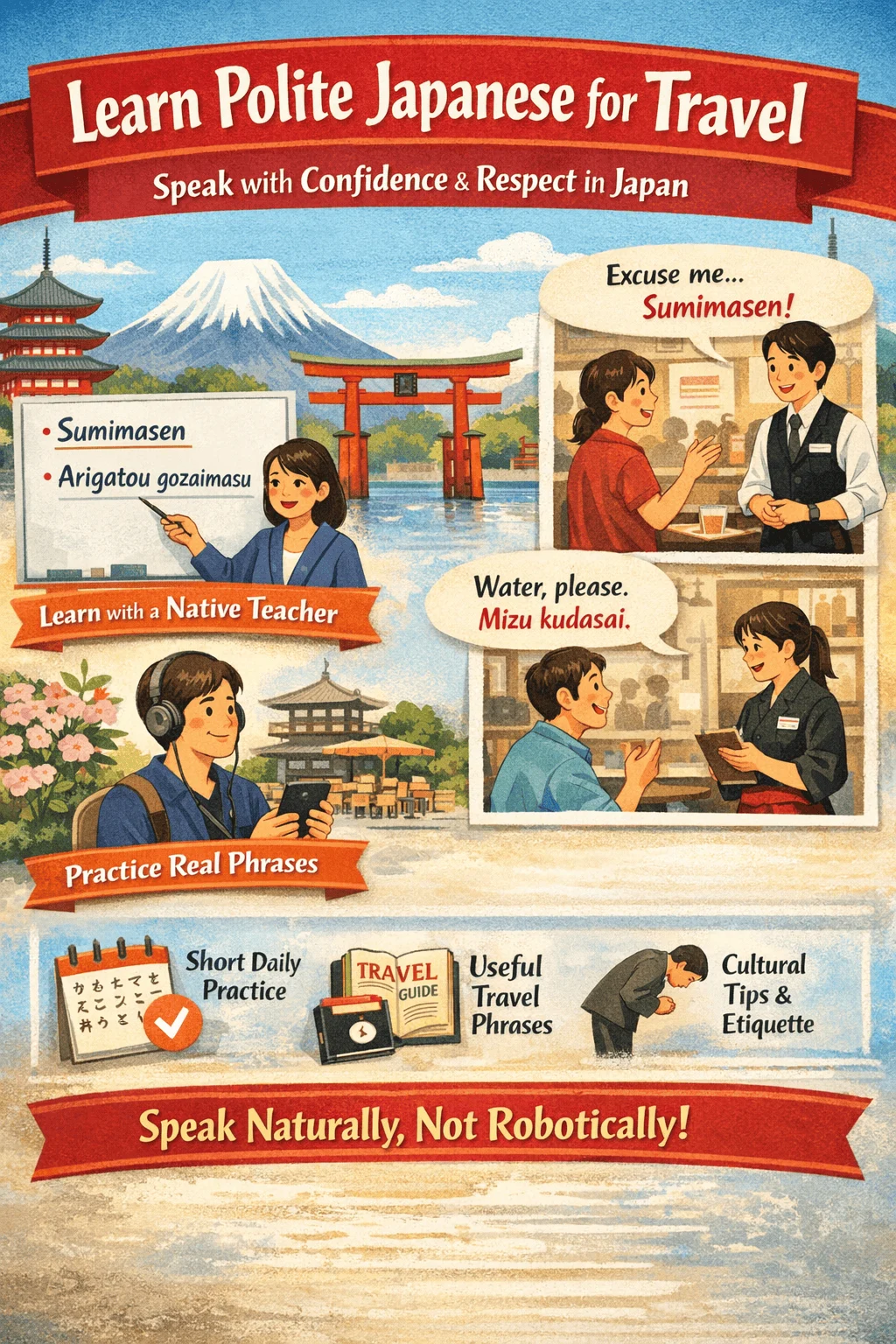
Traveling in Japan offers a rich tapestry of experiences, from ancient temples to bustling metropolises. Enhancing this journey significantly involves the ability to communicate with respect and confidence, particularly through the nuanced use of polite Japanese. While comprehensive fluency might seem an insurmountable task for short-term visitors, a strategic focus on practical, conversational Japanese can transform interactions from potentially awkward encounters into moments of genuine connection. The traditional approach of memorizing extensive phrase lists often results in stilted, robotic speech and can lead to confusion rather than clarity. A more effective strategy involves immersing oneself in real-life conversational scenarios and prioritizing practical phrases that are frequently used in everyday interactions. This method not only facilitates natural communication but also provides a deeper understanding of how politeness is woven into the fabric of Japanese social dynamics.
The efficacy of learning polite Japanese for travel purposes is significantly amplified when learners are exposed to its application in authentic contexts. Understanding why certain linguistic forms are chosen is as crucial as knowing what to say. While many travelers resort to guidebooks or compact audio courses, an increasingly popular and effective method involves engaging with a qualified Japanese language teacher specializing in travel preparation. These educators can clarify subtle aspects of tone, etiquette, and the specific linguistic tools needed for common travel situations, such as navigating restaurants, checking into accommodations, or asking for directions. This personalized guidance ensures that learners concentrate their efforts on practical vocabulary and phrases that are directly applicable to their travel itinerary, rather than investing time in memorizing sentences they may rarely, if ever, encounter. The goal is to equip travelers with the confidence to engage, rather than simply to recite.
The principle of spaced repetition and contextual learning is paramount for effective language acquisition. Short, consistent daily practice and exposure to the language in its natural environment prove far more beneficial for retention than prolonged, isolated study sessions often associated with textbook learning. By hearing polite Japanese phrases employed within actual conversations, learners begin to internalize the rhythm, intonation, and structural patterns of the language. This organic absorption process fosters a more intuitive understanding and allows for confident, spontaneous responses, moving beyond the reliance on rehearsed utterances. This shift from rote memorization to contextual understanding is the cornerstone of achieving natural-sounding and culturally appropriate communication.
Key Takeaways for Travelers
- Prioritize Practicality: Focus on phrases essential for common travel interactions.
- Context is King: Learn words and phrases within conversational scenarios.
- Embrace Nuance: Understand the importance of tone, timing, and non-verbal cues.
- Leverage Technology: Utilize language apps and digital tools for pronunciation and grammar support.
- Cultural Immersion: Integrate basic etiquette and politeness into your communication.
Mastering Essential Polite Japanese Quickly
Developing practical speaking skills in polite Japanese for travel purposes can be achieved by strategically focusing on key areas: courtesy phrases, essential greeting patterns, and concise expressions for immediate or sensitive situations. This targeted approach empowers travelers to navigate daily life in Japan with a sense of ease and respect, circumventing the need to memorize exhaustive linguistic inventories. The emphasis remains on building a functional toolkit that facilitates positive interactions and fosters a deeper connection with the local culture.
Most-Used Courtesy Phrases and Their Functions
Certain Japanese words are so pervasive in daily interactions that they form the bedrock of polite communication. Sumimasen stands out as an exceptionally versatile term, functioning as both an "excuse me" to capture attention and a sincere "sorry" to acknowledge minor inconveniences. Its utility extends to initiating conversations, apologizing for accidental bumps, or even expressing gratitude in certain contexts. For instance, when trying to get a server’s attention in a restaurant, a polite sumimasen is the standard opening. Similarly, Kudasai is indispensable for making requests. When paired with a noun, it transforms a simple statement into a polite plea. A classic example is mizu kudasai, meaning "water, please." Mastering the appropriate usage of kudasai ensures that requests are conveyed respectfully.
Beyond these fundamental terms, expressions such as arigatou gozaimasu (thank you very much) and onegaishimasu (please, often used in a more formal or reciprocal sense) are vital for expressing gratitude and making formal requests. Arigatou gozaimasu is the standard, polite way to thank someone, whether it’s a shopkeeper, a hotel attendant, or a fellow traveler who has offered assistance. Onegaishimasu carries a weight of polite anticipation, often used when asking for a service or favor, such as when ordering food in a restaurant by saying kore o onegaishimasu (this one, please). The key to remembering these phrases lies in their clear functional purpose, making them more memorable through application than through rote memorization.
To achieve a natural flow, attention to tone and timing is crucial. Polite Japanese is often delivered with a softer vocalization and accompanied by subtle non-verbal cues, such as a slight bow or nod. In commercial settings like shops and restaurants, the repeated, natural use of simple travel phrases like sumimasen and arigatou throughout the day reinforces these linguistic habits and builds confidence with the foundational elements of Japanese communication. These consistent, small efforts significantly enhance a traveler’s comfort level and ability to engage respectfully.
Strategic Greetings for Different Situations
Japanese greetings are more than mere pleasantries; they are signals of respect, awareness of the temporal context, and recognition of the social setting. The standard temporal greetings are ohayou gozaimasu (good morning), konnichiwa (good afternoon/hello), and konbanwa (good evening). Adopting these greetings at the appropriate times demonstrates an awareness of local customs and a willingness to engage appropriately. Even minor adjustments in when these greetings are used can significantly improve a traveler’s integration into daily social flows.
While Sayonara is widely known as "goodbye," it often carries a sense of finality that may not be suitable for everyday partings. Among friends or in casual encounters, shorter forms like jaa ne or mata ne are more common. For polite farewells in public spaces, professional settings, or when departing from someone of higher status, phrases such as shitsurei shimasu (excuse me for leaving/excuse my rudeness) or dewa mata (see you later, in a polite context) are more appropriate. Understanding these contextual nuances prevents the traveler from sounding either overly formal or inappropriately casual, ensuring the greeting aligns with the situation.
The concept of omotenashi, or Japanese hospitality, is deeply embedded in these greeting rituals. Returning a greeting with sincerity, a genuine smile, and a slight nod can convey respect and warmth, bridging any perceived gaps in linguistic fluency. These non-verbal expressions of goodwill are universally understood and highly appreciated, demonstrating a traveler’s genuine interest in and respect for the culture.
Minimal Phrases for Emergencies and Apologies
In the unpredictable nature of travel, having a few concise, high-impact phrases readily accessible can be invaluable during unexpected challenges. The urgent call for assistance, tasukete! (help!), is a critical phrase to know. Equally important for medical emergencies is knowing how to ask, byouin wa doko desu ka? (where is the hospital?). Having these short, direct phrases committed to memory can make a significant difference in urgent situations, allowing for clear and immediate communication when it matters most.
For occasions requiring an apology, sumimasen can be employed for minor offenses or to express regret for inconvenience. For a more profound or sincere apology, gomen nasai is the appropriate choice. These phrases are instrumental in acknowledging responsibility and conveying remorse without requiring extensive verbal explanations, thereby maintaining a respectful demeanor even in difficult circumstances.
Before embarking on a trip, it is prudent to compile a short list of essential emergency expressions. This proactive step ensures that travelers are prepared to communicate critical needs effectively and respectfully under pressure, upholding the high standards of courtesy that are so highly valued in Japanese language and culture.
Effective Learning Methods for Travelers
Acquiring polite and functional Japanese for travel does not necessitate extensive hours of dedicated study. The most effective approach involves a deliberate focus on practical expression, real-world application, and the cultivation of simple, consistent habits. By paying close attention to the natural cadence of spoken Japanese and understanding the cultural context in which it is used, travelers can project a more respectful and confident demeanor throughout their journey.
Memorization-Free Techniques for Rapid Results
The most significant hurdle for many travelers is the perceived need to memorize vast vocabulary lists. A more efficient method bypasses this by learning through context. Engaging with short, authentic dialogues – such as those found in language learning apps depicting scenarios like asking for directions or ordering food – provides practical exposure. Repeated encounters with these useful, bite-sized phrases accelerate memory retention far more effectively than isolated word drills. This contextual learning naturally illustrates how polite Japanese integrates into genuine conversations.
Breaking down the learning process into small, manageable goals is also highly effective. For instance, a traveler might dedicate their initial focus to mastering the essential greetings and polite request forms. Subsequently, they could move on to phrases for navigation or dining. This segmented approach prevents cognitive overload and allows for a sense of accomplishment as each set of phrases is mastered and applied.
Shadowing practice, a technique involving repeating short audio clips aloud in sync with the speaker, is an excellent method for improving pronunciation and intonation without the burden of memorization. This immersive practice helps the ear to naturally discern and replicate the subtle differences between polite and casual speech patterns, fostering an intuitive understanding of appropriate language use.
Leveraging Japanese Writing Systems for Politeness
While deep linguistic study isn’t the goal, a basic understanding of the Japanese writing systems can significantly enhance the learner’s ability to recognize and comprehend politeness cues. Beginning with hiragana is foundational, as this phonetic script is used to write polite grammatical endings and many common Japanese words. Familiarity with hiragana allows learners to parse sentences and identify polite verb conjugations.
Next, katakana becomes important for recognizing foreign loanwords, which are frequently encountered on signs, menus, and product packaging. Understanding katakana helps travelers decode information that might otherwise be opaque. Finally, focusing on a core set of everyday kanji – such as those representing concepts like ‘day’ (日 – hi/nichi), ‘eat’ (食 – taberu/shoku), or ‘go’ (行 – iku/kou) – can provide further context. Kanji often appear in more formal signage or in compound words that denote specific contexts.
Each writing style offers clues about the tone and formality of the text. Kanji, for example, are frequently used in official or formal settings, such as train station signs or official documents, subtly indicating the level of politeness expected in those environments. By recognizing these visual cues, learners can infer politeness and formality through context rather than relying solely on memorized vocabulary. Maintaining a small notebook or digital note for useful symbols and phrases encountered in real-life situations creates a tangible link between visual recognition and practical application, reinforcing learning.
Using Technology and Cultural Tools
Modern language learning apps and digital tools offer an efficient pathway to refine spoken Japanese. Features such as speech recognition allow learners to practice pronunciation and receive immediate feedback, enabling rapid correction of errors. Translation tools, like Google Translate, can be useful for checking grammar and understanding the general meaning of phrases, but it is crucial to test these phrases aloud to gauge their naturalness and intended tone.
Audio-based learning platforms that offer slow playback speeds are invaluable for improving listening comprehension. Pairing these tools with short, simulated role-playing exercises – such as practicing asking for assistance at a train station or ordering tea in a café – bridges the gap between passive listening and active production.
Beyond linguistic tools, an awareness of Japanese cultural customs is integral to polite communication. Subtle actions like a slight bow, the appropriate use of honorifics (such as the ubiquitous -san suffix attached to names), and demonstrating patience are all expressions of respect that complement verbal interactions. Integrating these small cultural gestures with basic Japanese phrases cultivates more meaningful exchanges and demonstrates a genuine commitment to understanding and respecting Japanese society.
In conclusion, achieving proficiency in polite Japanese for travel is attainable without the arduous task of memorizing extensive phrasebooks. The most effective strategy involves concentrating on phrases that directly address the needs of everyday travel, such as greetings, requests, and expressions of gratitude. Consistent application of these phrases in real-world scenarios ensures they are retained naturally, becoming ingrained habits rather than mere recited words.
The practice of learning small sets of words and actively using them throughout a trip, such as consistently saying "arigatou" (thank you) or "sumimasen" (excuse me), helps travelers project respect and builds confidence rapidly. Local residents often value the effort and sincerity behind the attempt more than absolute linguistic perfection. Observing and emulating how native speakers communicate, paying attention to their tone, gestures, and timing, provides invaluable insights into what sounds natural and appropriate. Over time, these observations translate into ingrained habits that make polite speech a seamless part of a traveler’s routine.
Ultimately, the path to mastering polite Japanese for travel is paved with consistent use, not rote memorization. By prioritizing meaningful phrases, actively engaging in real interactions, and maintaining a patient, learning-oriented mindset, travelers can cultivate both comfort and respect as they explore the diverse landscapes and rich culture of Japan. This approach fosters not just linguistic competence but a deeper, more authentic connection with the destination.



 Anjar Salim
 Chandra Hamzah
 Tatiana Tantri Indah Sari
 Budi Mulyono
 Lukman Taruna Persada Ramadan
