Walid Sujud Trenggono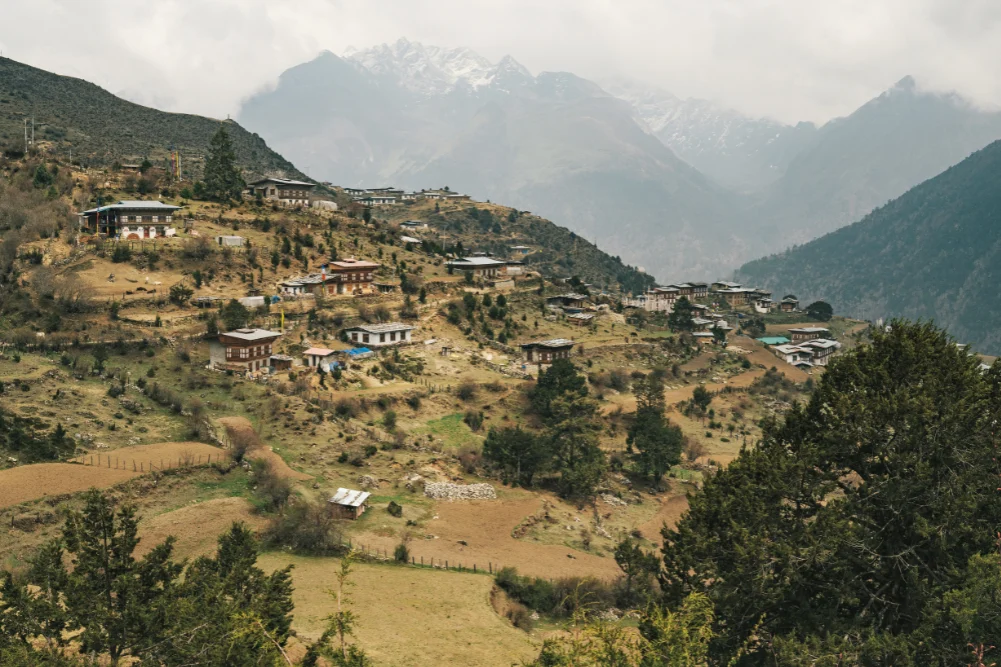
The phenomenon of "burnout" has transitioned from a professional buzzword to a global health crisis, particularly among the "sandwich generation"—those balancing the demands of raising children, managing businesses, and caring for aging parents. For many high-functioning professionals, the traditional vacation of "lounging in linen" has proven insufficient to combat the deep-seated exhaustion of a hyper-connected digital life. This has led to a growing trend of "transformative travel," where individuals seek out environments that offer radical departures from Western capitalistic norms. Bhutan, the secluded Himalayan kingdom situated between India and China, has emerged as a primary destination for this caliber of reset, offering a societal model that prioritizes collective well-being over individualistic gain.
The Geopolitical and Cultural Context of the Last Shangri-La
Bhutan remains one of the world’s most enigmatic nations, having never been colonized and maintaining a policy of isolationism for centuries. With a population of approximately 760,000, the kingdom is a study in controlled modernization. It was not until the 1970s that foreign tourists were permitted entry, and the introduction of television and the internet was delayed until 1999—making it the last nation on Earth to adopt these technologies. This deliberate pacing of development has allowed Bhutan to preserve a culture that is fundamentally at odds with the "always-on" nature of the modern West.
The nation’s geography is as formidable as its culture. Arriving in Bhutan requires landing at Paro International Airport, widely considered one of the most dangerous runways in the world. Situated at an elevation of 2,235 meters and surrounded by 5,500-meter peaks, only a small number of pilots are certified to navigate the visual-only approach. This physical barrier serves as a metaphor for the psychological transition required to enter the country. Upon landing, visitors are greeted not by the commercial clamor of typical international hubs, but by a landscape devoid of billboards and a society where traffic lights are non-existent, even in the capital city of Thimphu.
The Architecture of Stillness: Monastic Life and Spiritual Integration
For travelers seeking a "midlife reset," the journey often begins with an immersion into Bhutan’s deep-rooted Buddhist traditions. The Dodedrak Monastery, a 12th-century institution, serves as a focal point for those looking to understand the country’s spiritual backbone. Accessing such sites often requires significant physical exertion, reflecting the Bhutanese belief that spiritual rewards are earned through effort. A typical ascent to the monastery involves a steep mountain hike that can take anywhere from one to three hours, depending on one’s physical conditioning and the unpredictable Himalayan weather.
Inside the monastery, the atmosphere is defined by the rhythmic chanting of ancient scriptures and the scent of ritual incense. This environment is designed to trigger a physiological "down-regulation" of the nervous system. Observers note that the collective vibration of dozens of monks chanting in unison creates a grounding effect that contrasts sharply with the fragmented attention spans fostered by smartphone usage. This integration of spirituality into daily life is not merely for show; it is a foundational element of the nation’s governance and social fabric.
Laya: A Case Study in Remote Communal Living
The village of Laya represents the extreme of Bhutan’s commitment to traditional life. Perched at 3,800 meters, Laya is one of the most remote inhabited settlements on Earth. It is inaccessible by road, requiring a multi-day trek or a journey via yak and pony. The village is home to the Layap people, an indigenous community of approximately 1,600 individuals who maintain a semi-nomadic lifestyle rooted in yak herding and agriculture.
In Laya, the concept of the "nuclear family" is secondary to the village collective. This is exemplified in their approach to infrastructure and social support; when a family builds a house, the entire village participates in the construction. This reciprocal labor system ensures that no individual is left to struggle in isolation—a stark contrast to the "solo parenting" struggles common in Western urban centers.
The Bumkor Festival, a biennial event held in Laya, showcases the village’s cultural resilience. During the festival, sacred texts are carried in a grand procession through the village, accompanied by traditional flags once used by ancient warriors. The event is characterized by communal singing and dancing that can last for days. For Western observers, the festival highlights a profound sense of belonging and communal identity that is often lost in more "developed" societies.
The Science of Gross National Happiness (GNH)
Bhutan’s most significant contribution to global political discourse is the philosophy of Gross National Happiness (GNH). Introduced by the Fourth King of Bhutan in 1972, GNH posits that sustainable development should take a holistic approach to notions of progress and give equal importance to non-economic aspects of well-being.
The GNH framework is built on four pillars:
- Sustainable and Equitable Socio-Economic Development: Ensuring that growth benefits all citizens.
- Environmental Conservation: Bhutan is the world’s first carbon-neutral country, with its constitution mandating that at least 60% of the land remain under forest cover in perpetuity.
- Preservation and Promotion of Culture: Protecting the unique Bhutanese identity in the face of globalization.
- Good Governance: Creating transparent and accountable institutions.
According to the 2022 GNH Index, nearly half of the population described themselves as "happy" or "very happy," despite the country having a relatively low GDP per capita. This is achieved through policies such as free healthcare and free education for all citizens. In Bhutan, every government policy must pass a "GNH lens" test; if a project is deemed harmful to the environment or the community’s social fabric, it is rejected, regardless of its potential for economic profit.
Environmental Medicine and Traditional Healing
The Bhutanese approach to wellness extends to the physical environment, which is viewed as a form of "natural medicine." Research into "forest bathing" (Shinrin-yoku) and the impact of mountainous landscapes on cortisol levels aligns with the Bhutanese experience of their terrain. The shifting landscapes—from lush forests to gem-blue streams—act as a constant, passive meditation for the inhabitants.
Traditional healing practices are also integrated into the public health system. The Gasa hot springs (Tshachu) are a prime example of this. Unlike the luxury spas of Europe or North America, these springs are communal baths where locals from all walks of life—from students to elderly farmers—soak together. Legend and local belief suggest that 13th-century saints blessed these waters with 128 different medicines. While the scientific community might view these claims with skepticism, the psychological and physiological benefits of thermal soaking and communal interaction are well-documented in sports medicine and psychology.
The Role of Impermanence in Productivity
One of the more jarring aspects of Bhutanese culture for Westerners is the open discussion of death. Bhutanese citizens are encouraged to contemplate their own mortality five times a day. In Western psychology, such a practice might be labeled as "morbid" or a symptom of depression. However, in the Bhutanese context, this mindfulness of impermanence is viewed as a tool for productivity and joy. The logic suggests that by acknowledging the fleeting nature of life, individuals are more likely to prioritize meaningful activities, treat others with kindness, and avoid the "greed" that leads to perpetual dissatisfaction.
This perspective directly challenges the "more is better" mantra of Western consumerism. As noted by village elders in Laya, happiness is often measured by having "enough"—enough rice to eat, a warm place to sleep, and a community to rely on. This "philosophy of enough" stands in opposition to the digital "scrolling" culture that fuels a constant desire for more products, more status, and more experiences.
Implications for the Global Mental Health Crisis
As the world grapples with rising rates of anxiety and depression, Bhutan offers a potential roadmap for systemic change. The "High Value, Low Volume" tourism model, which includes a Sustainable Development Fee (SDF) of $100 per day for visitors, is a deliberate attempt to prevent the "over-tourism" that has plagued places like Venice or Bali. This fee is used to fund the country’s social services, directly linking tourism to the well-being of the local population.
The "Bhutanese Reset" is not merely about taking a vacation; it is an exposure to an alternative way of being. For the overscheduled professional, the lessons of Bhutan—slowing down, embracing community, and defining "enough"—provide a set of tools for long-term resilience. While it is impossible to transplant the Himalayan kingdom’s model entirely into a Western context, the integration of GNH principles into personal life can serve as a powerful antidote to the delirium of modern over-commitment.
In conclusion, Bhutan serves as a living laboratory for a different kind of progress. It is a nation that has chosen to walk a different path, valuing the forest over the factory and the community over the individual. For those who feel "stretched impossibly thin," the kingdom offers more than just a view of the mountains; it offers a view of a life where happiness is not a commodity to be chased, but a practice to be lived.



 Chandra Hamzah
 Gabriela Annisa
 Tatiana Tantri Indah Sari
 Budi Mulyono
 Anjar Salim