
 Tatiana Tantri Indah Sari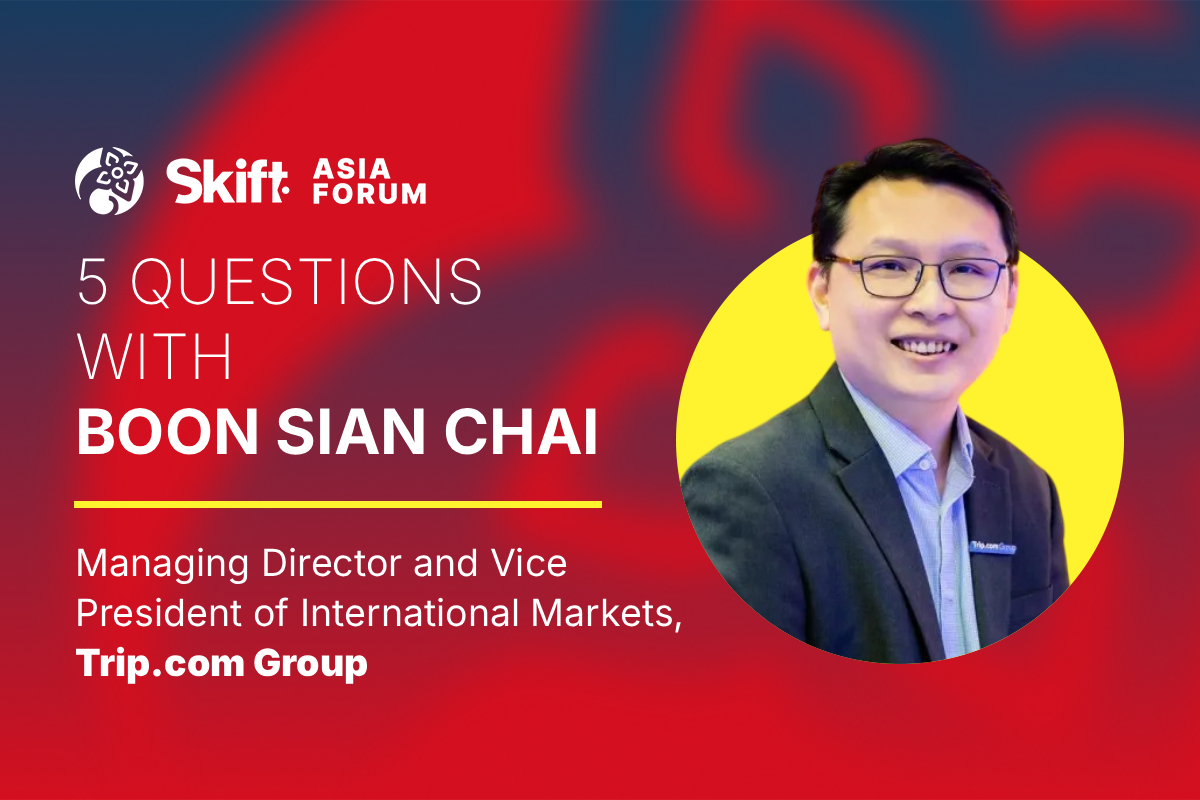
Boon Sian Chai, Managing Director and Vice President of International Markets at Trip.com Group, has asserted that Asia’s travel operators are not merely catching up to the West, but are decisively running ahead, a paradigm shift he will meticulously detail at the highly anticipated Skift Asia Forum 2026 this week. His address is set to challenge conventional perceptions of global travel leadership, leveraging Trip.com’s extraordinary journey from a regional powerhouse to a formidable global entity operating across more than 200 countries. Chai’s insights, honed by navigating a complex global landscape characterized by radically different payment systems, diverse traveler psychologies, and varied cultural expectations, promise to illuminate the strategic blueprint for Asia’s ascendance in the international travel arena.
The Skift Asia Forum, a pivotal annual gathering for the global travel industry, is convening operators, investors, and product leaders to dissect the strategies shaping travel’s evolution in the world’s most dynamic region. Scheduled to take place this week, the 2026 edition serves as a crucial platform for discussing how Asian innovation, particularly in digital transformation and customer experience, is setting new benchmarks for the industry worldwide. Chai’s session, "Can Asia Take Its Travel Playbook Global?", is poised to be a highlight, offering concrete answers rather than speculative hypotheses, grounded in Trip.com’s proven track record of international expansion and localized success.
Trip.com’s Global Trajectory: A Decade of Hyper-localized Expansion
Trip.com Group’s journey is a testament to the power of strategic hyper-localization coupled with robust technological infrastructure. Over the past decade, the company, founded in Asia, has meticulously scaled its operations, adapting its platform to the unique intricacies of each market. This involved not only technical integrations, such as supporting hundreds of local payment gateways, but also a profound understanding of cultural nuances influencing traveler behavior. For instance, the company has had to develop specific marketing strategies and product offerings for markets where multi-generational family travel is paramount, contrasting with regions driven by solo adventure or cultural immersion.
This granular approach has allowed Trip.com to overcome significant barriers to entry, demonstrating that a ‘one-size-fits-all’ global strategy is obsolete in modern travel. The capability to tailor user interfaces, language options, currency conversions, and even the prioritization of search results based on local preferences has been critical. This bespoke approach to market penetration has arguably positioned Trip.com to thrive where other global players have struggled to gain traction without compromising their core identity.
The Rise of Experiential Travel: From Sightseeing to "Skillvenirs"
Chai introduces the compelling concept of "Skillvenirs," defining a new breed of travelers who select destinations based on the specific skill or experience they wish to acquire and bring home. This represents a significant evolution from traditional sightseeing, pivoting towards deeper, more immersive engagement. Examples cited include mastering a tea ceremony in Kyoto, undertaking a culinary class in Bologna, or engaging in a yoga retreat in Bali. This shift signifies a profound transformation in traveler motivation, moving from passive observation to active participation and personal enrichment.
This trend is not merely anecdotal; it is reflected in robust market data. According to Trip.com’s Momentum 2025 report, a staggering 63% of travelers have planned a trip specifically around a live event, indicating a strong appetite for experience-driven itineraries. The economic impact of such events is immense. Major K-POP concerts, such as those by BLACKPINK and SEVENTEEN in Hong Kong in 2026, saw premium tickets vanish within ten seconds, with the entire allocation selling out within an hour on Trip.com. The platform experienced peak traffic exceeding 300,000 users per second, underscoring the colossal demand for such integrated experiences. Similarly, as the exclusive overseas ticketing partner for AnimeJapan 2026 in Tokyo, Trip.com witnessed international ticket sales surge by 697% year-on-year, attracting travelers from 82 countries and regions.
This phenomenon signifies a fundamental redefinition of the travel product. As Chai explains, "We are no longer selling a hotel room; we are selling access to a lifestyle moment." By seamlessly bundling events with essential logistics – flights, accommodation, and local transport – Trip.com transforms a mere transaction into a holistic, unforgettable experience. This integrated approach not only enhances customer satisfaction but also unlocks new revenue streams and strengthens customer loyalty in a highly competitive market.
Distribution Evolution: Integrated Ecosystems and the Creator Economy
The landscape of travel distribution in Asia is undergoing a profound transformation, characterized by the consolidation of the entire traveler journey within integrated digital ecosystems. These platforms act as single gateways, managing everything from initial inspiration and booking to payment and real-time in-destination support. This streamlines the customer experience, reducing friction and increasing conversion rates.
Concurrently, the creator economy has matured significantly within the travel sector. Influence is no longer solely about brand awareness or engagement metrics; it has evolved into a powerful driver of measurable conversion. Trip.com’s "Super World Trip" livestream series exemplifies this shift, generating over 20,000 hotel room nights in a single campaign. This demonstrates that content creators, ranging from social media influencers to specialized travel bloggers, are now indispensable components of the distribution funnel, directly impacting booking volumes.
Furthermore, platform use is increasingly migrating towards AI-supported interfaces. Travelers are moving away from traditional filter-based searches, embracing natural language queries that demand a seamless conversational experience. This makes the quality of AI interaction as crucial as the breadth of inventory. Success in the Asia-Pacific region now heavily relies on the ability to distribute the right product, at the optimal price, through either the authentic voice of a creator or a sophisticated, AI-powered recommendation engine. This dual approach signifies a departure from conventional marketing, requiring a blend of human touch and advanced algorithmic precision.
The Imperative of Hyper-localization: No "Standard Traveler"
One of the most critical lessons learned in scaling across multiple markets, according to Chai, is the undeniable truth that "there’s no such thing as a ‘standard traveler.’" This principle underpins Trip.com’s entire global strategy, emphasizing that global reach demands hyper-localization. A successful strategy in Kuala Lumpur, driven by social media trends and K-pop concerts, cannot be directly transplanted to Tokyo, where travelers might prioritize seasonal nature experiences or traditional luxury cruises.
The demographic and cultural divergences are stark. Middle Eastern travelers often prioritize large family logistics and privacy, necessitating specific accommodation types and service considerations. European travelers, conversely, are increasingly drawn to food-led discovery, major concerts, and international sporting events. This diversity necessitates a profoundly flexible platform capable of localization at every touchpoint: from the user interface and marketing tone to the specific products prioritized in search results.
Beyond technological adaptation, local execution expertise is paramount. This involves addressing region-specific pain points, such as complex visa processes or language barriers, by leveraging a global technology stack. This combination of localized front-end experiences and global back-end efficiency creates a unique competitive advantage that neither purely local players nor purely global, undifferentiated platforms can replicate. The overarching principle, as Chai articulates, is clear: "to be a global leader, you must become the best local player in every market you enter." This insight has profound implications for any business aiming for international scale, stressing that true global leadership is built on a foundation of local mastery.
Evolving Traveler Expectations: Sustainability and Intelligent Support
Modern travelers now present two distinct shifts in expectations compared to just a few years ago: actionable sustainability and real-time intelligent support. Sustainability has transcended being a mere marketing tagline or a "nice-to-have" option; it has become a default expectation. Travelers increasingly view sustainability as a climate-adaptive practice, proactively seeking out cooler destinations, opting for electric vehicle rentals, and choosing lower-carbon accommodation options. This trend reflects a growing consumer consciousness that demands concrete, measurable environmental responsibility from travel providers. Industry reports indicate that over 70% of global travelers now consider sustainable travel options important, a figure projected to rise further by 2030.
Simultaneously, the "book and forget" model is unequivocally obsolete. Travelers expect a digital concierge that accompanies them throughout their entire journey. This includes real-time AI assistance for translation services, efficient disruption management (e.g., flight delays, re-routing), and seamless last-minute bookings. The travel platform must function as a "safety net in their pocket," shifting the focus from the initial point of sale to the ongoing point of experience. Meeting these heightened expectations necessitates substantial investment in advanced AI capabilities and robust in-trip infrastructure, ensuring travelers feel supported and empowered at every stage of their adventure.
Defining Trends for the Next Phase of Travel
Chai identifies three major trends that will define the next phase of travel across the region and, by extension, globally:
-
Autonomous AI Agents: This represents a fundamental shift from AI as a search tool to AI as a comprehensive journey partner. These agents will possess the capability to understand a traveler’s calendar, preferences, and constraints, then proactively book, re-route, and rebook around disruptions without direct human intervention. The realization of this vision hinges on two critical enablers: AI-ready internal systems structured for machine consumption and AI-friendly infrastructure that is open to external agents. This evolution promises unprecedented levels of personalization and convenience, potentially revolutionizing how travel is planned and executed.
-
Travel to Heal (Wellness 2.0): Wellness trips are evolving beyond traditional spa retreats. Travelers are increasingly seeking combinations of physical exertion and mindful recovery. Data from Trip.com reveals a remarkable surge in this niche: searches for "golf & spa resorts" grew by over 300% year-over-year, while "ski & spa" packages rose by 250%. This signifies "Wellness 2.0" in action, encompassing mental longevity programs, bio-hacking retreats, and digital detoxes, all anchored in active, measurable experiences. This trend reflects a broader societal emphasis on holistic well-being and preventative health, integrating seamlessly with travel aspirations.
-
The Low-Tech Paradox: As AI assumes the burden of complexity, a fascinating counter-trend emerges: travelers will pay a premium for authentic, unmediated experiences. The most advanced travel platforms will differentiate themselves not by showcasing more technology, but by expertly curating offline connections. This paradox suggests that while technology simplifies logistics, its ultimate purpose in this context is to enable more profound human experiences, fostering genuine connections with destinations and cultures. It’s about using technology to disappear the technology, allowing the real world to shine through.
The Broader Conversation and Astro-Tourism’s Emergence
Beyond these core trends, Chai introduces a compelling and somewhat unexpected prediction: the rapid ascent of astro-tourism and space-adjacent travel from a niche novelty to a fast-growing segment. While not referring to commercial moon flights, he anticipates a surge in travelers adopting a "space-faring mindset," transforming extreme geography and astronomical phenomena into the new bucket list. Trip.com data already indicates a search interest for space travel experiences that has surged over 600%, pointing towards a burgeoning market for stargazing tours, aurora borealis expeditions, and visits to space observatories. This trend suggests a human desire for awe-inspiring, boundary-pushing experiences, facilitated by increasingly accessible travel options.
The Skift Asia Forum 2026, by bringing together such visionary leaders and discussions, underscores Asia’s pivotal role in shaping the future of global travel. Chai’s session, in particular, contributes significantly to this broader conversation, demonstrating how the models and innovations pioneered by Asian platforms are not just relevant within the region but are increasingly defining the global playbook for travel success. The implications for Western travel operators are clear: to remain competitive, they must closely observe, understand, and adapt to the rapid advancements originating from Asia, embracing hyper-localization, experiential design, and cutting-edge AI integration as fundamental pillars of their future strategies. The era of Asia leading the charge in travel innovation has definitively arrived.




 Chandra Hamzah
 Budi Mulyono
 Anjar Salim
