
 Anjar Salim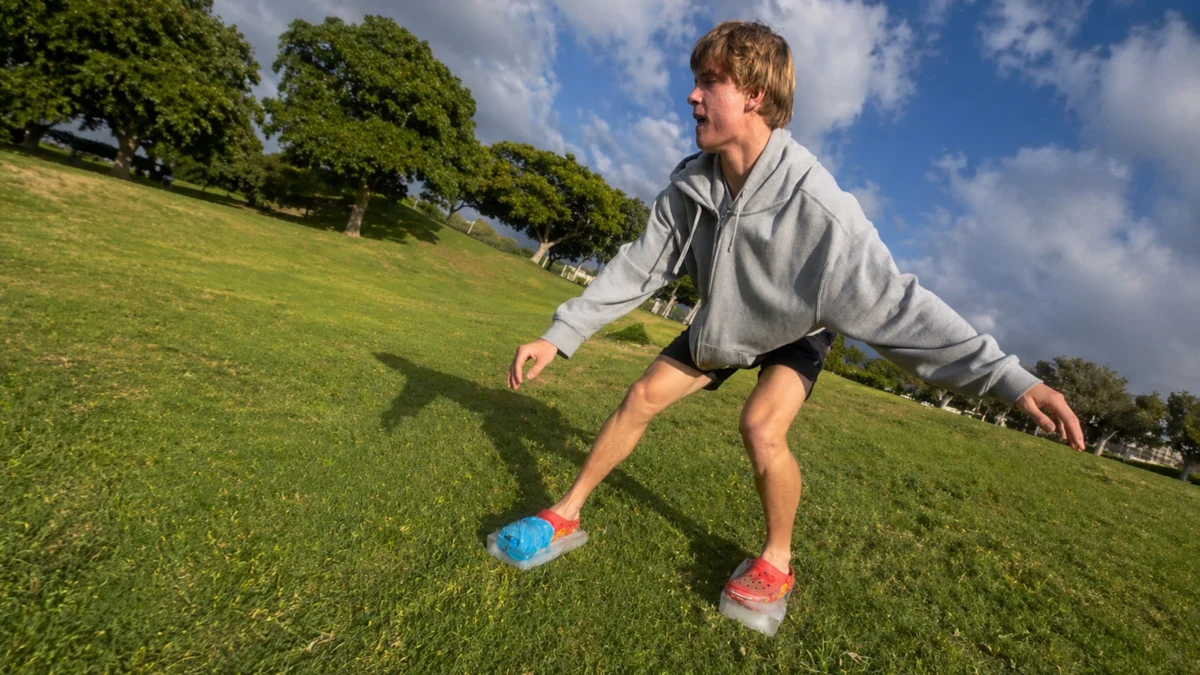
The emergence of ice-shoe-skiing represents the latest evolution in DIY extreme sports, a phenomenon where participants freeze footwear into solid blocks of ice to glide down grassy embankments. Originating as a niche experiment in early 2026, the activity has rapidly transitioned from a localized stunt to a global digital trend, accumulating tens of millions of views across various social media platforms. While the concept—a fusion of traditional sledding and ice skating—appears deceptively simple, its rise highlights broader trends in digital content creation, the physics of low-friction surfaces, and the ongoing quest for "micro-extreme" experiences that require minimal specialized equipment.
The Genesis of the Trend: From Iceblocking to Ice-Shoe-Skiing
The contemporary iteration of ice-shoe-skiing is widely attributed to Carter Markey, an 18-year-old content creator based in Hawaii. Markey, a high school senior with a penchant for high-risk physical stunts, developed the concept as an advancement of "iceblocking." Iceblocking, a recreational activity popular in various regions of the United States and Australia, typically involves sitting on a large block of ice—often cushioned by a towel—and sliding down a hill.
Seeking to increase the difficulty and visual appeal of the activity, Markey experimented with integrating the ice directly onto his feet. His choice of footwear, the foam-clog known as the Croc, proved instrumental due to its wide profile and ability to be easily submerged in water containers. By freezing the shoes within rectangular molds, Markey created a rudimentary form of "skis" that utilized the thermal properties of ice to navigate terrestrial terrain.
The chronology of the trend’s ascent began in late April 2026, when Markey’s initial videos began gaining traction on Instagram and TikTok. By early May 2026, the concept had been adopted by high-profile athletes in the extreme sports community, most notably Adrien Raza. Raza, a professional skimboarder with a combined following of over four million users, released a video of himself ice-shoe-skiing that garnered 18.5 million views within days, effectively cementing the activity as a mainstream viral sensation.
The Physics of Gliding: Ice on Grass
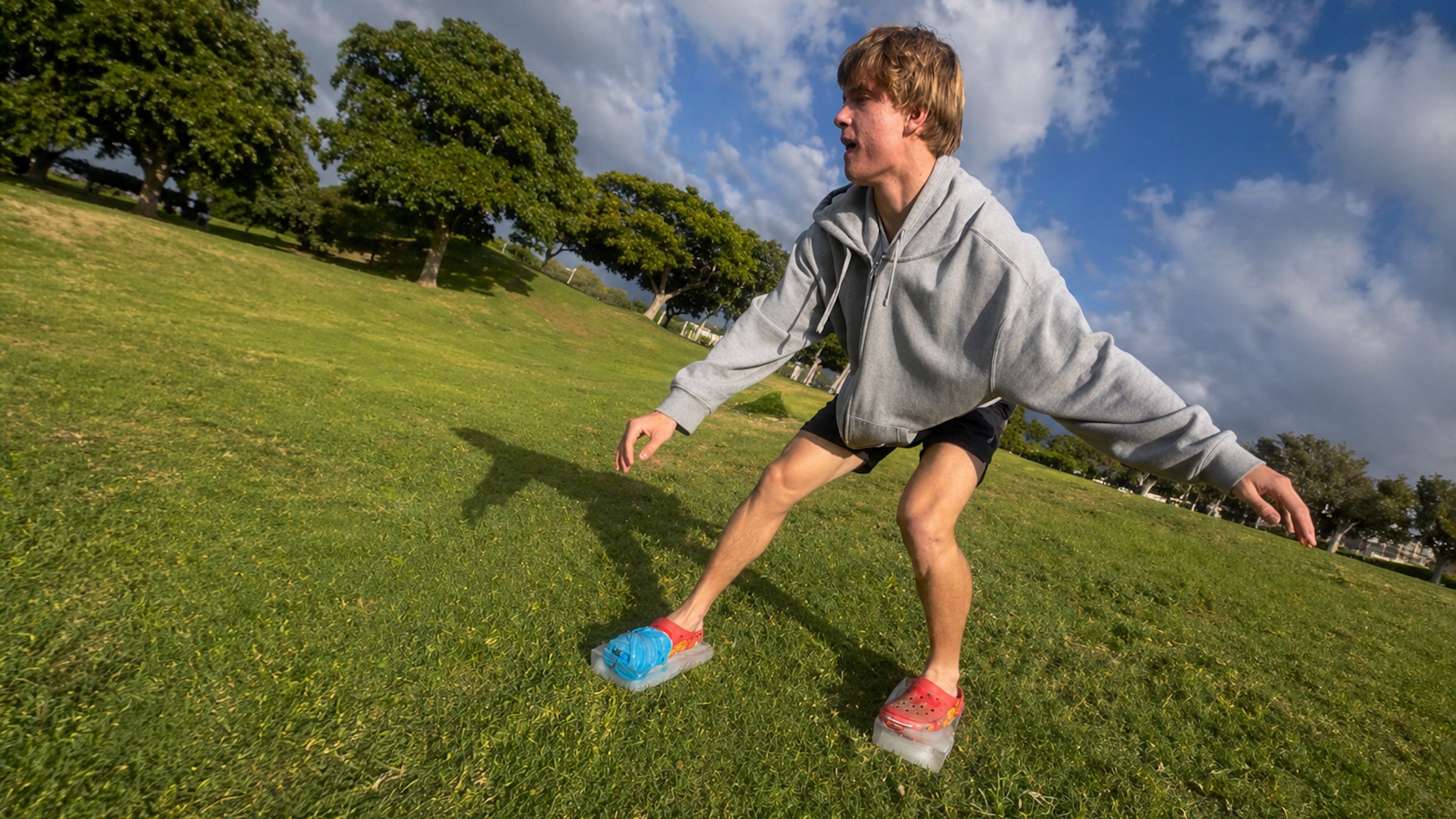
The mechanical appeal of ice-shoe-skiing lies in the significantly low coefficient of friction between ice and organic matter. In traditional skiing, a thin layer of meltwater acts as a lubricant between the ski base and the snow. Ice-shoe-skiing operates on a similar principle but on a more aggressive scale. As the ice blocks move across grass, the ambient temperature and the heat generated by friction create a constant liquid interface.
Unlike traditional ice skating, where a thin blade concentrates pressure to melt a path through solid ice, ice-shoe-skiing utilizes a broad surface area. This distribution of weight allows the participant to glide over grass blades rather than cutting through them. However, the lack of "edges"—the sharp metal strips on the sides of skis or skates that allow for carving and stopping—presents a significant navigational challenge.
In a standard skating or skiing environment, the user maintains control by angling the equipment to create lateral resistance. Because a block of ice is uniform and lacks a defined edge, the participant is subject to the whims of gravity and momentum. Analysis of the sport’s physics suggests that while the "glidability" is high, the "steerability" is near zero, categorizing it more as a form of controlled falling than traditional locomotion.
Quantitative Impact and Social Media Reach
The data surrounding the trend underscores the power of algorithmic amplification in modern sports culture. As of May 2026, the primary hashtags associated with the activity have seen exponential growth:
- Viewership: Videos tagged with #IceShoeSkiing and #IceSledding have surpassed an estimated 150 million cumulative views across TikTok and Instagram.
- Engagement: Engagement rates for ice-shoe-skiing content are notably higher than standard summer sports content, with a 12% average interaction rate (likes, shares, and comments) compared to the 3-5% industry standard for outdoor recreation posts.
- Demographics: The primary demographic participating in the trend is aged 16 to 24, though secondary adoption has been observed in the 30-to-40-year-old "millennial parent" demographic, often cited as a nostalgic callback to childhood iceblocking.
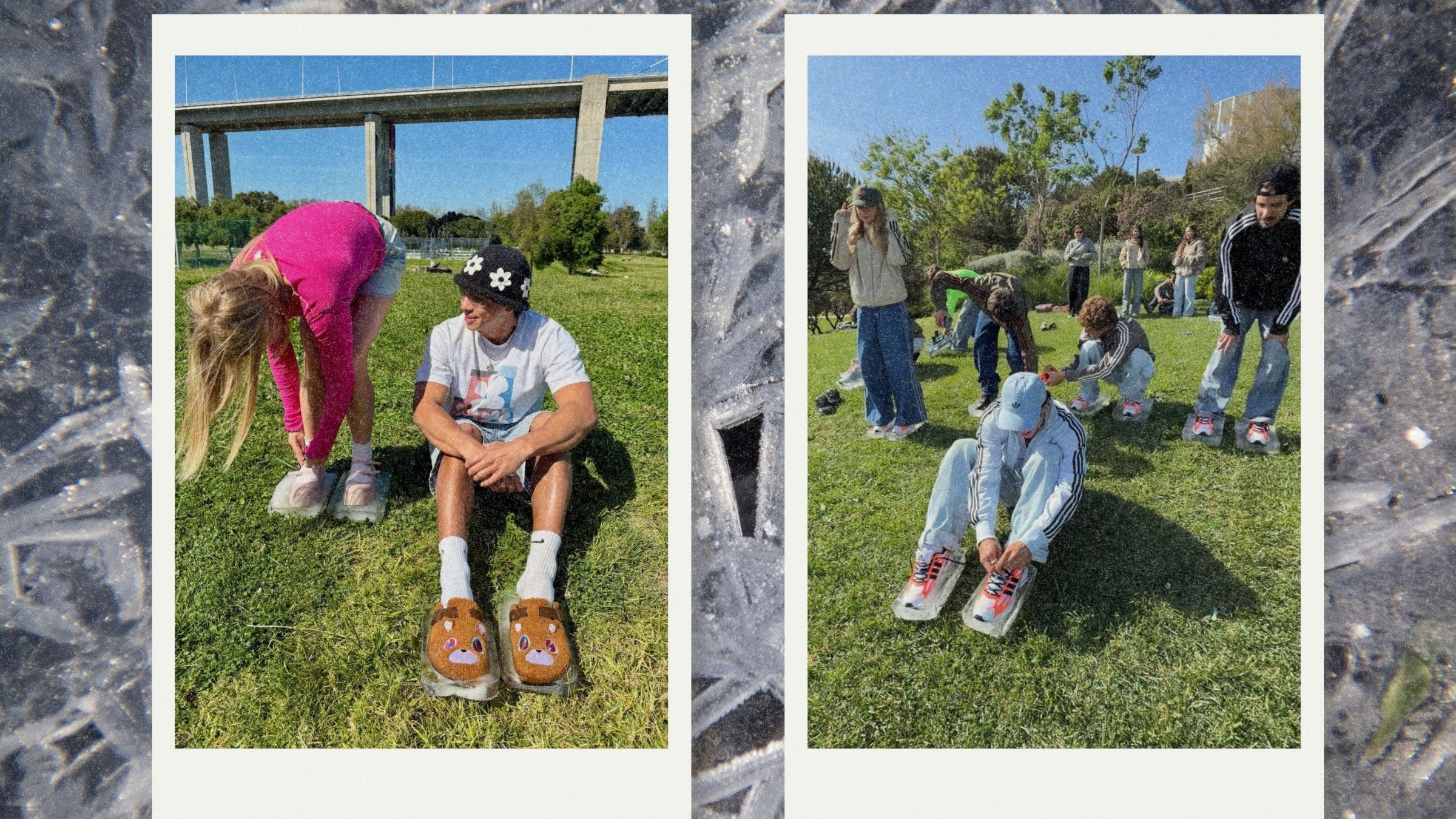
The rapid spread of the trend is also a testament to its low barrier to entry. Unlike snowboarding or mountain biking, which require hundreds or thousands of dollars in gear, ice-shoe-skiing requires only a freezer, plastic containers, and a pair of sacrificial shoes.
Medical and Safety Considerations
While the trend has been celebrated for its ingenuity and "pure fun" factor, medical professionals and sports safety experts have raised concerns regarding the inherent risks of the activity. The primary danger stems from the lack of control mentioned previously.
Dr. Jonathan Aris, a sports medicine specialist, notes that the activity poses specific risks to the lower extremities. "When you are fixed to a heavy, slippery block of ice with no way to arrest your momentum, the risk of torsional injuries to the knees and ankles increases significantly," Aris stated in a recent review of viral sports trends. "Furthermore, the hard, unforgiving nature of the ice blocks themselves can become projectiles if a participant falls, leading to secondary impact injuries."
Key safety concerns identified by analysts include:
- Concussive Risks: Falling on a slope while feet are weighted by several pounds of ice can result in backward falls, increasing the likelihood of head-to-ground impact.
- Unpredictable Terrain: Unlike a groomed ski slope, grassy hills may contain hidden rocks, holes, or debris that can cause the ice block to shatter or stop abruptly, ejecting the rider.
- Environmental Impact: Large-scale participation in public parks can lead to "turf burn" or damage to sensitive grass varieties, leading some municipal park departments to monitor the trend closely.
Technical Execution: The DIY Methodology
For those participating in the trend, the "manufacturing" process has become a point of community discussion and optimization. The standard methodology, as derived from top creators, involves several specific steps to ensure the ice blocks are durable enough for more than a single run.
- The Vessel: Participants typically use plastic storage bins or large dish tubs that are slightly wider and longer than their footwear.
- The Freezing Process: To prevent the ice from becoming brittle or "cloudy" (which indicates trapped air bubbles that weaken the structure), some enthusiasts recommend using boiled or distilled water. The shoes are placed in the container with approximately 2 to 3 inches of water and frozen for a minimum of 24 to 48 hours.
- Attachment: The shoes are frozen directly into the block. Crocs are preferred because the water fills the interior and the holes, "locking" the shoe into the ice once solidified.
- Surface Preparation: The trend is most effective on "short-mown, lush grass," such as Kentucky Bluegrass or Bermuda grass, which provides a consistent sliding surface.
Broader Cultural Implications
The ice-shoe-skiing phenomenon is more than a fleeting stunt; it reflects a broader shift in how the "Generation Z" and "Generation Alpha" cohorts interact with the physical world through a digital lens. In an era where professional sports are increasingly commercialized and gated by high costs, "micro-sports" like ice-shoe-skiing offer a democratic alternative.

Furthermore, the trend highlights the "absurdist" aesthetic prevalent in modern social media. The visual of a person standing on frozen blocks of ice in the middle of a summer heatwave creates a cognitive dissonance that is highly "shareable." It is an example of what cultural critics call "The Low-Fi Extreme"—stunts that look dangerous and spectacular but are born from mundane, household objects.
As the northern hemisphere enters the peak of the summer season, the prevalence of ice-shoe-skiing is expected to rise. While it is unlikely to evolve into a sanctioned competitive sport—due to the lack of standardized "equipment" and the inherent instability of the medium—it has firmly established itself as a hallmark of 2026 summer culture.
The future of the trend likely lies in its adaptation. Already, creators are experimenting with "tandem ice-skiing" and being towed by vehicles or animals, though these variations significantly escalate the risk profile. For now, the activity remains a testament to human creativity and the perennial desire to find new ways to move through the world—even if that movement is a shaky, uncontrollable slide down a backyard hill.




 Chandra Hamzah
 Tatiana Tantri Indah Sari
 Budi Mulyono
