
 Gabriela Annisa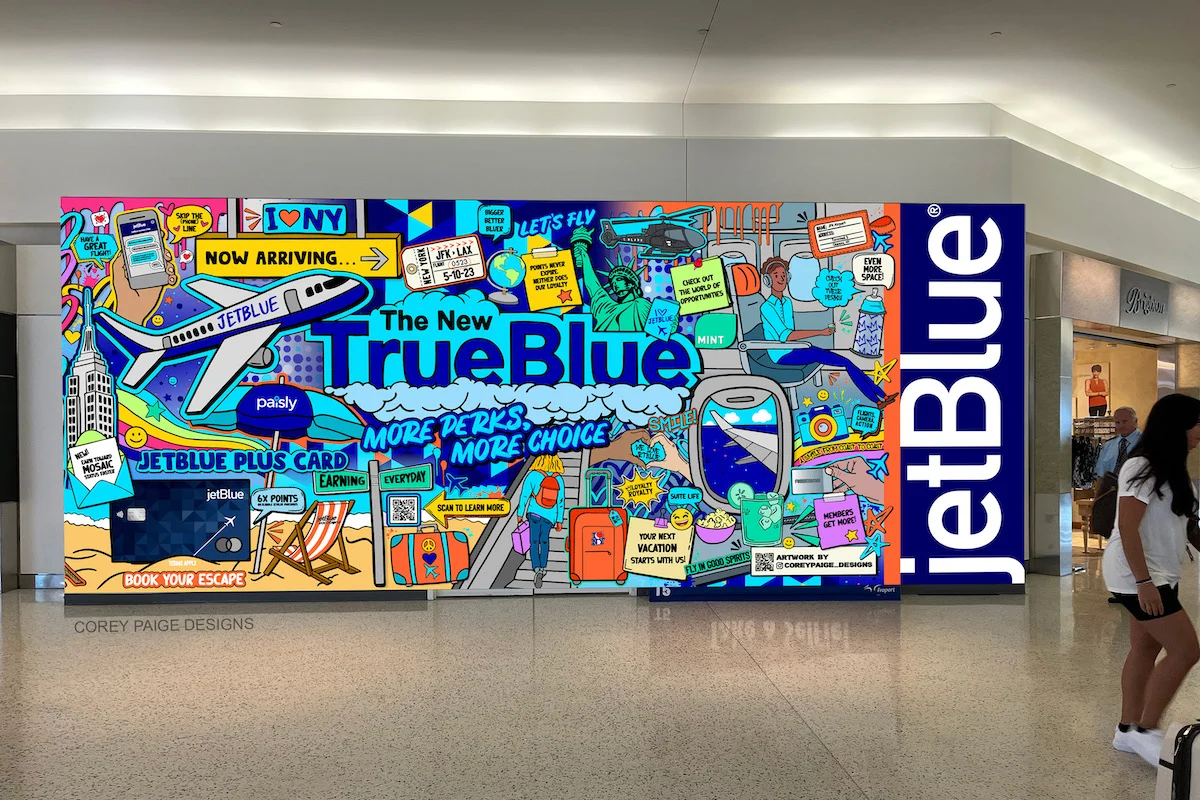
JetBlue Airways, a carrier once celebrated for its innovative approach and customer-centric model, reported its sixth consecutive year of losses in the first quarter of 2026, signaling persistent challenges for the New York-based airline. The company posted a negative 10% operating margin for the quarter, a deterioration from the negative 8% recorded in the same period last year, despite the inclusion of the Easter travel period which typically boosts revenues. This bleak financial update comes as Norwegian Air Shuttle, a former long-haul low-cost pioneer, continues its impressive post-restructuring turnaround, achieving significantly improved results in its latest quarterly earnings.
JetBlue’s Enduring Financial Headwinds and Strategic Adjustments
JetBlue’s extended period of unprofitability, spanning every year of the 2020s, underscores a complex interplay of internal strategic decisions and external market pressures. The airline’s leadership, including CEO Joanna Geraghty, expressed confidence in its "JetForward" plan, an initiative designed to transform the business and guide it towards financial stability. However, the first quarter’s performance suggests that the path to recovery remains arduous, exacerbated by unforeseen market disruptions.
A primary culprit identified by JetBlue management is the surge in fuel prices. The airline reported paying an average of $2.96 per gallon for jet fuel in Q1 2026, a rate notably higher than many of its major U.S. competitors. For context, Delta Air Lines, benefiting from its refinery operations, paid $2.62, while United Airlines and Southwest Airlines recorded $2.78 and $2.73 per gallon, respectively. This disparity places JetBlue at a competitive disadvantage, particularly given its limited hedging strategies compared to some peers. While Alaska Airlines also faced elevated fuel costs at $2.98 per gallon due to its West Coast exposure and reliance on Singapore-sourced fuel, JetBlue’s situation highlights broader vulnerabilities in its procurement and operational structure. The company’s initial planning for the year was based on a Brent crude oil price assumption of $63 per barrel, a stark contrast to the actual Q1 average of $112 per barrel, effectively doubling its projected fuel expenses.
Beyond fuel, JetBlue’s operational environment presented additional hurdles. The airline’s significant concentration in the U.S. Northeast makes it particularly susceptible to adverse weather events, such as the snowstorms that impacted major hubs like Boston during the quarter. Such disruptions not only lead to flight cancellations and delays but also incur substantial operational costs, which JetBlue quantified as contributing approximately four points of pressure to its year-over-year operating expense (CASM ex-fuel) increase of 6.6%. Furthermore, widespread TSA disruptions during the quarter added another layer of complexity, although their impact was likely more evenly distributed across the industry.
Competitive Landscape and Strategic Responses
The competitive dynamics within the U.S. domestic market also played a role in JetBlue’s struggles. The airline acknowledged potential impacts from the resurgence of Southwest Airlines, which recorded a "miraculous turnaround" in Q1 2026, achieving a 5% operating margin and matching Delta’s profitability. Southwest’s recent reforms, including the introduction of assigned seating and premium fare options, may have drawn some customers away from JetBlue, particularly on overlapping routes in the Northeast to Florida corridor. Additionally, the aggressive pricing strategies of distressed ultra-low-cost carriers like Spirit Airlines, especially in key markets such as Orlando and Fort Lauderdale, created intense fare competition that likely eroded JetBlue’s unit revenues.
JetBlue’s strategic blueprint, JetForward, aims to address these challenges by enhancing its premium offerings, strengthening its loyalty program, and optimizing its network. The airline is actively adding domestic first-class cabins to its fleet and recently opened an airport lounge at JFK, with plans for a Boston lounge. Efforts are also underway to make the TrueBlue loyalty program more lucrative, leveraging its nascent alliance with United Airlines – a looser partnership formed after the dissolution of the Northeast Alliance (NEA) with American Airlines. This United alliance is seen as crucial for expanding JetBlue’s network reach and providing loyalty benefits on routes it does not operate, such as to Asia, an example cited by management during their earnings call.
However, JetBlue faces a delicate balancing act with its capacity strategy. While trimming capacity is a common industry response to high fuel prices, JetBlue is reluctant to cut significantly in two key areas: Fort Lauderdale and JFK Airport. Fort Lauderdale is a designated "focus city" where JetBlue is making substantial investments, driving all of its Q2 capacity growth. The strategy here is explicitly to build a leadership position, with some analysts inferring an intent to exert pressure on Spirit Airlines, a major competitor in that market. This aggressive growth, however, means some new routes may initially operate at a loss. At JFK, slot restrictions compel JetBlue to maintain a certain level of operations to avoid forfeiting valuable takeoff and landing rights, limiting its flexibility to optimize capacity based purely on profitability.
The company’s balance sheet is also under scrutiny. JetBlue’s Chief Financial Officer conceded that the balance sheet "isn’t where we want it to be." While management assured investors that the airline possesses sufficient assets for collateral and is intensifying cost-cutting measures, including a hiring freeze, the sustained losses and negative cash flows present a considerable challenge to its financial health and long-term investment capacity. The airline’s journey from an innovative disruptor to a struggling hybrid carrier has been marked by a series of strategic pivots, including the ambitious but ultimately thwarted attempt to acquire Spirit Airlines due to regulatory opposition. The dissolution of the NEA also forced a significant network re-evaluation, further complicating its operational and financial outlook.
Norwegian’s Remarkable Turnaround and European Resilience
In stark contrast to JetBlue’s struggles, Norwegian Air Shuttle is celebrating a significant recovery, reporting very encouraging first-quarter results that highlight a successful post-bankruptcy restructuring. The airline, once known for its ambitious but ultimately unsustainable long-haul, low-cost model that led to bankruptcy during the COVID-19 pandemic, has transformed into a more focused and profitable regional and short-haul European carrier.
For Q1 2026, Norwegian reported a negative 7% operating margin, a substantial improvement from the negative 13% recorded in the first quarter of the previous year. While a loss in the traditionally weak winter quarter for leisure-focused airlines operating in the Nordic region is expected, this improvement underscores the effectiveness of its strategic overhaul. The core Norwegian operation reported a negative 11% margin, an improvement from negative 17% last year. Crucially, Widerøe, the regional airline acquired by Norwegian in 2023, posted a positive 2% operating margin. Widerøe’s performance is particularly noteworthy given its less seasonal business model, catering more to corporate and essential regional travel within Norway, providing valuable diversification and stability to the group.
Norwegian’s recovery is attributable to several factors. The post-bankruptcy restructuring involved a radical simplification of its business model, shedding its unprofitable long-haul routes to destinations like Oakland and Bangkok, and focusing on its core Nordic and European short-haul network. This strategic pivot, coupled with stringent cost-cutting measures and a re-evaluation of its fleet, has significantly improved its operational efficiency and financial resilience.
Favorable currency dynamics have also provided a tailwind, with a stronger Norwegian Krone against the U.S. Dollar aiding on the cost side, particularly for dollar-denominated expenses like aircraft leases and fuel. The airline has also benefited from its fuel and currency hedging strategies, which have provided a buffer against the recent volatility in global commodity markets, a stark contrast to JetBlue’s more exposed position.
On the operational front, Norwegian has experienced reliable aircraft deliveries from Boeing, particularly for its 737 MAX fleet. This consistent fleet expansion and modernization allow for better capacity planning and improved fuel efficiency, contributing to its overall cost management.
Market Opportunities and Demand Shifts in Europe
Norwegian has also capitalized on market opportunities arising from competitors’ challenges. Several European rivals, including SAS and Lufthansa, have been forced to cut capacity aggressively in response to high fuel prices and operational constraints. SAS, undergoing its own bankruptcy restructuring and facing labor disputes, canceled approximately 1,000 flights in April alone. Lufthansa also announced significant flight reductions, totaling around 20,000 flights over an extended period. These capacity reductions create openings for agile carriers like Norwegian to gain market share, particularly in key Nordic and European leisure destinations. Norwegian management noted that these cancellations were "probably having an effect" on its performance, allowing it to absorb demand.
Demand patterns in Europe have also played into Norwegian’s favor. The airline observed a shift in customer preferences, with many European travelers opting for Southern Mediterranean destinations instead of traditional Middle Eastern hubs like Dubai, Tel Aviv, or Doha, likely due to ongoing geopolitical tensions. This re-routing of leisure travel has bolstered demand for Norwegian’s network, which is heavily geared towards popular European sun and beach destinations.
Further enhancing its financial outlook, Norwegian’s cost savings programs are yielding results, and its loyalty program continues to perform well. The integration with Widerøe is progressing, with merger synergies beginning to materialize, such as the ability to book combined Norwegian and Widerøe itineraries on its website, with app integration forthcoming. The airline is also evaluating additional lease extensions for its aircraft, a positive indicator that its existing fleet can be profitably utilized for sustained growth.
Broader Aviation Trends and Outlook
The contrasting fortunes of JetBlue and Norwegian highlight the divergent paths of recovery and ongoing challenges within the global aviation industry. While strong passenger demand remains a common thread across both continents, the ability of airlines to effectively manage costs, particularly fuel, and adapt to competitive landscapes dictates their financial health.
In Europe, the mood among airline executives, despite caution, remains optimistic regarding demand. At a recent aviation summit in Berlin, industry leaders from Wizz Air, Condor, and Ryanair reiterated that while fuel prices are unhelpful, consumer resistance to higher fares remains low, ensuring robust revenue generation. Concerns about jet fuel supply, initially heightened by geopolitical events, appear to have largely subsided in Europe, with carriers like Norwegian and Wizz Air expressing confidence in securing necessary fuel volumes.
For JetBlue, the immediate future hinges on the accelerated execution of its JetForward plan and the stability of fuel prices. The airline’s journey back to sustained profitability will require not only internal efficiencies but also a more favorable external environment, particularly concerning fuel costs and a balanced competitive landscape. The broader implications of continued losses for JetBlue could include further scrutiny from investors, potential limitations on expansion, and ongoing pressure to redefine its position in the increasingly polarized U.S. market, caught between ultra-low-cost and legacy network models. The specter of potential government intervention, as discussed in the context of a hypothetical Spirit Airlines bailout, further underscores the complex and often politically charged environment in which U.S. carriers operate, adding another layer of uncertainty to JetBlue’s strategic calculus.
Norwegian, on the other hand, stands as a testament to the power of radical restructuring and focused execution. Its success demonstrates that shedding ambitious but unprofitable ventures, streamlining operations, and capitalizing on regional market strengths can pave a clear path to recovery, even amidst global economic volatility. The airline’s strategic choices, from fleet modernization to leveraging synergistic acquisitions, position it for continued growth and profitability in the dynamic European aviation market. The coming quarters will reveal whether JetBlue can emulate Norwegian’s turnaround, finding its own stable and profitable niche in the fiercely competitive North American skies.




 Anjar Salim
 Chandra Hamzah
 Tatiana Tantri Indah Sari
 Budi Mulyono

