
 Diana Nuri Rohmawati
The Capital One Venture X Business credit card has emerged as a significant contender in the premium corporate rewards market, challenging the long-standing dominance of established players like American Express and Chase. Designed specifically for small-to-medium enterprises (SMEs) and high-spending entrepreneurs, the card bridges the gap between high-end travel perks and a simplified reward structure. With an annual fee of $395, the product is positioned as a "value-premium" offering, providing a suite of benefits that often exceed the out-of-pocket cost for the cardholder. The card’s primary value proposition rests on its uncapped 2x miles earning rate on all purchases, a $300 annual travel credit, and an anniversary bonus of 10,000 miles, creating a framework where the effective annual fee can be reduced to zero or even a net positive for the user.
The Evolution of Capital One in the Premium Travel Space
The launch of the Venture X Business represents a strategic pivot for Capital One, which historically focused on the "subprime" and mid-market consumer segments. The journey began in earnest in 2021 with the release of the consumer-facing Venture X card, which disrupted the industry by offering premium lounge access and high-value credits for a lower fee than the Chase Sapphire Reserve or the American Express Platinum Card. Following the success of the personal version, Capital One transitioned this philosophy to the business sector in late 2023, replacing the older Spark-branded premium products with the Venture X Business.
This chronology reflects a broader industry trend toward "premiumization." Financial institutions have observed that business owners are increasingly willing to pay higher annual fees in exchange for "soft" benefits, such as airport lounge access and primary rental car insurance, which mitigate the stresses of frequent corporate travel. By integrating these features with a "no preset spending limit" model, Capital One has targeted businesses that require high liquidity and flexible purchasing power for inventory, marketing, and logistics.
Core Features and Financial Data Analysis
To understand the card’s market position, one must analyze the specific financial incentives provided to the cardholder. The $395 annual fee is significantly lower than the $695 charged by the American Express Business Platinum card. However, the Venture X Business provides several "offsetting" credits that redefine its cost-to-value ratio.
The $300 Annual Travel Credit: This credit is applied to bookings made through the Capital One Travel portal. While some travel purists prefer booking directly with airlines to maintain elite status benefits, the portal—powered by the travel-tech firm Hopper—offers price drop protection and price matching. For a business owner who spends at least $300 annually on flights or hotels, this credit effectively reduces the card’s cost to $95.
The 10,000-Mile Anniversary Bonus: Starting on the first anniversary of account opening, cardholders receive 10,000 bonus miles. In the industry, Capital One miles are generally valued at 1.0 cent per mile when redeemed for travel through the portal or as a statement credit for travel purchases. This adds another $100 in value, bringing the total annual credits to $400—five dollars more than the annual fee itself.
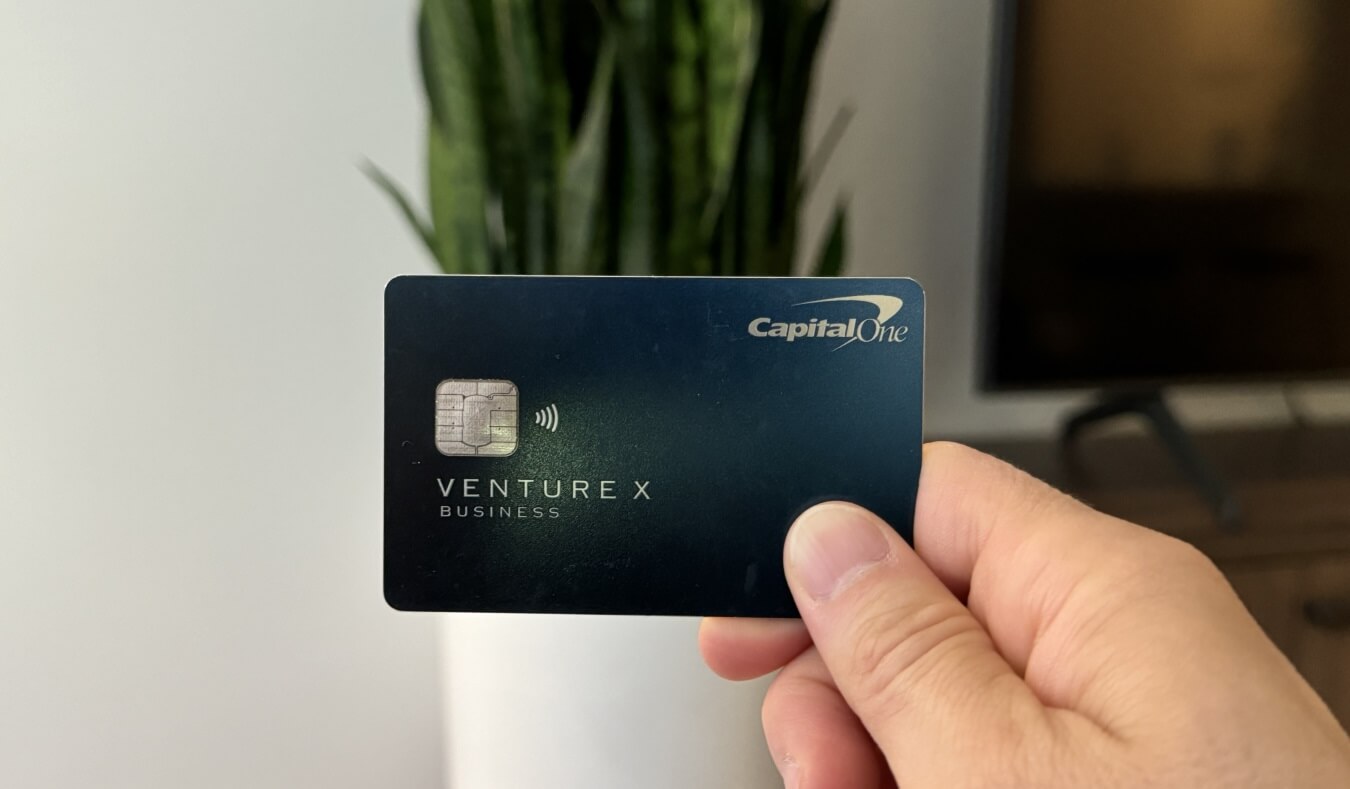
The Earning Structure: The card offers 10x miles on hotels and rental cars booked via the portal, 5x miles on flights booked via the portal, and a flat 2x miles on all other business expenses. For businesses with significant "non-category" spend—such as legal fees, contractor payments, or inventory—the 2x base rate outperforms cards that only offer 1 cent per dollar on general purchases.
The Mechanics of Mile Redemption and Transfer Partners
The utility of a rewards card is determined by the flexibility of its points. Capital One miles are no longer restricted to the bank’s own ecosystem; they can be transferred to over 15 airline and hotel loyalty programs, usually at a 1:1 ratio. This allows business owners to leverage "arbitrage" in the travel market. For instance, transferring miles to programs like Air France-KLM Flying Blue or British Airways Executive Club can often result in business class flight redemptions valued at 2 to 4 cents per mile, significantly higher than the standard 1-cent baseline.
Current transfer partners include:
- Aeromexico Rewards
- Air Canada Aeroplan
- Air France-KLM Flying Blue
- Avianca LifeMiles
- British Airways Executive Club
- Cathay Pacific Asia Miles
- Emirates Skywards
- Etihad Guest
- EVA Air Infinity MileageLands
- Finnair Plus
- Qantas Passenger Network
- Singapore Airlines KrisFlyer
- TAP Air Portugal Miles&Go
- Turkish Airlines Miles&Smiles
- Virgin Red
- Accor Live Limitless (2:1 ratio)
- Choice Privileges
- Wyndham Rewards
Infrastructure and Lounge Access
Beyond the financial credits, the Venture X Business provides a suite of travel services aimed at the frequent flyer. This includes a $100 credit for Global Entry or TSA PreCheck every four years, which facilitates faster transit through domestic security and international customs.
The most significant "lifestyle" perk is the lounge access. Cardholders receive unlimited access to the Capital One Lounge network, which currently includes high-end locations at Dallas/Fort Worth (DFW), Washington-Dulles (IAD), and Denver (DEN), with more locations in development. These lounges have received critical acclaim for providing chef-curated meals, luggage lockers, and relaxation rooms, often surpassing the quality of traditional domestic airline lounges. Furthermore, the card provides a full Priority Pass Select membership, granting access to over 1,300 airport lounges globally, and access to Plaza Premium Lounges. This multi-layered access ensures that business travelers have a workspace or a place to rest regardless of the airport or airline they are using.
Strategic Implications for Small Business Management
For small business owners, the Venture X Business serves as more than just a payment tool; it acts as a mechanism for overhead reduction. By utilizing the 2x miles on every dollar spent, a business with $500,000 in annual expenses would earn 1,000,000 miles. When redeemed strategically, these miles can cover dozens of domestic flights or several international business class trips for the owner or employees, effectively removing "travel" as a line item from the company’s budget.
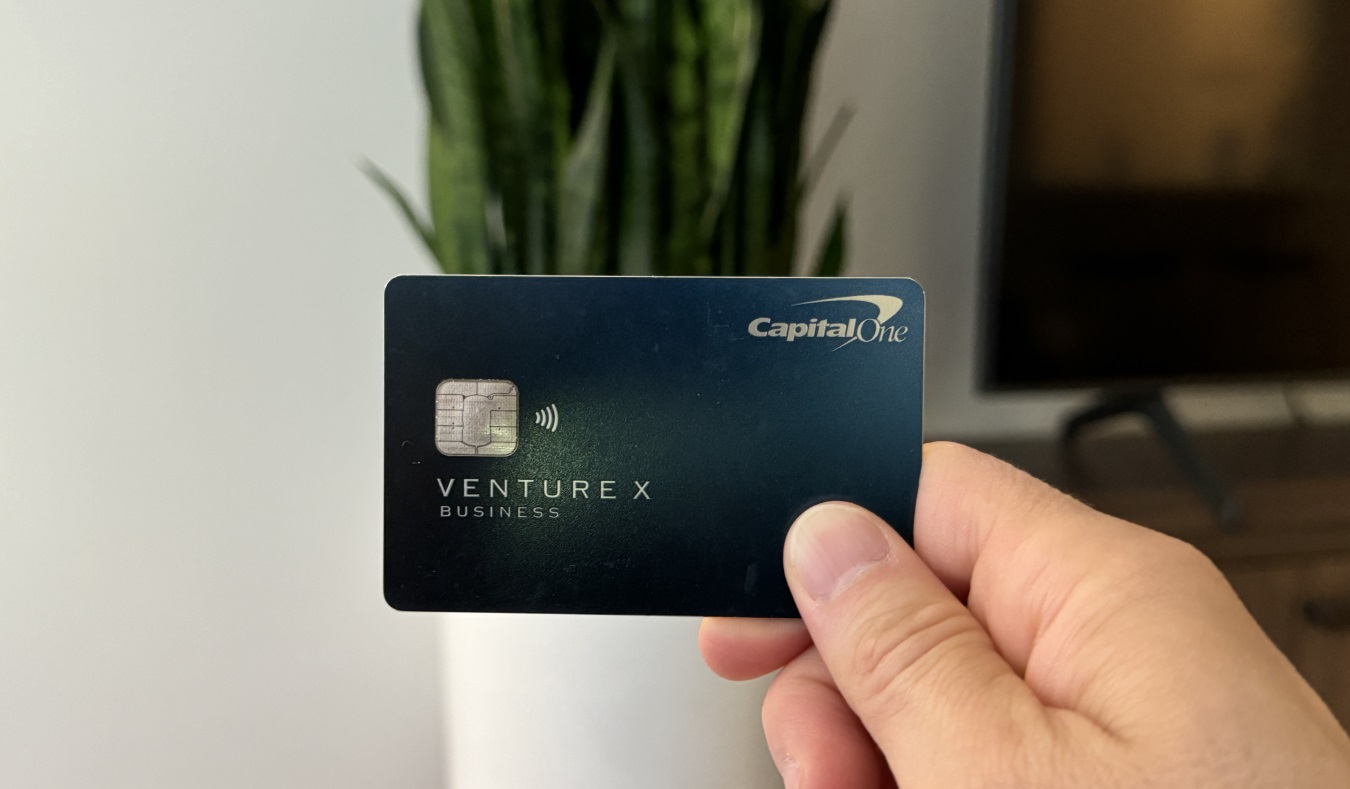
The card also addresses the issue of employee spending. Business owners can add employee cards at no additional cost, and all miles earned on those cards accrue to the primary business account. This allows for the centralization of rewards while maintaining oversight of employee expenditures through the Capital One mobile app and desktop portal.
Market Response and Competitive Analysis
Industry analysts have noted that the Venture X Business is a direct response to the "complexity fatigue" many business owners feel with other cards. The American Express Business Platinum, while feature-rich, requires users to track various monthly and quarterly credits (such as Dell credits, wireless credits, and airline fee credits) to justify its $695 fee. In contrast, the Capital One offering is seen as a "set-it-and-forget-it" card.
"The market is seeing a shift toward simplicity," says one fintech analyst. "Business owners are busy. They don’t want to spend three hours a month auditing their credit card statement to see if they triggered a specific $20 credit. They want a high base earn and a few high-value, easy-to-use perks. That is where Capital One is winning."
However, the card is not without its barriers to entry. The "welcome offer"—often reaching 150,000 miles or more—typically requires a high spend threshold, such as $30,000 within the first three months. This requirement filters the applicant pool toward established businesses with consistent cash flow, rather than new startups or low-overhead freelancers.
Broader Impact and Future Outlook
The success of the Venture X Business is likely to trigger further innovation among its competitors. As Capital One continues to expand its physical footprint with more airport lounges and "Landing" dining concepts, other banks may be forced to lower their annual fees or increase their base earning rates to remain competitive.
Furthermore, Capital One’s pending acquisition of Discover Financial Services could have long-term implications for the Venture X Business. If the deal is finalized, Capital One may move its premium cards onto its own payment network, potentially changing the "Visa Infinite" protections currently associated with the Venture X Business. For now, however, the card remains a Visa Infinite product, providing cardholders with top-tier protections including primary rental car insurance, trip cancellation/interruption insurance, and extended warranty on purchases.
In summary, the Capital One Venture X Business Credit Card represents a sophisticated blend of high-end travel utility and straightforward financial rewards. Its entry into the market has democratized access to luxury travel perks for the SME sector, providing a compelling case for business owners to reconsider their loyalty to traditional "Big Three" banking institutions. As the landscape of corporate travel continues to recover and evolve in a post-pandemic economy, products that offer clear, tangible value over marketing-heavy "fluff" are expected to lead the sector. For the modern business traveler, the Venture X Business is not just a card, but a strategic asset in the pursuit of efficient and cost-effective global mobility.




 Anjar Salim
 Chandra Hamzah
 Tatiana Tantri Indah Sari
 Budi Mulyono

