
 Anjar Salim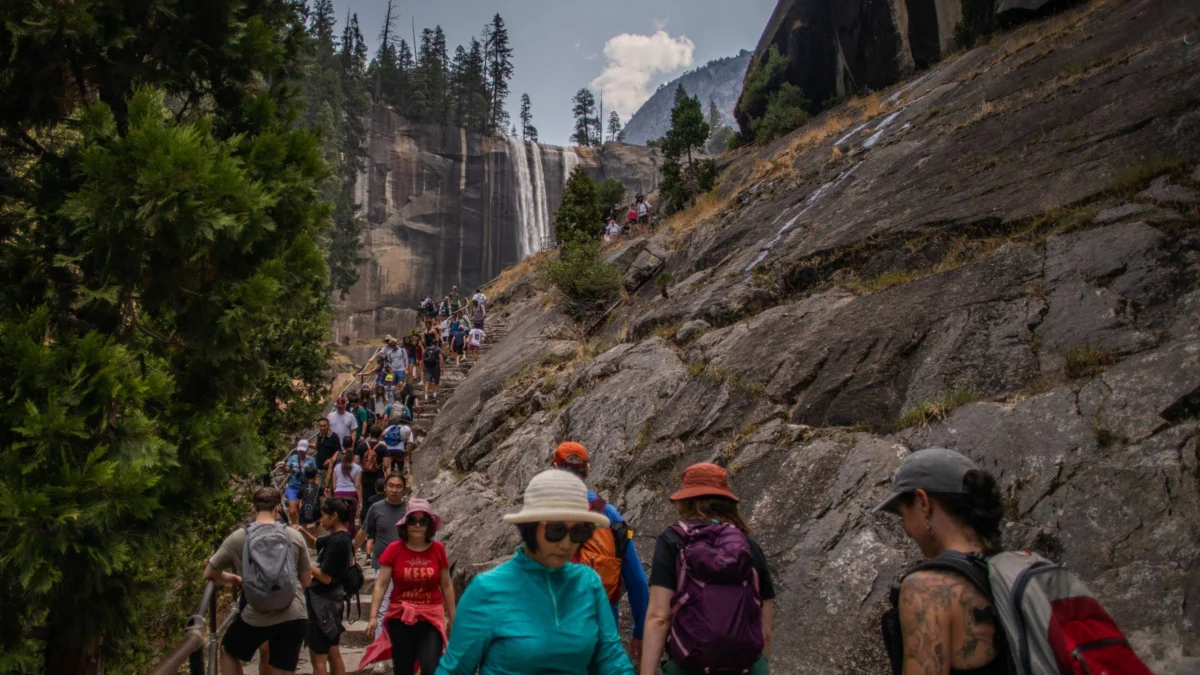
The United States National Park Service (NPS) enters the summer of 2026 facing a dual crisis that challenges the foundational mission of the agency: the simultaneous surge in environmental degradation caused by overtourism and a radical shift in federal policy that prioritizes visitor volume over conservation infrastructure. As the peak travel season approaches, a complex landscape of record visitation, dwindling congressional appropriations, and the rollback of crowd-management systems has created a scenario where the very crowds straining the parks have become the primary political and financial justification for their continued existence.
The current state of the park system is the result of a decade-long escalation in popularity that has not been matched by federal investment. In 2014, the NPS managed approximately 290 million visits with a budget of $2.5 billion. By 2024, visitation had climbed to a record 331.9 million. Despite a slight correction to 323 million in 2025, the pressure on the "Crown Jewels" of the American landscape remains at historically unprecedented levels. However, the proposed budget for the 2027 fiscal year sits at just $2.14 billion—a significant decrease in real-dollar value when adjusted for inflation and the sheer volume of public use.
A Chronology of Overcrowding and Policy Shifts
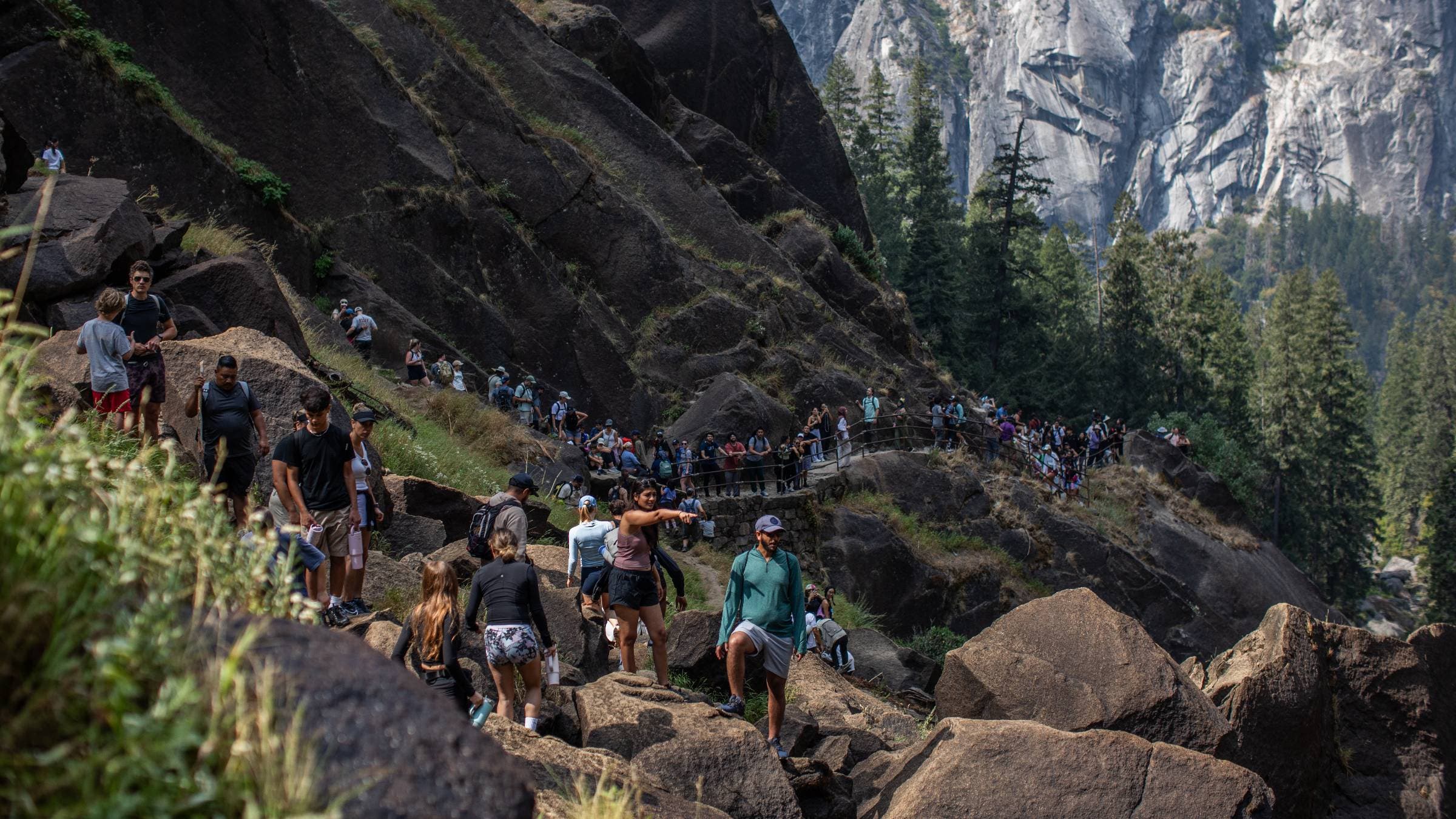
The trajectory toward the current crisis began in the mid-2010s, as social media and a renewed national interest in domestic travel began to funnel millions of new visitors into a concentrated group of "marquee" parks. By 2014, popular sites like Yosemite National Park were already exhibiting signs of "Disneyfication," with trail congestion and local lodging shortages becoming the norm rather than the exception.
Following the COVID-19 pandemic, the surge in outdoor recreation led many parks to implement innovative management tools. Between 2021 and 2025, parks such as Arches, Rocky Mountain, and Glacier utilized timed-entry systems and permit requirements to mitigate the impact on fragile ecosystems and reduce traffic congestion. These programs were largely hailed by conservationists and park rangers as essential for protecting the "visitor experience" and the biological integrity of the land.
However, the policy environment shifted abruptly in February 2026. In a controversial decision that sent shockwaves through the conservation community, federal officials announced the immediate abandonment of most reservation and timed-entry systems. The move was framed as a return to "unrestricted public access," but critics argue it was a response to pressure from specific commercial interests and a broader political shift toward privatizing elements of the public land experience. This decision coincided with the loss of over 4,000 NPS employees through a combination of layoffs, Department of Government Efficiency (DOGE) buyouts, and hiring freezes, leaving the agency understaffed exactly as the gates were thrown wide open.
The Economic Engine: Dependency on the Crowd
The financial architecture of the National Park Service has become increasingly reliant on the very visitors who contribute to its wear and tear. Under current federal law, individual parks retain 80 percent of the entrance fees they collect, creating a direct link between high visitation and the ability to fund basic operations.
In 2026, the NPS announced historic rate hikes, specifically targeting non-U.S. residents who are now charged nearly three times the previous entry rates. While this generates immediate revenue, it reinforces a "volume-based" financial model. The reliance on visitor spending extends far beyond the park gates into "gateway communities"—the towns like Mariposa, California, and Estes Park, Colorado, that serve as the staging grounds for park adventures.
Data from 2024 shows that park visitors contributed approximately $29 billion to the U.S. economy, with a heavy concentration in hotels, restaurants, and local services. Specific economic impacts include:
- Great Smoky Mountains National Park: $2 billion annually in visitor spending.
- Grand Canyon National Park: $905 million annually.
- Grand Teton National Park: $808 million annually.
Sarah Leonard, CEO of Visit Estes Park, noted that local tax districts are fundamentally tied to park attendance. "Our primary budget is from that tax," Leonard stated, highlighting the dilemma faced by local leaders who must balance the desire for "properly managed tourism" with the cold reality that a drop in visitation—such as the 30 percent decrease seen during the 2013 government shutdown—can result in hundreds of millions of dollars in lost local revenue.
Infrastructure at the Breaking Point
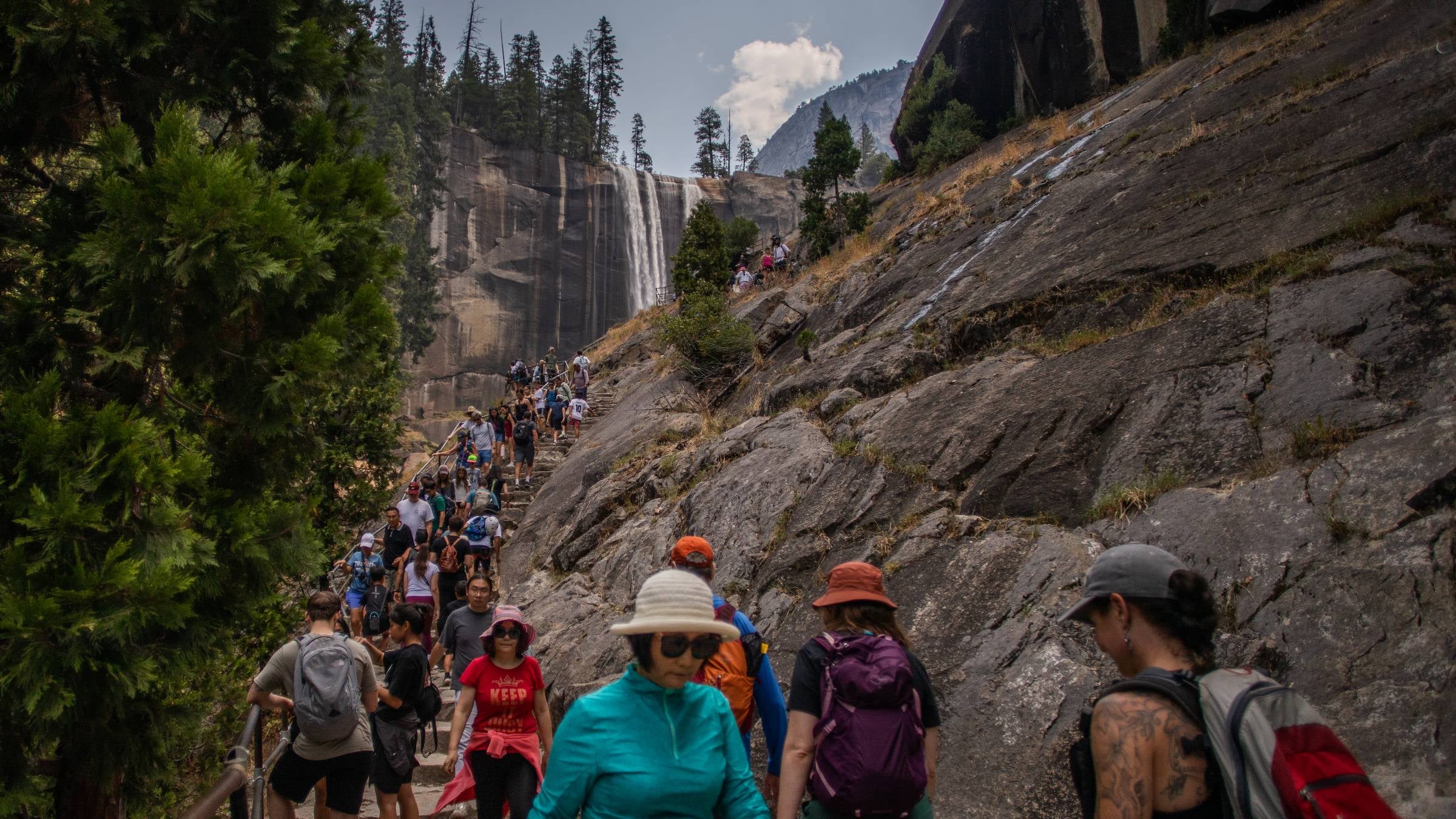
The physical consequences of the "loving to death" phenomenon are visible across the system. In Yosemite, the infrastructure at Bridalveil Fall required a complete rebuild to accommodate unprecedented crowds on boardwalks, requiring expanded viewing areas to prevent hikers from trampling surrounding habitats. In the Great Smoky Mountains, heavy vehicle traffic has led to a spike in pedestrian-car accidents, prompting emergency safety reviews.
Perhaps the most staggering example of infrastructure strain is found in Yellowstone National Park. The park’s aging wastewater systems, designed for a fraction of current visitor levels, are on the verge of failure. The NPS is currently on track to spend more than $1.5 billion just to update these systems to prevent environmental contamination of the park’s hydrothermal features and local water tables.
Cassidy Jones, a former ranger and current senior visitation program manager for the National Parks Conservation Association, expressed concern that the "urbanization" of the park experience is nearing a point of no return. Jones warned that without the "behind the scenes" staff—the researchers, planners, and maintenance crews—the parks are maintaining a "facade" of health while the underlying systems degrade.
The Political Calculus of Visibility
A central paradox of 2026 is that while crowds damage the parks, they also serve as a political shield. In a climate where public lands are increasingly viewed through the lens of resource extraction and development, the sheer number of Americans utilizing national parks makes them difficult to ignore in the legislative area.
Recent leasing proposals and drilling expansions have targeted lands adjacent to national park sites, including more than 1.5 million acres of the Arctic National Wildlife Refuge. Throughout the West, the Bureau of Land Management (BLM) has moved to approve a slew of oil and gas leases on land that shares watersheds and migratory corridors with national parks.
Advocacy groups argue that if visitation numbers were to drop, the political justification for maintaining strict protections would weaken. High visitation keeps national parks in the headlines and on the priority lists of voters. However, this visibility has not yet translated into budgetary security. The 20 to 25 percent funding cuts proposed for 2026 suggest that even record popularity cannot entirely protect the NPS from a broader federal trend of deprioritization.
Analysis: The Future of the National Park Experience
The "uncomfortable reality" of 2026, as described by park advocates, is that there is no longer an "opt-out" for the dilemma of overtourism. To visit is to contribute to the physical degradation of the resource; to stay away is to withhold the funding and political capital necessary for its survival.
The current administration’s focus on "visitor access at all costs" has created a tension between the immediate gratification of the tourist and the long-term mission of the 1916 Organic Act, which mandates that parks be left "unimpaired for the enjoyment of future generations." The abandonment of reservation systems in February 2026 is seen by many as a victory for short-term access but a defeat for long-term sustainability.
For the modern traveler, the "cost of entry" is shifting from a simple fee to a form of civic responsibility. Experts like Jones suggest that visitors must become advocates for systemic changes, moving beyond the "generic" advice of visiting in the off-season or choosing less popular parks. As the NPS faces a future of diminished staff and increased external pressures, the survival of these landscapes may depend less on how they are managed and more on whether the millions of people who crowd their gates are willing to demand the funding and protections that their presence currently justifies.
The question for the remainder of the decade is no longer whether the parks are being loved to death, but whether they can survive the political and financial consequences of being loved less. In 2026, the crowds are not just a nuisance; they are a vital, albeit destructive, heartbeat for a system under siege.



 Chandra Hamzah
 Tatiana Tantri Indah Sari
 Budi Mulyono
