
 Anjar Salim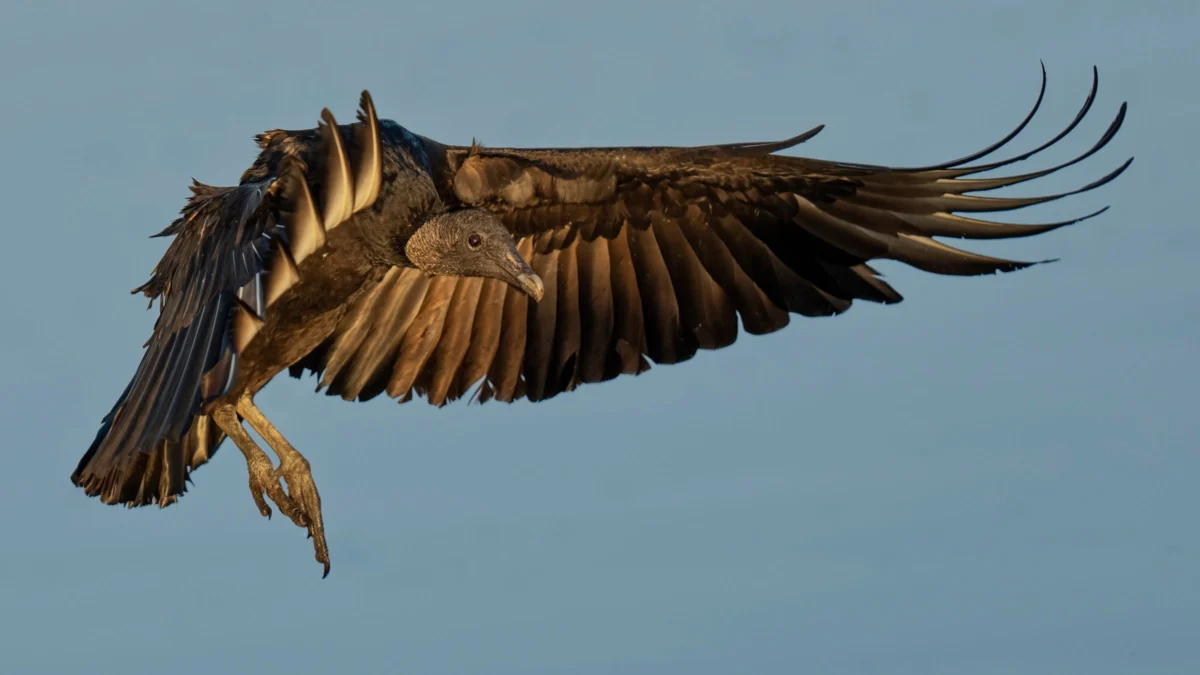
The National Park Service (NPS) has initiated a federal investigation following the discovery of 33 black vultures found dead and illegally discarded within the boundaries of Great Smoky Mountains National Park. The incident, which involves a species protected under stringent federal law, has prompted a call for public assistance as investigators seek to identify the individuals responsible for what appears to be a targeted mass killing and disposal of the birds.
The discovery was made during the early afternoon of April 6, 2024. According to official reports from the National Park Service, rangers patrolling the western section of the Foothills Parkway encountered a large cluster of avian carcasses strewn along the roadside. Upon closer inspection, wildlife biologists confirmed the remains belonged to 33 black vultures (Coragyps atratus). The location of the dumping—a scenic corridor between the communities of Chilhowee and Walland, Tennessee—is a prominent feature of the most-visited national park in the United States, raising concerns about both wildlife preservation and public safety.
Chronology of the Discovery and Initial Response
The timeline of the event suggests a deliberate act of disposal occurring shortly before the discovery. At approximately 12:00 p.m. on April 6, park rangers were alerted to the presence of the birds. The bodies were found in a concentrated area, suggesting they were transported to the site and dumped rather than having died in situ.
Initial field assessments by NPS wildlife rangers were focused on identifying the species and determining if there was an immediate threat to public health or other wildlife. Following the identification of the birds as black vultures, the investigation transitioned into a criminal inquiry. While the specific cause of death for the 33 birds has not been publicly released, the NPS has engaged in forensic efforts to determine whether the animals were shot, poisoned, or killed through other illegal means.
Outside investigators and avian experts note that the sheer volume of birds found in a single location suggests a significant event, possibly involving a communal roost or a localized eradication effort. The National Park Service has since reached out to the public, requesting dashcam footage or witness statements from anyone traveling the Foothills Parkway West on the day of the discovery.
The Legal Framework: The Migratory Bird Treaty Act of 1918
The black vulture is a federally protected species under the Migratory Bird Treaty Act (MBTA). Enacted in 1918, the MBTA is one of the oldest and most comprehensive environmental laws in the United States. It was established to implement conventions between the U.S. and Great Britain (acting for Canada), and later expanded to include treaties with Mexico, Japan, and Russia.
The act makes it illegal for anyone to "pursue, hunt, take, capture, kill, attempt to take, capture, or kill, possess, offer for sale, sell, offer to purchase, purchase, deliver for shipment, ship, cause to be shipped, deliver for transportation, transport, cause to be transported, carry, or cause to be carried by any means whatever, receive for shipment, transportation or carriage, or export, at any time, or in any manner, any migratory bird, included in the terms of this Convention… or any part, nest, or egg of any such bird."
Because the black vulture is listed among the more than 1,000 species protected by this act, the killing of these 33 birds constitutes a major federal offense. The penalties for such violations are severe:
- Misdemeanor Violations: Can result in fines of up to $15,000 and six months in prison.
- Felony Violations (Commercial or Intentional Killing): Under the Fish and Wildlife Improvement Act of 1978, individuals can face fines of up to $250,000 and up to two years in federal prison.
- National Park Regulations: In addition to the MBTA violations, the act of dumping carcasses within a national park violates Title 36 of the Code of Federal Regulations, which can carry separate sentences of up to six months in prison and thousands of dollars in additional fines.
Ecological Importance of the Black Vulture
While often maligned due to their appearance and dietary habits, black vultures play a vital role in maintaining the health of North American ecosystems. As obligate scavengers, they serve as nature’s primary sanitation crew.
Hardy Kern, the director of government relations at the American Bird Conservancy, emphasized that vultures provide a "recycling service" that is indispensable to public health. The black vulture possesses a highly specialized digestive system; their stomach acid is incredibly corrosive—approaching a pH of zero—allowing them to consume carcasses infected with anthrax, botulism, and cholera without falling ill. By neutralizing these pathogens, vultures prevent the spread of disease to other wildlife, livestock, and humans.
Unlike their relatives, the turkey vultures, which rely on a keen sense of smell to find food, black vultures have excellent eyesight and often follow turkey vultures to carcasses. They are social birds, often roosting in large groups, which makes them vulnerable to mass-killing events if a roost is targeted.
The loss of 33 vultures in a single incident is not merely a legal matter but an ecological one. In many parts of the world, particularly in India and parts of Africa, vulture populations have plummeted due to accidental poisoning. These declines have led to a measurable increase in rabies and other zoonotic diseases as feral dog populations expand to fill the scavenging niche. The illegal killing of vultures in the United States risks destabilizing the local balance that keeps environmental pathogens in check.
Human-Wildlife Conflict and Potential Motives
Despite their ecological benefits, black vultures are frequently the subject of human-wildlife conflict. This friction often stems from two primary behaviors: property damage and perceived threats to livestock.
Black vultures are known to gather on human structures, where they can cause significant damage to property. They have a documented tendency to tear at rubber seals on car windshields, sunroofs, and wipers, as well as asphalt shingles and vinyl seat covers on boats. This destructive behavior often leads to frustration among property owners.
More critically, black vultures are sometimes accused of attacking live animals. While turkey vultures almost exclusively eat carrion, black vultures have been known to occasionally target newborn calves, lambs, or weakened livestock. While these instances are statistically rare compared to other causes of livestock mortality, they contribute to a negative perception of the species among the agricultural community.
However, federal law provides legal avenues for managing these conflicts. Farmers and property owners can apply for "depredation permits" from the U.S. Fish and Wildlife Service, which allow for the legal removal or deterrent of birds under specific circumstances. The illegal "dumping" and killing of 33 birds suggests a bypass of these legal channels, opting instead for unauthorized lethal force.
The Foothills Parkway: A Targeted Location
The location of the dumping—the Foothills Parkway—adds a layer of complexity to the investigation. The Parkway is a federally managed scenic roadway that has been under intermittent construction for decades. Known as the "missing link" for many years, the sections between Walland and Chilhowee offer vast, secluded stretches of road that provide both easy access for vehicles and relative isolation from constant surveillance.
The National Park Service manages this land with the same rigor as the interior of the Great Smoky Mountains. The dumping of biological waste, particularly protected wildlife, is viewed as a desecration of public land. Investigators are looking into whether the birds were killed elsewhere and transported to the Parkway for disposal, or if the Parkway itself was the site of the killing.
Broader Implications and Forensic Analysis
The investigation into the 33 black vultures is part of a broader effort by the National Park Service and the U.S. Fish and Wildlife Service to combat wildlife crime. Wildlife forensics has become increasingly sophisticated, and investigators may utilize several methods to track the perpetrators:
- Toxicology Reports: If the birds were poisoned, the specific chemical used (such as lead or prohibited pesticides) can often be traced to a source.
- Ballistics: If the birds were shot, forensic analysis of the projectiles can identify the type of firearm used.
- DNA and Trace Evidence: Investigators may look for tire tracks, shoe prints, or DNA on the birds or the surrounding area that could link a suspect to the scene.
The NPS has emphasized that information from the public is often the turning point in these cases. By requesting dashcam footage, they are hoping to identify any vehicles that were stopped or driving slowly in the Chilhowee-Walland section of the Parkway during the midday hours of April 6.
Conclusion and Call to Action
The illegal dumping of 33 black vultures in Great Smoky Mountains National Park represents a significant breach of federal environmental protections and an affront to the conservation mission of the National Park Service. As the investigation continues, officials remain focused on the ecological impact of the loss and the legal repercussions for the offenders.
The National Park Service encourages anyone with information to come forward. Tips can be submitted anonymously. Information regarding suspicious activity, vehicles, or individuals in the vicinity of the Foothills Parkway West on April 6 could be vital to the case. Those with information are encouraged to contact the NPS through their official tip lines or by emailing the investigative team directly.
As urban areas continue to expand into natural habitats, the frequency of human-wildlife conflict is expected to rise. However, the National Park Service maintains that the preservation of species like the black vulture is essential for a healthy environment, and that the rule of law must be upheld to protect the country’s natural heritage for future generations.




 Chandra Hamzah
 Tatiana Tantri Indah Sari
 Budi Mulyono
 Lukman Taruna Persada Ramadan