
 Budi Mulyono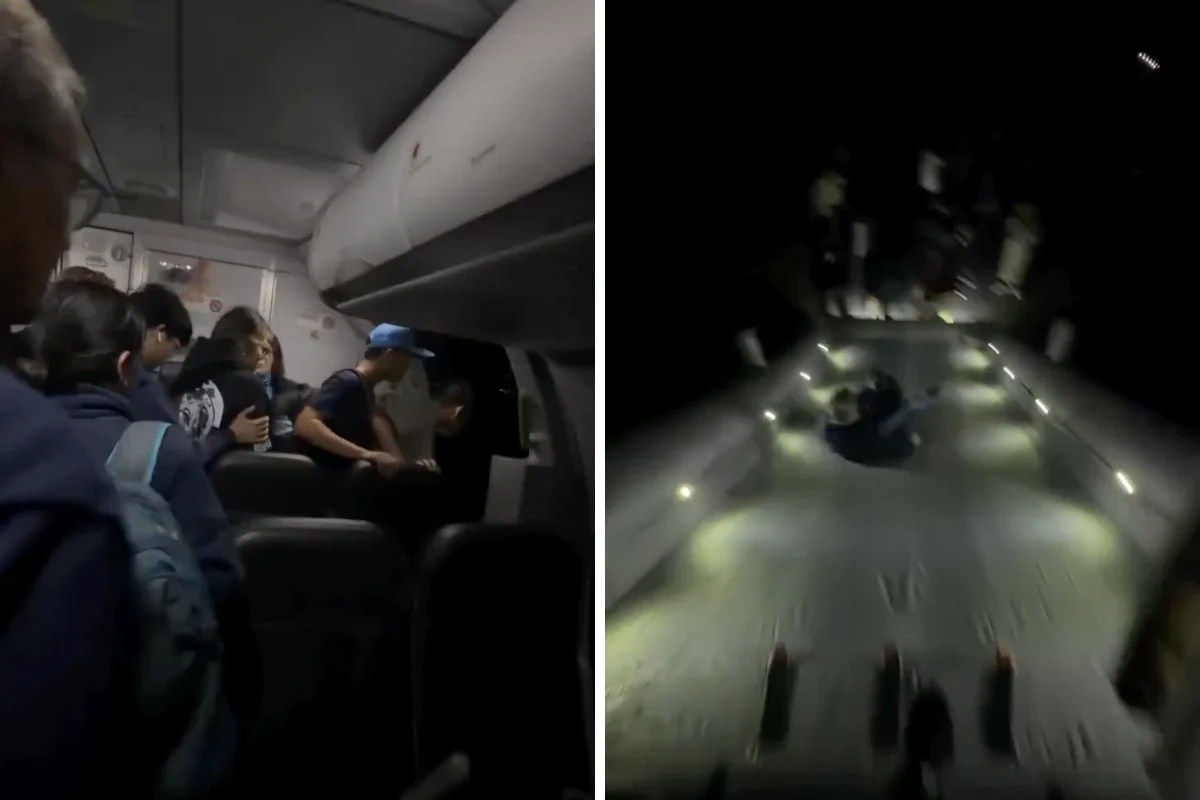
The safety of commercial aviation faces a growing crisis of passenger non-compliance as evidenced by a harrowing emergency evacuation at Denver International Airport. On the evening of Friday, May 8, Frontier Airlines Flight F9-4345, scheduled to depart for Los Angeles, was forced into a high-speed emergency stop following a catastrophic collision with a trespasser on the runway. While the technical response from the flight crew was immediate and professional, the subsequent evacuation has drawn intense scrutiny due to the behavior of passengers who ignored life-saving instructions in favor of retrieving personal belongings.
A video captured by a passenger on board provides a chilling look into the chaos and the blatant disregard for emergency protocols. As the cabin filled with smoke and the flight crew shouted for an immediate exit, the footage reveals a cabin of people more concerned with their carry-on luggage than the imminent threat of fire. This incident serves as a stark reminder of a dangerous trend in modern aviation: the prioritization of property over human life during time-critical emergencies.
Chronology of the Incident: Collision and Engine Fire
The sequence of events began as Frontier Airlines Flight F9-4345 commenced its takeoff roll at Denver International Airport (DEN). According to preliminary reports, the aircraft was gaining speed for rotation when a pedestrian, who had reportedly scaled the airport’s perimeter security fence, appeared on the runway. The aircraft struck the individual at high speed. The victim was partially ingested into the aircraft’s right-hand engine, an event that resulted in immediate mechanical failure and a localized fire.
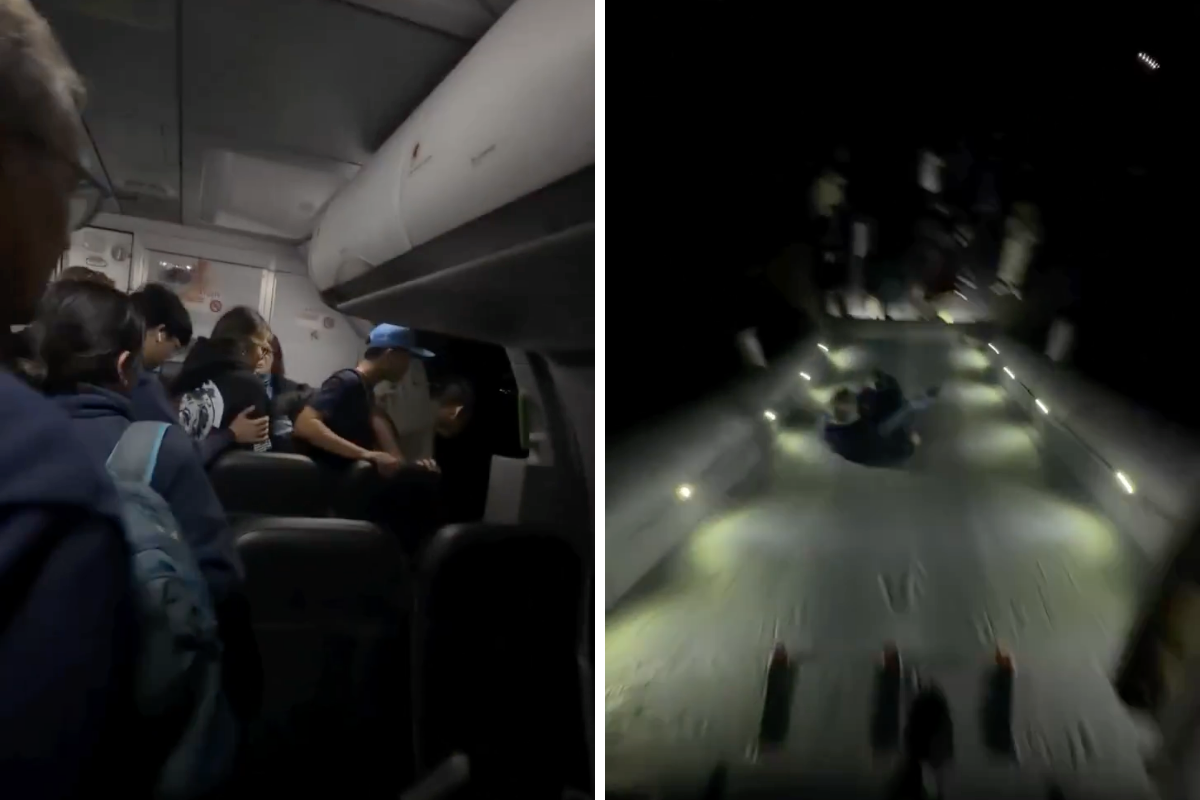
The flight deck crew, alerted to the impact and subsequent engine anomalies, executed an emergency heavy-braking maneuver to abort the takeoff. As the aircraft came to a halt on the runway, smoke began to permeate the cabin, a byproduct of the engine damage and the fire that had ignited within the nacelle. In accordance with standard operating procedures for a "smoke in the cabin" scenario following a ground incident, the captain ordered an immediate evacuation via the aircraft’s inflatable emergency slides.
While airport fire and rescue services were dispatched and arrived on the scene within minutes to extinguish the flames, the situation inside the aircraft remained critical. The presence of smoke necessitates an evacuation within seconds, as toxic fumes can quickly incapacitate passengers and crew.
Passenger Defiance and the Delay of Evacuation
The transition from a controlled environment to an emergency evacuation is designed to be swift. However, the video evidence from Flight F9-4345 shows a significant breakdown in passenger discipline. Despite the dark, hazy atmosphere of the smoke-filled cabin, the video depicts passengers standing in the aisles, reaching into overhead bins, and methodically packing their bags.
A flight attendant can be heard repeatedly shouting, “LEAVE EVERYTHING!” over the sound of the emergency alarms. The instructions were not merely ignored; they were actively dismissed. In the recording, the passenger filming the event is heard telling her companion that she intended to take her belongings regardless of the orders. Another passenger, when reminded by crew members that their lives were more important than their luggage, was heard scoffing, stating that her belongings were her priority.
This behavior created a bottleneck in the aisles. The video shows several overhead bins open and empty, indicating that multiple passengers had already successfully retrieved their luggage, while others behind them were forced to wait. The slow pace of the evacuation meant that individuals were remaining in a smoke-filled fuselage far longer than safety standards dictate. Once on the tarmac, the lack of urgency continued. Passengers were filmed laughing, joking, and congregating near the aircraft to document the scene on their phones, ignoring further commands from the crew to move a safe distance away from the plane, which still posed a risk of explosion or secondary fire.
The Human Toll and Safety Data
The evacuation of Flight F9-4345 resulted in injuries to approximately 12 passengers and crew members. Of those, five individuals required transportation to local hospitals for treatment. While the injuries ranged from smoke inhalation to abrasions sustained on the evacuation slides, safety experts argue that the number of injuries could have been lower—or the outcome much worse—had the evacuation been conducted according to protocol.
The aviation industry operates under the "90-second rule." To be certified for service, aircraft manufacturers must demonstrate that a full load of passengers can be evacuated in 90 seconds or less, using only half of the available emergency exits. These simulations, however, are conducted with able-bodied volunteers who are instructed not to take any personal items.
In real-world scenarios, the retrieval of luggage has been shown to double or even triple evacuation times. Furthermore, the physical act of carrying luggage down an inflatable slide poses a severe safety risk. Suitcases with sharp edges or wheels can puncture and deflate the slides, rendering them useless for the passengers remaining on board. Heavy bags also increase the likelihood of collisions and "pile-ups" at the bottom of the slide, which is a frequent cause of broken bones and head injuries during evacuations.
Regulatory Response and the FAA Safety Alert
The incident in Denver is not an isolated case. Over the last decade, numerous evacuations—including the 2016 Emirates crash in Dubai and the 2019 Aeroflot fire in Moscow—have seen passengers prioritize luggage, sometimes with fatal consequences. In the Moscow incident, 41 people perished, and investigators pointed to passengers in the front of the aircraft stopping to grab bags as a factor that prevented those in the rear from escaping the flames.
In response to this growing trend, the Federal Aviation Administration (FAA) issued a Safety Alert to Operators (SAFO) in late 2025. This document urged U.S. commercial airlines to enhance their safety briefings and find more effective ways to ensure passenger compliance. The FAA’s recommendations included:
- Enhanced Pre-Flight Briefings: Incorporating more direct language regarding the dangers of luggage retrieval during emergencies.
- Visual Aids: Using more graphic or clear signage near emergency exits and overhead bins.
- Crew Training: Providing flight attendants with specific psychological strategies to manage defiant passengers during high-stress evacuations.
- In-Flight Announcements: Reminding passengers during taxi and takeoff that in the event of an emergency, all items must be left behind.
Despite these recommendations, the FAA has stopped short of mandating technological solutions, such as remote-locking overhead bins, citing concerns over mechanical failure during power losses and the potential for passengers to become trapped or injured trying to force open locked compartments.
The Psychology of the "Luggage Reflex"
The International Air Transport Association (IATA) has announced plans to launch a comprehensive study in late 2026 to investigate the psychology behind why passengers risk their lives for property. Preliminary theories from behavioral scientists suggest several factors:
- Normalcy Bias: Passengers often fail to grasp the severity of a situation, believing that "everything will be fine" and that they will have plenty of time to grab their things.
- Economic Value and Essential Items: The reliance on smartphones, laptops, and travel documents creates a "survival" link to these objects. For many, the prospect of being stranded in a foreign city without a phone or passport feels like a greater immediate threat than the abstract risk of fire.
- Panic-Induced Routine: Under extreme stress, the human brain often reverts to familiar routines. For a traveler, the routine at the end of a flight is to stand up and grab their bag.
The scoffing response of the passenger in the Denver video—claiming her belongings were more important than her life—highlights a disturbing shift in passenger attitude. It reflects a breakdown in the traditional "contract" of safety between the airline and the traveler, where the authority of the crew is increasingly challenged.
Broader Implications for the Aviation Industry
The Frontier Airlines incident at Denver International Airport is likely to reignite debates over airport security and passenger liability. The fact that a trespasser was able to scale a perimeter fence and reach an active runway raises significant questions about the security infrastructure at one of the nation’s busiest hubs. An investigation by the National Transportation Safety Board (NTSB) and the Transportation Security Administration (TSA) is expected to focus on how the breach occurred and what measures are necessary to prevent a recurrence.
For the airline industry, the challenge remains behavioral. If passengers cannot be persuaded to follow life-saving instructions, airlines may be forced to implement stricter penalties. Some industry analysts have suggested that passengers filmed taking luggage during an evacuation should face heavy fines or be placed on "no-fly" lists, similar to the consequences for interfering with flight crews or engaging in "air rage."
As aircraft cabins become more crowded and the volume of carry-on luggage increases due to checked-bag fees, the "luggage reflex" during emergencies will only become more dangerous. The Denver incident stands as a chilling case study: a tragedy was narrowly avoided, but the video evidence suggests that the next time, the delay caused by a single suitcase could result in a catastrophic loss of life. The aviation community now looks toward the results of the IATA study and potential FAA mandates to solve a problem that is, at its core, a matter of human defiance against the basic instinct of survival.




 Anjar Salim
 Chandra Hamzah
 Tatiana Tantri Indah Sari
 Lukman Taruna Persada Ramadan
