
 Budi Mulyono
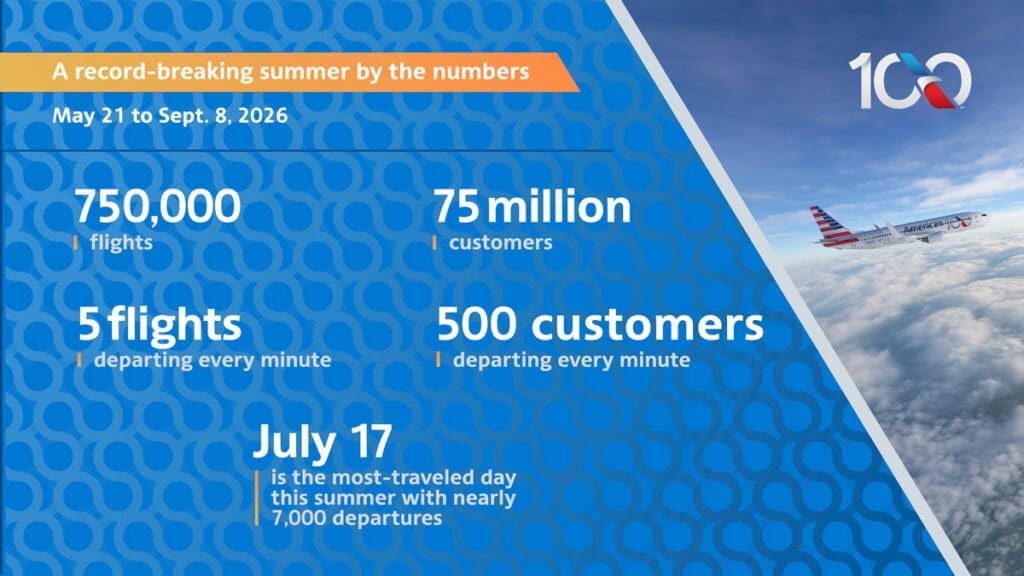
American Airlines has officially announced its projections for the summer 2026 travel season, signaling what is expected to be the most expansive and high-volume period in the carrier’s century-long history. As the airline celebrates its centennial year, it has prepared a schedule that accommodates an estimated 75 million customers across more than 750,000 scheduled flights. This massive undertaking, spanning from late May through early September, represents a significant milestone for the Fort Worth-based carrier, surpassing all previous performance benchmarks, including the pre-pandemic highs of 2019.
The 2026 summer season is not merely a routine increase in capacity but a strategic culmination of American Airlines’ century of operations. Founded in 1926, the airline is utilizing this milestone to demonstrate its logistical capabilities and network depth. The operational window, which begins on May 21 and concludes on September 8, is designed to capture the full breadth of the peak northern hemisphere travel demand. Industry analysts suggest that these figures indicate a robust recovery and growth phase for the aviation industry, with American Airlines positioning itself at the forefront of domestic and international connectivity.
Strategic Launch and Memorial Day Projections
The summer season will commence with an intensive push during the Memorial Day holiday weekend, traditionally the unofficial start of the American summer travel period. For 2026, American Airlines anticipates transporting more than 4.2 million travelers between May 21 and May 26. To facilitate this movement, the airline has scheduled over 40,000 flights during the six-day holiday window.
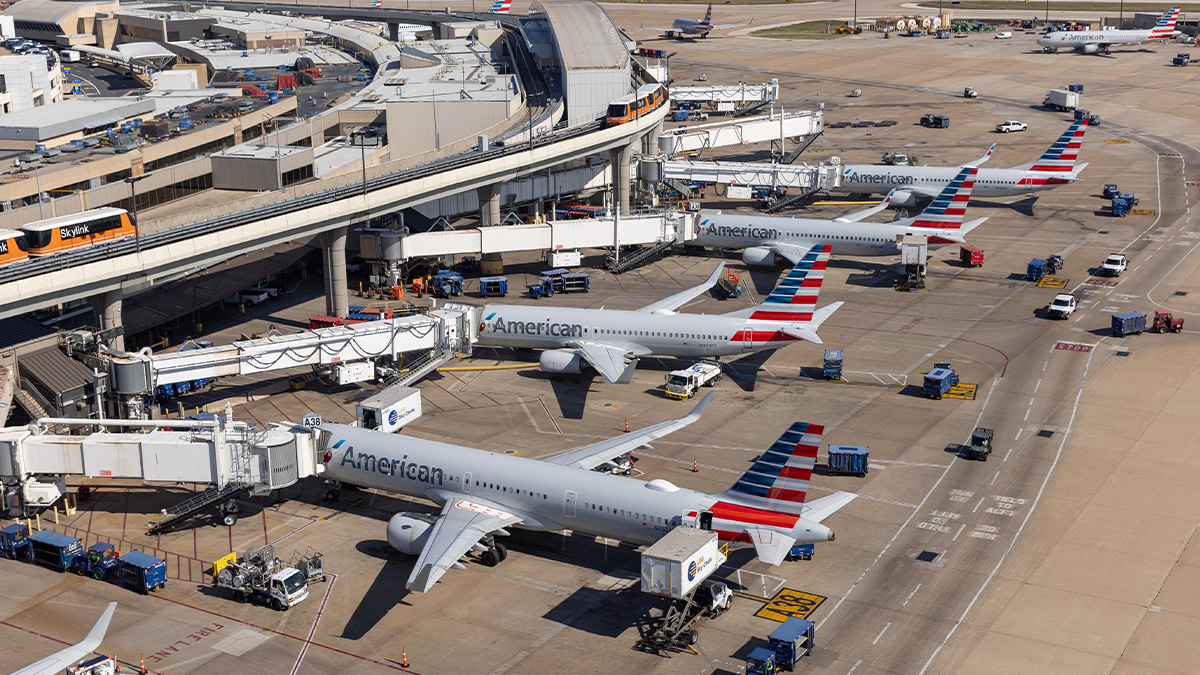
Internal data from the carrier identifies May 22 as the projected peak travel day for the holiday period. On this day, the airline’s hub-and-spoke system will be tested to its limits, with logistical models predicting that at its most active intervals, nearly 500 passengers will be departing on an American Airlines or American Eagle flight every sixty seconds. This level of throughput requires surgical precision in ground operations, gate management, and air traffic coordination.
Operational Reliability and Schedule Engineering
To mitigate the risks associated with such high volume, American Airlines has implemented several structural changes to its scheduling and operational philosophy. A primary component of this strategy is the optimization of "block times"—the total time a flight is scheduled from gate to gate. By building additional buffers into these schedules, the airline aims to absorb the inevitable delays caused by summer weather patterns or air traffic control congestion.
The carrier reports that these adjustments are already yielding dividends. In the months leading up to the summer surge, American’s on-time performance metrics have shown a steady upward trend. This proactive approach to scheduling is designed to prevent the "cascading delay" effect, where a single late arrival in the morning disrupts dozens of subsequent flights throughout the day. Furthermore, the airline has increased its investment in reserve staffing, ensuring that flight crews and maintenance teams are positioned at key nodes across the network to respond to mechanical issues or crew timing-out events.
The Battle for Chicago: O’Hare Capacity and Competition
A focal point of the summer 2026 strategy is Chicago O’Hare International Airport (ORD), a critical hub where American Airlines is locked in a high-stakes competition for market dominance with United Airlines. Following a period of intense capacity wars that drew scrutiny from federal regulators, the Federal Aviation Administration (FAA) intervened to implement capacity adjustments aimed at maintaining operational stability at the perennially congested airport.
Despite these regulatory caps, American Airlines is projecting a record-setting summer in Chicago. The airline plans to transport over 5.2 million passengers through ORD, representing an 11% increase over the summer of 2025 and a staggering 48% increase compared to 2023 levels. This growth is being driven by a shift toward larger "mainline" aircraft and a more efficient use of available slots.
The competition in Chicago is not just about passenger volume but also about corporate contracts and international feeder traffic. By significantly boosting its presence at O’Hare, American is attempting to solidify its position in the Midwest market, even as it navigates the complexities of the FAA’s oversight. The success of the Chicago operation is viewed by industry experts as a bellwether for the airline’s overall summer performance.
International Expansion and Global Connectivity
Beyond its domestic strongholds, American Airlines is aggressively expanding its international footprint for the 2026 season. The airline is introducing five new routes to Europe, responding to a sustained surge in demand for transatlantic travel. These routes are designed to provide non-stop access from major U.S. hubs to high-demand cultural and economic centers in Europe.
The expansion includes a focus on strengthening the long-haul network with a mix of established destinations and emerging markets. While the airline continues to lean on its Atlantic Joint Business partners, such as British Airways and Iberia, the addition of these new American-operated flights allows the carrier to capture a larger share of the premium and leisure revenue. The international growth is supported by the continued delivery of new Boeing 787 Dreamliner aircraft, which offer the fuel efficiency and range necessary for these high-utilization summer routes.
Analyzing the Mid-Summer Peak: July’s Record Activity
While Memorial Day serves as the seasonal kickoff, the true zenith of the summer operation occurs in July. American Airlines identifies July 17 as the single busiest day of the entire year. On this date, the airline expects to operate nearly 7,000 flights. July 10 is projected to be the second busiest day, underscoring a two-week period of maximum intensity for the carrier.
This mid-July surge coincides with the peak of family vacation travel and international tourism. To manage this peak, the airline has optimized its fleet maintenance schedule, ensuring that the maximum number of aircraft are "mission-ready" during the July window. This involves performing heavy maintenance checks during the slower winter and spring months to avoid having aircraft out of service during the highest-revenue period of the year.
Broader Industry Implications and Economic Impact
The scale of American Airlines’ summer 2026 plan has broad implications for the wider travel and tourism industry. The airline’s decision to fly 75 million passengers suggests a high degree of confidence in consumer spending and the continued prioritization of travel in household budgets.
- Economic Ripple Effect: The influx of travelers will provide a significant boost to the hospitality sector, including hotels, car rental agencies, and local tourism boards. Major destinations such as Orlando, Las Vegas, and coastal European cities are expected to see record-high occupancy rates driven by American’s increased seat capacity.
- Labor and Infrastructure: The airline’s centennial summer will put unprecedented pressure on airport infrastructure and labor. This includes not only American’s own employees but also TSA agents, air traffic controllers, and airport ground staff. The carrier’s success will depend heavily on the ability of these third-party entities to scale their operations in tandem with the airline’s growth.
- Technological Integration: American is relying more heavily than ever on its mobile app and AI-driven rebooking tools. In the event of weather disruptions, these digital platforms are designed to handle the volume of re-accommodations that manual gate agents could not manage alone.
Conclusion: A Centennial Test of Resilience
As American Airlines enters its second century of flight, the summer of 2026 stands as a definitive test of its modern operational model. By combining historical scale with contemporary data-driven scheduling, the carrier is attempting to prove that it can handle record-breaking volume without sacrificing the reliability that customers demand.
The stakes are high. A successful summer would solidify American’s reputation for operational excellence and provide a strong financial foundation for its next century. Conversely, any significant operational failures during such a high-profile season would be magnified by the sheer number of passengers affected. With 750,000 flights on the horizon and the eyes of the industry on its Chicago and international operations, American Airlines is prepared to navigate its most ambitious season to date, marking its 100th year with a display of logistical and commercial force.




 Chandra Hamzah
 Tatiana Tantri Indah Sari
 Anjar Salim

