Gabriela Annisa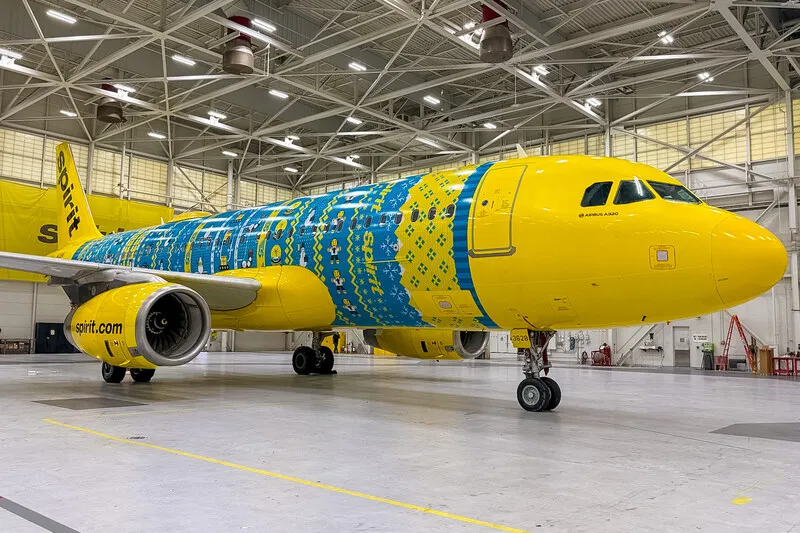
Washington D.C. / Seattle – The U.S. aviation sector is currently witnessing two distinctly divergent narratives, with ultra-low-cost carrier Spirit Airlines confronting a severe financial crisis that has prompted discussions of government intervention and potential liquidation, while Alaska Air Group grapples with a challenging first quarter marked by soaring fuel costs as it strategically expands its international footprint. The precarious state of Spirit Airlines has even drawn commentary from former President Donald Trump, adding a significant political dimension to its future.
Spirit Airlines: A Deep Dive into Financial Distress
Spirit Airlines, an airline long associated with dramatic financial fluctuations, finds itself at a critical juncture. The carrier has accumulated staggering operating losses totaling approximately $2.1 billion over the past four years (2022-2025), culminating in a reported operating loss of $896 million in 2025 alone, reflecting a deeply concerning negative 24% operating margin. This performance places Spirit at the absolute bottom of industry earnings scoreboards, highlighting the severe operational and market pressures it faces.
The airline’s historical struggles are well-documented, including previous bankruptcy filings and multiple attempts at turnaround plans. A key strategy in its most recent restructuring efforts aimed at emulating the successful low-utilization, leisure-focused models of carriers like Allegiant or Sun Country. This involved renegotiating contracts, cutting costs, and addressing its debt load. However, these efforts have been significantly undermined by an unexpected and sustained surge in fuel prices. The original turnaround plan, for instance, was predicated on fuel costs around $2.20 per gallon, a stark contrast to the current market rates exceeding $4.00 per gallon. This dramatic increase has rendered the core assumptions of the recovery plan unviable, pushing the airline deeper into peril.
Liquidation Analysis and Creditor Scrutiny
The gravity of Spirit’s situation was underscored by recent reports, confirmed through bankruptcy proceedings, that the airline’s creditors have commissioned a liquidation analysis. This formal assessment explores the financial returns that could be generated by dismantling the airline and selling off its assets—including aircraft, real estate, and operational infrastructure—a stark indication that some creditors may perceive the business to be "worth more dead than alive." While not a definitive decision, the mere undertaking of such an analysis signals a severe lack of confidence in Spirit’s ability to recover as a going concern. In bankruptcy scenarios, creditors assume a dominant role, effectively dictating the airline’s future, and their consideration of liquidation represents the most extreme outcome.
The Trump Intervention and Government Aid Speculation
Adding an unforeseen political dimension to Spirit’s plight, former President Donald Trump publicly weighed in on the airline’s future during an appearance on CNBC’s Squawk Box on April 21st, 2025. When asked about potential airline mergers, Trump stated, "I don’t mind mergers. I would love someone to buy Spirit, for example. Spirit’s in trouble. It’s 14,000 jobs. Maybe the federal government should help that one out." This unprecedented call for government intervention for a specific troubled airline, especially from a figure typically associated with free-market principles, immediately sparked widespread speculation.
Trump’s comments follow earlier reports in major financial news outlets like The Wall Street Journal and Bloomberg, suggesting that Spirit and potentially other low-cost carriers have been quietly lobbying Washington for financial assistance to combat the inflationary pressures of fuel. This echoes the significant federal aid provided to the airline industry during the COVID-19 pandemic, although the current circumstances differ markedly, being a more localized financial distress rather than a systemic industry shutdown. The prospect of the federal government taking an equity stake in a commercial airline, reminiscent of past interventions in other strategic industries like Intel, challenges traditional capitalist norms and raises questions about the scope of government involvement in private enterprise.
Potential Paths Forward for Spirit
Industry analysts and observers are now considering several potential outcomes for Spirit Airlines:
- Government Bailout: Driven by the concerns over 14,000 jobs and the airline’s critical role in the low-cost travel segment, a federal intervention—either through loans, equity stakes, or other financial packages—remains a possibility, albeit a controversial one. The specifics of such a package and the political will required to enact it are highly uncertain.
- Liquidation: As explored by creditors, a complete liquidation would involve the sale of all assets, potentially leading to the permanent cessation of Spirit’s operations. This would have devastating consequences for employees and significantly alter the competitive landscape of the U.S. airline market.
- Acquisition: Another carrier, potentially one looking to expand its presence in key leisure markets like Florida (Fort Lauderdale, Orlando), could acquire Spirit’s assets at a significantly reduced price. This could involve purchasing aircraft, gate slots, and potentially absorbing some of its workforce, a move that would be opportunistic for a financially stronger airline.
- Original Bankruptcy Plan with Modifications: Despite the current challenges, creditors might still opt to proceed with a modified version of the existing turnaround plan, hoping for a future decline in fuel prices or a successful implementation of cost-saving measures. This path, however, appears increasingly risky given the current economic climate.
Market Confidence and Human Impact
The public discussion surrounding Spirit’s viability, particularly high-profile statements from political figures, creates a "self-fulfilling prophecy" risk. As news of potential collapse or liquidation circulates, consumer confidence erodes, leading to a decline in bookings. While Spirit maintains "business as usual" on its dedicated restructuring website (spiritrestructuring.com), travelers may hesitate to book flights, fearing cancellations or being stranded. This reluctance further exacerbates the airline’s cash drain, accelerating its financial decline. Beyond the operational and financial implications, the uncertainty casts a long shadow over Spirit’s 14,000 employees, whose livelihoods hang in the balance.
Alaska Air Group: Navigating Q1 Headwinds and Strategic International Growth
In stark contrast to Spirit’s existential struggle, Alaska Air Group, now encompassing Hawaiian Airlines, reported a challenging but manageable first quarter for 2025. The airline posted a negative 7.5% operating margin, a performance that, while weak, is not uncommon for Alaska in the typically softer Q1. However, this quarter was particularly impacted by exceptionally high fuel costs and specific regional demand issues.
Q1 Performance and Fuel Cost Challenges
Alaska Air Group faced significant headwinds from fuel prices, paying an average of $2.98 per gallon in Q1, substantially higher than the $2.62 per gallon reported by Delta Air Lines for the same period. This disparity is largely attributed to Alaska’s unique fuel sourcing strategy. Approximately 55% of its fuel is sourced from the U.S. West Coast, a region historically prone to volatile and high refining margins. Additionally, about 20% of its fuel previously came from Singapore, a market that, while traditionally low-cost, has seen prices surge by over 400% since early February 2025. The remaining 25% is sourced from other regions, including the Gulf Coast. This heavy reliance on volatile West Coast and now-expensive Singapore markets has placed Alaska at a disadvantage compared to carriers with more diversified or strategically hedged fuel portfolios.
Non-Fuel Costs and Capacity Adjustments
Beyond fuel, Alaska is also contending with rising non-fuel unit costs. A primary factor is the airline’s strategic decision to trim capacity in response to economic pressures and high operational costs. Airlines typically leverage growth to achieve economies of scale and lower unit costs. By reducing capacity, particularly in its North American network (including Hawaii, which is projected to shrink in Q2), Alaska loses this advantage, leading to upward pressure on its non-fuel expenses. The airline has notably suspended its financial guidance for the full year, citing extreme volatility, a move that reflects the broader industry’s uncertainty.
Despite domestic capacity reductions, Alaska is pursuing an aggressive international expansion. The airline is launching several new long-haul routes, including Rome (starting this week), London, and Iceland, in addition to existing services to Tokyo and Seoul. These routes, utilizing larger, long-distance aircraft, contribute significantly to available seat miles and are intended to provide a boost to unit cost efficiency, albeit with inherent revenue risks.
International Expansion: Opportunities and Risks
Alaska’s foray into new intercontinental markets presents both opportunities and risks. The airline has reported that international booking trends are "building in line with expectations," a phrase that, while positive, is cautiously interpreted by analysts as potentially indicating modest initial performance rather than robust demand. The Seattle-Narita (Tokyo) and Seattle-Incheon (Seoul) routes reportedly achieved profitability in March, with load factors exceeding 90%. However, the precise definition of "profitability" (e.g., operating profit vs. cash cost recovery) and the sustainability of high load factors at potentially discounted fares remain areas of scrutiny.
These trans-oceanic routes are highly competitive and capital-intensive, carrying substantial operational costs. Their long-term financial success is critical for Alaska’s strategic repositioning.
Strong Corporate and Loyalty Performance
Despite the broader challenges, Alaska Air Group reports strong performance in its corporate and loyalty segments. The airline benefits significantly from its strong presence in Seattle, a hub for major corporate spenders. Companies like Amazon, the world’s largest corporate spender on air travel, and Boeing, ranking eighth globally, are critical corporate clients for Alaska. The airline’s robust market share in key business travel corridors, including its scaled-back but still significant presence in San Francisco, allows it to capture a substantial portion of this lucrative corporate demand. This corporate travel segment appears to be rebounding strongly after a period of uncertainty last year.
Furthermore, Alaska’s loyalty program, recently rebranded as "Atmos Rewards," is experiencing "incredible loyalty growth." Its highly lucrative partnership with Bank of America is a significant revenue generator. The integration of Hawaiian Airlines into its portfolio is also expected to enhance loyalty program attractiveness and broaden its customer base, providing a distinct advantage over competitors like JetBlue, which historically have less potent loyalty programs. The strong demand for premium cabins further underscores a resilient high-yield customer segment.
Demand Headwinds in Key Markets
Alaska is also navigating specific regional demand challenges. The airline has noted some softness in demand for Mexico routes, primarily attributed to recent negative headlines concerning civil unrest in certain areas. Additionally, its Hawaiian operations have experienced reduced demand due to natural disasters, including flooding and heavy rains, which have deterred tourism to the islands. These localized issues add another layer of complexity to Alaska’s revenue management and network planning.
Broader Industry Implications
The contrasting fortunes of Spirit Airlines and Alaska Air Group highlight the diverging paths within the U.S. airline industry. While Spirit’s struggles underscore the acute vulnerability of ultra-low-cost carriers to external shocks like fuel price volatility and aggressive competition, Alaska’s experience reflects the challenges even well-capitalized network carriers face in maintaining profitability amidst high operational costs and strategic expansion. The potential government intervention in Spirit’s case could set a controversial precedent for future industry bailouts, while Alaska’s careful navigation of international growth and domestic cost pressures offers insights into resilience in a turbulent market. The outcomes for both carriers in the coming months will undoubtedly reshape the competitive landscape and inform future policy discussions within the U.S. aviation sector.


 Chandra Hamzah
 Tatiana Tantri Indah Sari
 Budi Mulyono
 Anjar Salim